Why Your Visualizations Aren’t Working (And How the Tarot Can Help)

Using the Tarot to boost your visualizations and manifestations.

One of the strangest things about visualization and manifestation is that almost everyone who practices it has seen it work at least once.

A check arrives unexpectedly in the mail.

A new opportunity appears out of nowhere.

A problem that seemed impossible to solve suddenly resolves itself.

Most of us who have explored manifestation have had moments like that. The experience is so striking that we walk away convinced that there really is something to it.

The problem is that it often seems wildly inconsistent.

It’s as if we were handed a magic wand that only works on Tuesdays.

Sometimes it works beautifully.

Sometimes nothing happens at all.

So what’s going on?

Now available – Tarot Meditation Kits

THE PROBLEM MAY NOT BE THE UNIVERSE

Most manifestation teachings assume that if something isn’t showing up in our lives, we simply aren’t visualizing hard enough, affirming often enough, or maintaining a high enough vibration.

Sometimes that’s true.

But sometimes the problem lies somewhere else entirely.

Sometimes we’re trying to manifest something that we don’t actually want.

That sounds strange, but think about it for a moment.

We’re constantly being told what we should want.

More money.

A bigger house.

A more prestigious career.

A newer car.

A better relationship.

Society hands us a ready-made list of desires and then encourages us to spend our lives pursuing them.

But what if those desires aren’t really ours?

Suppose your deepest dream is to live a quiet, peaceful life creating art, writing books, tending a garden, or herding goats in the mountains.

Trying to manifest a million-dollar corporate empire might actually move you farther away from what you truly want.

One part of you is saying:

“I want more money.”

Another part is saying:

“I want simplicity, freedom, and peace.”

The messages conflict.

And when they conflict, the energy behind them weakens.

THE HIDDEN VOICE OF THE SUBCONSCIOUS

There’s another reason manifestation sometimes fails.

Many of our deepest beliefs operate below conscious awareness.

We may consciously desire wealth while secretly believing that wealthy people are selfish or corrupt. So why would we want to be one?

We may desire a loving relationship while carrying a deep conviction that we are unworthy of love.

We may want success while simultaneously fearing attention, criticism, or failure.

In those situations, our conscious intentions and our subconscious beliefs are pulling in opposite directions.

No amount of affirmations can completely overcome a belief that remains hidden and unexamined.

THE TEN PERCENT PRINCIPLE

One idea that has always fascinated me is what I call the Ten Percent Principle.

Rather than focusing on the times manifestation didn’t work, focus on the times it did.

If your visualization works only ten percent of the time, that’s still astonishing.

That’s magic.

That’s making something appear out of nothing, simply using the power of your mind and heart.

So how do we increase that success rate from 10% to 50%?  How do we start to live the magic that we know is there?

HOW THE TAROT CAN HELP

This is where the Tarot becomes so valuable.

Most manifestation techniques begin with a conscious desire.

“I want more money.”

“I want a new relationship.”

“I want a better job.”

The Tarot approaches the problem from the opposite direction.

Because Tarot communicates through symbols, images, and archetypes, it speaks directly to the subconscious mind. It bypasses many of the stories, assumptions, and social programming that shape our everyday thinking.

The cards often reveal things we weren’t expecting to hear.

Sometimes they show us hidden fears.

Sometimes they reveal limiting beliefs.

And sometimes they show us that the thing we’re trying to manifest isn’t what we really want at all.

The Tarot doesn’t simply ask:

“What do you want?”

It asks:

“What does your soul want?”

THE SOUL SPREAD

One of the central ideas in my new book, Tarot and the Art of Alignment, is a reading method I call the Soul Spread.

Rather than focusing on future events, the Soul Spread is designed to uncover your deeper purpose, natural gifts, hidden challenges, and the path that brings the greatest sense of meaning and fulfillment.

In other words, it helps answer a question that most manifestation systems never ask:

“Am I trying to create a life that is actually mine?”

When our conscious goals and our deeper purpose come into alignment, something remarkable often happens.

The struggle begins to ease.

Synchronicities increase.

Opportunities appear.

The path feels more natural.

It’s as though life itself begins cooperating with us.

Perhaps the secret isn’t learning how to force the universe to give us what we want.

Perhaps the secret is discovering what we truly want in the first place.

And that’s a journey the Tarot is uniquely qualified to help us make.

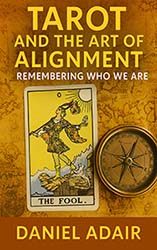
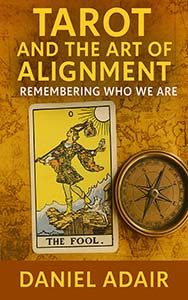
Tarot and the Art of Alignment is now available as both a Kindle edition and a downloadable PDF. If you’ve ever wondered why your visualizations seem inconsistent—or how to uncover the deeper desires beneath your conscious goals—the book offers a practical framework for using the Tarot as a tool for alignment, purpose, and personal transformation.

Why Are We Here? Bridey Murphy, Reincarnation, and the Search for Purpose

Exploring past life memories and looking for meaning with the Tarot.

In 1956, a hugely controversial book called The Search for Bridey Murphy became a national sensation.

The book documented a series of hypnotic regressions conducted by a Colorado businessman named Morey Bernstein. His subject, Virginia Tighe, was initially regressed to childhood memories. Instead, she began describing what appeared to be a previous life in nineteenth-century Ireland.

According to the story, Virginia remembered being a young woman named Bridey Murphy who had lived in County Cork. She described places, customs, people, and events in remarkable detail.

The reaction was immediate.

Some people were fascinated.

Some were deeply moved.

Some were furious.

Others thought the whole thing was ridiculous.

The book became a bestseller. It was turned into a movie. Comedians did Bridey Murphy jokes. People threw Bridey Murphy-themed parties. Children even dressed up as Bridey Murphy for Halloween.

Imagine that for a moment.

Millions of Americans were suddenly debating whether reincarnation might actually be real.

That would be surprising today.

In the buttoned-down 1950s, it was astonishing.

After all, more than ninety percent of Americans then identified as church-going Christians. Traditional Christian theology leaves very little room for reincarnation. From the perspective of many ministers and priests, the idea was outright heresy.

Naturally, there were efforts to debunk the claims, expose errors, and prove that the entire thing was a misunderstanding or a fraud. Eventually the public moved on.

But I’ve always been fascinated by one aspect of the story.

Why did so many people take it seriously in the first place?

Why didn’t they simply dismiss it out of hand?

The Strange Familiarity of Past-Life Memories

Today, surveys suggest that roughly a third of Americans believe in reincarnation. Among many New Age and metaphysical communities, the idea is simply taken for granted.

Most of us, however, don’t have detailed memories like Virginia Tighe supposedly did.

We don’t remember specific addresses.

We don’t remember the names of shopkeepers.

We don’t remember exact dates.

What many people do experience are odd fragments.

Half-memories.

Dreams.

Emotions that seem to belong to someone else and yet somehow feel intimately familiar.

Over the years I’ve spoken with dozens of people who have reported experiences like this.

One person remembered being a stone carver in ancient Egypt. What struck him most wasn’t some grand spiritual revelation. It was the memory of being exhausted, sweaty, and desperately in need of a bath.

Another remembered being a poet during the American Revolution. His strongest impression wasn’t literary genius. It was embarrassment over being a terrible poet.

Yet another remembered escaping from a Mississippi jail during the 1930s, stealing a car, and taking a brief joyride before being captured.

None of these people could provide names, dates, or evidence that would satisfy a historian.

Yet they all said the same thing.

The memories felt absolutely real.

In some ways, I find these stories more convincing than tales of being Cleopatra or Joan of Arc. Most people don’t remember being kings and queens.

If reincarnation is real, the overwhelming majority of us probably spent most of our lives being ordinary people.

Which leads to a much more interesting question.

Why Would We Keep Coming Back?

Let’s suppose, for the sake of argument, that reincarnation is real.

Why are we doing this?

Why would a soul return over and over again?

The idea that we’re reincarnating merely to carve stones, write bad poetry, or heist a car seems a little absurd.

Most of us instinctively feel that there must be more to it than that. We sense that there must be a purpose behind the process.

Perhaps we’re here to learn.

Perhaps we’re here to grow.

Perhaps we’re here to develop qualities that cannot be learned anywhere else.

Perhaps we’re here to become something.

What’s fascinating is that we often ask these questions about our past lives while completely ignoring them in our current one.

We look at a supposed lifetime in ancient Egypt and ask:

“What lesson was I learning?”

“What was the purpose of that incarnation?”

“What was I supposed to become?”

Yet many of us live our present lives without ever asking the same questions.

We get up. Go to work. Pay bills. Consume several million calories. Accumulate possessions. Grow older.

And eventually die.

Then we wonder why life sometimes feels strangely empty.

Perhaps the real mystery isn’t whether we’ve lived before.

Perhaps the real mystery is why we’re here now.

Understanding the “Why”

This is one of the questions that led me to develop the ideas explored in Tarot and the Art of Alignment.

What if the purpose of Tarot isn’t merely to predict future events?

What if the cards can help us discover why we came here in the first place?

Most Tarot readings focus on questions such as:

“Will I get the job?”

“Will this relationship work out?”

“What should I expect next week?”

Those are perfectly valid questions.

But there may be a deeper question hiding beneath all of them.

“What am I here to become?”

In my own work, I’ve found that Tarot can be an extraordinary tool for exploring that question.

The cards often reveal recurring themes, gifts, challenges, and lessons that seem to run through an entire lifetime.

They can help us recognize where we’re in alignment with our deeper purpose—and where we’ve drifted away from it.

In the coming weeks, I’ll be writing more about the Soul Reading described in Tarot and the Art of Alignment, a Tarot spread specifically designed to explore these larger questions of purpose, destiny, and meaning.

Because whether reincarnation is real or not, one question remains:

Why are you here?

And that may be the most important question any of us will ever ask.

Tarot and the Two Kinds of Desire:  Filling the Hole and Expressing the Soul

Exploring the sources of true happiness.

One of the major themes in my new book, Tarot and the Art of Alignment, is how to use the Tarot to create greater happiness and satisfaction in our lives.

But that raises an important question:

What do we really mean by happiness?

Most of us assume that all desires are the same.

We want more money.

We want a better relationship.

We want a bigger house.

We want status, recognition, and success.

But what if there are actually two very different kinds of desire?

And what if one of them leads to lasting fulfillment while the other keeps us trapped in an endless cycle of wanting?

Are We Really Happy?

Studies about happiness are fascinating because they sometimes seem to completely contradict one another.

On the one hand, surveys consistently show that most Americans report being satisfied with their lives. According to a 2024 study conducted by the Centers for Disease Control, the overwhelming majority of Americans describe themselves as satisfied or very satisfied.

That’s kind of astounding, isn’t it?

If that were the whole story, we might expect to step outside and find people skipping down the street singing, “Zip-a-Dee-Doo-Dah” and celebrating the sheer joy of being alive.

Yet another study found that 61% of Americans experience loneliness on a regular basis, with a substantial number reporting that they feel isolated much of the time.

So which is it?

Are we happy?

Or are we lonely?

Are our desires being fulfilled?

The answer, I believe, lies in understanding that there are two very different kinds of desire operating within us.

Desire #1: Filling the Hole

Wharton School senior fellow Matthew Killingsworth conducted research suggesting that money does, in fact, increase happiness.

At first glance, that seems to confirm the modern assumption that more money equals a better life.

And to a certain extent, that’s true. But . . . buried in that study is the fact that it takes a LOT of money to be happy all of the time. Billionaires are very happy campers – the rest of us, not so much. The statistics show that you have to be making at least $175,500 per year to crack into that money = happiness paradigm.

Over half of the people in the United States make less than $75,000 a year. So, quite literally, money is NOT going to buy them happiness.

The problem is that most of us unconsciously continue to believe that it will.

We begin to believe that happiness is always just one purchase away.

Maybe a new car will make us happy.

Maybe a larger house will make us happy.

Maybe the latest phone, computer, or gadget will finally make us feel successful and secure.

Sometimes these things do make us happy—for a little while. Then the novelty wears off. The new car becomes the old car. The new computer crashes. The bigger house develops problems.

And before long we’re looking for the next thing that will finally make us feel complete.

At its core, this desire is driven by a feeling of lack.

It whispers:

“You don’t have enough.”

And because you don’t have enough:

“You aren’t enough.”

This kind of desire attempts to fill an inner emptiness with outer possessions.

The problem is that the hole never stays filled for very long.

Desire #2: Expressing the Soul

There is a second kind of desire that stands in stark contrast to the first.

Rather than trying to fill an inner void, it seeks to express something that already exists within us.

Carl Jung called it individuation.

Abraham Maslow called it self-actualization.

The Buddhists speak of dharma.

Most people simply call it purpose or destiny.

This desire isn’t asking: “What can I get?” It’s asking: “Who am I meant to become?”

At some level, most of us sense that we are here for a reason. We feel drawn toward certain experiences, certain talents, certain ways of contributing to the world.

For one person, that calling may involve art. For another, healing. For another, teaching, parenting, writing, building, serving, or leading.

The details differ, but the underlying experience is the same. Something inside us wants to become fully expressed.

The tragedy is that many of us lose touch with that calling.

From childhood onward, we’re taught to fit in, conform, and follow the established path. Schools, institutions, social expectations, and sometimes even our own families encourage us to become what is expected rather than what is authentic.

Over time, we begin to forget the dreams that we felt so vividly as children. We lose sight of the deeper reason we came here. And then we wonder why life feels empty.

We don’t have meaning in our lives and so life feels meaning-less.

Alignment = Happiness

This second desire contains the secret of lasting happiness.

The more closely we align with our authentic purpose, the more alive we feel. The farther we drift from it, the more restless, dissatisfied, and disconnected we become.

This doesn’t mean life suddenly becomes easy (although it frequently does.) It means life becomes meaningful.

And meaning has a remarkable ability to sustain us even through difficulty.

This is where Tarot enters the picture.

Rather than using the cards exclusively to predict future events, we can use them as a mirror that reflects our deeper purpose.

We can ask:

* What am I here to learn?

* What gifts am I meant to develop?

* Where am I out of alignment?

* What is trying to emerge through me?

In Tarot and the Art of Alignment, I introduce a process called the Soul Reading, designed to help uncover those answers.

Once we begin to understand who we are and why we’re here, the Tarot becomes more than a tool for prediction.

It becomes a tool for alignment.

And alignment, more than money, possessions, status, or recognition, is where lasting happiness is found.

Tarot and the Art of Alignment: A New Way to Read the Cards

For years I’ve been fascinated by a simple question: What if Tarot isn’t primarily about predicting the future? That question eventually grew into my new book, Tarot and the Art of Alignment.

For years, I’ve been fascinated by a simple question:

What if Tarot isn’t primarily about predicting the future?

What if the cards are actually showing us where we’re aligned—or misaligned—with our deeper path?

That question eventually grew into my new book, Tarot and the Art of Alignment.

Of course, behind that question lies another one that human beings have been asking for thousands of years:

Why am I here?

We phrase it in many different ways:

* What is my purpose in life?

* Do I have some sort of destiny?

* Why did I incarnate in this place and time?

* Or, on particularly difficult days: What in the HELL is all of this about?

Philosophers, psychologists, and spiritual teachers have all recognized that human beings have a deep need for meaning in their lives. It isn’t enough to simply wake up, go to work, buy things, pursue pleasure, and repeat the process until our inevitable deaths.

We long for something more.

We need a sense of purpose. We need to feel that our lives matter, that our struggles and triumphs are part of a larger story. Without that sense of meaning, life can begin to feel exactly what the word suggests: meaningless.

Over time, it began to dawn on me that the answer to those questions might be found in the Tarot.

Most of us use the cards to ask questions about the future:

* What is my week going to be like?

* Should I take this job?

* Is this relationship headed somewhere meaningful?

* Am I making the right decision?

When we stop and think about it, that’s actually a remarkable process.

Whenever we lay out the cards, we operate from the assumption that we’re tapping into a source of wisdom greater than our ordinary awareness. Whether we call that source Spirit, the Universe, God/dess, Higher Self, Angels, Guides, or simply the deeper unconscious mind, we trust that the cards can reveal information we don’t consciously possess.

And if that greater source can offer guidance about a career decision, a relationship, or whether we’re headed in the right direction, then surely it can help us answer the most important question of all:

Why am I here?

That realization led me to begin experimenting with a different way of reading the cards.

Instead of asking the Tarot to predict what might happen next, I began asking it to reveal who I am, why I’m here, and whether my life is aligned with my deeper purpose.

I also began using the cards as an ongoing check-in system—a way of determining whether I was moving toward greater alignment or drifting away from it.

This book is the result.

Rather than teaching hundreds of card meanings to memorize, the book explores a different approach. It shows how Tarot can become a mirror that helps us recognize alignment, resistance, intuition, synchronicity, and purpose.

At its heart, Tarot and the Art of Alignment is about learning to see the cards as a conversation with the deeper self.

The Tarot has always been rich with symbols, archetypes, and spiritual lessons. Yet many readers become trapped in the endless task of memorizing meanings and predicting outcomes. This book shifts the focus from fortune-telling to self-discovery. The question is no longer, “What will happen to me?” but rather, “Who am I becoming?”

Through the practices and spreads presented in the book, you’ll learn how to identify the beliefs that keep you stuck, reconnect with your intuition, recognize meaningful patterns and synchronicities, and uncover the deeper purpose that has been quietly calling to you all along.

At the heart of the book is a model I call The Tarot Alignment Process.

The first step is Remembering the Call. This is the moment when we become conscious of our deep hunger for meaning and purpose. We stop drifting through life and begin to recognize that something within us is calling for a more authentic way of living.

The second step is Unveiling Conditioning. Here we examine the beliefs, fears, expectations, and assumptions that have caused us to forget who we really are. We explore the ways that family, culture, education, and society have shaped our identity—and often obscured our deeper truth.

The third step is Reclaiming Inner Knowing. Through Tarot and self-reflection, we begin to trust our own wisdom again. We learn to listen to the quiet voice within that knows why we came into this life and what we are here to contribute.

The fourth step is Entering Synchronicity and Flow. We discover how our emotions, life circumstances, and meaningful coincidences can serve as guides, helping us recognize when we are moving in harmony with our deeper purpose.

And finally, the fifth step is Embodying Destiny. Rather than seeking occasional moments of inspiration, we learn how to stay aligned over time, using the Tarot as an ongoing tool for guidance, self-correction, and growth.

Looking back, I realize that I’ve spent years exploring these themes through Tarot readings, blog posts, synchronicity, personal experience, and spiritual study. This book is my attempt to gather all of those threads together into a single framework.

Over the next several weeks, I’ll be exploring many of these ideas here on the blog, including alignment and resistance, synchronicity, the Soul Spread, and why difficult Tarot readings may not be bad news at all.

If those topics interest you, I hope you’ll join me for the journey.

Tarot and the Art of Alignment

The book is now available as an Amazon Kindle edition:

Tarot and the Art of Alignment – Kindle Edition

Or as a downloadable PDF edition:

Tarot and the Art of Alignment – Downloadable PDF Edition

Remember:

Tarot is not about predicting the future.

It’s about aligning with your true path.

The Tower Is About the Basement, Not the Top Floor

The freedom hidden in The Tower card – starting all over.

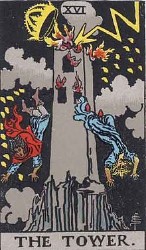
When we glance at The Tower card, our eyes naturally go to the most dramatic part of the image.

A mighty tower has been struck by lightning. Flames erupt from the windows. The occupants, hurled into the air by the force of the blast, are plunging toward a very unpleasant landing.

Yikes.

It’s one of the most feared cards in the Tarot. Whether it appears upright or reversed, The Tower usually signals upheaval, disruption, loss, or sudden change.

But here’s the thing:

The Tower isn’t really about the top of the tower.

It’s about the basement.

The Importance of Foundations

Like a Saturn return in astrology, The Tower destroys whatever is built on a weak foundation.

Notice that the lightning strike isn’t the whole story. Lightning hits buildings all the time. What turns a lightning strike into a catastrophe is the condition of the structure itself.

The real lesson of The Tower is that most of us build our lives on foundations we rarely examine.

Our assumptions.

Our beliefs.

Our fears.

Our relationships.

Our careers.

Our identities.

We construct elaborate towers on top of these foundations and then spend years assuming they’ll stand forever.

Until they don’t.

Eliphas Levi and the Wrong Turn

Part of the reason The Tower has such a grim reputation comes from an interpretation popularized by the nineteenth-century occultist Eliphas Levi.

Levi identified the card with the Tower of Babel from the Bible.

The problem is that the story doesn’t really fit.

The Tower of Babel wasn’t destroyed by lightning. According to the story, God punished its builders by confusing their languages so they could no longer communicate.

The deeper message of Babel is that humanity was punished for its pride. The builders reached too high, became too ambitious, and were struck down for their arrogance.

Once this idea attached itself to The Tower card, the interpretation began drifting toward a very Christian notion of guilt and punishment.

Something bad happened.

Therefore you must have done something wrong.

God, Karma, Fate, or the Universe is simply giving you what you deserve.

It’s a comforting theory because it suggests that bad things only happen for a reason.

Unfortunately, life doesn’t always work that way.

Just The Tarot, by Dan Adair – Available on Amazon

The “Shit Happens” Principle

One of the hardest truths to accept is that sometimes terrible things happen for no obvious reason.

A good person gets sick.

A devoted spouse is abandoned.

A careful driver gets hit by a drunk driver.

Someone loses their job, their savings, and their sense of security all within a few months.

When these things happen, we immediately begin searching for explanations.

What did they do wrong?

What lesson are they supposed to learn?

What hidden flaw attracted the disaster?

Sometimes there may be a lesson.

Sometimes there isn’t.

Sometimes shit just happens.

That’s not a very comforting answer, but it’s often a truthful one.

The Pendulum

The Kybalion offers a useful way of looking at this.

According to the Principle of Rhythm, life moves like a pendulum.

Good times are followed by difficult times.

Difficult times are followed by good times.

The pendulum swings one way and then the other.

There is nothing personal about it.

The tides come in and go out.

The moon waxes and wanes.

Seasons change.

Life moves in cycles.

The Tower often appears when we’ve forgotten that truth and begun acting as though our present circumstances are permanent.

The Gift Hidden Inside The Tower

As painful as The Tower can be, it contains an unexpected gift.

It reveals what isn’t working.

A loveless marriage ends.

A dead-end career collapses.

An identity built on appearances falls apart.

A belief system that no longer serves us is shattered.

At the time, these experiences can feel catastrophic.

Years later, many people look back and realize that The Tower didn’t destroy their lives.

It destroyed the illusion that their lives were built on solid ground.

And once the illusion is gone, something remarkable becomes possible.

Rebuilding.

That is the hidden blessing of The Tower.

Very few people willingly tear down their lives and start over.

The Tower does it for us.

Not because we are being punished.

Not because God is angry.

Not because the Universe is keeping score.

But because whatever was false can no longer support the weight placed upon it.

The Tower clears the ground.

What we build next is up to us.

As Kris Kristofferson famously wrote:

“Freedom’s just another word for nothing left to lose.”

Strange as it may sound, that’s the freedom The Tower offers.

Not the freedom to avoid change.

The freedom to begin again.

REVERSE ENGINEERING A BAD READING

Changing a negative reading to a positive reading by using the lesson that needs to be learned.

Available on Amazon

If we read Tarot cards for long enough, we will eventually pull a bad reading. Sometimes it’s a really, really bad reading.  You know:  Death, The Tower, 10 of Swords, and maybe a few other horrible seeming cards thrown in.  

After all, everyone has ups and downs.  Everyone goes in and out of the light.  Bad things happen to good people and vice versa.

The completely natural reaction to that is to freak out and think, “Oh, I’m so screwed.”  And then we may batten down our psychological hatches, load our pockets full of protective crystals and charms, and go forth into the world, fully expecting to be hit by a bolt of lightning.

IT’S NOT CARVED IN STONE

A better approach is to remember that Tarot readings are never carved in stone.  They’re a snapshot of the present moment, a prediction of how things are going to turn out if they continue along the present course.

Yes, they are eerily reliable.  If the Tarot predicts that something is going to happen – good, bad, or neutral – it usually does.

But that’s primarily because we forget that we have free will and we can make choices.  By acknowledging what’s happening right now and getting to work on it, we can alter the outcome of those readings.  In a phrase, we can look at the problems that the Tarot is predicting and reverse engineer them so that they don’t happen.

HERE’S AN EXAMPLE

Let’s look at a simple three card reading.  The question of the reading is, “Where am I aligning with my life’s purpose?”

1 – Where does the energy flow most freely? – The Tower reversed.

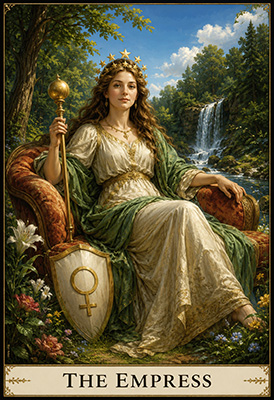
2 – Where does the greatest resistance occur? – The Empress reversed.

3 – What lesson needs to be learned at this point? – The Three of Swords

Now, if we were to just look at that sequence of cards as they lay on the table, it’s not a very positive reading.  The Tower reversed warns of serious destruction.  The Empress reversed is a loss of abundance.  The Three of Swords is heartbreak.

If we were just reading this predictively, we’d say, “Okay, this person is going to get hit by something heavy, he’ll lose his abundance, and it will break his heart.”  

When we look at it symbolically, in the context of the actual reading, though, we see a far different message.

The energy is flowing most freely where the person is consciously dismantling false foundations and lies in his own life (The Tower, reversed.)  He’s unable to receive abundance because he can’t open to it (Empress reversed.). AND the reason that he can’t open to it is because his heart, his trust, has been seriously wounded in the past (Three of Swords.)

REVERSING IT

Now, as I said, none of this is carved in stone and all of this can be changed.  So, what does this person need to do to flip the reading to something more positive?

We look directly at the last card – what lesson needs to be learned – for guidance.  This person needs to heal his heart.  When he heals his heart, that will enable him to trust the world and receive the abundance that he deserves.  When he heals his heart and learns to trust the world, then the false foundation of The Tower reversed becomes a real foundation that’s based on love.

If we were to put in purely energetic terms, this person has been deeply wounded emotionally, resulting in his heart chakra being blocked.  His heart chakra being blocked has kept him from being able to receive abundance.  His inability to receive abundance has caused him to question the basis for his existence, which is the falling Tower.

CAUSE AND EFFECT

When we use this approach, we cease to look at a Tarot reading as if it’s just a prediction and we start to look at it as a puzzle that can be solved.  We don’t just see that bad things may be about to happen – we see WHY they’re about to happen.

And if we can change the WHY, we can change the HOW.

There are about a kajillion different Tarot spreads out there, but most of them will have a, “lesson card.”  That card may be called:

– what needs to be learned;

– hidden forces;

– causal factors;

– opposing forces, etc.

That’s the card that we want to focus in on when we’re trying to reverse engineer a bad reading.  We don’t want to take an attitude of, “Well, shit happens.”  We want to figure out why it’s happening and then reverse those forces with an opposite energy.

In the example above, the client had a broken heart (AKA, a blocked heart chakra) and so the solution was to bring love into his heart.  A simple Metta meditation, done every day, began to cultivate more compassion, understanding, and love.

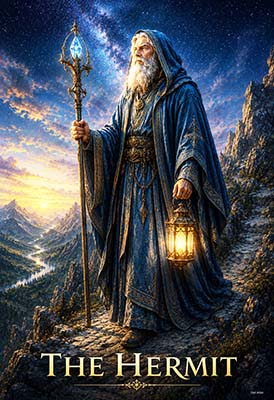
The, “lesson,” will probably be different with each client, of course.  It may be that their issue is addiction (The Devil) or a need for more solitude (The Hermit) or a lack of direction (Seven of Cups.)

Whatever the lesson card may be, that’s the keystone that holds the whole reading together.  Figure out what the client needs to learn, and you figure out what’s happening to her and why.  

Don’t just look at the effect – look at the cause.  And that will change the effect.

Tarot and the Root Chakra – Part Three – Finding Healing

Resources for Healing the Root Chakra – Part Three in a series on Tarot and the Root Chakra.

Root Chakra Meditation Poster – Available on Etsy.

This is the last of a three part series on Tarot and the root chakra.  In the first part, “10 Tarot Cards That May Indicate a Blocked Root Chakra (1st Chakra)” we looked at some of the cards that are signposts for root chakra issues.  In the second part, “Understanding the Root Chakra More Deeply: Safety, Survival, and the Foundations of Self,” we explored some of the devastating effects that problems with our root chakra can cause in our adult lives.  

Of course, for any problem, we should also lay out some solutions, so in this post I’ve compiled some of the resources that I’ve personally used and found to be dependable.  If you’re aware of other resources that you’d like to see listed here, please don’t hesitate to write and let me know.

BOOKS:

Energy Rules: Deflect Negative Vibrations and Own Your Energy by Alla Svirinskaya.  This was originally published under the name of, “Own Your Energy,” and is a wonderful explanation of the chakras and meridian system by a world renowned energy healer.  She also has some interesting thoughts about energy vampires and how to preserve your unique energy identity.

Chakras Made Easy: Seven Keys to Awakening and Healing the Energy Body (Made Easy series) by Anodea Judith. A complete guide to understanding, working with and developing your connection to your chakra system for healing and transformation.  I’ve had this one in my library for several years and it’s one of the best and most complete explanations of the chakra system.

Root Chakra: The Ultimate Guide to Opening, Balancing, and Healing Muladhara (The Seven Chakras) by Mari Silva – Understand the role of your root chakra and learn how to keep it healthy and happy.  Silva has written extensively about the chakra system and this is short, easy read on the root chakra.

Unblocked: A Revolutionary Approach to Tapping into Your Chakra Empowerment Energy to Reclaim Your Passion, Joy, and Confidence by Margaret Lynch Raniere and David Raniere – This is centered around using EFT tapping to unblock your chakras, but does a very deep dive into the lower four chakras.  She especially covers how a blocked root chakra can lead to a weak sense of personal identity and severely affect our ability to attract abundance.

VIDEOS

Unblock Your SuperPowers – Chakra One – by Margaret Lynch Raniere – This is a really nice series covering that lower four chakras, which is an explanation of her book.  About an hour long and packed with good ideas.

10 Minute Root Chakra Guided Meditation – by Great Meditations – Great Meditations has several chakra meditations up and they’re all good.  If you have trouble meditating (or even if you don’t) this is a wonderful resource for quick, powerful visualizations.

Grounding with the First Chakra – Part One – by Sonia Choquette – Sonia, of course, is one of the best spiritual teachers out there and this is a wonderful three part series with many tips for immediate grounding.

10 min Chakra Meditation Series~Note C~1st~Root Chakra with Tibetan Bowls~No Vocals – by Temple Sounds – A quick sound meditation designed to stimulate the root chakra through vibrations.

Balance Your Chakras Using Tapping – Chakra #1 – by Helen McConnell Tapping Into Higher Consciousness – EFT tapping to heal root chakra blocks.

Yoga Nidra for the Root Chakra – 30 Minute Yoga Nidra for the Root Chakra with Costa Rican Jungle Soundscape – by Ally Boothroyd, Sarovara Yoga – All of her yoga Nidra videos are incredibly healing and this one is specifically for root chakra.

“Just the Tarot,” by Dan Adair – available on Amazon

Understanding the Root Chakra More Deeply: Safety, Survival, and the Foundations of Self

Exploring the causes of root chakra issues, the second in a three part series on Tarot and the root chakra.

In my previous post, “10 Tarot Cards That May Indicate a Blocked Root Chakra,” we explored how Tarot can reveal energetic patterns related to fear, insecurity, survival struggles, and grounding issues. Those are all first chakra issues.

So now, let’s look at the Root Chakra in a little more depth.

The Root Chakra, or Muladhara, is located at the base of the spine and is traditionally associated with the color red. It serves as the energetic foundation of the chakra system, governing our sense of safety, survival, stability, and belonging.

Its symbol is a four-petaled lotus, often interpreted as representing the four directions—north, south, east, and west—symbolizing our connection to the physical world and our grounded presence within it.

Its seed syllable, or bija mantra, is LAM, a sound traditionally used in meditation to strengthen and activate Root Chakra energy.

When balanced, this chakra allows us to feel safe in our bodies and secure in the world. When blocked, however, it can create profound ripple effects throughout every other area of life.

CHAKRAS AND DEVELOPMENTAL PSYCHOLOGY

One of the most interesting things about chakra work is that it’s really a method of developmental psychology.  

What do we mean by that?  

Developmental psychology posits that there are certain, “goals,” that we have to achieve as we develop into complete human beings and achieving one goal helps us to achieve the next goal.  

To use a really simple example that’s become a cliche’, we have to learn how to walk before we run.  When we look at an infant, we can see that that’s literally true:  the child’s body has to develop the muscular strength  to walk before she can run.

In the same sense, the child has to learn to make sounds before he can make words and has to learn what words mean before he can make sentences.  Each developmental step leads into the next.

The important point here is that if we don’t fully achieve the first step, it makes it more difficult to achieve the next step.

While all of that is going on with our physical bodies, there’s a similar development happening with our energetic bodies, i.e. the chakra system. 

 Each chakra actually develops at a particular phase of our lives and – if it doesn’t develop right – that causes problems in the next chakra, which causes problems in the next chakra, and so on.

LOWER CHAKRA DEVELOPMENTAL STAGES

Chakra One (Root Chakra)

Womb to 12 months

Develops our sense of safety, security, and trust in life.

Chakra Two (Sacral Chakra)

6 months to 2 years

Develops personal identity, emotional experience, and selfhood.

Chakra Three (Solar Plexus Chakra)

18 months to 3.5 years

Develops ego strength, confidence, and our ability to project ourselves into the world.

Chakra Four (Heart Chakra)

3.5 years to 7 years

Develops our ability to form loving, healthy relationships.

Here’s how that looks in the lower chakras:

So, if the first chakra doesn’t develop correctly, then we don’t feel safe in the world.  

If we don’t feel safe in the world, then we’ll try to hide who we really are, so the second chakra won’t develop well.  

If we try to hide who we really are, then we’ll never have the confidence to project ourselves into the world in a healthy way, so the third chakra won’t develop.  

And if we don’t have a strong ego structure, then we can’t develop healthy relationships, so the fourth chakra becomes stunted.

Each step leads to the next, right?

FIRST CHAKRA ISSUES

In her powerful book: “Unblocked: A Revolutionary Approach to Tapping into Your Chakra Empowerment Energy to Reclaim Your Passion, Joy, and Confidence”, Margaret Lynch Raniere suggests that the Inner Child essentially lives within the Root Chakra.

This is a profound concept because it means the first chakra contains the earliest energetic blueprint for:

* Safety

* Security

* Trust

* Survival

* Worthiness of care

According to this model, Root Chakra healing often comes down to two essential early-life questions:

1. Did we feel safe?

2. Were our needs met?

The answers to these questions become deeply wired into both our nervous systems and our energetic systems.

“Just the Tarot,” by Dan Adair – Available on Amazon

DID WE FEEL SAFE?

That’s actually a fairly complex question.  If we were born into extremely abusive or dysfunctional families, it’s fairly easy to surmise that we didn’t feel safe.  If we were being slapped around or screamed at as a helpless infant, obviously we wouldn’t feel safe.  

Remember, though, that the first chakra forms – not just in our first year – but also in the womb.  During that period when we were gestating inside of our mother’s bodies, we were basically immersed in whatever chemicals and hormones SHE was feeling.  

And so the second part of this question is, “Did our mothers feel safe?”  

Because, for that period that we were in the womb, her nervous system was our nervous system.

For instance, if our family was going through a period of extreme stress during the time that we were gestating, we can reasonably conclude that our mothers were producing really high levels of cortisol and adrenaline in their bodies.  If they were depressed, they may have had chronically low levels of serotonin. And so did we.

Put another way, if our mothers didn’t feel safe, then we didn’t feel safe.  

Whatever they were feeling is the emotional set point that we had when we entered the world.  If they were extremely anxious, then we were extremely anxious.  If they were depressed, then we were depressed.

And we carry that forward into the rest of our lives.  If we felt unsafe as infants, we’ll be in chronic low level fight or flight reactions as adults.  We’ll be hyper-vigilant, always looking for the next threat.  

We may be ungrounded and unfocused because it’s literally painful to be in our own bodies.  

We may even be attracted to people who MAKE us feel unsafe as a way to validate our feelings.

WERE OUR NEEDS BEING MET?

As Raniere pointed out, we might think of the needs of an infant as a continuing series of irritations followed by being soothed.  

In a healthy family, that runs like this:

 Irritation:  I’m hungry.  Soothing:  someone fed me.

Irritation:  I’m cold.  Soothing:  someone covers me.

Irritation:  I’m scared.  Soothing: someone holds me.

That sets up a pattern in the nervous system whereby we feel that our needs will always be met.  And if our needs are met, then we feel safe and secure in the world.

Now, again, we may think of an infant’s needs not being met in terms of the extremes of child neglect.  If a child isn’t held and loved they can actually die from failure to thrive.  But not having your needs met can exist over a broad spectrum.

We may, for instance, have good, loving parents who simply have too many kids.  Raniere touches on this with the fact that she had 8 siblings who also needed to be taken care of by her parents.  

As we were talking about in the preceding section, we may have had a mother who was suffering from deep depression or a physical illness and simply couldn’t provide the care that we needed.

And as Gabor Mate’ has pointed out, it’s possible that our parents adopted a child-rearing philosophy where they thought it was actually good for the infant to ignore her needs.  If you just let the baby sit its crib and cry, they’ll learn patience, right?  

Whatever the reasons, if our needs weren’t being met as infants, that sets up in our first chakra as the expectation that our needs won’t be met as adults.  

We can drift into codependent relationships where we’re constantly over-giving in the hopes that our partners will at least meet some of our needs.  

We can intentionally seek out partners who aren’t capable of meeting our needs in order to validate our expectations.

Even worse, we may learn to ignore our needs and fail to take care of ourselves as adults.  The pattern we learned was, “Something is irritating me and I’m not going to be soothed, so I have to just live with it.”  Our levels of self-care, self-love, and self-compassion may be almost non-existent.

MOVING ON TO SOME SOLUTIONS

So in the first post in this series, we looked at some Tarot cards that may indicate that we have a blocked first chakra.  In this post, we looked at how that happens.  In the next post, I’ll gather together a list of really good resources to help us heal the root chakra and regain a sense of safety in our lives.

Because when we reclaim our foundation, we reclaim the possibility of building a life rooted not in fear—but in genuine security.

10 Tarot Cards That May Indicate a Blocked Root Chakra (1st Chakra)

Ten tarot cards that may indicate a blocked first chakra.

When we begin exploring Tarot through the lens of the chakra system, the 1st chakra, or Root Chakra (Muladhara), is one of the most essential places to start.

Located at the base of the spine, the Root Chakra governs our sense of safety, survival, grounding, and physical stability. It is the energetic foundation upon which all other aspects of self-expression are built. If this chakra is balanced, we tend to feel secure, present, connected to our bodies, and capable of navigating the world with confidence.

When blocked or imbalanced, however, Root Chakra issues may manifest as:

* Chronic fear or anxiety

* Survival struggles

* Money insecurity

* Health concerns

* Feeling unsafe or unsupported

* Living in constant fight-or-flight mode

* Restlessness or inability to settle

* Feeling ungrounded, “spacey,” or disconnected

* Difficulty trusting life

Energetically, this chakra develops during the earliest stage of life—from the womb through approximately 12 months of age—making it deeply connected to our primal sense of security and belonging.

In many ways, a blocked Root Chakra can make it difficult to fully express our gifts, creativity, and higher spiritual potential because part of us is still focused on basic safety.

In an upcoming post, we’ll take a deeper look at Root Chakra healing and explore some of the powerful teachings of Margaret Lynch Raniere in her groundbreaking book, Unblocked: A Revolutionary Approach to Tapping into Your Chakra Empowerment Energy to Reclaim Your Passion, Joy, and Confidence.

For now, let’s explore 10 Tarot cards that may suggest Root Chakra imbalance and what they could reveal.

1. The Moon

The Moon often points to deep subconscious fears, uncertainty, and emotional confusion.

When connected to Root Chakra issues, this card may indicate:

* Fear-based living

* Unclear survival instincts

* Anxiety rooted in early developmental experiences

* Difficulty distinguishing real threats from imagined ones

A blocked Root Chakra may leave us feeling as though the ground beneath us is unstable—very much the territory of The Moon.

2. Five of Pentacles

This is one of the clearest indicators of Root Chakra distress.

It may reflect:

* Financial hardship

* Scarcity mindset

* Fear of abandonment

* Physical illness

* Feeling unsupported

The Five of Pentacles often highlights core wounds around survival, security, and belonging.

3. Four of Pentacles (Reversed)

While upright, this card can show attempts to create security, reversed it may suggest:

* Fear-driven instability

* Money anxiety

* Difficulty holding onto resources

* Feeling unsafe or ungrounded

This reversal can point to instability in one’s foundational energy.

4. Nine of Swords

This card often represents chronic worry, sleeplessness, and nervous system overload.

From a Root Chakra perspective:

* Fight-or-flight patterns

* Hypervigilance

* Trauma-based fear

* Difficulty relaxing into safety

The body may remain in survival mode even when danger is absent.

5. The Tower

The Tower can represent major disruptions to safety structures.

Possible Root Chakra themes include:

* Sudden loss of stability

* Security crises

* Physical or emotional upheaval

* Fear of collapse

This card may indicate foundational wounds being activated.

6. The Devil

The Devil often reflects fear, material bondage, or trauma patterns.

In relation to the Root Chakra:

* Survival programming

* Scarcity beliefs

* Fear-based attachment

* Feeling trapped by insecurity

This card can reveal deeply ingrained patterns rooted in primal fear.

7. Seven of Cups

This card may not seem obvious, but it can indicate dissociation or lack of grounding.

Signs include:

* Spaciness

* Escapism

* Fantasy over practical reality

* Difficulty staying present

Blocked Root energy can sometimes lead people to disconnect from reality rather than inhabit it fully.

8. Knight of Swords

This card may signal overactive nervous system energy.

Potential indicators:

* Restlessness

* Hyperactivity

* Constant urgency

* Survival-driven action

Instead of grounded stability, there is perpetual motion and mental overstimulation.

9. Two of Pentacles

This card may suggest instability in balancing material concerns.

It can point toward:

* Financial juggling

* Overwhelm

* Lack of grounded routine

* Survival stress

Life may feel precarious rather than rooted.

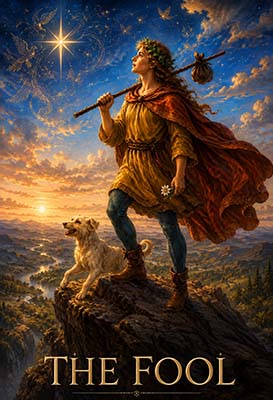
10. The Fool (Reversed)

While upright The Fool can symbolize trust, reversed it may reveal:

* Fear of stepping forward

* Lack of trust in life

* Instability

* Poor grounding

This may indicate that foundational fears are interfering with growth.

Final Thoughts

A blocked Root Chakra doesn’t necessarily mean failure—it often means there are foundational issues calling for healing.

Tarot can help illuminate these patterns by showing us where fear, scarcity, instability, or early survival programming may still be influencing our lives.

The good news? Awareness is the first step toward transformation.

By recognizing these Tarot indicators, we can begin addressing the deeper energetic roots of our struggles and move toward greater grounding, safety, and empowerment.

In our next post, we’ll dive further into Root Chakra healing practices and explore Margaret Lynch Raniere’s innovative work on chakra empowerment.

Because when the foundation is strong, everything else can rise.

Just the Tarot, by Dan Adair – Available on Amazon

THE TOWER CARD AND THE HOUSE OF GOD

Why was The Tower card once called, “The House of God?”

We all know the basic definition of The Tower card:  destruction.  When it appears in a reading, it tells us that massive change is on the way.  It can signal divorces, loss of employment, and many other difficult life-changing events.  I’ve described it in the past as having our lives blasted right down to the studs.

Depending on which deck you use, you may have heard different names for The Tower card.  Some call it The Lightning Struck Tower.  Some refer to it as The Blasted Tower.  Most of us just call it The Tower.  There’s an interesting twist, though, in the name that a much older Tarot deck applied to it.

THE HOUSE OF GOD

In the Marseilles Tarot deck, which is a style that emerged in France in the 1500s, The Tower is referred to as, “La Maison Dieu.”  Which means, “The House of God.”  

That’s  a very peculiar name for destruction, isn’t it?

What do we automatically think of when we hear the term, “House of God?”  A church, of course.  So is The Lightning Struck Tower actually a Lightning Struck Church?

Hmmm . . .

NOT GOD

Now, if the card had been labelled as, “The Finger of God,” or even just, “God,” it would have made more sense theologically.  

The Middle Ages were a hyper-religious time in European history and, of course, Christianity was the dominant religion.  As I’ve noted in previous posts, the God of the Old Testament acted very much like a bipolar alcoholic who was off his medications.  He was constantly rampaging around causing floods or blowing up cities or throwing people out of gardens because they ate an apple.  

If that was your concept of God, then, of course, you might associate him with complete destruction of your life.  “Uh, oh . . .  God’s pissed off at me for some reason, so he’s going to smash me like a bug.”

But the thing is, God is most notable in the Tarot by his absence.  True, there are devils and angels and popes and priestesses, but there isn’t one single card that shows a god.

So if it wasn’t the wrath of God that the Tarot was trying to depict, what was it?

IT’S NOT THE TOWER OF BABEL

The French occultist, Eliphas Levi, created a rabbit hole that a lot of subsequent scholars have jumped into.  For no particular reason, he looked at The Tower card and announced that it was a depiction of the Tower of Babel.

If you’re not familiar with that myth, here’s a brief recap:  at one point, all humans spoke the same language.  Since they were able to communicate, they decided to build a tower that would reach all the way to heaven.  That pissed God off and he cursed them so that they’d all speak different languages and couldn’t complete their construction project.

Now, nowhere in the Tower of Babel myth is there any indication that the tower was struck by lightning.  And nowhere in the Tower card, is there any indication that the people falling out of the tower are trying to talk to each other.  

In other words, the only thing that the Tower of Babel and The Tower card have in common is the word, “tower.”

One really unfortunate result of that confusion is that The Tower is now associated with hubris and arrogance.  Like the builders of the Tower of Babel, people who draw the card are supposedly being punished for their pride.  Again, there’s no evidence for that whatsoever.  You can be a perfectly good person and still have that Tower energy blow through your life.

THE INQUISITION

So, again . . . why call it The House of God?

We have to remember that the Tarot is basically a system for predicting the future, or what we loosely call fortune telling.  And the Bible – the operating manual for the Christian church – is very much against it.

“Let no one be found among you who sacrifices their son or daughter in the fire, who practices divination or sorcery, interprets omens, engages in witchcraft.”  – Book of Deuteronomy 18:10–12.

There are several other examples, but suffice it to say the church was against fortune telling and the punishment was death.

The Inquisition was reaching its peak during the exact same time frame that the Tarot first emerged.  Priests were merrily torturing, maiming, and burning anyone whom they considered to be practicing witchcraft.  

In a very real sense, then, the church itself – the House of God – could be viewed as complete destruction for both the Tarot and those who used it for divination.  

THE DEFINITION IS THE SAME

The basic definition of The Tower remains the same, of course.  It signifies an almost complete destruction of a person’s way of living or thinking.  Upright, it shows that the destruction is coming and reversed, it shows that it’s already happened.

It IS fascinating, though, to conjecture about what those early Tarot designers might have been trying to tell us.  Were they saying that the church itself was evil?

Were they warning other occultists to keep the true meanings of the cards concealed or risk persecution?

Were they warning against the ultimate effect of rigid belief systems?

Were they, perhaps, predicting the eventual destruction of the church system – the House of God?

We’ll never really know.  In an age when we’re once again seeing the rise of religious fundamentalism and intolerance, though, it might serve us well to ponder those very questions.

“Just the Tarot,” by Dan Adair – Available on Amazon