The Happiness Compass: What If Joy Is Trying to Tell You Something?

Exploring the idea that happiness is a compass that points us in the right direction.

We’ve all heard the old saying from the 1960s:

“If it feels good, do it.”

Unfortunately, our culture often teaches the exact opposite.

Work a job you hate because it’s practical.

Stay in a relationship that’s gone stale because it’s your duty.

Ignore your dreams because they’re unrealistic.

Somewhere along the way, many of us begin wearing our unhappiness like a badge of honor, as though misery proves we’re responsible adults.

But what if we’ve misunderstood happiness?

What if it isn’t a luxury?

What if it’s a compass?

Happiness Isn’t Random

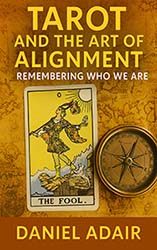
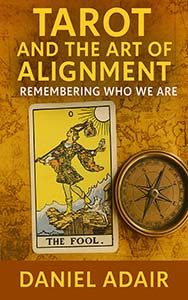
One of the central ideas in my book, Tarot and the Art of Alignment, is that happiness isn’t merely an emotion that comes and goes.

It’s directional.

It points.

When we’re moving toward the life we’re meant to live, something inside us quietly says:

“Yes…this is the way.”

Likewise, when we drift away from our authentic nature, life begins to feel heavy, flat, and strangely empty.

Our emotions aren’t simply fluctuations. They’re messages that point us in the right direction.

The Simplest Question

Perhaps the most radical question we can ask ourselves isn’t:

“How much money am I making?”

Or…

“What will other people think?”

It’s simply this:

Am I happy here?

If the honest answer is no, don’t treat it as a failure. Treat it as information.

Your inner compass is trying to get your attention.

Isn’t That Just Hedonism?

Whenever people talk about following happiness, someone inevitably objects:

“That sounds selfish.”

Or…

“Life isn’t supposed to be fun all the time.”

I agree. This isn’t about chasing pleasure.

There’s a profound difference between pleasure and fulfillment.

Pleasure asks:

“What feels good right now?”

Fulfillment asks:

“What kind of joy helps me become more fully myself?”

Real happiness isn’t the endless pursuit of dopamine. It’s the quiet satisfaction that comes from living in harmony with your deepest nature.

Happiness Is a Side Effect of Truth

One of the biggest misconceptions in our culture is that happiness comes from accumulating enough “stuff.”

More money.

A bigger house.

A nicer car.

More followers.

Those things may be enjoyable. But they’re not necessarily meaningful.

Real happiness comes from something much deeper.

It appears when we’re living with integrity.

When our actions reflect who we really are.

When we’re doing the work we came here to do—even if that work is difficult.

Happiness isn’t the goal.

It’s the glow that appears when we’re moving in the right direction.

Entering the Flow

Psychologists call it flow.

The Taoists simply speak of being in harmony with the Tao.

Athletes call it being in the zone.

Whatever name we give it, most of us have experienced those rare moments when intention and action become one.  When life seems to go perfectly.

Time disappears.

Energy rises.

Life feels strangely enchanted.

Synchronicities seem to increase.

Everything flows naturally.

To me, this is the Happiness Compass operating at full strength. The needle of the compass isn’t spinning in circles anymore – it’s pointing solidly in one direction.

Why We Lose Our Way

The tragedy is that most of us weren’t taught to trust this inner guidance.

We were taught to obey.

To fit in. To be practical. To put duty ahead of authenticity.

Eventually the compass is still there…

But it’s buried beneath expectations, obligations, financial worries, and the opinions of other people.

Eventually, we may not even remember what genuine happiness feels like, because we’ve forgotten who we truly are.

How the Tarot Can Help

This is one of the reasons I love working with the Tarot.

The cards don’t tell us who we’re supposed to become. They remind us who we already are. They gently reveal where we’ve ignored our intuition, overridden our happiness, or wandered away from our authentic path.

The cards are about helping us realign with ourselves and answer that basic question:  Am I happy? If the answer is no, they tell us why.

Perhaps happiness isn’t something we have to chase.  Perhaps it’s simply something that we need to remember.

Adapted from Chapter Six of my new book, Tarot and the Art of Alignment: Using the Cards to Remember Who You Are, which explores how the Tarot can become a practical compass for discovering your authentic path and living with greater joy, purpose, and synchronicity.


Now available – Tarot Meditation Kits

What If Your Destiny Isn’t to Become Rich?

Exploring the idea that we’re not just here to get rich.

Spend a few minutes browsing YouTube or social media and you’ll quickly discover that almost everyone seems to know your destiny.

Apparently, you’re supposed to become wealthy.

Manifest abundance.

Drive the right car.

Live in the right house.

Travel the world.

And, of course, achieve financial freedom.

There’s nothing inherently wrong with any of those goals. The question is whether they’re everyone’s destiny.

I’m not convinced they are.

The Feeling That Something Is Missing

Most of us have experienced a quiet feeling that we’re here for some larger purpose.

Even when life is going reasonably well, there can be a sense that something remains unfinished.

It’s as though we’re being gently called toward a life that is more authentic, more meaningful, and somehow more fully our own.

But what exactly is that calling? Some people say it’s destiny.

Two Ways of Looking at Destiny

Over the years, I’ve noticed that most spiritual teachings seem to fall into one of two broad models.

The first is what I call the Earth School Model.

According to this view, we reincarnate again and again in order to learn lessons, overcome limitations, and gradually evolve spiritually.

Life is a classroom.

Every challenge is part of the curriculum.

The second is what I call the Actualization Model.

Instead of asking, “What lessons am I here to learn?” it asks:

“Who am I here to become?”

This idea reminds me of psychologist Abraham Maslow’s famous hierarchy of needs.

At the very top of his pyramid wasn’t wealth.

It wasn’t fame.

It wasn’t status.

It was self-actualization—becoming the fullest expression of your authentic self.

I find that idea deeply compelling.

The Prosperity Trap

Somewhere during the twentieth century, something interesting happened.

The New Thought movement, with its emphasis on affirmations, visualization, and the creative power of the mind, gradually merged with American ideas about success and capitalism.

Before long, spiritual growth and financial success became almost interchangeable.

Manifestation came to mean one thing:

More money.

Now, don’t misunderstand me.

There’s absolutely nothing wrong with financial security.

Most of us would welcome a little more of it.

But if we believe that every soul reincarnated primarily to become rich, we end up with a rather curious picture of human existence. Can we really imagine that we’ve come back again and again because we should all be more like Elon Musk?

Imagine a shepherd whose deepest fulfillment comes from tending goats in the mountains.

Or a teacher whose greatest joy is helping children learn to read.

Or an artist who creates beauty that quietly changes people’s lives.

Would we really say that these people have somehow missed their destiny because they didn’t become millionaires?

I don’t think so.

Their success may have very little to do with the size of their bank account.

Listening for Your Own Call

One of the central ideas in my book, Tarot and the Art of Alignment, is that destiny isn’t something someone else can define for you.

It isn’t found in a bestselling seminar or a motivational slogan.

It arises from discovering your own authentic nature.

For one person, that path may indeed involve building a successful business.

For another, it may involve raising a family, creating art, caring for others, teaching, healing, or living a quiet life close to nature.

The Tarot doesn’t ask us to pursue someone else’s dream.

It asks us to discover our own.

Perhaps the real purpose of life isn’t to become rich.

Perhaps it’s to become ourselves.

And in the end, that may be the greatest success of all.

Now available – Tarot Meditation Kits

Finding Ourselves on the Map

Using the Tarot to Predict the Present

Why One-Size-Fits-All Spirituality Doesn’t Work

If you’ve spent any time in the self-help world, you’ve probably noticed a recurring theme:

Someone discovers a technique that changes their life.

Then they write a book, launch a podcast, create an online course, and explain why everyone else should do exactly the same thing.

The assumption is simple:

If it worked for me, it should work for everyone.

Unfortunately, human beings don’t work that way.

When it comes to following a spiritual path, one size does not fit all.

The Jewel Hidden Beneath the Rock

Buddhist teachers sometimes use a beautiful metaphor.

They tell us that each of us possesses a precious jewel hidden beneath a layer of gray rock.

That jewel is our true nature.

Our wisdom.

Our compassion.

Our spiritual essence.

The goal of the spiritual path isn’t to create the jewel. It’s already there.

The goal is to uncover it.

This is an important distinction.

Many of us approach spirituality as though we’re trying to become something we are not. We’re trying to become enlightened, worthy, lovable, wise, or whole. But what if our deeper nature already possesses those qualities?

What if awakening isn’t something that gets added to us?

What if it’s something that gets revealed?

Some Rocks Are Thicker Than Others

Of course, if life were that simple, we’d all be enlightened by Tuesday.

The challenge is that the jewel is often buried beneath layers of conditioning.

Those layers can include:

  • Fear
  • Trauma
  • Limiting beliefs
  • Cultural conditioning
  • Prejudice
  • Old wounds
  • False ideas about who we are

Some people arrive carrying a little rock.

Others arrive carrying a boulder.

But we’re all engaged in the same process. We’re all uncovering the same jewel.

Don’t Compare Your Journey

One of my favorite passages from the Desiderata reminds us:

“If you compare yourself with others, you may become vain or bitter, for always there will be greater and lesser persons than yourself.”

That’s particularly true on the spiritual path.

Some people seem naturally compassionate. Some seem deeply intuitive. Others appear to have spent decades doing inner work.

Meanwhile, some of us are just figuring out which end of the shovel to hold.

And that’s okay.

The important thing is to remember that we’re all on the same continuum.

Some people have uncovered more of the jewel.

Some are just beginning.

Neither position makes anyone better or worse.

The Spiritual GPS

This brings me to one of my favorite metaphors, borrowed from Mike Dooley.

He compares the spiritual journey to a GPS.

It’s a wonderful image.

Suppose you want to drive from Phoenix to Los Angeles.

The GPS can absolutely help you get there.

But first it needs one crucial piece of information:

Where are you now?

Without that information, the GPS is useless. It cannot guide you from Phoenix to Los Angeles if it doesn’t know you’re in Phoenix.

The same thing is true spiritually.

Before we can determine where we’re going, we need to understand where we are.

And that’s precisely where many spiritual systems fall apart.

They offer directions without first helping us identify our current location.

The Real Genius of the Tarot

Most people think the Tarot’s greatest strength is predicting the future.

I disagree.

I believe the real genius of the Tarot lies in its ability to describe the present.

A good Tarot reading reveals:

  • Where you are right now
  • What forces are influencing you
  • What patterns are helping you
  • What patterns are holding you back
  • What lessons are trying to emerge

In other words, it functions as a spiritual GPS.

Before it tells you where you’re headed, it tells you where you’re standing.

And that’s incredibly valuable information.

Because once you know where you are, the next step becomes much easier to see.

The Paradox of Destiny

One of the central ideas in Tarot and the Art of Alignment is that destiny is often misunderstood.

Most people imagine destiny as something waiting for them somewhere in the future.

A distant goal.

A future achievement.

A place they haven’t reached yet.

But what if destiny isn’t waiting out there somewhere?

What if it’s already here?

What if the path is beneath your feet right now?

The future emerges from the interaction between the present and the past.

Every choice.

Every belief.

Every action.

Every moment.

The Tarot helps us see those forces at work.

It shows us how the energies of the present moment are combining to create the next moment.

In that sense, the cards don’t simply predict the future.

They reveal the path.

Finding Your Own Way

This is why I don’t believe there is a single spiritual method that works for everyone.

Different people need different tools.

Different lessons.

Different experiences.

The first step is not finding the perfect technique.

The first step is discovering where you are.

Once you know that, the path forward becomes much easier to navigate.

Like any GPS, the Tarot begins with a simple question:

“You are here.”

And from that point, the journey can begin.

Now available – Tarot Meditation Kits

Navigating the Ocean of Self-Help

Using the Tarot to become your own guru.

Why We Don’t Need Another Guru

The Buddha once taught that certain conditions are necessary for enlightenment:

  • Being born human
  • The appearance of a Buddha or enlightened teacher
  • A way for those teachings to reach human beings
  • People capable of understanding and applying the teachings

Today, I’d like to focus on that third point: How do the teachings reach us?

And perhaps more importantly:

How do we know which teachings are right for us?

From Ancient Villages to Information Overload

In the Buddha’s day, getting a spiritual message out into the world was no small task.

There were no emails, podcasts, YouTube channels, online courses, or social media platforms.

The Buddha spent roughly forty-five years walking from village to village, teaching anyone who was willing to listen. Basically, walking up to strangers and saying, “Hey, I’ve got an idea . . .”

Imagine that.

No marketing department. No sales funnel. No premium membership package.

Just a teacher sharing what he had discovered.

Fast forward twenty-five centuries and we’ve arrived at the opposite problem.

When I wake up in the morning, my inbox is usually full of messages promising to transform my life, align my energy, unlock hidden potential, activate forgotten abilities, and teach me the secret to happiness, wealth, abundance, success, enlightenment, or all of the above.

The challenge is no longer finding information.

The challenge is sorting through it.

Never before in human history have so many spiritual teachings, philosophies, techniques, and self-help systems been available to so many people.

And yet many of us remain confused about what actually works.

The Billion-Dollar Search for Happiness

The self-help industry generates tens of billions of dollars each year.

That’s a big chunk of enlightenment.

Most programs follow a familiar pattern:

  • I have achieved success.
  • You have not.
  • I have a special technique, secret, or system.
  • Pay me, and I’ll teach it to you.

To be fair, some of these teachers are sincere and genuinely helpful.

Many people have benefited from books, courses, seminars, and retreats.

But there is also a tendency to assume that one technique should work for everyone.

What if that assumption is wrong? What if there is no universal formula? What if different people require different paths?

Satisfaction Not Guaranteed

One thing I’ve noticed over the years is that self-help programs rarely come with guarantees.

Suppose someone is struggling financially and spends thousands of dollars attending an exclusive retreat in Costa Rica. They spend a week sipping organic hot chocolate, munching down tofu rice cakes, and opening their heart chakra.

At the end of the experience, they may feel inspired, motivated, and hopeful. But what if nothing really changed, other than they have a better tan and a lighter wallet?

What if their life remains exactly the same six months later?

The explanation is often that they didn’t practice enough, believe enough, surrender enough, visualize enough, or raise their vibration enough.

In other words, if MY method doesn’t work, it’s YOUR fault.

Let’s face it: if one teacher could make everyone happy, rich and successful, we’d all be going to that teacher and we’d all be rich.

Instead, the emails continue to pile up in our in-boxes.

Where the Tarot Is Different

This is where my book, Tarot and the Art of Alignment, takes a different arapproach.

The central idea is surprisingly simple:

The wisdom we seek is not somewhere outside of us.

It is already within us.

The challenge is learning how to access it.

The Tarot provides a remarkably effective way to do exactly that.

Rather than telling us what to think, the cards help us listen.

Rather than asking us to surrender our authority to a teacher, they encourage us to develop trust in our own inner knowing.

Rather than offering one answer for everyone, they reveal the unique lessons, challenges, and opportunities present in each individual’s life.

In this model, the Tarot is not a fortune-telling device.

It is a mirror.

A guide.

A conversation with the deeper parts of ourselves.

Your Own Inner Teacher

One of the things I appreciate most about the Tarot is its simplicity.

A Tarot deck costs roughly twenty-five to thirty bucks.

Once you have it, the conversation can begin.

There are no monthly subscription fees. No expensive retreats. No advanced certification programs. No endless upselling.

Just you, the cards, and the wisdom waiting beneath the noise of everyday life.

The goal is not to find another guru.

The goal is to discover the teacher that has been quietly waiting within you all along.

And in my experience, the Tarot is one of the most powerful keys to that door.

Why Your Visualizations Aren’t Working (And How the Tarot Can Help)

Using the Tarot to boost your visualizations and manifestations.

One of the strangest things about visualization and manifestation is that almost everyone who practices it has seen it work at least once.

A check arrives unexpectedly in the mail.

A new opportunity appears out of nowhere.

A problem that seemed impossible to solve suddenly resolves itself.

Most of us who have explored manifestation have had moments like that. The experience is so striking that we walk away convinced that there really is something to it.

The problem is that it often seems wildly inconsistent.

It’s as if we were handed a magic wand that only works on Tuesdays.

Sometimes it works beautifully.

Sometimes nothing happens at all.

So what’s going on?

Now available – Tarot Meditation Kits

THE PROBLEM MAY NOT BE THE UNIVERSE

Most manifestation teachings assume that if something isn’t showing up in our lives, we simply aren’t visualizing hard enough, affirming often enough, or maintaining a high enough vibration.

Sometimes that’s true.

But sometimes the problem lies somewhere else entirely.

Sometimes we’re trying to manifest something that we don’t actually want.

That sounds strange, but think about it for a moment.

We’re constantly being told what we should want.

More money.

A bigger house.

A more prestigious career.

A newer car.

A better relationship.

Society hands us a ready-made list of desires and then encourages us to spend our lives pursuing them.

But what if those desires aren’t really ours?

Suppose your deepest dream is to live a quiet, peaceful life creating art, writing books, tending a garden, or herding goats in the mountains.

Trying to manifest a million-dollar corporate empire might actually move you farther away from what you truly want.

One part of you is saying:

“I want more money.”

Another part is saying:

“I want simplicity, freedom, and peace.”

The messages conflict.

And when they conflict, the energy behind them weakens.

THE HIDDEN VOICE OF THE SUBCONSCIOUS

There’s another reason manifestation sometimes fails.

Many of our deepest beliefs operate below conscious awareness.

We may consciously desire wealth while secretly believing that wealthy people are selfish or corrupt. So why would we want to be one?

We may desire a loving relationship while carrying a deep conviction that we are unworthy of love.

We may want success while simultaneously fearing attention, criticism, or failure.

In those situations, our conscious intentions and our subconscious beliefs are pulling in opposite directions.

No amount of affirmations can completely overcome a belief that remains hidden and unexamined.

THE TEN PERCENT PRINCIPLE

One idea that has always fascinated me is what I call the Ten Percent Principle.

Rather than focusing on the times manifestation didn’t work, focus on the times it did.

If your visualization works only ten percent of the time, that’s still astonishing.

That’s magic.

That’s making something appear out of nothing, simply using the power of your mind and heart.

So how do we increase that success rate from 10% to 50%?  How do we start to live the magic that we know is there?

HOW THE TAROT CAN HELP

This is where the Tarot becomes so valuable.

Most manifestation techniques begin with a conscious desire.

“I want more money.”

“I want a new relationship.”

“I want a better job.”

The Tarot approaches the problem from the opposite direction.

Because Tarot communicates through symbols, images, and archetypes, it speaks directly to the subconscious mind. It bypasses many of the stories, assumptions, and social programming that shape our everyday thinking.

The cards often reveal things we weren’t expecting to hear.

Sometimes they show us hidden fears.

Sometimes they reveal limiting beliefs.

And sometimes they show us that the thing we’re trying to manifest isn’t what we really want at all.

The Tarot doesn’t simply ask:

“What do you want?”

It asks:

“What does your soul want?”

THE SOUL SPREAD

One of the central ideas in my new book, Tarot and the Art of Alignment, is a reading method I call the Soul Spread.

Rather than focusing on future events, the Soul Spread is designed to uncover your deeper purpose, natural gifts, hidden challenges, and the path that brings the greatest sense of meaning and fulfillment.

In other words, it helps answer a question that most manifestation systems never ask:

“Am I trying to create a life that is actually mine?”

When our conscious goals and our deeper purpose come into alignment, something remarkable often happens.

The struggle begins to ease.

Synchronicities increase.

Opportunities appear.

The path feels more natural.

It’s as though life itself begins cooperating with us.

Perhaps the secret isn’t learning how to force the universe to give us what we want.

Perhaps the secret is discovering what we truly want in the first place.

And that’s a journey the Tarot is uniquely qualified to help us make.

Tarot and the Art of Alignment is now available as both a Kindle edition and a downloadable PDF. If you’ve ever wondered why your visualizations seem inconsistent—or how to uncover the deeper desires beneath your conscious goals—the book offers a practical framework for using the Tarot as a tool for alignment, purpose, and personal transformation.

Tarot and the Two Kinds of Desire:  Filling the Hole and Expressing the Soul

Exploring the sources of true happiness.

One of the major themes in my new book, Tarot and the Art of Alignment, is how to use the Tarot to create greater happiness and satisfaction in our lives.

But that raises an important question:

What do we really mean by happiness?

Most of us assume that all desires are the same.

We want more money.

We want a better relationship.

We want a bigger house.

We want status, recognition, and success.

But what if there are actually two very different kinds of desire?

And what if one of them leads to lasting fulfillment while the other keeps us trapped in an endless cycle of wanting?

Are We Really Happy?

Studies about happiness are fascinating because they sometimes seem to completely contradict one another.

On the one hand, surveys consistently show that most Americans report being satisfied with their lives. According to a 2024 study conducted by the Centers for Disease Control, the overwhelming majority of Americans describe themselves as satisfied or very satisfied.

That’s kind of astounding, isn’t it?

If that were the whole story, we might expect to step outside and find people skipping down the street singing, “Zip-a-Dee-Doo-Dah” and celebrating the sheer joy of being alive.

Yet another study found that 61% of Americans experience loneliness on a regular basis, with a substantial number reporting that they feel isolated much of the time.

So which is it?

Are we happy?

Or are we lonely?

Are our desires being fulfilled?

The answer, I believe, lies in understanding that there are two very different kinds of desire operating within us.

Desire #1: Filling the Hole

Wharton School senior fellow Matthew Killingsworth conducted research suggesting that money does, in fact, increase happiness.

At first glance, that seems to confirm the modern assumption that more money equals a better life.

And to a certain extent, that’s true. But . . . buried in that study is the fact that it takes a LOT of money to be happy all of the time. Billionaires are very happy campers – the rest of us, not so much. The statistics show that you have to be making at least $175,500 per year to crack into that money = happiness paradigm.

Over half of the people in the United States make less than $75,000 a year. So, quite literally, money is NOT going to buy them happiness.

The problem is that most of us unconsciously continue to believe that it will.

We begin to believe that happiness is always just one purchase away.

Maybe a new car will make us happy.

Maybe a larger house will make us happy.

Maybe the latest phone, computer, or gadget will finally make us feel successful and secure.

Sometimes these things do make us happy—for a little while. Then the novelty wears off. The new car becomes the old car. The new computer crashes. The bigger house develops problems.

And before long we’re looking for the next thing that will finally make us feel complete.

At its core, this desire is driven by a feeling of lack.

It whispers:

“You don’t have enough.”

And because you don’t have enough:

“You aren’t enough.”

This kind of desire attempts to fill an inner emptiness with outer possessions.

The problem is that the hole never stays filled for very long.

Desire #2: Expressing the Soul

There is a second kind of desire that stands in stark contrast to the first.

Rather than trying to fill an inner void, it seeks to express something that already exists within us.

Carl Jung called it individuation.

Abraham Maslow called it self-actualization.

The Buddhists speak of dharma.

Most people simply call it purpose or destiny.

This desire isn’t asking: “What can I get?” It’s asking: “Who am I meant to become?”

At some level, most of us sense that we are here for a reason. We feel drawn toward certain experiences, certain talents, certain ways of contributing to the world.

For one person, that calling may involve art. For another, healing. For another, teaching, parenting, writing, building, serving, or leading.

The details differ, but the underlying experience is the same. Something inside us wants to become fully expressed.

The tragedy is that many of us lose touch with that calling.

From childhood onward, we’re taught to fit in, conform, and follow the established path. Schools, institutions, social expectations, and sometimes even our own families encourage us to become what is expected rather than what is authentic.

Over time, we begin to forget the dreams that we felt so vividly as children. We lose sight of the deeper reason we came here. And then we wonder why life feels empty.

We don’t have meaning in our lives and so life feels meaning-less.

Alignment = Happiness

This second desire contains the secret of lasting happiness.

The more closely we align with our authentic purpose, the more alive we feel. The farther we drift from it, the more restless, dissatisfied, and disconnected we become.

This doesn’t mean life suddenly becomes easy (although it frequently does.) It means life becomes meaningful.

And meaning has a remarkable ability to sustain us even through difficulty.

This is where Tarot enters the picture.

Rather than using the cards exclusively to predict future events, we can use them as a mirror that reflects our deeper purpose.

We can ask:

* What am I here to learn?

* What gifts am I meant to develop?

* Where am I out of alignment?

* What is trying to emerge through me?

In Tarot and the Art of Alignment, I introduce a process called the Soul Reading, designed to help uncover those answers.

Once we begin to understand who we are and why we’re here, the Tarot becomes more than a tool for prediction.

It becomes a tool for alignment.

And alignment, more than money, possessions, status, or recognition, is where lasting happiness is found.

Tarot and the Art of Alignment: A New Way to Read the Cards

For years I’ve been fascinated by a simple question: What if Tarot isn’t primarily about predicting the future? That question eventually grew into my new book, Tarot and the Art of Alignment.

For years, I’ve been fascinated by a simple question:

What if Tarot isn’t primarily about predicting the future?

What if the cards are actually showing us where we’re aligned—or misaligned—with our deeper path?

That question eventually grew into my new book, Tarot and the Art of Alignment.

Of course, behind that question lies another one that human beings have been asking for thousands of years:

Why am I here?

We phrase it in many different ways:

* What is my purpose in life?

* Do I have some sort of destiny?

* Why did I incarnate in this place and time?

* Or, on particularly difficult days: What in the HELL is all of this about?

Philosophers, psychologists, and spiritual teachers have all recognized that human beings have a deep need for meaning in their lives. It isn’t enough to simply wake up, go to work, buy things, pursue pleasure, and repeat the process until our inevitable deaths.

We long for something more.

We need a sense of purpose. We need to feel that our lives matter, that our struggles and triumphs are part of a larger story. Without that sense of meaning, life can begin to feel exactly what the word suggests: meaningless.

Over time, it began to dawn on me that the answer to those questions might be found in the Tarot.

Most of us use the cards to ask questions about the future:

* What is my week going to be like?

* Should I take this job?

* Is this relationship headed somewhere meaningful?

* Am I making the right decision?

When we stop and think about it, that’s actually a remarkable process.

Whenever we lay out the cards, we operate from the assumption that we’re tapping into a source of wisdom greater than our ordinary awareness. Whether we call that source Spirit, the Universe, God/dess, Higher Self, Angels, Guides, or simply the deeper unconscious mind, we trust that the cards can reveal information we don’t consciously possess.

And if that greater source can offer guidance about a career decision, a relationship, or whether we’re headed in the right direction, then surely it can help us answer the most important question of all:

Why am I here?

That realization led me to begin experimenting with a different way of reading the cards.

Instead of asking the Tarot to predict what might happen next, I began asking it to reveal who I am, why I’m here, and whether my life is aligned with my deeper purpose.

I also began using the cards as an ongoing check-in system—a way of determining whether I was moving toward greater alignment or drifting away from it.

This book is the result.

Rather than teaching hundreds of card meanings to memorize, the book explores a different approach. It shows how Tarot can become a mirror that helps us recognize alignment, resistance, intuition, synchronicity, and purpose.

At its heart, Tarot and the Art of Alignment is about learning to see the cards as a conversation with the deeper self.

The Tarot has always been rich with symbols, archetypes, and spiritual lessons. Yet many readers become trapped in the endless task of memorizing meanings and predicting outcomes. This book shifts the focus from fortune-telling to self-discovery. The question is no longer, “What will happen to me?” but rather, “Who am I becoming?”

Through the practices and spreads presented in the book, you’ll learn how to identify the beliefs that keep you stuck, reconnect with your intuition, recognize meaningful patterns and synchronicities, and uncover the deeper purpose that has been quietly calling to you all along.

At the heart of the book is a model I call The Tarot Alignment Process.

The first step is Remembering the Call. This is the moment when we become conscious of our deep hunger for meaning and purpose. We stop drifting through life and begin to recognize that something within us is calling for a more authentic way of living.

The second step is Unveiling Conditioning. Here we examine the beliefs, fears, expectations, and assumptions that have caused us to forget who we really are. We explore the ways that family, culture, education, and society have shaped our identity—and often obscured our deeper truth.

The third step is Reclaiming Inner Knowing. Through Tarot and self-reflection, we begin to trust our own wisdom again. We learn to listen to the quiet voice within that knows why we came into this life and what we are here to contribute.

The fourth step is Entering Synchronicity and Flow. We discover how our emotions, life circumstances, and meaningful coincidences can serve as guides, helping us recognize when we are moving in harmony with our deeper purpose.

And finally, the fifth step is Embodying Destiny. Rather than seeking occasional moments of inspiration, we learn how to stay aligned over time, using the Tarot as an ongoing tool for guidance, self-correction, and growth.

Looking back, I realize that I’ve spent years exploring these themes through Tarot readings, blog posts, synchronicity, personal experience, and spiritual study. This book is my attempt to gather all of those threads together into a single framework.

Over the next several weeks, I’ll be exploring many of these ideas here on the blog, including alignment and resistance, synchronicity, the Soul Spread, and why difficult Tarot readings may not be bad news at all.

If those topics interest you, I hope you’ll join me for the journey.

Tarot and the Art of Alignment

The book is now available as an Amazon Kindle edition:

Tarot and the Art of Alignment – Kindle Edition

Or as a downloadable PDF edition:

Tarot and the Art of Alignment – Downloadable PDF Edition

Remember:

Tarot is not about predicting the future.

It’s about aligning with your true path.

THE TOWER CARD AND THE HOUSE OF GOD

Why was The Tower card once called, “The House of God?”

We all know the basic definition of The Tower card:  destruction.  When it appears in a reading, it tells us that massive change is on the way.  It can signal divorces, loss of employment, and many other difficult life-changing events.  I’ve described it in the past as having our lives blasted right down to the studs.

Depending on which deck you use, you may have heard different names for The Tower card.  Some call it The Lightning Struck Tower.  Some refer to it as The Blasted Tower.  Most of us just call it The Tower.  There’s an interesting twist, though, in the name that a much older Tarot deck applied to it.

THE HOUSE OF GOD

In the Marseilles Tarot deck, which is a style that emerged in France in the 1500s, The Tower is referred to as, “La Maison Dieu.”  Which means, “The House of God.”  

That’s  a very peculiar name for destruction, isn’t it?

What do we automatically think of when we hear the term, “House of God?”  A church, of course.  So is The Lightning Struck Tower actually a Lightning Struck Church?

Hmmm . . .

NOT GOD

Now, if the card had been labelled as, “The Finger of God,” or even just, “God,” it would have made more sense theologically.  

The Middle Ages were a hyper-religious time in European history and, of course, Christianity was the dominant religion.  As I’ve noted in previous posts, the God of the Old Testament acted very much like a bipolar alcoholic who was off his medications.  He was constantly rampaging around causing floods or blowing up cities or throwing people out of gardens because they ate an apple.  

If that was your concept of God, then, of course, you might associate him with complete destruction of your life.  “Uh, oh . . .  God’s pissed off at me for some reason, so he’s going to smash me like a bug.”

But the thing is, God is most notable in the Tarot by his absence.  True, there are devils and angels and popes and priestesses, but there isn’t one single card that shows a god.

So if it wasn’t the wrath of God that the Tarot was trying to depict, what was it?

IT’S NOT THE TOWER OF BABEL

The French occultist, Eliphas Levi, created a rabbit hole that a lot of subsequent scholars have jumped into.  For no particular reason, he looked at The Tower card and announced that it was a depiction of the Tower of Babel.

If you’re not familiar with that myth, here’s a brief recap:  at one point, all humans spoke the same language.  Since they were able to communicate, they decided to build a tower that would reach all the way to heaven.  That pissed God off and he cursed them so that they’d all speak different languages and couldn’t complete their construction project.

Now, nowhere in the Tower of Babel myth is there any indication that the tower was struck by lightning.  And nowhere in the Tower card, is there any indication that the people falling out of the tower are trying to talk to each other.  

In other words, the only thing that the Tower of Babel and The Tower card have in common is the word, “tower.”

One really unfortunate result of that confusion is that The Tower is now associated with hubris and arrogance.  Like the builders of the Tower of Babel, people who draw the card are supposedly being punished for their pride.  Again, there’s no evidence for that whatsoever.  You can be a perfectly good person and still have that Tower energy blow through your life.

THE INQUISITION

So, again . . . why call it The House of God?

We have to remember that the Tarot is basically a system for predicting the future, or what we loosely call fortune telling.  And the Bible – the operating manual for the Christian church – is very much against it.

“Let no one be found among you who sacrifices their son or daughter in the fire, who practices divination or sorcery, interprets omens, engages in witchcraft.”  – Book of Deuteronomy 18:10–12.

There are several other examples, but suffice it to say the church was against fortune telling and the punishment was death.

The Inquisition was reaching its peak during the exact same time frame that the Tarot first emerged.  Priests were merrily torturing, maiming, and burning anyone whom they considered to be practicing witchcraft.  

In a very real sense, then, the church itself – the House of God – could be viewed as complete destruction for both the Tarot and those who used it for divination.  

THE DEFINITION IS THE SAME

The basic definition of The Tower remains the same, of course.  It signifies an almost complete destruction of a person’s way of living or thinking.  Upright, it shows that the destruction is coming and reversed, it shows that it’s already happened.

It IS fascinating, though, to conjecture about what those early Tarot designers might have been trying to tell us.  Were they saying that the church itself was evil?

Were they warning other occultists to keep the true meanings of the cards concealed or risk persecution?

Were they warning against the ultimate effect of rigid belief systems?

Were they, perhaps, predicting the eventual destruction of the church system – the House of God?

We’ll never really know.  In an age when we’re once again seeing the rise of religious fundamentalism and intolerance, though, it might serve us well to ponder those very questions.

“Just the Tarot,” by Dan Adair – Available on Amazon

The Empress and the Courage to Be “Unproductive”

The Empress Archetype and Relaxation as a Way to Nurture Creativity.

In my Empress affirmation poster, I paired her image with the words:

Nurture Creativity

This may be one of the most misunderstood instructions in the entire Tarot.

  Empress Affirmation Poster – Available on Etsy

Because most of us have been trained to believe that creativity comes from effort. From discipline. From pushing harder. From sitting at the desk and refusing to get up until something happens.

That approach belongs to The Emperor.

The Empress operates differently.

She does not force growth.

She allows it.

She creates the conditions in which growth becomes inevitable.

Creativity Cannot Be Forced

Every creative person eventually encounters this paradox.

The harder you try to force creativity, the more it retreats.

You sit at your desk, determined to produce something brilliant. Hours pass. Nothing happens. Your mind feels like dry soil.

And then, days later—while taking a walk, washing dishes, or doing something completely unrelated—an idea appears effortlessly.

It arrives whole.

Not constructed, but received.

Albert Einstein understood this phenomenon. When asked how he discovered the theory of relativity, he didn’t describe grinding intellectual labor. He said simply:

“It just dropped in while I was playing the piano.”

He wasn’t forcing the insight.

He was allowing it.

This is Empress energy.

The Forgotten Value of Leisure

The philosopher Josef Pieper wrote a remarkable book titled Leisure as the Basis of Culture. In it, he argues that leisure is not the absence of productivity, but its foundation.

Leisure, in its true sense, is not laziness in the modern, pejorative sense. It is a state of receptive openness.

It is the willingness to stop forcing.

Pieper observed that culture itself—art, philosophy, music, science—arises not from frantic effort, but from spaces of inward stillness.

When we allow ourselves to be idle, something deeper begins to move.

The soil replenishes itself.

Modern society often treats leisure as wasteful. We are taught that our worth is tied to constant activity. But creativity obeys older, quieter laws.

Seeds do not grow faster because you stare at them.

They grow because the conditions are right.

“Just the Tarot,” by Dan Adair – available on Amazon

Julia Cameron and the Act of Creative Nurturing

Julia Cameron’s The Artist’s Way remains one of the most practical and psychologically accurate guides to creativity ever written.

Her central insight is simple: creativity must be nurtured.

Not commanded.

She encourages practices like morning pages and artist dates—not to produce finished work, but to create space for the creative self to emerge naturally.

These practices are Empress practices.

They say to the creative mind:

You are safe here.

You are allowed to emerge in your own time.

And when that safety is present, creativity begins to flow again.

The Courage to Be “Lazy”

This is perhaps the most radical lesson of The Empress.

You must allow yourself to be, at times, unproductive.

Not because you are weak.

But because you are cultivating fertility.

What appears to be inactivity is often incubation.

Beneath the surface, ideas are forming. Connections are being made. Your subconscious is doing its work.

If you constantly demand output, you exhaust the system that produces it.

The Empress reminds us that rest is not the opposite of creation.

It is part of creation.

Nurture Creativity

The Empress does not shout. She does not command. She invites.

She reminds us that creativity is not a machine, but a living process.

It responds to kindness.

It responds to patience.

It responds to nourishment.

When you stop trying to force creativity and begin nurturing it instead, something remarkable happens.

Ideas begin to arrive again.

Quietly.

Effortlessly.

Like seeds finding their way toward the light.

So when The Empress appears in your readings—or quietly makes herself known in your life—it is not a signal to push harder. It is an invitation to soften. She asks you to step out of the mentality of force and into the rhythm of cultivation. To rest without guilt. To follow your curiosity. To trust that creativity, like all living things, emerges when it is nourished rather than commanded.

 She reminds you that you are not a machine designed for constant output, but a garden capable of extraordinary growth. Your task is not to force the flowers to bloom, but to tend the soil and allow them to emerge in their own time.

The Influence of The Hierophant

The Influence of The Hierophant Card When Paired With Other Major Arcana, Including Definitions for Each Pairing.

In the absence of a regular blog post for today, I’d like to offer a reference chart detailing the influence of The Hierophant when paired with the other cards of the Major Arcana.

The Hierophant represents tradition, spiritual authority, teaching, sacred structures, and shared belief systems. When this card appears, it often asks:

• What do you believe?

• Where did those beliefs come from?

• Are you conforming… or consciously committing?

Please feel free to print this and use it as a quick reference in your readings. Or, if you prefer, you can download a PDF version here. Just click the link and, when it opens, select Print from your browser menu.

The Hierophant + The Fool

A new spiritual path begins; stepping into tradition with fresh eyes.

Reversed: Rebellion without reflection; rejecting structure simply to avoid commitment.

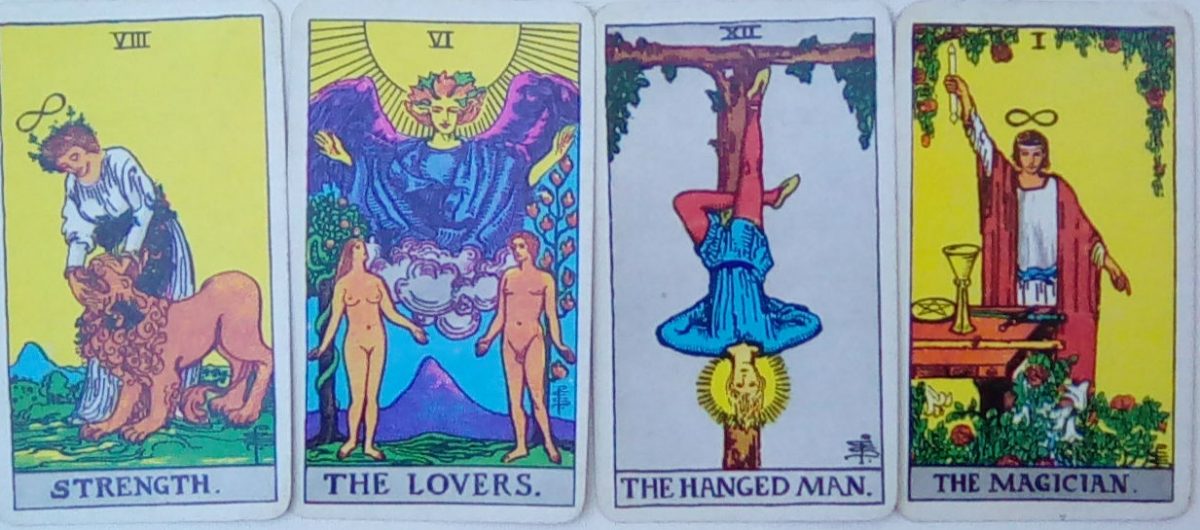
The Hierophant + The Magician

Teaching what you know; manifesting through spiritual principles.

Reversed: Manipulating belief systems; using doctrine for personal gain.

“Just the Tarot,” by Dan Adair – Available on Amazon

The Hierophant + The High Priestess

Outer tradition meets inner knowing; balancing doctrine with intuition.

Reversed: Conflict between personal truth and institutional belief.

The Hierophant + The Empress

Sacred nurturing; honoring family or cultural traditions around love and creativity.

Reversed: Restrictive roles around gender, parenting, or creative expression.

The Hierophant + The Emperor

Institutional authority; law, governance, or structured religion.

Reversed: Oppressive systems; authoritarian belief structures.

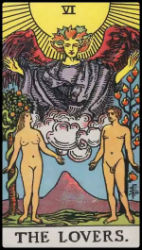
The Hierophant + The Lovers

Commitment blessed by tradition; marriage, vows, sacred partnership.

Reversed: Choosing love outside of conventional expectations.

The Hierophant + The Chariot

Driving forward with faith; disciplined spiritual progress.

Reversed: Dogmatic certainty; forcing beliefs onto others.

The Hierophant + Strength

Moral courage; gentle adherence to deeply held values.

Reversed: Internal conflict between instinct and conditioning.

The Hierophant + The Hermit

Spiritual teacher and spiritual seeker; mentorship or formal study.

Reversed: Breaking away from tradition to seek personal truth.

The Hierophant + Wheel of Fortune

Destined encounters with teachers or belief systems.

Reversed: Clinging to outdated doctrines during change.

The Hierophant + Justice

Ethical accountability; living in alignment with stated values.

Reversed: Hypocrisy; preaching principles not practiced.

The Hierophant + The Hanged Man

Spiritual surrender; re-evaluating long-held beliefs.

Reversed: Martyrdom rooted in rigid ideology.

The Hierophant + Death

Transformation of belief systems; shedding old doctrines.

Reversed: Fear of spiritual evolution; resisting theological change.

The Hierophant + Temperance

Balanced faith; integrating different traditions harmoniously.

Reversed: Spiritual confusion; incompatible belief blending.

The Hierophant + The Devil

Religious guilt; toxic conditioning; spiritual bondage.

Reversed: Breaking free from oppressive belief systems.

The Hierophant + The Tower

Collapse of institutional structures; crisis of faith.

Reversed: Quiet deconstruction of long-held doctrines.

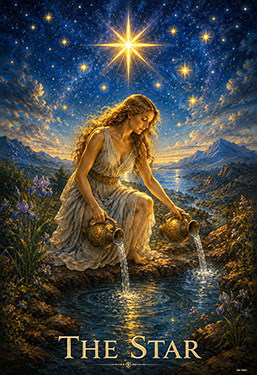
The Hierophant + The Star

Renewed faith; spiritual hope; inspired teaching.

Reversed: Disillusionment with organized belief systems.

The Hierophant + The Moon

Hidden doctrines; subconscious conditioning; fear-based teachings.

Reversed: Seeing through illusion; questioning inherited fears.

The Hierophant + The Sun

Joyful faith; spiritual clarity; enlightened tradition.

Reversed: Childlike rebellion against structure without understanding.

The Hierophant + Judgment

Spiritual awakening; answering a higher calling within tradition.

Reversed: Rejecting external authority to follow inner calling.

The Hierophant + The World

Completion of a spiritual cycle; mastery within a tradition.

Reversed: Feeling confined by cultural or institutional identity.