Politics and the Tarot

Exploring spirituality and politics.

I admit it:  I’m a political junkie.  I have a lifelong obsession with watching how politics play out in our country and around the world and it hasn’t diminished much as I’ve aged.

In part, that may be a generational thing.  I grew up during a time when people had, “the daily paper,” delivered to their front porch every morning. When every family had subscriptions to magazines like Time and Newsweek, and we all gathered around the television to watch the nightly news.  Even movies at theaters frequently started with a recap of the week’s news events.  In many ways, we were FAR more plugged into political events than we are now, even with the advent of the internet.

And so I love it when I see an intersection of this passion – the Tarot – and that passion – politics.  Put very simply, I love watching Tarot readers trying to figure out what in the HELL is going on with our crazy politics at any given time.

By far and away, my current favorite is Touched by Tarot and Beyond, which is a YouTube channel run by a woman named Afefe, who is a psychic reader and retired journalist.  She posts online readings a couple of times a week and she’s amazingly accurate.  Just for grins I kept track of her predictions over a period of a month and she was right on about 85 to 90% of the time.

And, yes, she is unapologetically political and progressively liberal and her readings are all over our insane political happenings.

SPIRITUALITY AND POLITICS

Now, I have several friends who are deeply into spirituality and turn up their noses at politics.    There are a couple of reasons for that, as near as I can tell.

The first is that many folks who are on the spiritual path are empaths.  As empaths, we tend to absorb whatever energies are coming our way and the energy of our current politics is SO toxic.  For an empath, reading the morning news can be like drinking a cup of poison for breakfast.  Sooner or later, it’s going to make them sick, so they try to avoid it.

The second reason that many New Agers avoid politics is that they have a sort of a more-spiritual-than-thou attitude.  Politics are common and mundane and not at all like the high minded path that spiritual people are supposed to tread.  

In that model, we’re supposed to rise above the mere physical – politics – and keep our noses pointed toward the Higher Powers.  We meditate, do yoga, take sound baths, and chant.  We do NOT indulge in the hatred and division that can come along with political discourse.  

Of course, when an increasing number of our fellow humans are being arrested, tortured, and cut off from food and shelter, the question arises:  where is your compassion?  Where is your love?  If you see someone suffering and do nothing to alleviate it, how spiritual ARE you, really?

And so, spirituality can become a good excuse for doing nothing and feeling comfortable about it.  I completely understand people who simply can’t follow politics because it burns them out energetically.  People who just feel that they’re somehow above it all, though?  Not so much.

TRACKING THE CRAZINESS

One of the most fascinating things I see happening with political Tarot readings is the vastly increased difficulty in predicting what’s going to happen.

As I’ve said many times before, a Tarot reading is just a snapshot in time.  It’s not written in stone.  A Tarot reading gathers in all of the relevant factors from the past and the present and – based on those factors – makes a prediction about what the probable outcome will be.  

Now, built in to that process is the idea that people are . . . well . . . predictable.  By the time that we become adults, most of us have a pretty predictable set of behaviors.  We have fairly firm political and religious beliefs. We tend to dress a certain way and behave a certain way. We react emotionally a certain way.  We’re introverts or extroverts, Republicans or Democrats, liberals or conservatives.

Unless we undergo a mental breakdown or a personal disaster, we’re very unlikely to deviate from those behaviors and so the outcome of a Tarot reading is easy to ascertain.

Normally, politics follow along those same lines.  Cultures and societies actually change at a much slower pace than individuals do, and it’s fairly easy to predict what directions they’re heading in.

Until now.

Our culture and society are changing at such an incredibly rapid rate that it really is hard to predict which direction we’re going in next, even with a deck of Tarot cards.

THE CHAOS FACTOR

The reason for that is that we’re seeing deliberately induced chaos.  Normal patterns of behavior are being disrupted to a point where our society is shaking apart.

One of the favorite expressions of the Silicon Valley techies is, “Move fast and break things.”  In other words, don’t plan what you’re going to replace something with before you break it – just break it and let chaos fill in the void.

Another conservative aphorism is, “flood the zone.”  That means introducing so many crazy changes so fast that a normal human attention span simply can’t keep up with them.  Eventually, we give up and shut down.

Which is exactly what we see in the news every week.  It jumps from the Epstein files to killing people in fishing boats to invading Iran to shooting demonstrators.  It’s literally one crisis after another with no respite.  Just when you think it can’t get any crazier, it does.  

Chaos has always been a factor in human existence.  Cultures have enshrined that principle in the idea of, “tricksters,” like Loki or Coyote’ or Satan, who basically just like to fuck things up and see what happens.  

Scientists call it, “entropy.”  The tendency of organized systems to fall apart.

We seldom, however, see political leaders deliberately inducing chaos as we do today. It makes rational prediction way more complicated.

RECLAIMING OUR GROUND

Of course, all of this is quite intentional.  When we’re constantly frightened or angry – AKA fight or flight response – the parts of our brains that are logical and creative shut down.  Brain scans show that we literally lose our ability to think rationally and judge what’s going on.  

Margaret Lynch Raniere refers to this as being, “hijacked.”  Our normal personalities are taken over by the fight-or-flight response, we’re flooded with cortisol and adrenaline, and we become . . . someone else.  Someone who lives in fear and anger.  Someone who has no compassion.  Someone who is incapable of empathy.

This is where political Tarot readings can re-introduce a level of sanity by giving us perspective.  

The Moon card may tell us that – no, it’s not just us – things really ARE crazy right now.

The Emperor reversed may tell us that the King is crazy as a loon and meaner than a constipated crocodile.

The Hierophant reversed may tell us that religion is being twisted and the land is full of false prophets.

The readings can’t change reality.  They don’t magically make things better.  But they do tell us what’s actually going on behind the smoke and mirrors.  They give us the ground to stand on while it all unfurls, rather than simply being swept away by the tides of fear and anger.

Hunter Thompson once said, “Things never got crazy enough for me.”  Perhaps if he’d lived a few years longer . . .

“Just the Tarot,” by Dan Adair – available on Amazon.

The Hierophant and the Strange History of Spiritual Possession

Exploring spiritual possession with Robert Falconer and the two sides of religious authority.

I watched an interesting interview recently with Robert Falconer, author of The Others Within Us: Internal Family Systems, Porous Mind, and Spirit Possession. The conversation took place on the podcast Life with Ghosts, so naturally there was a fair amount of discussion about spirituality and the spirit world.

One statement in particular really caught my attention.

Falconer noted that in roughly 80% of human cultures, spirit possession is not feared — it’s actively sought out.

In other words, what we usually think of as something terrifying was historically considered a sign of spiritual ability and authority.

That sounds strange to modern ears, doesn’t it?

Yet this idea connects directly to the deeper meaning of the Tarot card known as The Hierophant.

Spiritual Possession in Human History

Falconer’s observation is supported by a long history of spiritual traditions around the world.

In ancient Greece, the Oracle at Delphi entered trance states to channel messages believed to come from the gods.

Many Native American traditions included vision quests, in which individuals sought altered states of consciousness in the wilderness to receive spiritual insight.

In the Vodun religion, practitioners are said to be “ridden” by the Loa, powerful spiritual beings who temporarily inhabit the body and communicate sacred knowledge.

Shamans in many cultures likewise enter trance states in order to commune with spirit animals and guiding entities.

In each of these traditions, the ability to enter such states was not seen as madness or danger. Instead, it was considered a spiritual skill—one that brought wisdom and prestige.

Even in modern times we still see echoes of this idea. For example, Esther Hicks claims to channel a collective group of spiritual beings known as Abraham. Meanwhile, in certain Christian traditions, believers seek spiritual ecstasy through speaking in tongues.

Across cultures and centuries, the basic idea remains the same: direct contact with the spirit world is a form of spiritual authority.


“Just the Tarot,” by Dan Adair – available on Amazon

The Hierophant and Religious Authority

This is where The Hierophant becomes particularly interesting.

In Tarot, the Hierophant represents traditional spiritual authority—the priests, teachers, and religious leaders who guide communities in matters of faith and morality.

Today, we tend to imagine these figures as scholars or counselors. They sit in offices, wear ceremonial clothing, and offer guidance based on established teachings.

But historically, that wasn’t the original source of their authority.

The earliest priests and priestesses were valued because they were believed to have direct experience with the spirit world. They entered trance states, communed with divine forces, and returned with knowledge that helped guide their communities.

Their authority came not from books or institutions, but from experience.

When Authority Becomes Control

Over time, however, something changed.

As religious institutions grew more powerful, the priestly class began to guard their spiritual authority carefully. Communication with the spirit world was increasingly presented as something that only certain sanctioned individuals were allowed to do.

Ordinary people were discouraged—or even forbidden—from seeking those experiences themselves.

Those who attempted to bypass the system could be labeled heretics or dangerous mystics.

At the same time, organized religion often promoted the idea that interacting with spirits was extremely risky. The spirit world, people were warned, was full of malevolent entities waiting to corrupt or destroy unwary seekers.

Modern horror films have reinforced this idea beautifully. The classic movie The Exorcist is perhaps the most famous example: a child possessed by a demon and saved only through the intervention of religious authority.

The True Meaning of the Hierophant

When the Hierophant appears in a Tarot reading, it often represents a teacher, mentor, or spiritual authority figure.

But the card invites us to ask an important question:

Is this person acting as a guide — or as a gatekeeper?

True spiritual teachers help others develop their own connection to the sacred. They share knowledge, offer guidance, and encourage personal exploration.

Authoritarian figures, on the other hand, demand obedience and insist that spiritual truth flows only through them.

The difference is crucial.

As Ram Dass once said:

“The second that you think you’re spiritual, you aren’t.”

The best Hierophants understand this. They see themselves not as masters, but as teachers and guides—people who have walked a path and are willing to help others walk it too.

Their role is not to control spiritual experience.

Their role is to help others discover it for themselves.

The Four of Swords: ReCreation

Recreating ourselves through rest. An exploration of the Four of Swords.

If you’re feeling stuck, exhausted, or strangely unmotivated right now, the Four of Swords may have a valuable message for you.

In the traditional Tarot, the Four of Swords depicts an armored knight lying in deep slumber. Three swords hang above him; one rests beneath him. It’s a card associated not just with rest, but with recovery. We often see it when someone has gone through a physically or emotionally traumatic experience and simply needs to become as quiet as possible in order to heal.

But there’s a subtler message here — one that goes beyond simple rest.

It’s about re-creation.

When we’re physically ill, we’re encouraged to sleep as much as possible. Why? Because the body heals in stillness. Damaged cells are repaired. Infections are fought. New, healthy tissue is created. We intuitively understand that the human body is self-healing — if we can just turn off the busy mind and get out of the way.

The same principle applies emotionally and spiritually.

When we’ve been wounded — by stress, burnout, loss, disappointment, or simply too much striving — our instinct is often to withdraw. To reduce contact. To go quiet. That instinct isn’t weakness. It’s wisdom.

That’s what I was emphasizing in my Tarot affirmation poster for the Four of Swords: sometimes the periods when we feel least productive are actually the periods of our greatest growth.

Tarot Affirmation Print available on Etsy.

The Cultural Problem

Part of the struggle comes from the culture we swim in.

From the time we’re children, we’re trained to work harder, move faster, achieve more. Rest is framed as a brief pit stop before we re-enter the race. Productivity is virtue. Exhaustion is normal.

So when we find ourselves demotivated or depleted, our first reaction is usually self-criticism.

“I don’t know what’s wrong with me.”

“I just can’t get it together.”

“I feel stuck.”

But what if nothing is wrong with you?

What if you’re not broken — you’re rebuilding?

What if your body, mind, and spirit are quietly saying, “You need time. You need stillness. You need space.”

The tragedy is that the more we fight that message, the longer the recovery takes. We override the natural healing cycle because we’re afraid of falling behind.

Nature Doesn’t Apologize for Rest

Look at Nature.

The Earth explodes into life in the Spring.

She flourishes in Summer.

She releases in Autumn.

She rests in Winter.

Do you imagine the Earth berating herself all Winter long? Does she panic and whisper, “I should be more productive”?

Of course not.

Rest is part of the cycle.

Contraction makes expansion possible.

Stillness prepares the ground for growth.

And yet, though we are children of the Earth, we rarely grant ourselves the same permission.

Reframing “Stuck”

When we hit a slack period — when progress stalls and energy feels low — we can frame it in one of two ways.

We can tell ourselves we’re lazy, depressed, failing, falling behind.

Or we can recognize that we’re in a season of restoration before the next expansion.

Because that is precisely what often happens.

When we release our grip — when we stop forcing clarity, stop chasing momentum, stop judging ourselves — something begins to recalibrate beneath the surface. Just as the body eliminates toxins during sleep, the psyche releases old narratives during rest.

We may not consciously see it happening. Our subconscious may be reorganizing itself in silence. Old wounds may be dissolving. A new identity may be forming.

The Four of Swords is not stagnation.

It is sacred pause.

It is integration.

It is ReCreation — not recreation as distraction, but re-creation as transformation.

And if we can trust that process, if we can stop fighting it, those quiet, stuck-feeling days may turn out to be the very foundation of our next, beautiful phase of growth.

Sometimes the most powerful thing we can do is lay down the sword — and let ourselves become new.


“Just the Tarot,” by Dan Adair – available on Amazon

The Top Ten Tarot Cards That Indicate You’re Stuck

A concise, Tarot-based guide to the ten cards that most often indicate feeling stuck, stalled, or unable to move forward — and what each one reveals about the deeper source of that stuckness.

Being “stuck” in Tarot rarely means something is broken or hopeless. It usually means energy is stalled, attention is misdirected, or a transition is incomplete. These cards point to places where movement is paused — and where a shift is quietly waiting to happen.

Here are the ten cards that most often signal that kind of stuckness.

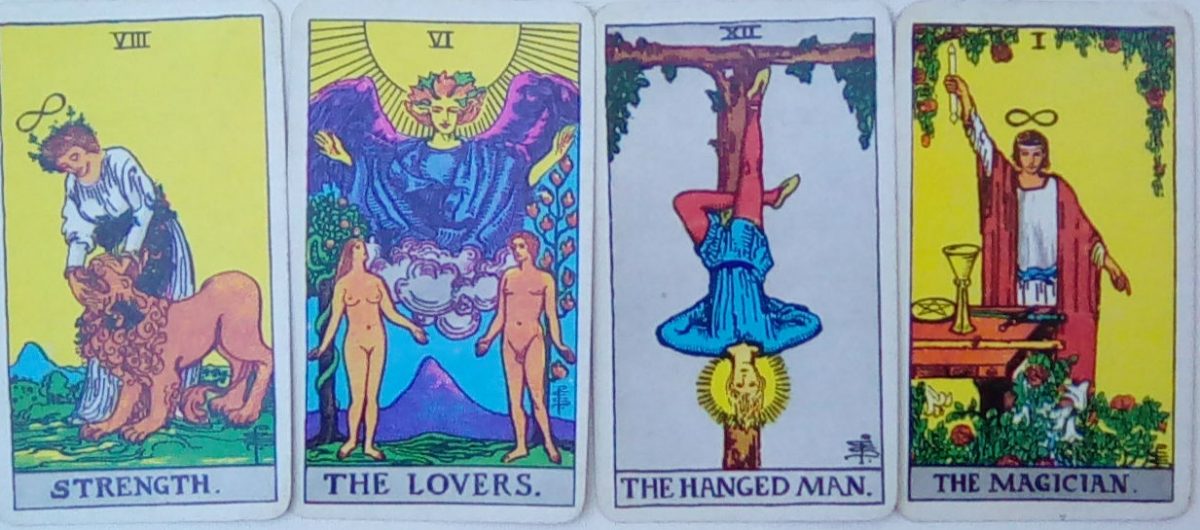
1. The Hanged Man

Stuck because of suspension or waiting.

This card indicates a pause imposed by timing, perspective, or the need for surrender. Progress isn’t possible yet because something deeper is still rearranging.

2. Eight of Swords

Stuck because of limiting beliefs or mental loops.

You feel trapped, restricted, or powerless — but the restriction is largely internal. The situation may not be as closed as it feels.

3. Two of Swords

Stuck because of indecision or avoidance.

Movement is blocked by a refusal to choose, usually because neither option feels safe or pleasant.

4. Four of Cups

Stuck because of emotional disengagement.

Nothing feels interesting or meaningful enough to respond to. Opportunities may exist, but the heart isn’t open to them yet.

5. Ten of Wands

Stuck because of overload or exhaustion.

You’re carrying too much. Forward motion is technically possible, but not sustainable in the current state.

6. Five of Cups

Stuck because of grief or fixation on loss.

Attention is anchored in what’s gone wrong, making it hard to see what remains or what could still grow.

7. Judgment (Reversed)

Stuck because of self-doubt or fear of stepping into a new identity.

The call to change is present, but something inside is resisting answering it.

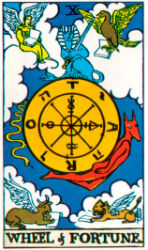
8. Wheel of Fortune (Reversed)

Stuck because of repeating patterns or feeling caught in cycles.

Life feels like it’s looping instead of evolving. This often points to unconscious habits or unresolved lessons.

9. Nine of Swords

Stuck because of anxiety, rumination, or worry.

The mind is so busy anticipating problems that it can’t access solutions or rest.

10. Five of Pentacles

Stuck because of a mindset of lack or survival.

Fear around resources, support, or worthiness makes it difficult to imagine improvement or receive help.

A Note on “Stuckness” in Tarot

In Tarot, being stuck is rarely a punishment or a failure. It’s usually a sign that:

• something internal needs to shift before something external can move,

• a lesson is still integrating,

• or attention needs to be redirected.

These cards don’t say “nothing will ever change.”

They say: this is the part of the story where motion pauses and meaning is being formed.

That’s often where the most important change begins.

And if you’re wondering when you’re going to get unstuck, then check out my other post:  The Top Ten Tarot Cards Indicating Something is About to Change.

“Just the Tarot,” by Dan Adair – available on Amazon

Running It By the Numbers: The Numerology Behind the Tarot Suits

Running It By the Numbers explores the numerological structure behind the Tarot suits from Ace through Ten.

When we look at the Tarot, it’s easy to get lost in the images, stories, and archetypes of each card. But underneath the pictures, symbols, and personalities lies a beautifully simple structure: number.

In each suit — Wands, Cups, Swords, and Pentacles — the cards numbered One through Ten follow a consistent energetic progression. The suit shows where the energy is playing out (creativity, emotion, thought, or material life), and the number shows how that energy is unfolding.

So let’s run it by the numbers.

Below you’ll find the numerological meaning of the cards from Ace (One) through Ten, and how that meaning expresses itself across all four suits.

One (Ace): Beginnings, Seeds, Potential

Ones represent the spark.

They are beginnings, raw potential, the moment when something new is offered into your life.

Numerologically, One is unity, origin, and creative impulse — the first expression of energy.

In Tarot:

• Aces show opportunities.

• They don’t guarantee outcomes — they offer possibility.

Each Ace says: “Here is a seed. Will you plant it?”

Two: Balance, Choice, Polarity

Twos represent the moment when the One becomes aware of an “other.”

Numerologically, Two is duality, relationship, contrast, and choice.

In Tarot:

• Twos often show balance, tension, or decision.

• They ask you to relate — to a person, a feeling, a path, or a truth.

Twos say: “Now that something exists, how will you engage with it?”

Three: Growth, Expansion, Expression

Threes are the first moment of outward growth.

Numerologically, Three is creativity, expression, and development.

In Tarot:

• Threes show movement, growth, collaboration, and early results.

• Something is starting to take form.

Threes say: “This is beginning to live and move in the world.”

Four: Structure, Stability, Foundation

Fours bring form, boundaries, and stability.

Numerologically, Four is structure, order, and grounding.

In Tarot:

• Fours stabilize the energy of the suit.

• They create something solid enough to rest on — or sometimes something rigid enough to get stuck in.

Fours say: “Let’s make this real and sustainable.”

Five: Disruption, Challenge, Change

Fives introduce instability.

Numerologically, Five is movement, friction, and necessary disruption.

In Tarot:

• Fives often show conflict, loss, challenge, or tension.

• They shake what has become too fixed.

Fives say: “Something needs to change — even if it’s uncomfortable.”

Six: Harmony, Integration, Adjustment

Sixes restore balance after the disruption of Five.

Numerologically, Six is harmony, healing, and realignment.

In Tarot:

• Sixes often show cooperation, support, generosity, or healing.

• They smooth what was roughened.

Sixes say: “Let’s bring this back into balance.”

Seven: Assessment, Testing, Inner Work

Sevens are a pause for evaluation.

Numerologically, Seven is reflection, inner work, and spiritual testing.

In Tarot:

• Sevens often show challenges that are internal, subtle, or strategic.

• They ask you to examine your approach.

Sevens say: “Is this truly aligned — and is this worth continuing?”

Eight: Power, Mastery, Momentum

Eights represent focused energy and effective action.

Numerologically, Eight is power, movement, and manifestation.

In Tarot:

• Eights show work, effort, discipline, and progress.

• Things move quickly here, for better or worse.

Eights say: “Apply yourself. This can be accomplished.”

Nine: Fulfillment, Culmination, Near Completion

Nines bring things close to completion.

Numerologically, Nine is culmination, wisdom, and harvest.

In Tarot:

• Nines often show satisfaction, insight, or emotional/spiritual fullness.

• They can also show isolation, depending on the suit.

Nines say: “This cycle is almost complete — what have you learned?”

Ten: Completion, Overflow, Transition

Tens complete the cycle — and often overwhelm it.

Numerologically, Ten is completion that tips over into excess, leading back toward a new beginning.

In Tarot:

• Tens show endings, fulfillment, or overload.

• They signal that a cycle has run its course.

Tens say: “This is complete. It’s time to release and begin again.”

In Summary

Across every suit, the numbers tell a story:

1. Seed

2. Choice

3. Growth

4. Structure

5. Disruption

6. Harmony

7. Assessment

8. Effort

9. Fulfillment

10. Completion

When you read Tarot “by the numbers,” you gain a deeper sense of where you are in a process — not just what’s happening, but what stage it’s in.

And that can be incredibly clarifying.

Because sometimes the most important message isn’t what is happening…

…but where you are in the journey.

“Just the Tarot,” by Dan Adair – available on Amazon

2026: A New Cycle Begins — Welcome to a Universal 1 Year

We’ve just completed a cycle of endings and stepped into a year of new beginnings. This post looks at 2026 as a Universal 1 Year, what it means energetically and symbolically, and how to align with the quiet power of starting anew.

As we step into 2026, many people in Tarot, astrology, and esoteric circles are talking about one simple but powerful idea: 2026 is a Universal 1 Year.
Which means we are collectively beginning a brand‑new nine‑year cycle.

So what does that actually mean? And why does it feel like such a big energetic shift?

Let’s explore.

 What Is a Universal Year?

In numerology, each calendar year carries a collective or Universal vibration. It’s calculated by adding the digits of the year together and reducing them to a single number.

For 2026:
2 + 0 + 2 + 6 = 10 → 1 + 0 = 1

So 2026 = a Universal 1 Year.

And the year we just completed:

2025:
2 + 0 + 2 + 5 = 9

Which means we’ve just finished a Universal 9 Year — the final stage of a nine‑year cycle.

The 1–9 Cycle at a Glance

The Universal Years move through a repeating 1–9 pattern, each with its own archetypal meaning:

YearArchetypeTheme
1The SeedBeginnings, identity, new direction
2The MirrorRelationship, reflection, polarity
3The ChildExpression, creativity, joy
4The BuilderStructure, work, foundations
5The RebelChange, disruption, freedom
6The CaretakerResponsibility, healing, home
7The MysticInner work, truth‑seeking
8The RulerPower, manifestation, money
9The ElderCompletion, release, harvest

A 9 year completes a story.
A 1 year begins a new one.

“Just the Tarot,” by Dan Adair – available on Amazon

What We Just Came Through: The Universal 9 Year

Universal 9 Years are not light or easy. They are about:

  • Endings and closures
  • Letting go of identities, relationships, or structures that no longer fit
  • Grief, composting, forgiveness, and release

A 9 year doesn’t just end things — it dissolves them. It clears space.

That’s why many people experienced 2025 as heavy, tiring, emotionally clarifying, or strangely emptying.

Something had to finish.

What’s Beginning Now: The Universal 1 Year

A Universal 1 Year is the opposite energy.

It is:

  • New identity
  • New direction
  • New seeds
  • New courage

But it is not loud or triumphant.

A 1 year is fragile, raw, and tender. It’s the match being struck. The first step onto a new path. The moment of saying:

“This is who I am becoming.”

It’s less about immediate success and more about choosing a direction.

 Symbolically Speaking

Esoterically:

  • 9 is Saturnian — time, karma, endings, harvest, limits
  • 1 is Solar — identity, will, creative fire

So this transition marks a shift from:

Saturn’s scythe The Sun’s spark

From completion into creation.

 Tarot Reflections

If we were to translate this into Tarot language:

  • The 9 Year corresponds to archetypes like The Hermit, Death, The World — inner truth, endings, integration.
  • The 1 Year corresponds to The Magician — the moment when possibility becomes intention.

Not the end of the journey — but the choosing of it.

How to Work With a Universal 1 Year

This is not the year to rush.

It is the year to:

  • Name what you want to begin
  • Claim new identity gently
  • Experiment without needing mastery
  • Allow yourself to be a beginner again

This is the year to plant seeds, not demand fruit.

 In Closing

We have crossed a threshold.

The old cycle is complete. The ground has been cleared. And now — something new is possible again.

May this year be kind to your beginnings.
May you listen for what is quietly trying to be born through you.
And may you walk your new path with patience, courage, and trust.

Happy New Year.

The Art of Receiving: A Holiday Lesson from the Ace of Pentacles

Are you great at giving but secretly uncomfortable receiving? This holiday-inspired reflection on the Ace of Pentacles explores why receiving is the true key to abundance — and how learning to allow support, blessings, and prosperity can transform your life.

We hear it every year: “It’s the season of giving.”

And while generosity is beautiful, here’s a question we rarely ask:

How good are you at receiving?

Most of us are excellent givers.

We’ll show up for others, offer help, carry the emotional load, and give until we’re exhausted…

Yet when something is offered to us — kindness, support, a compliment, an opportunity, or even abundance — we freeze. We deflect. We downplay. We say, “Oh, you shouldn’t have…”

But in manifestation, and in the symbolic language of the Tarot, receiving is not an afterthought — it’s the core skill.

And the Ace of Pentacles, with its golden hand offering a gift from the sky, is the perfect reminder that abundance can’t enter your life until you’re willing to let it in.

Ace of Pentacles Affirmation Poster by Dan Adair – Available on Etsy.

Why Receiving Is the Real Skill in Manifestation

Genevieve Davis puts it beautifully in her book, “Doing Magic: A Course in Manifesting an Exceptional Life.”

“As soon as you have asked for anything, your next immediate job is to get out of the way. You need to get out of asking and into the receiving state as soon as you possibly can.”

Most people stay stuck in:

• asking

• wishing

• visualizing

• striving

• trying harder

But manifestation isn’t powered by effort.

It’s powered by allowing.

During the holidays we pour energy outward — buying gifts, doing favors, meeting expectations — but the universe doesn’t respond only to what we give. It responds to what we’re willing to accept.

 Receiving Requires Softening, Not Effort

In, “Ask and It Is Given: Learning to Manifest Your Desires” Abraham/Hicks calls this the Art of Allowing:

“Unless you are in the receiving mode, your desires will not be fulfilled.”

Receiving isn’t about deserving more or working harder.

It’s the opposite — a gentle softening.

Receiving happens when you:

• relax your shoulders

• loosen your defenses

• stop arguing with your blessings

• stop explaining your worth

• allow yourself to be supported

Winter energy itself teaches this.

The natural world slows, quiets, and becomes receptive.

There is no pushing — only opening.

The Holiday Block: Feeling Unworthy of Good Things

Here’s the core wound for many people — especially during the holidays:

We don’t believe we deserve good things.

Old stories rise up:

• “Other people need it more.”

• “I haven’t earned that.”

• “I don’t want to be a burden.”

• “I’m not enough.”

Many of us learned as children to receive less so others could have more.

So now, when life tries to hand us something beautiful, we reject it without even realizing we’re doing it.

But the Ace of Pentacles offers a different truth:

You are worthy of abundance.

You are worthy of support.

You are worthy of receiving joy, money, kindness, opportunity — just as you are.

The Ace of Pentacles: A Gift You Are Meant to Receive

TheAce of Pentacles  captures this moment perfectly:

• the hand offering a golden coin

• the floral archway

• the path leading into a new beginning

• the vibrant, fertile landscape

This is the universe extending a gift — potential, prosperity, a fresh start.

The affirmation, “Receive Abundance,” is not a command.

It’s an invitation.

A permission slip.

This holiday season, abundance may appear in quiet ways:

• someone offering help

• an unexpected opportunity

• a compliment

• money flowing in

• a door opening you didn’t expect

Your job?

Let yourself say yes.

A Simple Holiday Receiving Ritual (2 Minutes)

Try this before bed or during a quiet moment in the day:

1. Place your hand over your heart.

2. Take a slow breath.

3. Say gently:

“It is safe for me to receive.”

4. Picture the golden hand of the Ace of Pentacles offering you a gift.

5. Say:

“I allow good things to enter my life.”

Small practice, big shift.

This Season, Let Receiving Be Part of the Celebration

Giving is beautiful.

Generosity is sacred.

But so is allowing yourself to be blessed.

Let this be the season you stop deflecting your good.

Stop stepping aside.

Stop shrinking back.

Let this be the season you say, without apology:

“I am ready to receive abundance.”

Because the universe can only deliver what you’re willing to accept.

Seven Lessons the Tarot Can Teach About Surviving the Holidays

Feeling overwhelmed by the holiday season? The Tarot has a surprising amount of wisdom — and humor — to offer.From The Fool’s fresh start to The World’s end-of-year perspective, these cards remind us that the holidays don’t have to be perfect to be meaningful.

A little humor, a little magic, and just enough perspective will get you through the Holiday Haze.

1. The Fool — You’re Allowed to Start Fresh

Every holiday season is a reset button.

Don’t carry last year’s stress into this year’s festivities.

Don’t walk off of emotional cliffs at family dinners.

Leap lightly… but maybe look down for gift-wrapping paper on the floor.

2. The Magician — Use the Tools You Actually Have

Trying to make a perfect holiday with imperfect resources?

The Magician whispers: Use what’s already on the table.

Don’t overspend now and stress later. 

Aim for gifts that are magical, not expensive.

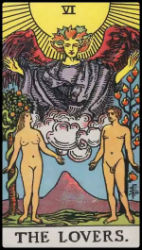
3. The Lovers — Choose Peace, Not Drama

The holidays tend to bring opinions.

And relatives.

And opinions from relatives.

The Lovers reminds you: choose connection, not combat… or at least choose silence and pie.

If one of your loved ones says something absolutely outrageous, remember that you can just put a piece of pie in your mouth and smile.  Add whipped cream to make it an extra sweet conversation.

4. The Seven of Cups — Beware of Overcommitment

Shopping! Baking! Parties! Rituals! Volunteering! Travel!

The Seven of Cups says: You cannot say yes to all seven.

Pick the cup with the least glitter and the most sanity.

You don’t have to be all things to all people – just be the you that people love.

5. The Nine of Swords — Anxiety Lies

That nagging feeling that everything will go wrong?

It’s just the Nine of Swords doing its nightly stand-up routine.

Thank it for its service… and then ignore it.

Don’t just make it a holiday – make it a vacation from worry.

6. The King of Pentacles — Treat Yourself Like a Honored Guest

Warm food, soft blankets, comfortable socks —

This is not indulgence, this is holiday self-care strategy.

Just look at all the things you’ve done for other people!  Don’t you deserve a little pampering, too?

The King of Pentacles approves.

7. The World — You Made It Through Another Year

Pause. Breathe. Celebrate the cycle completing.

On the Winter Solstice, the solar year will end.  Take the time to reflect, to congratulate yourself for another trip around the sun. 

Give yourself credit for all the chapters you survived this year — and all of the growth that went along with that.

Bonus Holiday survival secret:

Lower expectations. Raise kindness. Wear stretchy pants.

Available on Amazon

The Top Ten Tarot Cards Indicating Conflict

A quick, insightful guide to the ten Tarot cards that most often signal conflict—from chaotic energy and power struggles to hidden tension and emotional fallout. This post explains what each card means and how to navigate challenging situations with clarity and confidence.

There are days when Tarot feels like a warm hug…

…and days when it slides a little warning across the table and whispers,

“Brace yourself.”

Conflict is part of life, part of growth, and definitely part of the Tarot.

“Just the Tarot,” by Dan Adair – Available on Amazon

Whether it’s inner tension, relationship friction, or someone else’s chaos spilling into your lane, some cards show up to say:

“Something here needs attention.”

Here are the top ten Tarot cards that most strongly signal conflict — and what each one really means beneath the surface. If you’d like to download this list as a PDF file that you can add to your Tarot notebook, click here.

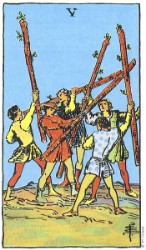
1. Five of Wands – The Classic Chaos Card

If conflict had a mascot, this would be it.

The Five of Wands shows:

– competition

– ego clashes

– mixed agendas

– flailing energy everywhere

It’s not necessarily destructive — but it is noisy.

Message: This isn’t war… it’s everyone talking at once. Calm the room.

2. Five of Swords – A Battle Nobody Really Wins

This is the energy of:

– arguing to be right

– unhealthy victories

– someone taking more than their share

– hurt feelings afterward

Message: Winning at all costs comes with a bill. Choose integrity.

3. Seven of Wands – Defend Your Ground

This is conflict from the outside:

– critics

– competition

– pressure

– feeling outnumbered

But the card says you can stand firm.

Message: Don’t fold. You’re stronger than the opposition.

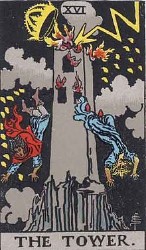
4. The Tower – Major Disruption

This isn’t a small disagreement — it’s a smackdown from the universe.

Think:

– sudden revelations

– arguments that break things open

– emotional earthquakes

Message: The old structure needed to fall. Liberation follows.

5. The Five of Cups – Emotional Fallout

Not a conflict card on its face, but it often shows up after one:

– regret

– grief

– disappointment

– unresolved conversations

Message: You’re grieving what was lost. Healing begins when you turn around.

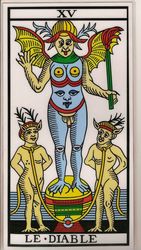
6. The Devil – Power Struggles

This card signals:

– manipulation

– obsession

– toxic dynamics

– control games

– addictive patterns in relationships

Message: This conflict has a hook. Break the chain, not each other.

7. The Knight of Swords – Rushing Into Battle

He is smart, fast, determined…

…and doesn’t always think things through.

Shows:

– heated arguments

– impulsive reactions

– someone charging ahead without listening

Message: Slow down before your mouth outruns your wisdom.

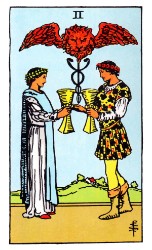
8. The Two of Swords – Silent Conflict

Not all conflict is loud.

This card is conflict frozen:

– denial

– avoidance

– stalemates

– tension beneath the surface

Message: Peace requires a decision. Open your eyes and choose.

9. The Seven of Swords – Sneaky Energy

Not direct conflict — but conflict waiting to happen.

Signals:

– deception

– half-truths

– secret plans

– someone acting behind the scenes

Message: If something feels “off,” it probably is. Trust your intuition.

10. The Ten of Wands – Overwhelm and Burnout

This appears when conflict comes from:

– taking on too much

– carrying other people’s problems

– no boundaries

– pressure that builds until you snap

Message: Put down what isn’t yours. You’re not meant to carry it all.

Final Thoughts: Conflict Isn’t Always the Enemy

Conflict in Tarot isn’t punishment — it’s information.

The cards don’t show conflict to scare you…

They show it to help you:

– redirect

– set boundaries

– speak truth

– release what’s toxic

Because once conflict is acknowledged, transformation can finally begin.

The Top Ten Tarot Cards That Indicate Healing

Discover the top ten Tarot cards that symbolize healing, recovery, and renewal. From The Star to The Hermit, explore how the cards reveal your path toward balance, peace, and wholeness.

When you’re working with the Tarot, certain cards appear as gentle messengers of recovery, renewal, and wholeness. Whether it’s physical, emotional, or spiritual healing, these ten cards remind us that balance and well-being are always within reach.

1. The Star

The ultimate card of healing and hope. It promises renewal after hardship and invites you to open your heart to divine light and self-trust.

2. Temperance

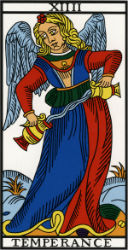
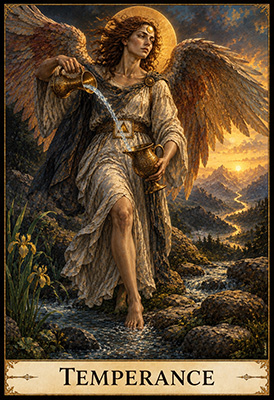
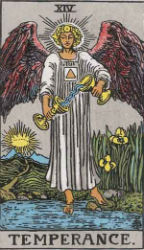
Balance, integration, and moderation — the alchemy of opposites. Healing flows when extremes are softened and peace returns.

3. The Sun

The warmth of vitality and joy. The Sun restores the life force, illuminating health, positivity, and the return of childlike energy.

4. The Four of Swords

The body and mind’s call for rest. Recovery through stillness, meditation, and withdrawal from stress.

5. The Six of Swords

Moving away from turbulence toward calm waters. Healing through distance, clarity, and emotional peace.

6. The Ace of Cups

Renewal of the heart. Healing through love, forgiveness, and self-compassion; a cleansing flow of feeling.

7. The Queen of Pentacles

Earthy nurturing energy. Healing through care, nourishment, and connection to the body and natural rhythms.

8. The Three of Cups

Healing through friendship and community. Emotional recovery by rejoining the circle of support and joy.

9. The Ten of Pentacles

Long-term stability and health. Healing in the sense of “wholeness” — when life feels safe, abundant, and grounded again.

10. The Hermit

Healing through introspection and solitude. Finding the inner light that guides you back to your own wisdom.

 Using the Cards for Healing

When these cards appear in a spread, ask yourself: What part of me is ready to recover?

Healing doesn’t always mean fixing something broken — sometimes it means remembering you were whole all along.

“Just the Tarot,” by Dan Adair – a complete set of definitions for all of the cards, including layouts and instructions, available on Amazon.