What Are Tarot Archetypes (And Why They Matter)?

The influence of Tarot archetypes in our lives.

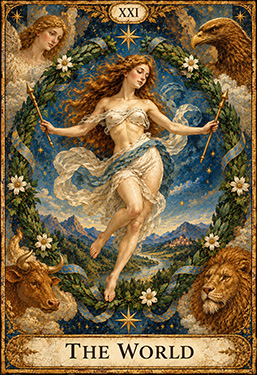
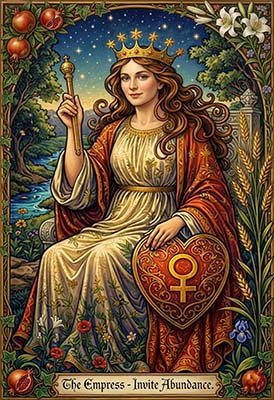
The Empress Abundance Poster – available on Etsy

In any serious discussion of the Tarot, you’ll hear people referring to the Major Arcana as “archetypes.”

Which sounds very impressive… but also raises a perfectly reasonable question:

What, exactly, is an archetype?

The idea goes all the way back to Plato, but in modern usage it’s most often associated with the Swiss psychologist Carl Jung.

Jung defined archetypes as:

Universal, inherited patterns of thought or imagery that exist in the collective unconscious of all human beings.

Which is a fine scholarly definition… but for most of us, it lands somewhere around:

“Huh?”

So instead of trying to define archetypes academically, let’s talk about how they actually show up in real life—especially through the Tarot.

The Major Arcana

If you’re reading a Tarot blog, you probably already know the basics.  The Tarot is divided into two parts, the Minor Arcana and the Major Arcana.

• The Minor Arcana (Wands, Cups, Pentacles, Swords) deal with everyday life.

• The Major Arcana (22 cards) deal with something deeper.

The images of the Major Arcana are the ancient core of the Tarot, dating back to the 15th century (and possibly earlier). The Minor Arcana didn’t even get illustrated scenes until the Waite-Smith deck in 1909.

So when we talk about archetypes in Tarot, we’re really talking about the Major Arcana.

They’re Not Personal

Here’s the first—and most important—thing to understand:

Archetypes are not personal.

Now, I know that sounds strange, because they feel very personal.

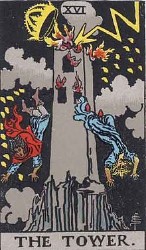
If you pull Death or The Tower in a reading, it doesn’t feel abstract. It feels like the universe just singled you out and dropped a piano on your head.

But here’s the shift:

• Minor Arcana = things you’re generating and can influence

• Major Arcana = larger forces moving through your life

For example:

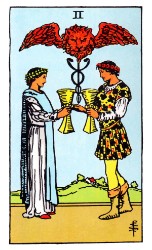
• Two of Cups → You’re falling in love.  Those are personal dynamics, like the type of person you find attractive, are you feeling lonely, do you want a partner?

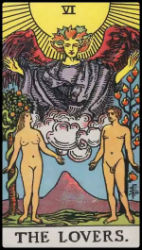
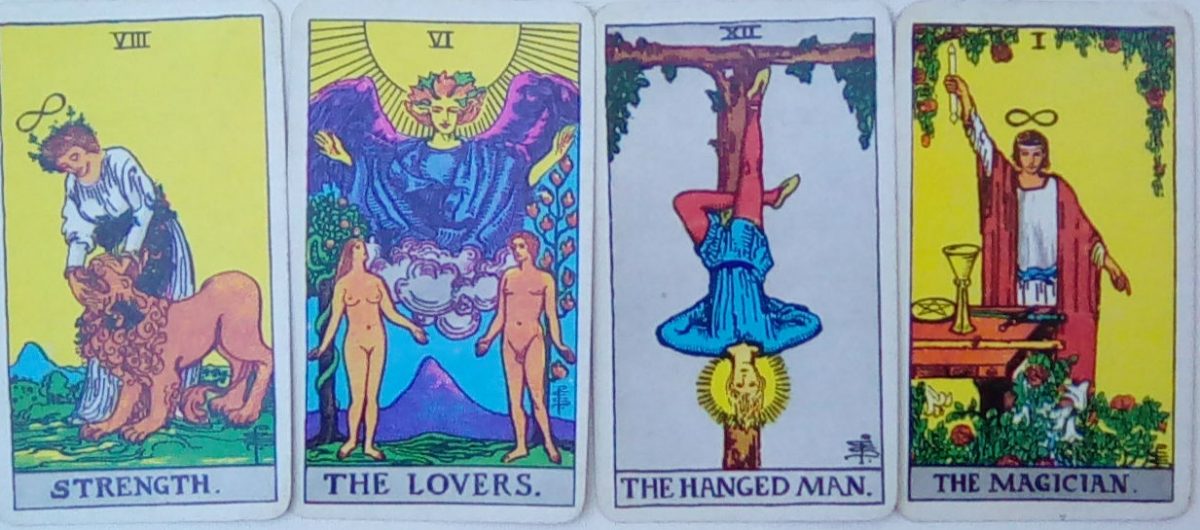
• The Lovers → Love as an energy is active in your life (archetypal force.). The energy isn’t something you’re creating and it’s not attached to any one person.  It’s just moving through your life.

In other words:

You don’t create archetypes—you experience them.

Sometimes They’re Collective

Archetypes don’t just affect individuals—they can sweep through entire cultures.

Jung noticed this before World War II when many of his German patients reported eerily similar dreams of White men riding black horses through the night—images that seemed to foreshadow the rise of Nazism. He interpreted this as a collective archetype emerging.

And honestly, you don’t have to look far to see this kind of thing in today’s politics.

We’ve all watched people we’ve known for years suddenly shift—sometimes dramatically—in beliefs, behavior, or identity. It can feel almost like they’ve been “taken over.”

From an archetypal perspective, that’s not entirely wrong.

These are psychic weather systems—and sometimes whole populations get caught in them.

The important takeaway?

Just because an energy is present doesn’t mean you have to identify with it.

Shelter in Place

Obviously, not all archetypes are pleasant.

• The Tower → destruction

• The Moon → confusion, illusion, emotional instability

• The Devil → addiction, entrapment, shadow patterns

So what do you do when one of these shows up?

You’ve got two main options.

1. Shelter in Place

Sometimes the best strategy is simple:

Ride it out.

Think of a tornado. You don’t go out and negotiate with it. You don’t try to “manifest” it away.

You get into the storm shelter and wait.

Life sometimes does this:

• Relationship ends

• Job disappears

• Everything falls apart at once

That’s Tower energy.

And sometimes the wisest response is:

“Okay… this is happening. Let’s survive it.”  Hunker down and wait for it to go away.

2. Rise Above It

The Kybalion talks about this strategy quite a bit.

Even if you can’t control the event, you can control your response.

You can:

• shift your perspective

• regulate your emotions

• choose your interpretation

For instance, with The Tower, you can respond to it in one of two ways.

• “This is a disaster. I lost my job, my partner divorced me, I’m out of money. My life is ruined.”

OR

• “This is a reset. I get to rebuild from scratch. My old life is gone, so I get to build my new life exactly as I want it.”

The external event is the same.

The internal vibration is not.

And that makes all the difference.  We haven’t, “cured,” what happened to us, but we’ve vastly diminished it effects on us.

Invoking the Positive Archetypes

Here’s where things get interesting.

Even though archetypes aren’t created by us…

We can align with them.

Think of it less as control and more as tuning in.

Examples:

• Feeling stuck financially? → work with The Empress (abundance, growth)

• Struggling with confidence? → invoke The Emperor (authority, structure)

• Feeling lonely? → connect with The Lovers (connection, union)

• Burned out? → step into The Hermit (withdrawal, restoration)

This can be done through:

• meditation

• visualization

• journaling

• even just keeping the image nearby

You’re not creating the energy.

You’re opening yourself to it and inviting it’s power into your life.

 Conclusion

So what is an archetype, really?

It’s not just a symbol.

It’s not just a psychological idea.

It’s more like a living pattern of energy that moves through human experience.

Sometimes it lifts us.

Sometimes it breaks us open.

Sometimes it sweeps through entire cultures like a storm.

But here’s the key:

You are not powerless in the face of archetypes.

You may not control when they appear,

but you do have a say in how you meet them.

You can:

• recognize them

• name them

• step back from them

• align with the ones that serve you

And over time, something interesting happens:

Instead of being tossed around by these forces…

You start to navigate them.

And that’s really what Tarot is for.

“Just the Tarot,” by Dan Adair – Available on Amazon

The Most Powerful Card in the Tarot – Getting Downright Foolish

An explanation of why The Fool is the most powerful card in the Tarot.

There’s an ongoing debate among Tarot aficionados about which card is THE strongest card in the deck.  The most prominent candidates are usually the first two cards of the Major Arcanum:  The Fool and The Magician.  I tend to lean toward The Fool, for reasons which I’ll explain, but the truth is that we need both of their energies in our personal and spiritual growth.  The Fool is pure potential, whereas The Magician is pure mastery.  Growth occurs when those two energies intersect.

LOOKING AT THE SYMBOLISM

In The Fool, we see a young, ambisexual person dancing along at the edge of a cliff.  He lightly holds a rose in one hand, and his meager possessions are contained in a satchel hanging from a pole that he carries over his shoulder.  A small dog joyously cavorts at his feet, despite the fact that The Fool appears to be about to walk straight off of the cliff.

If we had to select a couple of words to describe the image, they would probably be, “happy,” and, “unfocused.”  The person in the card seems to not have a care in the world.  He’s to telling us to stop and smell the roses, to trust in the present moment. The message is that if he walks off of the cliff, he’ll just keep strolling along on thin air.

The Magician card, on the other hand, is an image of total concentration and focus.  He’s dressed in the formal robes of a ceremonial magician and looking very serious.  One hand, holding a wand with two points, is pointed toward the sky and the other is pointed at the ground.  His robe is belted with the ouroboros symbol of eternity, a snake eating it’s own tail, and that message is reinforced by the eternity symbol floating over his head.  The four symbols of earthly existence, the wand, pentacle, cup, and sword, lie on his altar.

“Just the Tarot” by Dan Adair – A complete set of definitions, layouts and instructions for reading Tarot cards.

The Magician is channeling the divine energy into the Earth Plane.  He’s using it to control the four elements and manifest his desires through the use of his will power.  If we had to select a couple of words to describe this image, they would be, “control,” and, “focus.”

THE MAGICIAN AS THE WESTERN PARADIGM OF POWER

The Magician is very much the Western paradigm of power.  We use phrases like, “He’s a take-charge sort of a guy,” or, “She’s always in control,” to describe this kind of power, and we tend to admire it.

The Magician is the type of a person who is very conscious of what she wants to accomplish, has a detailed plan for doing it, has the necessary skills to make it happen, and works the plan until she reaches her goals.

This is the type of linear, step-by-step thinking that Westerners have traditionally employed, and it can be very effective.  

It’s also very much an ego-based sort of a power.  It’s saying, “This is what I want and I’m going to use all of my abilities and will to make it manifest.”

THE FOOL AS THE EASTERN PARADIGM OF POWER

The Fool’s energy is much more in keeping with the Eastern paradigm of power.  It has more to do with aligning ourselves with a deeper, universal  power, rather than trying to run the whole show with our egos.

There’s a basic trust implicit in The Fool.  It’s a trust that, as the Desiderata put it, “whether or not it is clear to you, no doubt the universe is unfolding as it should.”  The idea is that there IS an underlying force in the Universe and that it’s a loving, compassionate force.  When we’re in alignment with that force, then we’re in The Flow, or the Tao, and our lives are much easier and happier because of it.  And, paradoxically, the more that we try to control that Flow, as the Magician does, the less in alignment we are and the harder life becomes.

VISUALIZING AND MANIFESTATION

We can see this sort of tension between The Magician energy and The Fool energy when we begin to delve into visualization and manifestation.  

Most of the books and seminars on the subject run pretty close to The Magician model of power. (A) We figure out what we want (the usual example being a million dollars.)  (B) We concentrate all of our will power on that goal by visualizing it, writing affirmations, and making vision boards.  (C) We cause that goal to manifest in our lives through repetition and the sheer power of our wills.  The Magician model is also very one-pointed and specific, as in, “I want a million bucks by September the first and I want it to be in unmarked hundred dollar bills.”

Of course, that frequently doesn’t work, as evidenced by the fact that most of us aren’t millionaires.  This is the point where many teachers will bring in the concept of The Fool energy.  The idea here is to relax, stay in the present moment, and quit telling the Universe how it’s supposed to behave.  Instead of setting a specific goal, right down to every detail, we set a general goal, but let the Universe work out the details.

Mike Dooley, in particular, works with this concept in many of his books like, “Manifesting Change.”  He refers to our trying to control all of the details (Magician energy) as, “the cursed hows.”  In other words, “I want a million bucks, Universe, and this is exactly HOW I want you to manifest it.”  The point that he’s making is that we may think we’re opening one door to financial abundance, but in reality we’re slamming shut a thousand other doors.  The Universe is infinite and it has an infinite number of ways of delivering what we want to manifest, unless we get too specific about how we want it done.

So, we bring in Fool energy.  We use a general statement like, “I’d like to manifest happiness and abundance in my life, Universe, and I’m sure you can work out the details.  After all, you make stars and solar systems, so this shouldn’t be much of a challenge for you.” And then we butt out and let it happen, while we stay happy and in the present moment.

CONSCIOUS AND SUBCONSCIOUS MINDS

The Kybalion – a discussion of Hermetic magic – talks about this dance between Magician energy and Fool energy in terms of the conscious and subconscious minds.

Our conscious mind is our everyday mind, which is the mind that we mostly identify with.  It’s ego based, logical, and linear and it’s very clever at performing mundane tasks.  It’s the mind that balances our budgets, pays the rent, buys groceries, and gets the kids to school on time.  We could call it Magician energy but it’s really just a tiny part of our larger mind.

The subconscious mind, on the other hand, comprises the majority of our minds.  Unlike the conscious mind, it never needs to sleep and it’s working 24/7, processing information, calculating what the future may look like and telling us when something’s wrong.

The most important thing about the subconscious mind, though, is that it’s our connection to the super-conscious mind, AKA the Universe.  Though that connection, it has almost infinite power to manifest anything that we truly desire.  That’s Fool energy.

Those two minds – conscious and subconscious – need to work together.  Although the subconscious mind is infinitely powerful, it just drifts without direction from the conscious mind.  Even worse, it can construct our reality based on the crap that flows through the internet, our televisions, our cultures and our religions, which may have very little to do with what we really want to manifest.

So we need to use that Magician energy – the conscious mind – to sort through our options and figure out where we want to actually go with our lives.  Do I want to be rich?  Do I want to be an artist?  Do I want more love in my life?  Once we determine what our overall goals and desires are, then we say, “Hey, subconscious mind/Universe – this is what I’d like to see happen.  Please get to work on that.”

THE FOOL DOES THE HEAVY LIFTING

Here’s the most important thing about all of that:  The Fool does the heavy lifting.  The SOLE PURPOSE of the conscious mind is to figure out where we want to go and turn it over to the subconscious mind/Universe.  

The conscious mind has a terrible time accepting that notion, because it’s ego based.  It wants to control every little detail of the manifestation process, and so it keeps snatching it back from the Universe and imposing more and more cursed hows on the process.  Every single time that we do that, we’re slamming doors shut instead of letting the subconscious mind open more doors.

And so, yes, in my opinion there can be no doubt that the most powerful card in the Tarot deck is The Fool.  It’s the primal energy that makes good things manifest in our lives.  The Magician can guide that energy but, by itself, it’s nothing but a control freak in a red robe.

Donald Trump, Pharaohs, and the Peculiar Royalty Cards of the Tarot

\If you’ve ever studied the Tarot you know that the definitions for the royalty cards in the Minor Arcana pretty much suck.  For every suit of cards – wands, cups, swords, and pentacles – there are corresponding royal figures: the Page, Knight, Queen, and King.  The definitions for these come about as close as any of the cards to the stereotypes of Gypsy fortune tellers muttering that you’re about to meet a tall, dark stranger.

Unlike the definitions for all of the rest of the cards, these tend to be very gender and age specific.  As in, “An older, dark haired man with a hatchet face will play an important role in your life.” Or, “A troubled young person with red hair may cause mischief.”  Or, “A very strong, dark haired, materialistic woman will be difficult to defeat in legal problems.”

Perhaps the definitions are so awful because the very concept of royalty is so NOT the Tarot.  The Tarot is not about, “exceptionalism,” or people who are removed from the normal human experience by virtue of their wealth or power.  

The Minor Arcana cards describe common human experiences and states of being that we all go through.  Poverty, disappointment, broken hearts, celebrations, love, hate, passion.  The Major Arcana describe archetypes that blow through all of our lives.  Illumination, spiritual quests, death, lovers, evil, power, sudden turns of fortune.

In a word, the Tarot is, “egalitarian.”  Egalitarianism is, in its original meaning, the doctrine that all people are equal and deserve equal rights and opportunities.  We see that built into the Declaration of Independence:  

“We hold these truths to be self-evident, that all men are created equal, that they are endowed by their Creator with certain unalienable Rights, that among these are Life, Liberty and the pursuit of Happiness.”

Of course, we know that the people who signed that document were, for the most part, rich white dudes who owned slaves and would have been horrified at the possibility of women voting.  Nonetheless, let’s look at the truth that underlies the statements that they didn’t live up to.

We are ALL of us much more alike than we are different.  If you take it right down to the core, right down to the bedrock of existence, we are ALL Souls on the earth plane trying to do our best and figure out why in the hell we’re here and what we’re supposed to do next.  Just forget for a moment all of the strange earth plane illusions of skin color, gender, countries, languages, creeds and religions, wealth, poverty, genius and stupidity. Underneath the whole, bizarre, flashy, Mardi Gras parade of colorful costumes and masks, we’re Souls on a common journey.  On the Soul level, we are all equals.

Which is why the Tarot works for everyone.  It’s about that bedrock of human experiences that every person on the planet shares in common.  It’s about what we – ALL OF US – encounter in our lives.

Being a King or a Queen, a Knight or a Page . . . except metaphorically and momentarily, those are NOT experiences which most of us will share.  And so those cards seem like rather odd appendages to the Tarot as a whole.

Karl Popper, who was one of the most prominent philosophers of the 20th century, once wrote an essay called, “Is There Meaning in History?”  And the first sentence in his essay was, “No.”

His point was that history is mainly about the egomaniacs, killers, misfits, and psychotics who seized power, created thrones,  and caused endless misery for their fellow Souls, and NOT about the majority of people who were living during their periods of time.  The French, for instance, are fond of remembering the, “military genius,” of Napolean while ignoring the millions of deaths that the little over-compensated dictator caused.

Americans love to talk about their cowboys but not so much about the genocide of hundreds of thousands of Native Americans to make room for the cowboys.

The real story of the pyramids should be about the slaves and artisans who built them.  Instead, we remember them by the tricked out, inbred Pharaohs whose bodies they contained.

On the current scene, Donald Trump is an extremely wealthy man who has taken over control of the world’s most powerful office.  He, not us, will be remembered in the history books. But on a Soul level, he’s a rather pathetic old man who’s stuck in his first and second chakras, whose own mother didn’t like to touch him, who’s had a series of mail order wives he’s cheated on, who never had a pet and who, as near as we can tell, has never been loved by another human being. Pretty sad.

In all probability, decent definitions for the royalty cards in the Tarot won’t emerge until we give up our fascination with and admiration for royalty and the ultra-wealthy. 

At that point the definition for the King of Pentacles may be, “A totally materialistic, shallow soul who is obsessed with money to a point of crushing anyone in his path.”

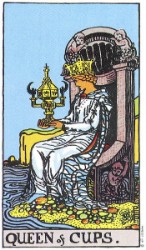
And the Queen of Cups might be, “A pathologically jealous bitch who will destroy anyone she views as a potential rival.”

And the Knight of Wands might be, “An intellectual zealot who will ride right over anyone who disagrees with his elitist, fanatical point of view.”

It’s just a matter of looking at the real Kings, Queens, Knights, and Pages in, “history,” and seeing how they really behaved.  What human qualities do the royalty cards really represent?  What kind of a person was Henry the Eighth?  Was the Sun King all that sunny? How horrible were most of these people?

We may have to create a special card to represent Trump, though.  Maybe the King of Putz? I’m open to suggestions . . .