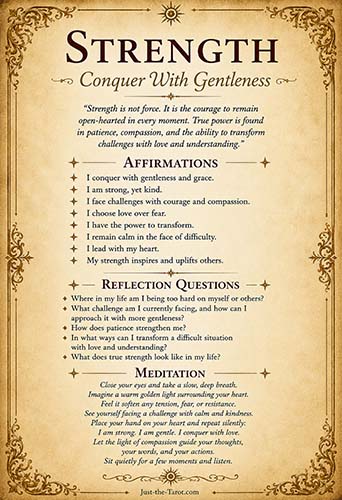
The Judgement Card and Starting a New Cycle

Judgement card,Judgement tarot card,Judgement in a tarot reading,Judgement card definition, Judgement card meaning, tarot major arcana, self judgement, the judgement card and reincarnation,Judgement Day,gabriel angel, tarot lesson, tarot blog, tarot books

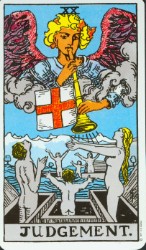
There’s something creepy about the Judgement card, especially to the modern eye. When we see corpses climbing out of coffins, our minds immediately go to some sort of a zombie apocalypse where dead people are trying to take over the earth.

Yikes! Run away, run away!

JUDGEMENT AND REINCARNATION

Obviously, the intent of the card and the artist was to portray Judgement Day, when the Angel Gabriel blows his horn and we all rise from the dead and have a nice brunch with Jesus and his Daddy.

While that may seem like a bit of a primitive belief today, it probably points toward the doctrine of reincarnation. We have to remember that the Tarot was introduced into Europe at a time when the Inquisition was in full swing. The priests and monks would happily tie you to a stake, light a fire under you, and toast s’mores if you deviated from their doctrine.

Reincarnation definitely deviated from their doctrine, so the designers of the Tarot cards had to have a way to introduce the concept without getting themselves killed. Judgement Day was the closest Christian analog to the concept, and so we have this very Christian scene with reanimated corpses.

JUDGEMENT AND THE TAROT JOURNEY

The Major Arcana of the Tarot shows the journey of the new soul, as illustrated in The Fool, through the various stages of life here on the Earth School. At different times we may reincarnate as royalty, as warriors, as mystics, as priests and prelates, each lifetime a stage of growth and evolution.

Included in those cards is the Death card. Now, the logical question here is why the Judgement card wasn’t paired with the Death card. That would be the normal Christian sequence, would it not? You live your life, you die, and then Gabriel blows his horn and you pop into heaven or hell. Period.

Using the Christian doctrine, Death and Judgement should have been the last cards in the deck. But they aren’t.

The Death card is followed by eight other cards, indicating that mortal death is far from the end. It isn’t even the end of that one journey; it’s just a rest stop.

The Judgement card reminds us that the journey goes on. When one lifetime ends, another begins, and we continue to reincarnate again and again until we finally learn the lessons we’re here to learn.

THE SYMBOLS

The symbolism in the Judgement card is a little heavy-handed.

The coffins represent past restrictions or boundaries that we’ve overcome.

The group of people rising from the coffins—man, woman, child—shows people rising from those restrictions and moving beyond them.

The angel blowing the horn denotes the divine vibration that reanimates us in our new incarnation.

For the most part, I discard the cross on the flag as another sop to Christian theology. If it were simply a white flag, we could interpret that as purification and starting over.

The mountains show the new obstacles that we’ll have to overcome in the next incarnation.

WHEN YOU GET JUDGEMENT IN A READING

Judgement obviously indicates a major awakening in our life. When it turns up in a reading, it shows that we’ve made a judgement about our lives and we’re turning in a whole new direction.

It is NOT about being judged by some cranky old man in the sky.

Ultimately, Judgement is about self-judgement. It’s taking stock of our lives and deciding whether we’re satisfied with what we’ve been doing. It’s making a decision about what direction we move in next. In most cases, if the card is upright, it indicates that we’ve made a positive judgement—we can look back over our incarnation and feel that we’ve made the right decisions and we’ve evolved. Now it’s time to move onward.

If the card is reversed, it can indicate harsh, negative self-judgement. It can indicate that we’re clinging to the past, refusing to move forward and deal with the karma we’ve accumulated. We choose to stay in our little boxes rather than starting a new cycle.

And, having made those judgements, we move on to the last card in the Tarot cycle, the new lifetime, The World.

THE MOON — DON’T MISTAKE MOONLIGHT FOR DAYLIGHT

The Moon is traditionally associated with illusion, uncertainty, and blurred reality—but why? By exploring the card’s dreaming face, open gateways, howling dog and wolf, and the strange creature rising from the water, we uncover a deeper meaning: The Moon represents those moments when subconscious fears, desires, memories, and intuitions begin coloring our perception of reality. The road is still there—we’re simply seeing it by moonlight.

The Moon is traditionally one of the more unsettling cards in the Tarot.

Illusion. Confusion. Deception. Uncertainty. Blurred reality. Things are not quite what they seem.

Those are perfectly good definitions, but they leave us with a question: Why? Why does the Tarot choose this particular collection of images to represent those ideas?

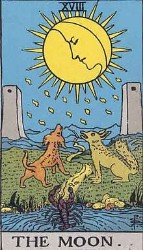
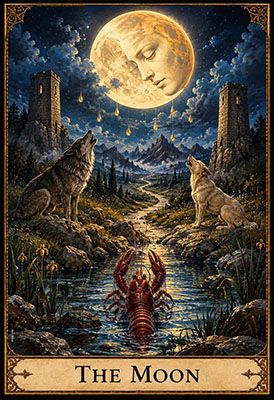
There is a pool of water with a strange crustacean crawling out of it. A dog and a wolf howl at the Moon. A road passes between two towers and winds away through an empty landscape. Strange drops of energy fall from the sky.

And above everything hangs an enormous Moon containing a human face.

Perhaps the key to understanding the entire card is right there.

The Moon’s eyes are closed.

THE DREAMING MOON

Look carefully at the Moon’s face. It isn’t screaming or displaying terror. It appears troubled, perhaps even melancholy, but its eyes remain firmly closed.

Nighttime. Moonlight. Closed eyes.

The Moon is dreaming. And perhaps it isn’t experiencing a nightmare so much as a troubled dream—the kind in which uncomfortable material from somewhere below consciousness begins working its way toward the surface.

That gives us a very different way of approaching the card.

During ordinary waking consciousness, we maintain a reasonably firm distinction between the world outside us and the world inside us. We distinguish memories from present events, imagination from observation, fears from facts.

Dreaming changes all of that.

The boundaries become porous. Memories mingle with fantasies. Fears become characters. Emotions become landscapes. People who died twenty years ago walk through the front door. Places we’ve never visited somehow feel completely familiar.

The subconscious speaks—but it speaks in its own peculiar language. And while we’re dreaming, we generally accept all of this as reality.

THE GATES ARE WIDE OPEN

The two towers in The Moon are usually interpreted as something we must pass through on our journey along the road.

But suppose we’ve been traveling in the wrong direction.

There is no obvious destination at the distant end of the road. The Tarot frequently used radiant light and other visual devices to suggest a glorious destination or spiritual attainment.

There is nothing like that here.

So what happens if we reverse direction?

Suppose we are traveling toward the pool rather than away from it.

Suddenly the towers become an entrance. And there’s something peculiar about that entrance: It’s wide open. The towers are separated by a broad expanse of land. There is no wall connecting them. No gate. No guardhouse. No barrier.

Nothing prevents us from entering.

That makes wonderful psychological sense if the landscape represents a dream—or, more broadly, a state in which the subconscious is becoming unusually active.

The gates between conscious and subconscious experience are open.

THE DOG AND THE WOLF

Just inside those gates we encounter two closely related animals: a dog and a wolf.

The wolf represents the primitive animal—the creature governed by instinct. The dog is essentially that same creature after thousands of years of domestication. It has learned the rules. It has adapted itself to human civilization.

Psychologically, the pairing is almost irresistible.

The wolf can represent our primal self: instinct, appetite, fear, aggression and everything else civilization has taught us to restrain. The dog can represent our conditioned self—perhaps even the ego attempting to maintain order.

And what does a guard dog do when something approaches the boundary?

It barks.

Both animals are howling at the Moon.  The intruder is the subconscious material and that’s what the wolf and dog are trying to keep out.

The ego may try to keep the contents of the subconscious at bay, but under the influence of The Moon, it cannot maintain complete control.

SOMETHING IS COMING OUT OF THE WATER

Then we reach the pool.

Water has long been associated with the subconscious and emotional realms, and the Tarot places it prominently at the bottom of the card.

And something is crawling out of it.

The strange crayfish or lobsterlike creature appears almost prehistoric. It belongs to a much older world than either the dog or wolf.

If the pool represents the subconscious, this creature can represent something equally ancient within ourselves: primitive psychological material that predates our carefully constructed conscious identity.

And it is rising.

The Moon, of course, controls the tides. The Tarot imagery therefore gives us a marvelous metaphor: the Moon is drawing something out of the depths.  Out of our depths.

Something normally submerged is coming to the surface.

That may be a forgotten memory. An instinct. A fear. A desire. An intuition. An old emotional wound. A creative image. Something we know without knowing how we know it.

The important point is that it has crossed—or is crossing—the boundary into consciousness.

WHAT IS A “MOON-LIKE” STATE?

This is where the symbolism becomes much broader than ordinary dreaming.

We might think of The Moon as depicting any Moon-like condition in which ordinary conscious control is weakened and subconscious material begins exerting an unusually powerful influence over our perception.

Dreaming is the most obvious example, but it isn’t the only one.

Intense anxiety can create a Moon-like state. So can grief, infatuation, obsession, fantasy, emotional overwhelm, trance, intense creativity and other experiences in which our interior world becomes unusually powerful.

And that’s when perception becomes tricky. Because we aren’t necessarily hallucinating something that doesn’t exist. More often, we’re interpreting something real through the light of our subconscious mind.

THE ROPE AND THE SNAKE

Imagine walking outside at night and seeing something long and curved lying across the path.

In daylight, you would immediately recognize it as a rope. But under uncertain moonlight, it looks remarkably like a snake. Your heart pounds. Your body tenses. You stop walking.

The rope is real.

The darkness is real.

Your fear is certainly real.

The snake isn’t.

Your subconscious has taken incomplete sensory information and supplied the rest.

That is The Moon.

And we do precisely the same thing psychologically.

An employer sends an email saying, “Could you come see me this afternoon?” If you’re already worried about losing your job, your subconscious may immediately finish the story. I’m getting fired.

Someone you love seems unusually quiet. They’re angry with me.

A new romantic interest doesn’t answer a message. They’re losing interest.

In each case, something actually happened. But subconscious fear, desire or expectation supplied information we didn’t possess.

The feeling may be real. The interpretation may not be.

BUT SOMETIMES THE SNAKE REALLY IS A SNAKE

And this is where The Moon becomes more interesting than a simple warning against illusion.

The subconscious isn’t necessarily wrong. Sometimes what we call intuition may be the subconscious assembling information the conscious mind hasn’t yet recognized.

Perhaps that quiet person really is angry. Perhaps something actually is wrong at work.

Perhaps some tiny combination of expression, tone of voice and behavior has registered below conscious awareness and produced the unmistakable feeling that something isn’t right.

That is why intuition belongs to The Moon just as surely as illusion does.

The problem is that under moonlight it can be extraordinarily difficult to distinguish between them.

Is this intuition—or fear? Am I perceiving something—or projecting something? Do I know this—or merely feel it very strongly?

The Moon doesn’t necessarily answer those questions.

It tells us that we need to ask them.

WHEN THE MOON APPEARS IN A READING

When The Moon appears, we don’t necessarily need to assume that somebody is lying to us or that everything around us is an illusion. Instead, the card may be telling us that subconscious material is strongly coloring our perception of the situation.

Something may be rising from the depths that deserves our attention. But this probably isn’t the moment to accept every fear, intuition, fantasy or suspicion as objective fact.

Ask yourself:

What do I actually know?

What am I assuming?

What am I afraid might be true?

What do I want to be true?

Is an old experience influencing how I interpret the present one?

Could my intuition be noticing something my conscious mind hasn’t recognized yet?

And perhaps most importantly:

Do I have enough light to see this clearly yet?

Sometimes we simply have to wait until we can see more clearly.

The lesson of The Moon may not be that we should distrust everything we experience in darkness. Dreams, emotions, instincts and intuitions can contain profound truths.

But they speak the symbolic language of the subconscious, and that language shouldn’t always be taken literally.

A rope may look like a snake.

A fear may masquerade as intuition.

And intuition may arrive disguised as an irrational fear.

The road is still there.

We simply have to remember that we’re seeing it by moonlight.

The Tower Card – Anatomy of a Nervous Breakdown

Exploring the healing side of The Tower card through a Jungian perspective.

As Above, So Below.

As Within, So Without.

— The Kybalion

Most discussions of The Tower card in the Tarot focus almost entirely on what is happening in a person’s outer world.

And that’s understandable. It’s a dramatic card.

When The Tower appears, we think of events like divorce, losing a job, bankruptcy, foreclosure, the collapse of a relationship, or some other sudden upheaval. The outer destruction can be breathtaking.

But as the old Hermetic principle suggests, whatever is happening in our outer lives is also reflected in our inner lives.

When the structure of our exterior world collapses, something often collapses inside us as well.

That inner destruction is what we used to call a nervous breakdown.

Everything we believed to be true is suddenly called into question. Relationships with people we trusted crumble into dust. Beliefs we held dear for most of our lives are revealed to be false. The future we thought we understood disappears.

We find ourselves psychologically adrift. We have lost our place in the world, and we cannot seem to figure out how to get back to normal.

In Jungian terms, The Tower can be understood as the sudden and sometimes catastrophic dismantling of a rigid psychological structure. An outgrown persona, a false framework, or a collection of deeply held illusions can no longer withstand reality.

Something has to give.

And the symbols contained in The Tower provide a remarkably clear roadmap of that process.

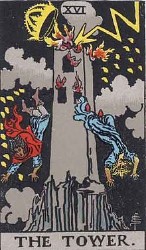
THE CROWN

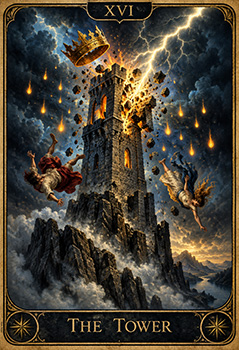
At the top of the tower is a crown, blasted away by the lightning strike.

Psychologically, the crown can represent the sovereignty of the conscious ego—the part of us that believes it understands what is happening and has things under control.

To put that more plainly, we all have to believe in ourselves.

When we get up in the morning, we need to believe that we are sane, that the world is reasonably predictable, and that what we do during the day will make sense and help keep us safe.

That is the everyday ego.

It goes to work. It pays the bills. It buys the groceries. It makes appointments. It solves problems. It deals with all those other human beings who are out there trying to do exactly the same thing.

Most of the time, it does a pretty good job.

But what happens when our predictable, manageable world completely falls apart?

What happens when we discover that our partner has been cheating on us? What happens when we lose the job we thought was secure? What happens when our finances collapse, our health fails, or something else occurs that simply cannot be fitted into the story we have been telling ourselves?

That wonderful daily wizard—the ego—suddenly doesn’t look so powerful.

The part of us that we believed would always keep us safe, solve the problem, and keep the car between the white lines suddenly has no idea what to do.

There is an old expression heard in twelve-step programs:

“My best thinking got me here.”

That is the crown being blown off the tower.

The Tower Poster – 13 X 19 Inches – Available on etsy

THE LIGHTNING STRIKE

And the moment we finally realize that we have really and truly lost control can feel like being struck by lightning.

It comes as a sudden flash of recognition—a crisis of the mind.

We may have spent months or even years denying that anything was seriously wrong.

“No,” we tell ourselves, “my partner couldn’t possibly be cheating on me. Those secretive phone calls and motel receipts don’t necessarily mean anything.”

Or perhaps we keep telling ourselves that we are just a little short financially this month.

Yes, we were short last month too. And the month before that. But things will turn around. We just need to tighten the budget a little more.

Until suddenly the truth becomes impossible to avoid.

We realize that we have been lying to ourselves.

And we are in real trouble.

That is the lightning strike.

The illusion doesn’t gradually fade away. For one terrible instant, we see through it.

And once we have seen the truth, we cannot completely unsee it.

THE FALLING FIGURES

The two figures blasted from the tower can represent the parts of ourselves that can no longer remain protected inside the old psychological structure.

We cannot hide in our intellectualizations and rationalizations anymore.

We built this magnificent structure called “my life.”

It protected us. It gave us an identity. It told us who we were, what mattered, whom we could trust, and what tomorrow was supposed to look like.

Now we have been thrown out of that safe little nest.

We are in psychological free fall.

There is nothing to hold on to because the things we once held on to are precisely the things that are collapsing.

But there is another way to look at those falling figures.

They are being grounded.

Literally.

They are falling out of an artificial structure and back toward the earth.

Toward reality.

The experience may hurt like hell. It may scare us half to death. But if we survive the fall, we have something we did not have while we were safely locked inside the tower:

The possibility of starting over.

Because now we have to.

THE GOLDEN SPARKS

Look carefully at the Waite-Smith Tower and something else is falling alongside the two figures.

Twenty-two golden drops or sparks surround the tower.

There are several ways of interpreting them. From a Jungian perspective, we might see them as psychic energy released when an old structure breaks apart. Spiritually, they can suggest something even more intriguing: illumination arriving in the middle of catastrophe.

The card is not simply about destruction.

It is about the destruction of a structure that can no longer contain who we are becoming.

At the very moment our old world is falling apart, new possibilities are appearing.

That doesn’t make the destruction pleasant.

It doesn’t mean we should pretend that loss isn’t loss, or pain isn’t pain.

But it suggests that destruction and creation may sometimes be two parts of the same process.

We cannot discover who we really are while clinging desperately to an identity built from fear, illusion, habit, or other people’s expectations.

The curse of The Tower is that everything we believed in may be falling apart.

The blessing is that we are finally free to discover what remains when it does.

And from there, we can begin again.

INDIVIDUATION

Perhaps the greatest difficulty with The Tower is that it feels like an ending.

Our world has been blown apart.

But psychologically, the ending may only be one stage in the process Carl Jung called individuation—the lifelong process of becoming a more whole and authentic individual.

As I said at the beginning, we all need a coherent story about ourselves in order to function.

But when that story becomes increasingly dependent upon denial, rationalization, self-deception, or an identity we have outgrown, maintaining it requires more and more energy.

Eventually reality catches up with us.

Eventually the false edifice comes tumbling down.

Jung used another wonderfully complicated word that is particularly appropriate to The Tower: enantiodromia.

Put very simply, it describes the tendency of something pushed too far in one direction to produce movement toward its opposite.

Psychologically, what we refuse to acknowledge does not simply disappear. The more rigidly we cling to one side of ourselves or one version of reality, the more pressure can accumulate in what has been excluded.

Eventually something breaks through.

In the language of Tarot, lightning strikes the tower.

When we become stuck in our own falsehoods—in the stories we tell ourselves and sometimes everyone around us—life has an uncomfortable way of getting us unstuck.

One way or another.

The false structure is burned down to its foundations so that something more authentic can eventually be built in its place.

And that may be the most important thing to understand about The Tower.

We naturally stare at the lightning.

We stare at the flames.

We stare at the people falling through the darkness.

But the destruction is not the entire story.

The Tower is also the clearing of ground.

Something false has ended.

Something real can now begin.

Yes, the burning tower is what catches our attention. But the deeper message of The Tower may be the healing that becomes possible after the destruction.
Temperance: Finding the Right Proportion

The Temperance card as a personal balancing act.

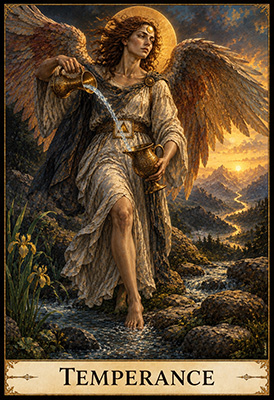
Temperance is usually defined as moderation, balance, and avoiding extremes. But the imagery of the Tarot suggests something more precise. Temperance is not simply about having less of something—it is about discovering the right proportion between different forces in our lives.

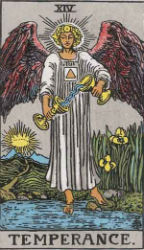
At first glance, Temperance can seem like one of the simpler cards in the Major Arcana. An angel stands quietly, pouring liquid from one cup into another. One foot rests on the earth while the other stands in water. Behind the angel, a path winds toward distant mountains and a brilliant golden light.

Nothing particularly dramatic is happening.

But perhaps that’s the point.

Temperance is about the delicate process of bringing different parts of ourselves—and different parts of our lives—into the proper relationship with one another.

Temperance as a Cardinal Virtue

Temperance is one of the traditional cardinal virtues, along with Justice, Fortitude and Prudence. Three of these virtues survive quite recognizably in the standard Tarot: Justice, Strength (Fortitude), and Temperance. Prudence is conspicuously absent. (For more on the missing Prudence card, see my previous post Dear Prudence – The Mysterious Case of the Missing Tarot Card.)

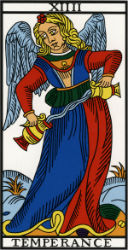
In older Tarot decks such as the Tarot de Marseille, the imagery of Temperance is considerably simpler than that of the Waite-Smith card. We generally see an angelic figure pouring liquid between two vessels.

To modern eyes, pouring something from one cup to another may not immediately suggest moderation. Historically, however, the connection was much more obvious.

The older meaning of temperance was not merely abstaining from excess. The Latin root temperare carries the sense of regulating, combining or mixing things in the correct proportions. Water and wine, for example, could be mixed so that the strength of the wine was tempered.

This gives us the fundamental symbolism of the two cups.

Temperance is creating the right mixture.

And importantly, the right mixture does not necessarily mean equal amounts.

Balance Doesn’t Always Mean 50/50

We often visualize balance as equality. Put the same amount on both sides of a scale and equilibrium is achieved.

Temperance offers a different model.

Suppose you’re making soup. Equal quantities of salt and water would certainly represent equality, but they wouldn’t produce anything you’d want to eat.

The ingredients have to be present in the proper proportions.

The same principle applies to life.

We need work and rest, but that doesn’t mean twelve hours of each every day. We need independence and connection, reason and emotion, discipline and spontaneity. What constitutes the right balance changes according to circumstances.

Temperance therefore represents something more sophisticated than simply avoiding extremes. It asks:

What does this particular mixture require?

That is a dynamic form of balance. The liquid in the card is moving because maintaining equilibrium often requires continual adjustment.

Temperance Poster – 13 X 19 – Available on Etsy

One Foot in the Water, One on the Land

A. E. Waite and Pamela Colman Smith greatly expanded the symbolism of the older Tarot image.

One of their most famous additions is the angel’s peculiar stance: one foot rests on dry land while the other is immersed in water.

Water traditionally represents emotion, intuition, imagination and the unconscious. Solid ground suggests physical reality, stability, practicality and the tangible world.

The angel doesn’t choose between them.

It participates in both.

We could read this very simply as advice to feel deeply without losing our grounding.

Someone who lives entirely through emotion may be swept along by every changing feeling. Someone who insists upon remaining completely rational and controlled may become disconnected from intuition and emotional reality.

Temperance asks for neither extreme.

It asks us to discover the useful proportion between them.

Head and Heart

Something similar appears in the symbols placed upon the angel’s forehead and chest.

It’s entirely possible that these were meant to represent the influences of the heart and brow chakras. And their placement naturally suggests another important polarity.

Head and heart.

Thought and feeling.

Reason and intuition.

Again, the card does not tell us which should win.

Imagine someone deciding whether to remain in a difficult relationship. Their emotions may say one thing while the observable facts say another.

Temperance doesn’t necessarily say, “Ignore your feelings and be rational.”

Nor does it say, “Follow your heart regardless of the evidence.”

Instead it asks the person to bring both sources of information into the same vessel.

What do I feel?

What do I know?

And what conclusion emerges when both are given their proper weight?

That’s Temperance at work.

Justice Weighs; Temperance Blends

This also gives us an interesting distinction between two of the cardinal virtue cards.

Both Justice and Temperance concern balance, but they achieve it differently.

Justice balances by weighing.

Temperance balances by blending.

Justice holds a scale. Separate things are compared against one another until equilibrium is established.

Temperance pours one thing into another. The elements aren’t merely compared—they become part of a new mixture.

That makes Temperance particularly useful when apparently contradictory needs are both legitimate.

Perhaps someone is pursuing an important creative project but becoming exhausted.

The answer isn’t necessarily to abandon the project. Nor is it necessarily to push harder.

Temperance asks a different question:

What proportion of work and restoration will allow the work to continue?

Perhaps the problem isn’t the goal at all.

The mixture is wrong.

The Path Toward the Light

Behind the angel is another important feature: a winding path disappearing into the distance.

It eventually reaches mountains beneath a brilliant golden light, within which appears something resembling a crown.

This introduces movement into an otherwise remarkably still card.

The angel isn’t walking along the road. The angel stands quietly performing the work of integration.

The road comes afterward.

That suggests a beautiful practical interpretation of Temperance. Sometimes we cannot see how to move forward because something within our present situation is badly out of proportion.

We may be working too much and recovering too little.

Thinking endlessly and feeling too little.

Giving constantly and receiving nothing.

Dreaming without acting—or acting without considering where we’re going.

When those elements are brought back into a workable relationship, the next step may become much easier to see.

The balance isn’t the destination.

The balance makes the journey possible.

Temperance in a Tarot Reading

When Temperance appears in a reading, the familiar advice to practice moderation is perfectly valid—but we can make it considerably more useful.

Temperance may be saying:

Something here needs to be brought into better proportion.

That might mean less of something, but it could equally mean more of something that has been neglected.

Too much work may require rest. Too much caution may require a little risk. Excessive emotional involvement may need perspective. Excessive intellectualization may need feeling. Constant giving may need to be balanced by receiving.

The card can also suggest that two things we’ve been treating as opposites don’t actually require an either/or decision. Perhaps they can be combined.

And that brings us back to those two cups.

The angel continually pours between them, adjusting the mixture.

Temperance isn’t asking us to eliminate one part of ourselves in favor of another. It asks us to discover how the different parts belong together.

Find the right proportion. Integrate the opposites. And when the mixture is right, continue along the path.

The Hanged Man Tarot Card: Finding Peace When You Can’t Move Forward

Explore The Hanged Man Tarot card as a symbol of suspension, powerlessness, reversed perspective and radical acceptance—and discover what it means when you cannot force life forward.

At first glance, The Hanged Man seems like a rather unpleasant Tarot card.

A man is hanging upside down by one foot. His hands are behind his back. He isn’t going anywhere, and there doesn’t appear to be anything he can do about it.

And yet there is something peculiar about him.

He doesn’t seem particularly bothered by the situation.

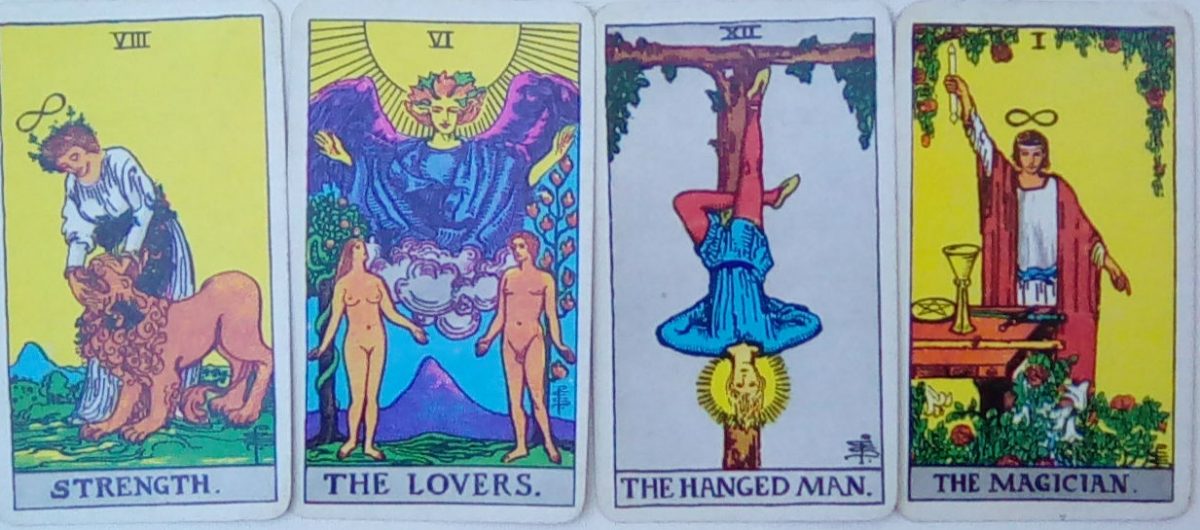
In the familiar Rider-Waite-Smith version, Arthur Edward Waite goes considerably further and gives the man a halo, transforming the image into something approaching spiritual illumination. But the essential image is much older than Waite’s deck. Earlier Tarot de Marseille versions already show the same strange figure hanging upside down with an unexpectedly composed expression.

So perhaps we don’t need the halo to understand him.

Instead, let’s look at what is actually happening to this man.

The Hanged Man Poster – 13 X 19 – Available on Etsy

What’s in the Card?

1. Suspension: Life Has Come to a Stop

The most obvious thing about The Hanged Man is that he is suspended.

He isn’t walking somewhere. He isn’t working on something. He isn’t fighting an enemy or pursuing a goal.

He’s literally going nowhere.

That’s very different from many of the other figures in the Major Arcana. The Charioteer is moving forward. The Hermit has deliberately withdrawn from the world. The Magician is actively manipulating the objects on his table.

The Hanged Man can do none of those things.

His normal activities have been interrupted.

We all encounter periods like this. A plan stalls. A relationship enters limbo. An illness interrupts our routines. We’re waiting for somebody else’s decision. Something we depended upon disappears. We simply don’t know what comes next.

Our natural response is usually:

“How do I get things moving again?”

But The Hanged Man raises a different possibility.

Perhaps, for the moment, we aren’t supposed to be moving.

Sometimes suspension is not an empty space between important events. The suspension itself is the experience.

2. Powerlessness: He Cannot Change His Circumstances

This brings us to the more uncomfortable aspect of the card.

The Hanged Man isn’t merely resting.

He’s powerless.

One foot is tied to the structure above him. His hands are behind his back. Whatever brought him into this situation, he cannot simply decide that he’s had enough, stand up and walk away.

That makes The Hanged Man a remarkably useful card for situations involving things outside our control.

We tend to associate personal power with the ability to change circumstances. If something is wrong, we fix it. If a door is closed, we find another door. If something isn’t working, we try harder.

Usually that’s excellent advice.

But sometimes there genuinely isn’t anything we can do.

And continuing to struggle against an unchangeable situation doesn’t necessarily give us more power. Sometimes it merely exhausts us.

The Hanged Man confronts us with one of life’s most difficult truths:

There are circumstances we cannot control.

The question then becomes not “How do I control this?” but:

“How am I going to live while this is true?”

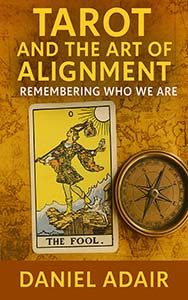
Tarot and the Art of Alignment – Available on Amazon

3. Reversed Perspective: The World Looks Completely Different

Now something interesting happens.

Because the Hanged Man cannot go anywhere, his perspective changes instead.

Quite literally, his world has turned upside down.

The trees, the earth, the sky, other people—everything familiar is suddenly being seen from an unfamiliar angle.

Nothing necessarily changed in the outside world.

His position within it changed.

This may be the great gift hidden inside the card.

When our usual methods stop working, we may begin questioning assumptions we never previously thought to question.

What if success isn’t what I thought it was?

What if this relationship isn’t what I believed it was?

What if the thing I’ve been desperately pursuing isn’t actually what I need?

What if the situation I’ve been calling a disaster looks entirely different when viewed from another angle?

The Hanged Man doesn’t necessarily give us the answers.

He interrupts our habitual way of looking for them.

Sometimes we don’t acquire a new perspective because we’re wise enough to seek one.

Sometimes life turns us upside down until we have no choice.

4. Serenity: Acceptance Without Defeat

And finally we come to the strangest feature of the entire card.

The Hanged Man looks serene.

That’s remarkable.

If his face showed terror, the card would be about victimization.

If he were struggling against his restraints, it would be about imprisonment.

If he looked defeated, it would be about despair.

But he doesn’t.

Somehow, this man who cannot move, cannot escape and cannot control his circumstances has found peace within them.

That doesn’t necessarily mean he likes what has happened.

Acceptance isn’t approval.

Nor does acceptance mean that he will remain suspended forever.

It simply means that he has stopped fighting the reality of the present moment.

There is an enormous psychological difference between:

“This must not be happening.”

and:

“This is happening. What now?”

The first keeps us locked in combat with reality itself.

The second gives us somewhere to stand—even when, like The Hanged Man, we aren’t technically standing at all.

The Four Lessons of The Hanged Man

Taken together, the picture gives us four stages:

Suspension: My normal life has stopped.

Powerlessness: I cannot presently change this situation.

Reversed Perspective: Since I cannot change the situation, perhaps I can see it differently.

Serenity: I can stop fighting what I cannot presently change.

That’s considerably richer than simply defining The Hanged Man as “waiting” or “sacrifice.”

Sometimes the card may indeed indicate a sacrifice. Sometimes it may simply tell us to wait.

But at its deepest level, The Hanged Man seems to address one of the most difficult human experiences:

What do we do when there is nothing we can do?

His answer is extraordinary.

We stop.

We surrender the struggle—not necessarily forever, but for now.

We allow ourselves to see the situation from an entirely different perspective.

And perhaps we discover that peace does not always have to wait until the problem has been solved.

When The Hanged Man Appears in a Reading

When The Hanged Man appears, it may be useful to ask:

* Where has my life become suspended?

* What am I trying to control that I genuinely cannot control right now?

* What might this situation look like if I turned my assumptions upside down?

* What would acceptance look like if I stopped confusing acceptance with defeat?

The Hanged Man does not promise that someone is about to cut the rope.

He offers something stranger and perhaps more valuable:

the possibility of finding peace while we’re still hanging there.

The Wheel of Fortune: Why Does Luck Seem So Unfair?

The Wheel of Fortune and dealing with the archetype of luck.

Was the Good Luck Fairy taking a bathroom break on the day you were born?

When your ship came in, were you at the airport?

Did your four-leaf clover turn out to be poison ivy?

If you’re one of the many people who feel like you came into this world under a cloud of bad luck, then The Wheel of Fortune may have an important lesson to teach.

The Archetype of Luck

The Wheel of Fortune is the Tarot’s great symbol of luck.

Every culture throughout history has recognized the existence of fortune, fate, chance, or providence—even if no one has ever managed to define exactly what luck is.

What we do know is that it seems wildly uneven.

Some people appear to be born under a lucky star. Opportunities seem to fall into their laps. They meet the right people at the right time. Doors mysteriously open.

Others spend their lives feeling like every door they approach has a “Closed” sign hanging on it.

Most of us live somewhere in between.

Luck is a remarkable force when you stop and think about it.

A successful investor can lose everything in a market crash through no fault of their own. Someone who has struggled financially for decades buys a lottery ticket on a whim and wakes up wealthy.

When Lady Luck smiles on us, everything seems to flow.

When she decides to leave, it can feel like nothing goes right.

The Wheel of Fortune represents that mysterious current moving beneath the surface of our lives.

The Old Interpretation

The older Tarot decks presented a fairly blunt message.

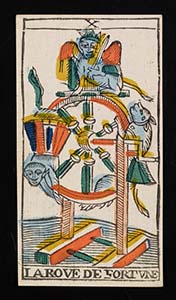
In the Tarot de Marseille, the wheel looks almost like a giant hamster wheel. Strange creatures ride its rim. One is climbing upward while another is tumbling down. At the top sits a stern ruler holding a sword, reminding us that fortune constantly changes.

The message is simple:

Up.

Down.

Up again.

Good luck.

Bad luck.

No one stays at the top forever, and no one remains at the bottom forever.

Waite’s New Interpretation

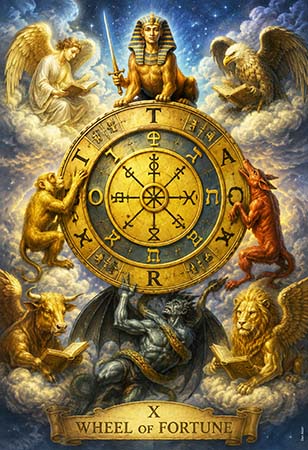
Wheel of Fortune Poster by Dan Adair – Available on Etsy

Arthur Edward Waite and Pamela Colman Smith transformed the image into something much more mysterious.

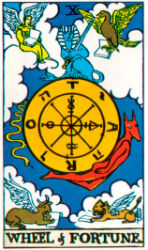
The crude wheel became a beautiful circular symbol filled with esoteric imagery. Around its rim are symbols drawn from alchemy, Hebrew mysticism, and ancient tradition. The dark figure that once ruled the wheel has been pushed to the bottom.

Now the highest point belongs to the Sphinx.

That change is significant.

The Sphinx represents wisdom, mystery, and understanding. Rather than brute force ruling our fate, wisdom now sits above the turning of fortune.

And then there are those wonderfully puzzling creatures in the four corners.

They’re the fixed signs of the zodiac—Taurus, Leo, Scorpio, and Aquarius.

For some reason…

…they’re all reading books.

It’s one of those delightful details that makes the Waite-Smith deck so fascinating.

So What Does It Mean?

The Victorian occultists didn’t deny the existence of luck.

Quite the opposite.

They believed that cycles of fortune were simply one of the natural laws of life.

Just as the tides rise and fall…

Just as the moon waxes and wanes…

Just as the seasons endlessly change…

Human beings move through cycles of prosperity and hardship.

The wheel turns.

It always has.

It always will.

The real question isn’t whether we can stop the wheel.

We can’t.

The question is whether we have to ride every revolution with it.

The four fixed signs may be offering an answer.

Unlike the creatures clinging to the wheel itself, they remain calm, steady, and detached. They aren’t fighting the motion below them. They’re quietly studying. Learning. Watching.

In other words, they’ve found a place that doesn’t move.

That’s the deeper lesson of the card.

We may not be able to control the cycles of fortune, but we can learn not to be controlled by them.

When life enters one of those stretches where everything seems to go wrong, we can remember:

This, too, shall pass.

Oddly enough, the more fiercely we struggle against a season of bad luck, the more we become entangled in it.

Acceptance isn’t surrender.

It’s stability.

The Wheel of Fortune reminds us that while the wheel keeps turning, we don’t always have to spin with it.

Perhaps that’s the greatest stroke of luck of all.

Tarot and the Art of Alignment – Available on Etsy as a Downloadable PDF

The Happiness Compass: What If Joy Is Trying to Tell You Something?

Exploring the idea that happiness is a compass that points us in the right direction.

We’ve all heard the old saying from the 1960s:

“If it feels good, do it.”

Unfortunately, our culture often teaches the exact opposite.

Work a job you hate because it’s practical.

Stay in a relationship that’s gone stale because it’s your duty.

Ignore your dreams because they’re unrealistic.

Somewhere along the way, many of us begin wearing our unhappiness like a badge of honor, as though misery proves we’re responsible adults.

But what if we’ve misunderstood happiness?

What if it isn’t a luxury?

What if it’s a compass?

Happiness Isn’t Random

One of the central ideas in my book, Tarot and the Art of Alignment, is that happiness isn’t merely an emotion that comes and goes.

It’s directional.

It points.

When we’re moving toward the life we’re meant to live, something inside us quietly says:

“Yes…this is the way.”

Likewise, when we drift away from our authentic nature, life begins to feel heavy, flat, and strangely empty.

Our emotions aren’t simply fluctuations. They’re messages that point us in the right direction.

The Simplest Question

Perhaps the most radical question we can ask ourselves isn’t:

“How much money am I making?”

Or…

“What will other people think?”

It’s simply this:

Am I happy here?

If the honest answer is no, don’t treat it as a failure. Treat it as information.

Your inner compass is trying to get your attention.

Isn’t That Just Hedonism?

Whenever people talk about following happiness, someone inevitably objects:

“That sounds selfish.”

Or…

“Life isn’t supposed to be fun all the time.”

I agree. This isn’t about chasing pleasure.

There’s a profound difference between pleasure and fulfillment.

Pleasure asks:

“What feels good right now?”

Fulfillment asks:

“What kind of joy helps me become more fully myself?”

Real happiness isn’t the endless pursuit of dopamine. It’s the quiet satisfaction that comes from living in harmony with your deepest nature.

Happiness Is a Side Effect of Truth

One of the biggest misconceptions in our culture is that happiness comes from accumulating enough “stuff.”

More money.

A bigger house.

A nicer car.

More followers.

Those things may be enjoyable. But they’re not necessarily meaningful.

Real happiness comes from something much deeper.

It appears when we’re living with integrity.

When our actions reflect who we really are.

When we’re doing the work we came here to do—even if that work is difficult.

Happiness isn’t the goal.

It’s the glow that appears when we’re moving in the right direction.

Entering the Flow

Psychologists call it flow.

The Taoists simply speak of being in harmony with the Tao.

Athletes call it being in the zone.

Whatever name we give it, most of us have experienced those rare moments when intention and action become one.  When life seems to go perfectly.

Time disappears.

Energy rises.

Life feels strangely enchanted.

Synchronicities seem to increase.

Everything flows naturally.

To me, this is the Happiness Compass operating at full strength. The needle of the compass isn’t spinning in circles anymore – it’s pointing solidly in one direction.

Why We Lose Our Way

The tragedy is that most of us weren’t taught to trust this inner guidance.

We were taught to obey.

To fit in. To be practical. To put duty ahead of authenticity.

Eventually the compass is still there…

But it’s buried beneath expectations, obligations, financial worries, and the opinions of other people.

Eventually, we may not even remember what genuine happiness feels like, because we’ve forgotten who we truly are.

How the Tarot Can Help

This is one of the reasons I love working with the Tarot.

The cards don’t tell us who we’re supposed to become. They remind us who we already are. They gently reveal where we’ve ignored our intuition, overridden our happiness, or wandered away from our authentic path.

The cards are about helping us realign with ourselves and answer that basic question:  Am I happy? If the answer is no, they tell us why.

Perhaps happiness isn’t something we have to chase.  Perhaps it’s simply something that we need to remember.

⸻

Adapted from Chapter Six of my new book, Tarot and the Art of Alignment: Using the Cards to Remember Who You Are, which explores how the Tarot can become a practical compass for discovering your authentic path and living with greater joy, purpose, and synchronicity.


Now available – Tarot Meditation Kits

Navigating the Ocean of Self-Help

Using the Tarot to become your own guru.

Why We Don’t Need Another Guru

The Buddha once taught that certain conditions are necessary for enlightenment:

  • Being born human
  • The appearance of a Buddha or enlightened teacher
  • A way for those teachings to reach human beings
  • People capable of understanding and applying the teachings

Today, I’d like to focus on that third point: How do the teachings reach us?

And perhaps more importantly:

How do we know which teachings are right for us?

From Ancient Villages to Information Overload

In the Buddha’s day, getting a spiritual message out into the world was no small task.

There were no emails, podcasts, YouTube channels, online courses, or social media platforms.

The Buddha spent roughly forty-five years walking from village to village, teaching anyone who was willing to listen. Basically, walking up to strangers and saying, “Hey, I’ve got an idea . . .”

Imagine that.

No marketing department. No sales funnel. No premium membership package.

Just a teacher sharing what he had discovered.

Fast forward twenty-five centuries and we’ve arrived at the opposite problem.

When I wake up in the morning, my inbox is usually full of messages promising to transform my life, align my energy, unlock hidden potential, activate forgotten abilities, and teach me the secret to happiness, wealth, abundance, success, enlightenment, or all of the above.

The challenge is no longer finding information.

The challenge is sorting through it.

Never before in human history have so many spiritual teachings, philosophies, techniques, and self-help systems been available to so many people.

And yet many of us remain confused about what actually works.

The Billion-Dollar Search for Happiness

The self-help industry generates tens of billions of dollars each year.

That’s a big chunk of enlightenment.

Most programs follow a familiar pattern:

  • I have achieved success.
  • You have not.
  • I have a special technique, secret, or system.
  • Pay me, and I’ll teach it to you.

To be fair, some of these teachers are sincere and genuinely helpful.

Many people have benefited from books, courses, seminars, and retreats.

But there is also a tendency to assume that one technique should work for everyone.

What if that assumption is wrong? What if there is no universal formula? What if different people require different paths?

Satisfaction Not Guaranteed

One thing I’ve noticed over the years is that self-help programs rarely come with guarantees.

Suppose someone is struggling financially and spends thousands of dollars attending an exclusive retreat in Costa Rica. They spend a week sipping organic hot chocolate, munching down tofu rice cakes, and opening their heart chakra.

At the end of the experience, they may feel inspired, motivated, and hopeful. But what if nothing really changed, other than they have a better tan and a lighter wallet?

What if their life remains exactly the same six months later?

The explanation is often that they didn’t practice enough, believe enough, surrender enough, visualize enough, or raise their vibration enough.

In other words, if MY method doesn’t work, it’s YOUR fault.

Let’s face it: if one teacher could make everyone happy, rich and successful, we’d all be going to that teacher and we’d all be rich.

Instead, the emails continue to pile up in our in-boxes.

Where the Tarot Is Different

This is where my book, Tarot and the Art of Alignment, takes a different arapproach.

The central idea is surprisingly simple:

The wisdom we seek is not somewhere outside of us.

It is already within us.

The challenge is learning how to access it.

The Tarot provides a remarkably effective way to do exactly that.

Rather than telling us what to think, the cards help us listen.

Rather than asking us to surrender our authority to a teacher, they encourage us to develop trust in our own inner knowing.

Rather than offering one answer for everyone, they reveal the unique lessons, challenges, and opportunities present in each individual’s life.

In this model, the Tarot is not a fortune-telling device.

It is a mirror.

A guide.

A conversation with the deeper parts of ourselves.

Your Own Inner Teacher

One of the things I appreciate most about the Tarot is its simplicity.

A Tarot deck costs roughly twenty-five to thirty bucks.

Once you have it, the conversation can begin.

There are no monthly subscription fees. No expensive retreats. No advanced certification programs. No endless upselling.

Just you, the cards, and the wisdom waiting beneath the noise of everyday life.

The goal is not to find another guru.

The goal is to discover the teacher that has been quietly waiting within you all along.

And in my experience, the Tarot is one of the most powerful keys to that door.

Why Your Visualizations Aren’t Working (And How the Tarot Can Help)

Using the Tarot to boost your visualizations and manifestations.

One of the strangest things about visualization and manifestation is that almost everyone who practices it has seen it work at least once.

A check arrives unexpectedly in the mail.

A new opportunity appears out of nowhere.

A problem that seemed impossible to solve suddenly resolves itself.

Most of us who have explored manifestation have had moments like that. The experience is so striking that we walk away convinced that there really is something to it.

The problem is that it often seems wildly inconsistent.

It’s as if we were handed a magic wand that only works on Tuesdays.

Sometimes it works beautifully.

Sometimes nothing happens at all.

So what’s going on?

Now available – Tarot Meditation Kits

THE PROBLEM MAY NOT BE THE UNIVERSE

Most manifestation teachings assume that if something isn’t showing up in our lives, we simply aren’t visualizing hard enough, affirming often enough, or maintaining a high enough vibration.

Sometimes that’s true.

But sometimes the problem lies somewhere else entirely.

Sometimes we’re trying to manifest something that we don’t actually want.

That sounds strange, but think about it for a moment.

We’re constantly being told what we should want.

More money.

A bigger house.

A more prestigious career.

A newer car.

A better relationship.

Society hands us a ready-made list of desires and then encourages us to spend our lives pursuing them.

But what if those desires aren’t really ours?

Suppose your deepest dream is to live a quiet, peaceful life creating art, writing books, tending a garden, or herding goats in the mountains.

Trying to manifest a million-dollar corporate empire might actually move you farther away from what you truly want.

One part of you is saying:

“I want more money.”

Another part is saying:

“I want simplicity, freedom, and peace.”

The messages conflict.

And when they conflict, the energy behind them weakens.

THE HIDDEN VOICE OF THE SUBCONSCIOUS

There’s another reason manifestation sometimes fails.

Many of our deepest beliefs operate below conscious awareness.

We may consciously desire wealth while secretly believing that wealthy people are selfish or corrupt. So why would we want to be one?

We may desire a loving relationship while carrying a deep conviction that we are unworthy of love.

We may want success while simultaneously fearing attention, criticism, or failure.

In those situations, our conscious intentions and our subconscious beliefs are pulling in opposite directions.

No amount of affirmations can completely overcome a belief that remains hidden and unexamined.

THE TEN PERCENT PRINCIPLE

One idea that has always fascinated me is what I call the Ten Percent Principle.

Rather than focusing on the times manifestation didn’t work, focus on the times it did.

If your visualization works only ten percent of the time, that’s still astonishing.

That’s magic.

That’s making something appear out of nothing, simply using the power of your mind and heart.

So how do we increase that success rate from 10% to 50%?  How do we start to live the magic that we know is there?

HOW THE TAROT CAN HELP

This is where the Tarot becomes so valuable.

Most manifestation techniques begin with a conscious desire.

“I want more money.”

“I want a new relationship.”

“I want a better job.”

The Tarot approaches the problem from the opposite direction.

Because Tarot communicates through symbols, images, and archetypes, it speaks directly to the subconscious mind. It bypasses many of the stories, assumptions, and social programming that shape our everyday thinking.

The cards often reveal things we weren’t expecting to hear.

Sometimes they show us hidden fears.

Sometimes they reveal limiting beliefs.

And sometimes they show us that the thing we’re trying to manifest isn’t what we really want at all.

The Tarot doesn’t simply ask:

“What do you want?”

It asks:

“What does your soul want?”

THE SOUL SPREAD

One of the central ideas in my new book, Tarot and the Art of Alignment, is a reading method I call the Soul Spread.

Rather than focusing on future events, the Soul Spread is designed to uncover your deeper purpose, natural gifts, hidden challenges, and the path that brings the greatest sense of meaning and fulfillment.

In other words, it helps answer a question that most manifestation systems never ask:

“Am I trying to create a life that is actually mine?”

When our conscious goals and our deeper purpose come into alignment, something remarkable often happens.

The struggle begins to ease.

Synchronicities increase.

Opportunities appear.

The path feels more natural.

It’s as though life itself begins cooperating with us.

Perhaps the secret isn’t learning how to force the universe to give us what we want.

Perhaps the secret is discovering what we truly want in the first place.

And that’s a journey the Tarot is uniquely qualified to help us make.

⸻

Tarot and the Art of Alignment is now available as both a Kindle edition and a downloadable PDF. If you’ve ever wondered why your visualizations seem inconsistent—or how to uncover the deeper desires beneath your conscious goals—the book offers a practical framework for using the Tarot as a tool for alignment, purpose, and personal transformation.

Why Are We Here? Bridey Murphy, Reincarnation, and the Search for Purpose

Exploring past life memories and looking for meaning with the Tarot.

In 1956, a hugely controversial book called The Search for Bridey Murphy became a national sensation.

The book documented a series of hypnotic regressions conducted by a Colorado businessman named Morey Bernstein. His subject, Virginia Tighe, was initially regressed to childhood memories. Instead, she began describing what appeared to be a previous life in nineteenth-century Ireland.

According to the story, Virginia remembered being a young woman named Bridey Murphy who had lived in County Cork. She described places, customs, people, and events in remarkable detail.

The reaction was immediate.

Some people were fascinated.

Some were deeply moved.

Some were furious.

Others thought the whole thing was ridiculous.

The book became a bestseller. It was turned into a movie. Comedians did Bridey Murphy jokes. People threw Bridey Murphy-themed parties. Children even dressed up as Bridey Murphy for Halloween.

Imagine that for a moment.

Millions of Americans were suddenly debating whether reincarnation might actually be real.

That would be surprising today.

In the buttoned-down 1950s, it was astonishing.

After all, more than ninety percent of Americans then identified as church-going Christians. Traditional Christian theology leaves very little room for reincarnation. From the perspective of many ministers and priests, the idea was outright heresy.

Naturally, there were efforts to debunk the claims, expose errors, and prove that the entire thing was a misunderstanding or a fraud. Eventually the public moved on.

But I’ve always been fascinated by one aspect of the story.

Why did so many people take it seriously in the first place?

Why didn’t they simply dismiss it out of hand?

The Strange Familiarity of Past-Life Memories

Today, surveys suggest that roughly a third of Americans believe in reincarnation. Among many New Age and metaphysical communities, the idea is simply taken for granted.

Most of us, however, don’t have detailed memories like Virginia Tighe supposedly did.

We don’t remember specific addresses.

We don’t remember the names of shopkeepers.

We don’t remember exact dates.

What many people do experience are odd fragments.

Half-memories.

Dreams.

Emotions that seem to belong to someone else and yet somehow feel intimately familiar.

Over the years I’ve spoken with dozens of people who have reported experiences like this.

One person remembered being a stone carver in ancient Egypt. What struck him most wasn’t some grand spiritual revelation. It was the memory of being exhausted, sweaty, and desperately in need of a bath.

Another remembered being a poet during the American Revolution. His strongest impression wasn’t literary genius. It was embarrassment over being a terrible poet.

Yet another remembered escaping from a Mississippi jail during the 1930s, stealing a car, and taking a brief joyride before being captured.

None of these people could provide names, dates, or evidence that would satisfy a historian.

Yet they all said the same thing.

The memories felt absolutely real.

In some ways, I find these stories more convincing than tales of being Cleopatra or Joan of Arc. Most people don’t remember being kings and queens.

If reincarnation is real, the overwhelming majority of us probably spent most of our lives being ordinary people.

Which leads to a much more interesting question.

Why Would We Keep Coming Back?

Let’s suppose, for the sake of argument, that reincarnation is real.

Why are we doing this?

Why would a soul return over and over again?

The idea that we’re reincarnating merely to carve stones, write bad poetry, or heist a car seems a little absurd.

Most of us instinctively feel that there must be more to it than that. We sense that there must be a purpose behind the process.

Perhaps we’re here to learn.

Perhaps we’re here to grow.

Perhaps we’re here to develop qualities that cannot be learned anywhere else.

Perhaps we’re here to become something.

What’s fascinating is that we often ask these questions about our past lives while completely ignoring them in our current one.

We look at a supposed lifetime in ancient Egypt and ask:

“What lesson was I learning?”

“What was the purpose of that incarnation?”

“What was I supposed to become?”

Yet many of us live our present lives without ever asking the same questions.

We get up. Go to work. Pay bills. Consume several million calories. Accumulate possessions. Grow older.

And eventually die.

Then we wonder why life sometimes feels strangely empty.

Perhaps the real mystery isn’t whether we’ve lived before.

Perhaps the real mystery is why we’re here now.

Understanding the “Why”

This is one of the questions that led me to develop the ideas explored in Tarot and the Art of Alignment.

What if the purpose of Tarot isn’t merely to predict future events?

What if the cards can help us discover why we came here in the first place?

Most Tarot readings focus on questions such as:

“Will I get the job?”

“Will this relationship work out?”

“What should I expect next week?”

Those are perfectly valid questions.

But there may be a deeper question hiding beneath all of them.

“What am I here to become?”

In my own work, I’ve found that Tarot can be an extraordinary tool for exploring that question.

The cards often reveal recurring themes, gifts, challenges, and lessons that seem to run through an entire lifetime.

They can help us recognize where we’re in alignment with our deeper purpose—and where we’ve drifted away from it.

In the coming weeks, I’ll be writing more about the Soul Reading described in Tarot and the Art of Alignment, a Tarot spread specifically designed to explore these larger questions of purpose, destiny, and meaning.

Because whether reincarnation is real or not, one question remains:

Why are you here?

And that may be the most important question any of us will ever ask.