The World – The Dance of Life

The World marks the completion of the Tarot’s great journey—but every ending contains a new beginning. Explore the card’s mysterious wands, its connection to The Fool and The Magician, and the symbolism of dance, rebirth, integration, and divine play.

As the final card of the Major Arcana, The World is both the end of a cycle and the beginning of a new one.

Yes, we’ve come to the end of the long journey through the archetypes. The lessons have been learned, the trials endured, and the pieces brought together. But Tarot doesn’t really have an ending. The moment one journey is completed, another begins.

The World isn’t a period.

It’s a doorway.
THE WREATH — COMPLETION AND REBIRTH

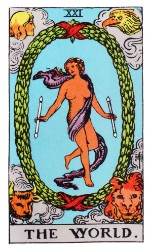
The most obvious symbol of completion is the enormous wreath surrounding the central figure.

But look at its peculiar shape. Rather than being perfectly circular, the wreath forms a long oval. It can easily suggest an opening, a portal—and perhaps even the shape of the birth canal.

Seen that way, the figure isn’t simply standing triumphantly inside a wreath celebrating what she has accomplished. She’s passing through it. She’s arriving at the destination and simultaneously being born into another world.

That’s one of the great paradoxes of The World: completion and beginning are the same event. Every genuine transformation eventually requires us to leave behind the person who began the journey.

THE FOOL, THE WORLD, AND THE DANCE OF LIFE

At the very beginning of the Tarot journey we encountered The Fool.

He’s filled with such exuberance that he practically dances toward the edge of a cliff. He doesn’t know where he’s going. He hasn’t experienced the Magician, the Lovers, Death, the Devil, the Tower, the Moon or any of the other archetypal encounters awaiting him.

He simply steps forward.

Now look at the figure in The World.

She’s dancing, too. But this is a very different dance. The Fool dances because he doesn’t yet know what lies ahead. The World dances because she does.

She has traveled through the entire cycle and somehow recovered the joyous freedom with which she began it.

This idea has a fascinating parallel in Hindu philosophy.
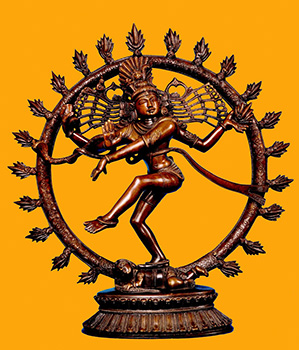
Shiva as Nataraja—the Lord of the Dance—is portrayed dancing within a great circle of flame. His dance represents the ceaseless movement of existence: creation, preservation, destruction and renewal.

The visual resemblance to The World is striking: a dancing figure surrounded by a circular boundary representing something vastly larger than the individual.

Hindu traditions also give us the wonderful concept of līlā, usually translated as “divine play.” Līlā suggests that creation doesn’t necessarily arise because the divine lacks something or needs to accomplish some desperately important objective. Creation can be understood as spontaneous expression—something closer to art, music, play or dance.

An artist paints. A musician plays. A dancer dances. Creation creates.

This doesn’t mean that suffering is unreal or that life should never be taken seriously. It suggests something subtler: beneath all our struggling, planning and attempts to control events, there may be another way of participating in existence.

We can dance with it.

The woman in The World is being born into something new, but she isn’t grimacing with effort. She’s having a hell of a lot of fun doing it.

THE MAGICIAN, THE WORLD, AND INTEGRATION

There’s another fascinating connection between The World and one of the earliest cards in the Major Arcana.

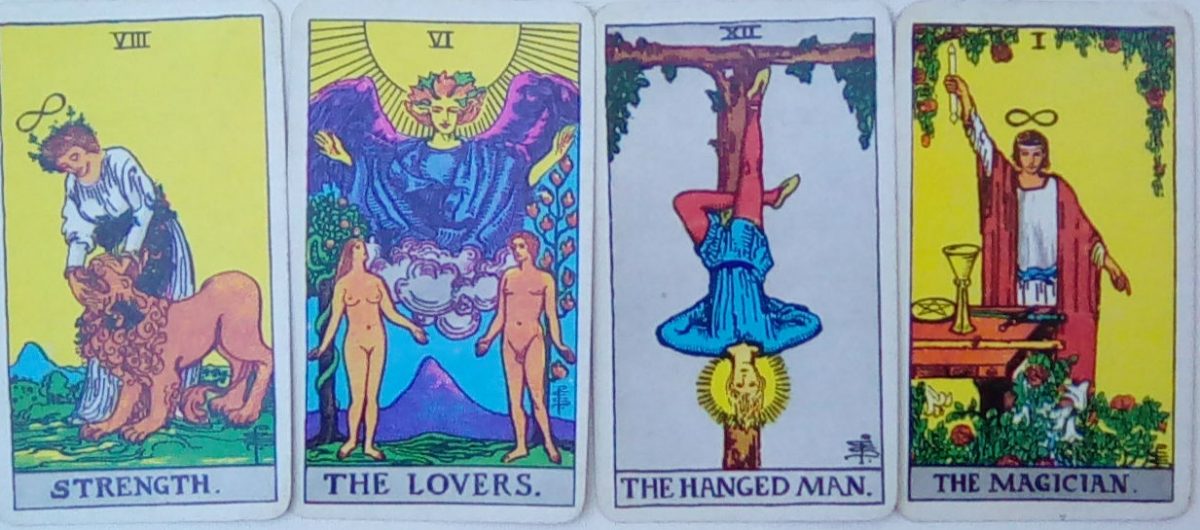
The woman holds two peculiar short, double-ended wands loosely in her hands. We’ve seen that wand before. The Magician holds one.

But notice the difference in how the two figures use them.

The Magician raises his wand deliberately toward heaven while pointing his other hand toward Earth. His entire posture communicates intention:

I will make something happen.

He channels divine power into manifestation. He gathers the four elemental tools before him and consciously directs his will.

The World no longer needs to do that. She holds two wands, perfectly balanced on either side of her body. She isn’t pointing them anywhere. She isn’t commanding anything. She almost seems to be playing with them.

They’ve become part of the dance.

The Magician uses magic. The World embodies it.

At the beginning of the journey, we have to learn that we possess creative power. We have to discover intention, will, concentration and the ability to shape our lives. But perhaps there comes a point when even that must be surrendered.

The Magician says: I am creating my world.

The World says: I am the creation.

THE MAGIC CIRCLE

Now notice the four mysterious figures occupying the corners of the card: the human or angel, eagle, bull and lion.

They have a long symbolic history extending far beyond Tarot, but within the Tarot’s esoteric correspondences they can be associated with the four fixed signs of the zodiac:

Aquarius — Air

Scorpio — Water

Taurus — Earth

Leo — Fire

Once again, all four elements are present. We encountered them on the Magician’s table at the beginning of the journey. Now they surround The World.

This gives the card an almost ritual quality. In Western ceremonial magic, the four directions and their elemental correspondences can be invoked around a ritual space. Symbolically, then, we can imagine the dancing woman standing within a great magic circle surrounded by the forces of creation.

But something has fundamentally changed.

The Magician stood before the elements and manipulated their symbols. The World dances among them.

Mind, emotion, body and spirit are no longer competing forces that need to be brought under control. They have become parts of a larger whole. That is integration.

And perhaps that’s what The World ultimately means by completion. Not perfection. Not reaching a place where nothing difficult will ever happen again.

Wholeness.
WHEN THE WORLD APPEARS IN YOUR READING

When The World appears in a reading, something has come full circle.

A long process may be reaching completion. You may finally understand something that once confused you, finish something you’ve worked toward for a long time, or realize that you’ve simply outgrown a particular chapter of your life.

But don’t mistake completion for stagnation. The World almost always contains the seed of what comes next.

You may be standing at exactly that strange threshold where you can look backward and say, “I’ve finished,” while simultaneously looking forward and realizing, “Now I begin again.”

The card can also indicate integration. Pieces of yourself that once seemed contradictory may finally be learning to coexist. The intellectual, emotional, physical and spiritual parts of your life may be finding their proper relationship with one another.

And sometimes The World offers an even simpler message:

Stop trying so hard to control the dance.

You’ve learned more than you realize. You have the tools. You’ve survived the journey.

Now loosen your grip on the wands.

Listen for the music.

And dance.
What Are Tarot Archetypes (And Why They Matter)?

The influence of Tarot archetypes in our lives.

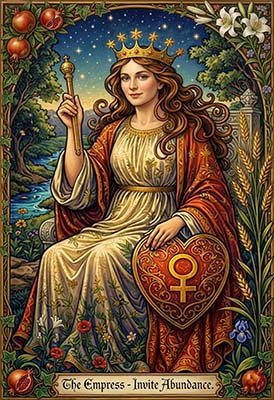
The Empress Abundance Poster – available on Etsy

In any serious discussion of the Tarot, you’ll hear people referring to the Major Arcana as “archetypes.”

Which sounds very impressive… but also raises a perfectly reasonable question:

What, exactly, is an archetype?

The idea goes all the way back to Plato, but in modern usage it’s most often associated with the Swiss psychologist Carl Jung.

Jung defined archetypes as:

Universal, inherited patterns of thought or imagery that exist in the collective unconscious of all human beings.

Which is a fine scholarly definition… but for most of us, it lands somewhere around:

“Huh?”

So instead of trying to define archetypes academically, let’s talk about how they actually show up in real life—especially through the Tarot.

The Major Arcana

If you’re reading a Tarot blog, you probably already know the basics.  The Tarot is divided into two parts, the Minor Arcana and the Major Arcana.

• The Minor Arcana (Wands, Cups, Pentacles, Swords) deal with everyday life.

• The Major Arcana (22 cards) deal with something deeper.

The images of the Major Arcana are the ancient core of the Tarot, dating back to the 15th century (and possibly earlier). The Minor Arcana didn’t even get illustrated scenes until the Waite-Smith deck in 1909.

So when we talk about archetypes in Tarot, we’re really talking about the Major Arcana.

They’re Not Personal

Here’s the first—and most important—thing to understand:

Archetypes are not personal.

Now, I know that sounds strange, because they feel very personal.

If you pull Death or The Tower in a reading, it doesn’t feel abstract. It feels like the universe just singled you out and dropped a piano on your head.

But here’s the shift:

• Minor Arcana = things you’re generating and can influence

• Major Arcana = larger forces moving through your life

For example:

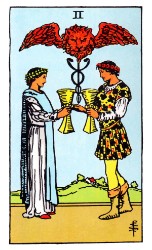
• Two of Cups → You’re falling in love.  Those are personal dynamics, like the type of person you find attractive, are you feeling lonely, do you want a partner?

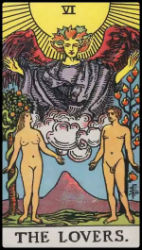
• The Lovers → Love as an energy is active in your life (archetypal force.). The energy isn’t something you’re creating and it’s not attached to any one person.  It’s just moving through your life.

In other words:

You don’t create archetypes—you experience them.

Sometimes They’re Collective

Archetypes don’t just affect individuals—they can sweep through entire cultures.

Jung noticed this before World War II when many of his German patients reported eerily similar dreams of White men riding black horses through the night—images that seemed to foreshadow the rise of Nazism. He interpreted this as a collective archetype emerging.

And honestly, you don’t have to look far to see this kind of thing in today’s politics.

We’ve all watched people we’ve known for years suddenly shift—sometimes dramatically—in beliefs, behavior, or identity. It can feel almost like they’ve been “taken over.”

From an archetypal perspective, that’s not entirely wrong.

These are psychic weather systems—and sometimes whole populations get caught in them.

The important takeaway?

Just because an energy is present doesn’t mean you have to identify with it.

Shelter in Place

Obviously, not all archetypes are pleasant.

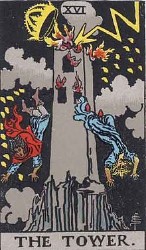
• The Tower → destruction

• The Moon → confusion, illusion, emotional instability

• The Devil → addiction, entrapment, shadow patterns

So what do you do when one of these shows up?

You’ve got two main options.

1. Shelter in Place

Sometimes the best strategy is simple:

Ride it out.

Think of a tornado. You don’t go out and negotiate with it. You don’t try to “manifest” it away.

You get into the storm shelter and wait.

Life sometimes does this:

• Relationship ends

• Job disappears

• Everything falls apart at once

That’s Tower energy.

And sometimes the wisest response is:

“Okay… this is happening. Let’s survive it.”  Hunker down and wait for it to go away.

2. Rise Above It

The Kybalion talks about this strategy quite a bit.

Even if you can’t control the event, you can control your response.

You can:

• shift your perspective

• regulate your emotions

• choose your interpretation

For instance, with The Tower, you can respond to it in one of two ways.

• “This is a disaster. I lost my job, my partner divorced me, I’m out of money. My life is ruined.”

OR

• “This is a reset. I get to rebuild from scratch. My old life is gone, so I get to build my new life exactly as I want it.”

The external event is the same.

The internal vibration is not.

And that makes all the difference.  We haven’t, “cured,” what happened to us, but we’ve vastly diminished it effects on us.

Invoking the Positive Archetypes

Here’s where things get interesting.

Even though archetypes aren’t created by us…

We can align with them.

Think of it less as control and more as tuning in.

Examples:

• Feeling stuck financially? → work with The Empress (abundance, growth)

• Struggling with confidence? → invoke The Emperor (authority, structure)

• Feeling lonely? → connect with The Lovers (connection, union)

• Burned out? → step into The Hermit (withdrawal, restoration)

This can be done through:

• meditation

• visualization

• journaling

• even just keeping the image nearby

You’re not creating the energy.

You’re opening yourself to it and inviting it’s power into your life.

 Conclusion

So what is an archetype, really?

It’s not just a symbol.

It’s not just a psychological idea.

It’s more like a living pattern of energy that moves through human experience.

Sometimes it lifts us.

Sometimes it breaks us open.

Sometimes it sweeps through entire cultures like a storm.

But here’s the key:

You are not powerless in the face of archetypes.

You may not control when they appear,

but you do have a say in how you meet them.

You can:

• recognize them

• name them

• step back from them

• align with the ones that serve you

And over time, something interesting happens:

Instead of being tossed around by these forces…

You start to navigate them.

And that’s really what Tarot is for.

“Just the Tarot,” by Dan Adair – Available on Amazon

The High Priestess: What It Really Means to Trust Your Intuition

The High Priestess Archetype and learning to trust our intuition.

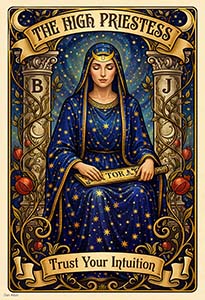
In my High Priestess affirmation poster, I chose the phrase:

“Trust Your Intuition.”

It sounds simple. Almost obvious.

And yet it’s one of the most misunderstood instructions in the entire Tarot.

We say things like:

“I have a feeling . . “

“I just have a hunch . . .”

“I’m getting bad vibes about this . . .”

All human beings have intuition — some more than others. Some people sneer at it as a primitive, pseudo-mystical leftover from a less scientific age. Others practically swim in it, using it as their primary guide through life.

Most of us fall somewhere in the middle.

We occasionally get flashes of clarity about which path to take and which to avoid. But most of the time we default to logic. We try to predict outcomes. We use our brains rather than our hearts.

And then sometimes — usually in hindsight — we think:

“Damn, I knew better . . .”

So it’s worth asking:

What is intuition… and what is it not?

“Just the Tarot,” by Dan Adair – available on Amazon

It’s Not Fear

One of the biggest confusions we have is mixing intuition up with the limbic system — the ancient part of the brain responsible for fight-or-flight.

That system exists to keep us alive. It detects threat. It reacts instantly.

It was what warned our ancestors that something dangerous was hiding in the trees. We experience it today as:

  • The hairs rising on the back of our neck
  • A sudden jolt of anxiety
  • The feeling that someone is watching us

That reaction can feel mysterious. But it isn’t mystical. It’s biological.

True intuition does not trigger fight-or-flight.

It doesn’t flood the body with adrenaline. It doesn’t tighten the chest.

Real intuition is calm.

It arrives quietly, with a sense of understanding. It clarifies rather than agitates. Instead of panic, it brings steadiness — a subtle reassurance that says:

“This is right – you’ll be okay.”


It’s Not Rapid-Fire Prediction

The brain is constantly predicting the future based on the past.

When we encounter a new situation, the mind instantly searches its archives for similar experiences. It matches patterns, runs comparisons, and projects possible outcomes — all in a fraction of a second.

We’re mostly unaware this is happening.

So when we say we “have a feeling” about someone, what we often have is a memory.

If we once had a terrible experience with a brunette woman wearing purple socks, we may feel wary of a new brunette wearing purple socks. We call that a vibe.

It isn’t.

Some people process these patterns so quickly that it seems magical. Certain personality types — INFJs and INFPs, for example — are especially skilled at rapid, intuitive-seeming synthesis.

But that process is still rooted in past data.

True intuition is different.

It is not logical.

It is not based on memory.

It may have absolutely nothing to do with what has happened before.

It is a clear message about the present moment — even when there’s no obvious reason you should understand what you understand.


It’s Not Fragmented

You may have met highly sensitive or empathic people whose lives are chaotic.

On the surface, that seems contradictory. If they absorb more information than most, shouldn’t they navigate life more easily?

Not necessarily.

When someone takes in too much external input without discernment, they can lose track of what belongs to them and what belongs to others.

If they’re near someone who is anxious, they become anxious. If they’re around anger, they internalize anger.

Soon they feel as if they’re having five contradictory “intuitions” at once.

But intuition does not contradict itself.

It does not conduct committee meetings in your head.

It does not present twelve equally compelling paths and demand that you choose one immediately.

True intuition is singular.

It points.

It does not debate.


Clear, Calm, and Quietly Joyful

Perhaps the greatest hallmark of genuine intuition is that it brings relief.

It removes doubt.

It dissolves mental noise.

It doesn’t shout. It doesn’t demand. It doesn’t come with fireworks.

It simply settles into you and says:

“Yes, this is it.”

And when it does, there is often a subtle happiness attached to it — not excitement, not mania — but a deep rightness.

That is the High Priestess.

She does not force reality.

She does not argue.

She does not panic.

She knows.

And when that knowing arrives within you, the work is not to question it endlessly — it is to honor it.

That is what “Trust Your Intuition” really means.


The Fool as Antidote: The Dictator Versus the Inflatable Frog

From inflatable frogs to the Tarot’s Sacred Jester, here’s why humor and play can puncture authoritarian posturing—and help renew our courage.

 Is it possible that what may save us from the political disaster we’re living through is pure Fool energy? Could it be that—more than protests and lawsuits—what ultimately rescues us is dancing, delight, and unapologetic Foolishness?

Portland, Expecting Doom… and Choosing Play

For months I dreaded a federal show of force in Portland, Oregon. My intuition said it was the logical target for a maximal authoritarian flex. Portland has all the necessary history.  It was the headquarters for the American Nazi movement prior to World War II.  And then there was a long, loud counter-history—artists, woo-woos, college kids, mystics, nude bike rides, and the endlessly invoked specter of “Antifa.” In short: the perfect symbol for the far right to try to crush.

When deployment was announced—National Guard plus a strong contingent of the ICE Orcs — I braced for the worst. Instead, Portlanders greeted it with protesters dressed as inflatable frogs and dancing bananas. Someone declared an “emergency nude bike ride,” and thousands of bare bodies on glittering bicycles poured into the streets.

The effect? Paralysis by absurdity. How does a macho, heavily armed ICE Orc “win” against a dancing banana? Left-brain force met right-brain play and simply short-circuited. The nation watched inflatable amphibians wiggle across our screens—and we laughed.

Remembering the Original Fool

We forget: in the oldest Tarot, The Fool wasn’t a tidy wanderer in tailored tights. He was a street entertainer—juggler, dancer, illusionist—utterly at home in an inflatable frog suit. In medieval courts, the Fool doubled as Sacred Jester, the one person allowed to lampoon the king and point out when the Emperor had no clothes.

That’s what Portland’s play did: it punctured the costume of power.

Why Laughter Works

Authoritarianism demands reverence. It thrives when we’re solemn and frightened. Laughter breaks the spell. It reveals the man behind the curtain, the baggy suit, the orange pancake makeup. Humor pulls us back into the Universal flow of playfulness and creativity, where life replenishes itself. Authoritarianism sits outside that flow; it eventually collapses under its own rigidity.

A Fool for Dark Times

We often gaze at the modern, elegant Fool and forget his deeper medicine. The original Fool brought giggles and belly-laughs during dark eras. That may be precisely what we need now.

Does this mean we abandon lawsuits, organizing, or policy? Of course not. It means we season courage with joy, protest with parody, pressure with play. When we add the Fool, we recover something essential: our sovereign refusal to be grim.

The Vanguard in Frog Suits

I didn’t expect the resistance to arrive on two wheels in nothing but body paint, but here we are—and it makes perfect sense. The antidote to the present darkness may well be to harness Fool energy and refuse to stop playing.

Let’s keep showing up with discipline and delight. March and mock. Organize and improvise. Because when we laugh together, power’s mask slips—and light gets in.

“Just the Tarot,” by Dan Adair – complete definitions and layouts for doing your own Tarot readings.

Donald Trump and the Dark Archetypes of the Tarot

A closer look at the dark archetypes the Donald Trump embodies and has brought into our national consciousness.

Most of us embody certain archetypes as we move through life.

Some of us are “The Wounded Healer” and endeavor to share our personal healing with others. Some of us are “The Magical Child,” who lead others back to their own creativity and wonder. Yet others are “The Wizards,” who have a deep understanding of life’s mysteries.

Donald Trump seems to embody several archetypes symbolized in the Tarot—none of them good—and it might be interesting to take a look at them.

THE MAGICIAN REVERSED

In order to really understand this one, we need to look at the older version of The Magician from the original Tarot decks. Contrary to the shining image portrayed in the modern decks, The Magician was much more of a street performer than an occultist. The closest we have to that in modern life is the stage magician who makes flowers appear out of his sleeve or pulls rabbits from his hat. In a word, he was an illusionist.

Another version of that is what is referred to as a “flim-flam man” in the South. He’s the guy who sets up three shells on a table and you have to guess which one the pea is hidden under while he shifts the shells faster than the eye can see. He’s also known as a con artist.

Trump is very much in that tradition. From his fake university to his fake charities to his golden tennis shoes and engraved guitars, he’s been conning people his entire life. He is such an excellent illusionist that he’s actually managed to con his way into the White House—not once but twice.

THE HIEROPHANT REVERSED

The Hierophant is basically a religious leader—more specifically, a leader of a formal religion rather than a spiritual path. When he’s reversed, he’s a false teacher, a pastor who’s leading his sheep-like followers down a path to the slaughterhouse.

This “religious” aspect of Trump may be the most surprising of all. As many people have noted, his most devoted followers have all of the characteristics of cult members. Despite the facts that he’s a serial adulterer, a pathological liar, a convicted felon, and an adjudicated rapist, they’re convinced that he’s been sent by God to watch over the United States. He’s violated every single teaching of Jesus Christ, yet he’s become the de facto leader of Christian nationalism.

JUSTICE REVERSED

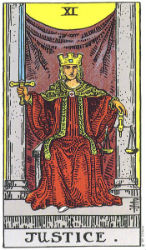
The Justice card is strongly associated with the legal system. Quite simply, when it’s upright it indicates a fair and balanced outcome in the law. Reversed, it indicates injustice and a lack of fairness.

Using his immense wealth and a stable of crooked lawyers, Trump has managed to evade 90% of the legal consequences that he should have faced. Yes, he fomented an insurrection; yes, he stole top secret documents and lied about it; yes, he’s committed one impeachable offense after another. But he continues to skate on the consequences. When his pet attorney general says, “No one is above the law,” she means no one but Trump.

THE DEVIL

If The Lovers card exemplifies love, then The Devil exemplifies hate. Trump is very fond of saying that he hates his opponents, he hates Democrats, he hates liberals, and he hates immigrants. In many ways, he’s hatred and vindictiveness personified.

Moreover, The Devil is a card of people being chained to their basest instincts. Trump has an amazing power to bring out the very worst in people. In just a few short years, he’s managed to turn half of the country into xenophobic, homophobic, misogynist racists who are happily ripping up our Constitution in order to celebrate their prejudices.

THE MOON

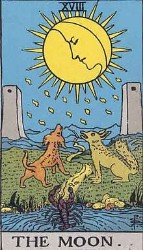
At its root, The Moon is the card of insanity. It’s the card of both delusions and illusions. You only have to listen to one of Trump’s speeches to know that he’s out of his mind. From rambling about sharks eating electric boats to windmills driving whales insane to his obsession with toilets that won’t flush, he’s a never-ending fountain of gibberish and word salads.

And beyond that, he drives the rest of us to the verge of insanity. He’s like this brain virus that’s slowly eating away at our serenity and sense of well-being. His view of the world is so skewed, so bizarre, so out of touch with reality that it’s astounding—and yet, here he is in our daily lives, ranting and raving and frothing at the mouth.

CONCLUSION – NAMING THE ARCHETYPES TO WEAKEN THEM

Archetypes are powerful forces shaping our destinies, our worldviews, and even our collective behavior. When they surface on a national scale, they can feel like hurricanes we can only endure.

But awareness is its own kind of power. By recognizing these archetypes and calling them by name, we loosen their grip. We stop being unwitting participants in someone else’s drama and begin to reclaim our agency. In a time when dark archetypes seem to walk among us, simple recognition is a first act of resistance.

“Just the Tarot,” by  Dan Adair – a kindle ebook available on Amazon

Taking Religion Out of the Tarot – A Look at the Real Tarot Deck

For centuries, Christianity condemned Tarot as witchcraft — yet hidden Christian symbols helped the cards survive the Inquisition. This post uncovers how those overlays disguised the deck’s true archetypal roots.

“Are Tarot cards evil?”

That’s one of the most common Google searches on the Tarot and I assume it comes from people who were raised as, “good Christian folks.”  After all, for centuries Christianity has railed against the Tarot.  Preachers and pastors are still screaming that the cards are the gateways to the Devil and dangerous tools of shadowy occultists.

One of the weird things about that is the Tarot actually contains a strong Christian thread that was intentionally stitched into the deck as camouflage.  It’s chock full of angels and not so subtle allusions to the Bible.  Without them, the Tarot would never have survived the Inquisition.

So let’s take a little closer look at how the Church’s iron grip shaped the early Tarot, what Christian symbols were embedded to disguise it, and what the cards may have actually looked like before that clever cover was sewn in.

TAROT WAS BORN IN DANGEROUS TIMES

The first historical references to the Tarot are in Europe in the 1450s.  Right in the middle of one of history’s most brutal religious crackdowns:  the Inquisition.  It’s hard for us to imagine it today, but ANY sort of fortune telling or divination could mean an automatic death sentence.

The Bible was explicit in its warnings. Leviticus 19:31 commands: “Do not turn to mediums or necromancers; do not seek them out, and so make yourselves unclean by them.”

We may casually lay out a reading today, curious as to what the cards can tell us.  To the Church, though, there was nothing casual about it.  It was witchcraft.  And witchcraft meant torture, trials, and being put to a horrible death.

The death toll from the Inquisition is still debated.  Some historians estimate the death toll from the Catholic Church’s witch hunts as, “low” as 30,000 victims.  Others, like Leonard Shlain in, “The Alphabet Versus the Goddess” place the number as high as 10 million.

Whatever the numbers actually were, the climate of terror was real, daily, and all pervasive.  So how did the Tarot survive?

HOW THE TAROT HID IN PLAIN SIGHT

The disguise of what the Tarot actually is was quite brilliant.

First, the makers announced that it was a card game, plain and simple.  Nothing to see here.   It’s just poker, only with archetypes.

 And then they wove Christian symbols directly into the deck.

Take The World card.  It’s four corner symbols – lion, ox, eagle, and angel – aren’t just random.  They’re the traditional symbols of the four evangelists:  Matthew, Mark, Luke, and John.

Even more striking are the Four Cardinal Virtues, lifted straight out of Catholic theology:

Justice

Temperance

Fortitude (Strength)

Prudence

By embedding these virtues, the creators of the deck could claim that the Tarot promoted Christian morality rather than undermining it.  It was a survival tactic:  “See – these aren’t pagan symbols.  Ripping up a Tarot deck is just like ripping up a Bible.”

Prudence eventually vanished from the deck (see my previous post, “Dear Prudence – The Mysterious Case of the Missing Tarot Card”), but the other three virtues remain mainstays of the Major Arcana to this day.

WHAT DID THE ORIGINAL DECK LOOK LIKE?

So what happens if we get rid of the Christian overlays, the cards that don’t really belong in the deck?

What remains are the raw archetypes.  Timeless figures like The Fool, The Magician, The Lovers, The Devil, The Wheel of Fortune and Death.  Those cards pulse with universal energies that transcend any single religion.

A question that arises naturally out of this is:  if we’re getting rid of the Virtue cards, why not get rid of The Hierophant, too?  After all, it was originally known as, “The Pope,” and what could be more Catholic than that?  The answer is The Hierophant is nothing but The High Priest in disguise and is the partner card to The High Priestess in the same way that the Emperor is linked to The Empress.

Beneath the Christian veneer lies a much older symbolic system, one that might have looked very different if it hadn’t been forced to wear this mask.

WHERE DID THE TAROT REALLY COME FROM?

Contrary to many modern assumptions, the Tarot did NOT evolve out of Christianity.  

Instead, it seems to have appeared fully formed in the mid-1400s, as though it had been carried forward from some older source.  What that source was – Ancient Egypt or an even older, lost esoteric tradition – remains a mystery.

What’s clear is this:  the Christian layer was camouflage, not origin.  It was a survival strategy, not a birthing.

SEEING THE REAL DECK

The, ‘Christian Themes’ in the Tarot were never a part of the original deck.  They were just part of a clever disguise to get past the censors of the Inquisition.

When we peel back that layer, what we find is a universal language of archetypes.  The Fool, Magician, Death, The Star – these are symbols that speak to something much deeper than mere religious dogma.

And so the question remains:  when we lay the cards out today, are we seeing the archetypes themselves?  Or the clever veil that once kept them alive?

“Just the Tarot” by Daniel Adair – a kindle ebook available on amazon.