What If Your Destiny Isn’t to Become Rich?

Exploring the idea that we’re not just here to get rich.

Spend a few minutes browsing YouTube or social media and you’ll quickly discover that almost everyone seems to know your destiny.

Apparently, you’re supposed to become wealthy.

Manifest abundance.

Drive the right car.

Live in the right house.

Travel the world.

And, of course, achieve financial freedom.

There’s nothing inherently wrong with any of those goals. The question is whether they’re everyone’s destiny.

I’m not convinced they are.

The Feeling That Something Is Missing

Most of us have experienced a quiet feeling that we’re here for some larger purpose.

Even when life is going reasonably well, there can be a sense that something remains unfinished.

It’s as though we’re being gently called toward a life that is more authentic, more meaningful, and somehow more fully our own.

But what exactly is that calling? Some people say it’s destiny.

Two Ways of Looking at Destiny

Over the years, I’ve noticed that most spiritual teachings seem to fall into one of two broad models.

The first is what I call the Earth School Model.

According to this view, we reincarnate again and again in order to learn lessons, overcome limitations, and gradually evolve spiritually.

Life is a classroom.

Every challenge is part of the curriculum.

The second is what I call the Actualization Model.

Instead of asking, “What lessons am I here to learn?” it asks:

“Who am I here to become?”

This idea reminds me of psychologist Abraham Maslow’s famous hierarchy of needs.

At the very top of his pyramid wasn’t wealth.

It wasn’t fame.

It wasn’t status.

It was self-actualization—becoming the fullest expression of your authentic self.

I find that idea deeply compelling.

The Prosperity Trap

Somewhere during the twentieth century, something interesting happened.

The New Thought movement, with its emphasis on affirmations, visualization, and the creative power of the mind, gradually merged with American ideas about success and capitalism.

Before long, spiritual growth and financial success became almost interchangeable.

Manifestation came to mean one thing:

More money.

Now, don’t misunderstand me.

There’s absolutely nothing wrong with financial security.

Most of us would welcome a little more of it.

But if we believe that every soul reincarnated primarily to become rich, we end up with a rather curious picture of human existence. Can we really imagine that we’ve come back again and again because we should all be more like Elon Musk?

Imagine a shepherd whose deepest fulfillment comes from tending goats in the mountains.

Or a teacher whose greatest joy is helping children learn to read.

Or an artist who creates beauty that quietly changes people’s lives.

Would we really say that these people have somehow missed their destiny because they didn’t become millionaires?

I don’t think so.

Their success may have very little to do with the size of their bank account.

Listening for Your Own Call

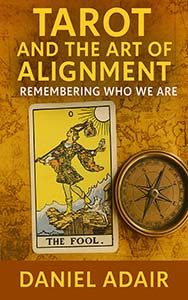
One of the central ideas in my book, Tarot and the Art of Alignment, is that destiny isn’t something someone else can define for you.

It isn’t found in a bestselling seminar or a motivational slogan.

It arises from discovering your own authentic nature.

For one person, that path may indeed involve building a successful business.

For another, it may involve raising a family, creating art, caring for others, teaching, healing, or living a quiet life close to nature.

The Tarot doesn’t ask us to pursue someone else’s dream.

It asks us to discover our own.

Perhaps the real purpose of life isn’t to become rich.

Perhaps it’s to become ourselves.

And in the end, that may be the greatest success of all.

Now available – Tarot Meditation Kits

Tarot and the Two Kinds of Desire:  Filling the Hole and Expressing the Soul

Exploring the sources of true happiness.

One of the major themes in my new book, Tarot and the Art of Alignment, is how to use the Tarot to create greater happiness and satisfaction in our lives.

But that raises an important question:

What do we really mean by happiness?

Most of us assume that all desires are the same.

We want more money.

We want a better relationship.

We want a bigger house.

We want status, recognition, and success.

But what if there are actually two very different kinds of desire?

And what if one of them leads to lasting fulfillment while the other keeps us trapped in an endless cycle of wanting?

Are We Really Happy?

Studies about happiness are fascinating because they sometimes seem to completely contradict one another.

On the one hand, surveys consistently show that most Americans report being satisfied with their lives. According to a 2024 study conducted by the Centers for Disease Control, the overwhelming majority of Americans describe themselves as satisfied or very satisfied.

That’s kind of astounding, isn’t it?

If that were the whole story, we might expect to step outside and find people skipping down the street singing, “Zip-a-Dee-Doo-Dah” and celebrating the sheer joy of being alive.

Yet another study found that 61% of Americans experience loneliness on a regular basis, with a substantial number reporting that they feel isolated much of the time.

So which is it?

Are we happy?

Or are we lonely?

Are our desires being fulfilled?

The answer, I believe, lies in understanding that there are two very different kinds of desire operating within us.

Desire #1: Filling the Hole

Wharton School senior fellow Matthew Killingsworth conducted research suggesting that money does, in fact, increase happiness.

At first glance, that seems to confirm the modern assumption that more money equals a better life.

And to a certain extent, that’s true. But . . . buried in that study is the fact that it takes a LOT of money to be happy all of the time. Billionaires are very happy campers – the rest of us, not so much. The statistics show that you have to be making at least $175,500 per year to crack into that money = happiness paradigm.

Over half of the people in the United States make less than $75,000 a year. So, quite literally, money is NOT going to buy them happiness.

The problem is that most of us unconsciously continue to believe that it will.

We begin to believe that happiness is always just one purchase away.

Maybe a new car will make us happy.

Maybe a larger house will make us happy.

Maybe the latest phone, computer, or gadget will finally make us feel successful and secure.

Sometimes these things do make us happy—for a little while. Then the novelty wears off. The new car becomes the old car. The new computer crashes. The bigger house develops problems.

And before long we’re looking for the next thing that will finally make us feel complete.

At its core, this desire is driven by a feeling of lack.

It whispers:

“You don’t have enough.”

And because you don’t have enough:

“You aren’t enough.”

This kind of desire attempts to fill an inner emptiness with outer possessions.

The problem is that the hole never stays filled for very long.

Desire #2: Expressing the Soul

There is a second kind of desire that stands in stark contrast to the first.

Rather than trying to fill an inner void, it seeks to express something that already exists within us.

Carl Jung called it individuation.

Abraham Maslow called it self-actualization.

The Buddhists speak of dharma.

Most people simply call it purpose or destiny.

This desire isn’t asking: “What can I get?” It’s asking: “Who am I meant to become?”

At some level, most of us sense that we are here for a reason. We feel drawn toward certain experiences, certain talents, certain ways of contributing to the world.

For one person, that calling may involve art. For another, healing. For another, teaching, parenting, writing, building, serving, or leading.

The details differ, but the underlying experience is the same. Something inside us wants to become fully expressed.

The tragedy is that many of us lose touch with that calling.

From childhood onward, we’re taught to fit in, conform, and follow the established path. Schools, institutions, social expectations, and sometimes even our own families encourage us to become what is expected rather than what is authentic.

Over time, we begin to forget the dreams that we felt so vividly as children. We lose sight of the deeper reason we came here. And then we wonder why life feels empty.

We don’t have meaning in our lives and so life feels meaning-less.

Alignment = Happiness

This second desire contains the secret of lasting happiness.

The more closely we align with our authentic purpose, the more alive we feel. The farther we drift from it, the more restless, dissatisfied, and disconnected we become.

This doesn’t mean life suddenly becomes easy (although it frequently does.) It means life becomes meaningful.

And meaning has a remarkable ability to sustain us even through difficulty.

This is where Tarot enters the picture.

Rather than using the cards exclusively to predict future events, we can use them as a mirror that reflects our deeper purpose.

We can ask:

* What am I here to learn?

* What gifts am I meant to develop?

* Where am I out of alignment?

* What is trying to emerge through me?

In Tarot and the Art of Alignment, I introduce a process called the Soul Reading, designed to help uncover those answers.

Once we begin to understand who we are and why we’re here, the Tarot becomes more than a tool for prediction.

It becomes a tool for alignment.

And alignment, more than money, possessions, status, or recognition, is where lasting happiness is found.