What If Your Destiny Isn’t to Become Rich?

Exploring the idea that we’re not just here to get rich.

Spend a few minutes browsing YouTube or social media and you’ll quickly discover that almost everyone seems to know your destiny.

Apparently, you’re supposed to become wealthy.

Manifest abundance.

Drive the right car.

Live in the right house.

Travel the world.

And, of course, achieve financial freedom.

There’s nothing inherently wrong with any of those goals. The question is whether they’re everyone’s destiny.

I’m not convinced they are.

The Feeling That Something Is Missing

Most of us have experienced a quiet feeling that we’re here for some larger purpose.

Even when life is going reasonably well, there can be a sense that something remains unfinished.

It’s as though we’re being gently called toward a life that is more authentic, more meaningful, and somehow more fully our own.

But what exactly is that calling? Some people say it’s destiny.

Two Ways of Looking at Destiny

Over the years, I’ve noticed that most spiritual teachings seem to fall into one of two broad models.

The first is what I call the Earth School Model.

According to this view, we reincarnate again and again in order to learn lessons, overcome limitations, and gradually evolve spiritually.

Life is a classroom.

Every challenge is part of the curriculum.

The second is what I call the Actualization Model.

Instead of asking, “What lessons am I here to learn?” it asks:

“Who am I here to become?”

This idea reminds me of psychologist Abraham Maslow’s famous hierarchy of needs.

At the very top of his pyramid wasn’t wealth.

It wasn’t fame.

It wasn’t status.

It was self-actualization—becoming the fullest expression of your authentic self.

I find that idea deeply compelling.
The Prosperity Trap

Somewhere during the twentieth century, something interesting happened.

The New Thought movement, with its emphasis on affirmations, visualization, and the creative power of the mind, gradually merged with American ideas about success and capitalism.

Before long, spiritual growth and financial success became almost interchangeable.

Manifestation came to mean one thing:

More money.

Now, don’t misunderstand me.

There’s absolutely nothing wrong with financial security.

Most of us would welcome a little more of it.

But if we believe that every soul reincarnated primarily to become rich, we end up with a rather curious picture of human existence. Can we really imagine that we’ve come back again and again because we should all be more like Elon Musk?

Imagine a shepherd whose deepest fulfillment comes from tending goats in the mountains.

Or a teacher whose greatest joy is helping children learn to read.

Or an artist who creates beauty that quietly changes people’s lives.

Would we really say that these people have somehow missed their destiny because they didn’t become millionaires?

I don’t think so.

Their success may have very little to do with the size of their bank account.

Listening for Your Own Call

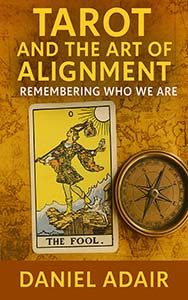
One of the central ideas in my book, Tarot and the Art of Alignment, is that destiny isn’t something someone else can define for you.

It isn’t found in a bestselling seminar or a motivational slogan.

It arises from discovering your own authentic nature.

For one person, that path may indeed involve building a successful business.

For another, it may involve raising a family, creating art, caring for others, teaching, healing, or living a quiet life close to nature.

The Tarot doesn’t ask us to pursue someone else’s dream.

It asks us to discover our own.

Perhaps the real purpose of life isn’t to become rich.

Perhaps it’s to become ourselves.

And in the end, that may be the greatest success of all.
Now available – Tarot Meditation Kits

Why Are We Here? Bridey Murphy, Reincarnation, and the Search for Purpose

Exploring past life memories and looking for meaning with the Tarot.

In 1956, a hugely controversial book called The Search for Bridey Murphy became a national sensation.

The book documented a series of hypnotic regressions conducted by a Colorado businessman named Morey Bernstein. His subject, Virginia Tighe, was initially regressed to childhood memories. Instead, she began describing what appeared to be a previous life in nineteenth-century Ireland.

According to the story, Virginia remembered being a young woman named Bridey Murphy who had lived in County Cork. She described places, customs, people, and events in remarkable detail.

The reaction was immediate.

Some people were fascinated.

Some were deeply moved.

Some were furious.

Others thought the whole thing was ridiculous.

The book became a bestseller. It was turned into a movie. Comedians did Bridey Murphy jokes. People threw Bridey Murphy-themed parties. Children even dressed up as Bridey Murphy for Halloween.

Imagine that for a moment.

Millions of Americans were suddenly debating whether reincarnation might actually be real.

That would be surprising today.

In the buttoned-down 1950s, it was astonishing.

After all, more than ninety percent of Americans then identified as church-going Christians. Traditional Christian theology leaves very little room for reincarnation. From the perspective of many ministers and priests, the idea was outright heresy.

Naturally, there were efforts to debunk the claims, expose errors, and prove that the entire thing was a misunderstanding or a fraud. Eventually the public moved on.

But I’ve always been fascinated by one aspect of the story.

Why did so many people take it seriously in the first place?

Why didn’t they simply dismiss it out of hand?

The Strange Familiarity of Past-Life Memories

Today, surveys suggest that roughly a third of Americans believe in reincarnation. Among many New Age and metaphysical communities, the idea is simply taken for granted.

Most of us, however, don’t have detailed memories like Virginia Tighe supposedly did.

We don’t remember specific addresses.

We don’t remember the names of shopkeepers.

We don’t remember exact dates.

What many people do experience are odd fragments.

Half-memories.

Dreams.

Emotions that seem to belong to someone else and yet somehow feel intimately familiar.

Over the years I’ve spoken with dozens of people who have reported experiences like this.

One person remembered being a stone carver in ancient Egypt. What struck him most wasn’t some grand spiritual revelation. It was the memory of being exhausted, sweaty, and desperately in need of a bath.

Another remembered being a poet during the American Revolution. His strongest impression wasn’t literary genius. It was embarrassment over being a terrible poet.

Yet another remembered escaping from a Mississippi jail during the 1930s, stealing a car, and taking a brief joyride before being captured.

None of these people could provide names, dates, or evidence that would satisfy a historian.

Yet they all said the same thing.

The memories felt absolutely real.

In some ways, I find these stories more convincing than tales of being Cleopatra or Joan of Arc. Most people don’t remember being kings and queens.

If reincarnation is real, the overwhelming majority of us probably spent most of our lives being ordinary people.

Which leads to a much more interesting question.

Why Would We Keep Coming Back?

Let’s suppose, for the sake of argument, that reincarnation is real.

Why are we doing this?

Why would a soul return over and over again?

The idea that we’re reincarnating merely to carve stones, write bad poetry, or heist a car seems a little absurd.

Most of us instinctively feel that there must be more to it than that. We sense that there must be a purpose behind the process.

Perhaps we’re here to learn.

Perhaps we’re here to grow.

Perhaps we’re here to develop qualities that cannot be learned anywhere else.

Perhaps we’re here to become something.

What’s fascinating is that we often ask these questions about our past lives while completely ignoring them in our current one.

We look at a supposed lifetime in ancient Egypt and ask:

“What lesson was I learning?”

“What was the purpose of that incarnation?”

“What was I supposed to become?”

Yet many of us live our present lives without ever asking the same questions.

We get up. Go to work. Pay bills. Consume several million calories. Accumulate possessions. Grow older.

And eventually die.

Then we wonder why life sometimes feels strangely empty.

Perhaps the real mystery isn’t whether we’ve lived before.

Perhaps the real mystery is why we’re here now.

Understanding the “Why”

This is one of the questions that led me to develop the ideas explored in Tarot and the Art of Alignment.

What if the purpose of Tarot isn’t merely to predict future events?

What if the cards can help us discover why we came here in the first place?

Most Tarot readings focus on questions such as:

“Will I get the job?”

“Will this relationship work out?”

“What should I expect next week?”

Those are perfectly valid questions.

But there may be a deeper question hiding beneath all of them.

“What am I here to become?”

In my own work, I’ve found that Tarot can be an extraordinary tool for exploring that question.

The cards often reveal recurring themes, gifts, challenges, and lessons that seem to run through an entire lifetime.

They can help us recognize where we’re in alignment with our deeper purpose—and where we’ve drifted away from it.

In the coming weeks, I’ll be writing more about the Soul Reading described in Tarot and the Art of Alignment, a Tarot spread specifically designed to explore these larger questions of purpose, destiny, and meaning.

Because whether reincarnation is real or not, one question remains:

Why are you here?

And that may be the most important question any of us will ever ask.