The High Priestess: What It Really Means to Trust Your Intuition

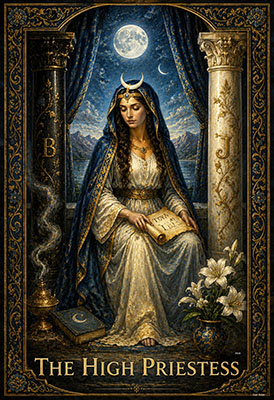
The High Priestess Archetype and learning to trust our intuition.

In my High Priestess affirmation poster, I chose the phrase:

“Trust Your Intuition.”

It sounds simple. Almost obvious.

And yet it’s one of the most misunderstood instructions in the entire Tarot.

We say things like:

“I have a feeling . .

“I just have a hunch . . .”

“I’m getting bad vibes about this . . .”

All human beings have intuition — some more than others. Some people sneer at it as a primitive, pseudo-mystical leftover from a less scientific age. Others practically swim in it, using it as their primary guide through life.

Most of us fall somewhere in the middle.

We occasionally get flashes of clarity about which path to take and which to avoid. But most of the time we default to logic. We try to predict outcomes. We use our brains rather than our hearts.

And then sometimes — usually in hindsight — we think:

“Damn, I knew better . . .”

So it’s worth asking:

What is intuition… and what is it not?

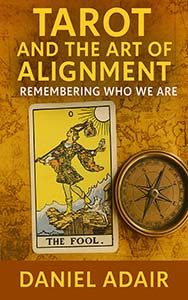
“Just the Tarot,” by Dan Adair – available on Amazon

It’s Not Fear

One of the biggest confusions we have is mixing intuition up with the limbic system — the ancient part of the brain responsible for fight-or-flight.

That system exists to keep us alive. It detects threat. It reacts instantly.

It was what warned our ancestors that something dangerous was hiding in the trees. We experience it today as:

  • The hairs rising on the back of our neck
  • A sudden jolt of anxiety
  • The feeling that someone is watching us

That reaction can feel mysterious. But it isn’t mystical. It’s biological.

True intuition does not trigger fight-or-flight.

It doesn’t flood the body with adrenaline. It doesn’t tighten the chest.

Real intuition is calm.

It arrives quietly, with a sense of understanding. It clarifies rather than agitates. Instead of panic, it brings steadiness — a subtle reassurance that says:

“This is right – you’ll be okay.”


It’s Not Rapid-Fire Prediction

The brain is constantly predicting the future based on the past.

When we encounter a new situation, the mind instantly searches its archives for similar experiences. It matches patterns, runs comparisons, and projects possible outcomes — all in a fraction of a second.

We’re mostly unaware this is happening.

So when we say we “have a feeling” about someone, what we often have is a memory.

If we once had a terrible experience with a brunette woman wearing purple socks, we may feel wary of a new brunette wearing purple socks. We call that a vibe.

It isn’t.

Some people process these patterns so quickly that it seems magical. Certain personality types — INFJs and INFPs, for example — are especially skilled at rapid, intuitive-seeming synthesis.

But that process is still rooted in past data.

True intuition is different.

It is not logical.

It is not based on memory.

It may have absolutely nothing to do with what has happened before.

It is a clear message about the present moment — even when there’s no obvious reason you should understand what you understand.


It’s Not Fragmented

You may have met highly sensitive or empathic people whose lives are chaotic.

On the surface, that seems contradictory. If they absorb more information than most, shouldn’t they navigate life more easily?

Not necessarily.

When someone takes in too much external input without discernment, they can lose track of what belongs to them and what belongs to others.

If they’re near someone who is anxious, they become anxious. If they’re around anger, they internalize anger.

Soon they feel as if they’re having five contradictory “intuitions” at once.

But intuition does not contradict itself.

It does not conduct committee meetings in your head.

It does not present twelve equally compelling paths and demand that you choose one immediately.

True intuition is singular.

It points.

It does not debate.


Clear, Calm, and Quietly Joyful

Perhaps the greatest hallmark of genuine intuition is that it brings relief.

It removes doubt.

It dissolves mental noise.

It doesn’t shout. It doesn’t demand. It doesn’t come with fireworks.

It simply settles into you and says:

“Yes, this is it.”

And when it does, there is often a subtle happiness attached to it — not excitement, not mania — but a deep rightness.

That is the High Priestess.

She does not force reality.

She does not argue.

She does not panic.

She knows.

And when that knowing arrives within you, the work is not to question it endlessly — it is to honor it.

That is what “Trust Your Intuition” really means.


The Four of Swords: ReCreation

Recreating ourselves through rest. An exploration of the Four of Swords.

If you’re feeling stuck, exhausted, or strangely unmotivated right now, the Four of Swords may have a valuable message for you.

In the traditional Tarot, the Four of Swords depicts an armored knight lying in deep slumber. Three swords hang above him; one rests beneath him. It’s a card associated not just with rest, but with recovery. We often see it when someone has gone through a physically or emotionally traumatic experience and simply needs to become as quiet as possible in order to heal.

But there’s a subtler message here — one that goes beyond simple rest.

It’s about re-creation.

When we’re physically ill, we’re encouraged to sleep as much as possible. Why? Because the body heals in stillness. Damaged cells are repaired. Infections are fought. New, healthy tissue is created. We intuitively understand that the human body is self-healing — if we can just turn off the busy mind and get out of the way.

The same principle applies emotionally and spiritually.

When we’ve been wounded — by stress, burnout, loss, disappointment, or simply too much striving — our instinct is often to withdraw. To reduce contact. To go quiet. That instinct isn’t weakness. It’s wisdom.

That’s what I was emphasizing in my Tarot affirmation poster for the Four of Swords: sometimes the periods when we feel least productive are actually the periods of our greatest growth.

Tarot Affirmation Print available on Etsy.

The Cultural Problem

Part of the struggle comes from the culture we swim in.

From the time we’re children, we’re trained to work harder, move faster, achieve more. Rest is framed as a brief pit stop before we re-enter the race. Productivity is virtue. Exhaustion is normal.

So when we find ourselves demotivated or depleted, our first reaction is usually self-criticism.

“I don’t know what’s wrong with me.”

“I just can’t get it together.”

“I feel stuck.”

But what if nothing is wrong with you?

What if you’re not broken — you’re rebuilding?

What if your body, mind, and spirit are quietly saying, “You need time. You need stillness. You need space.”

The tragedy is that the more we fight that message, the longer the recovery takes. We override the natural healing cycle because we’re afraid of falling behind.

Nature Doesn’t Apologize for Rest

Look at Nature.

The Earth explodes into life in the Spring.

She flourishes in Summer.

She releases in Autumn.

She rests in Winter.

Do you imagine the Earth berating herself all Winter long? Does she panic and whisper, “I should be more productive”?

Of course not.

Rest is part of the cycle.

Contraction makes expansion possible.

Stillness prepares the ground for growth.

And yet, though we are children of the Earth, we rarely grant ourselves the same permission.

Reframing “Stuck”

When we hit a slack period — when progress stalls and energy feels low — we can frame it in one of two ways.

We can tell ourselves we’re lazy, depressed, failing, falling behind.

Or we can recognize that we’re in a season of restoration before the next expansion.

Because that is precisely what often happens.

When we release our grip — when we stop forcing clarity, stop chasing momentum, stop judging ourselves — something begins to recalibrate beneath the surface. Just as the body eliminates toxins during sleep, the psyche releases old narratives during rest.

We may not consciously see it happening. Our subconscious may be reorganizing itself in silence. Old wounds may be dissolving. A new identity may be forming.

The Four of Swords is not stagnation.

It is sacred pause.

It is integration.

It is ReCreation — not recreation as distraction, but re-creation as transformation.

And if we can trust that process, if we can stop fighting it, those quiet, stuck-feeling days may turn out to be the very foundation of our next, beautiful phase of growth.

Sometimes the most powerful thing we can do is lay down the sword — and let ourselves become new.


“Just the Tarot,” by Dan Adair – available on Amazon

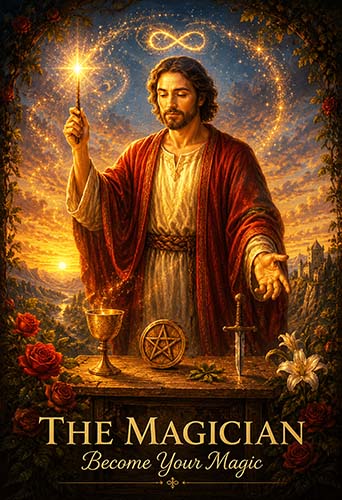
The Magician — Become Your Magic

Integrating the Magician archetype into our lives.

It’s a foundational premise of the Tarot that we are all our own Magicians.

We create our lives through imagination, intention, will, and attention. The tools are already on the table. The energy is already within us. We shouldn’t need gurus, occult masters, or spiritual middlemen to “activate” anything for us — because our creative power is our birthright.

So why do so many of us wander in circles?

Why do we feel disconnected from our own magic?

Why do we feel driven by outside forces instead of guided by our internal compass?

If we want to fully integrate the Magician archetype into our lives, it may help to examine what the Magician is not.

Because sometimes clarity comes from contrast.

The Magician Isn’t Self-Doubt Disguised as Humility

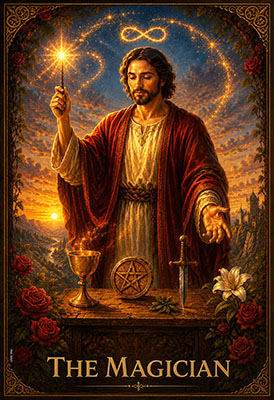
When we look at the traditional Magician card, we see the tools laid out clearly: the cup, the sword, the pentacle, and the wand. Nothing is missing.

The problem is not a lack of tools. The problem is the refusal to pick them up.

How many books go unwritten because someone thinks, “Who am I to write a book?”

How many paintings never see the light of day because someone thinks, “I didn’t go to art school.”

Self-doubt often masquerades as humility. It sounds modest. It sounds careful. It even sounds wise.

But it’s usually fear.

The Magician does not deny his gifts. He uses them.

Every one of us has talents, perspectives, experiences, and insights that no one else on the planet possesses in exactly the same configuration. The moment we stop apologizing for that uniqueness and begin using it, we step into our magic.

“Just the Tarot,” by Dan Adair – available on Amazon

The Magician Isn’t Scattered Energy

The Magician is focused intention.

One hand points to heaven. One hand points to earth. Energy flows through him with direction and clarity.

This doesn’t mean we can’t have many interests. It means we choose what matters most right now — and we concentrate.

If you want to be a writer, write daily.

If you want to open a nursery, start gathering pots and soil.

If you want to transform your life, choose one consistent action and repeat it.

Scattered energy feels busy. Focused energy creates results.

The Magician understands hierarchy. He knows what matters today — and he pours his will into that.

The Magician Isn’t Manipulation

The Magician archetype is often misunderstood as charm, persuasion, or cleverness.

But true magic isn’t about bending others to your will.

Manipulation says, “I can’t do this on my own, so I need to control the room.”

The authentic Magician says, “I am aligned. I will act. And the world will respond accordingly.”

There’s a profound difference between influence and integrity.

The Magician’s power comes from alignment — not trickery.

The Magician Isn’t Performance Instead of Authenticity

There are two kinds of magicians in the world: the illusionist and the integrated.

The stage magician dazzles. Distracts. Redirects attention. Pulls rabbits from hats.

The integrated Magician is quieter.

He doesn’t need to perform spirituality. He doesn’t need to announce his power. He doesn’t need to posture as enlightened.

He simply acts in alignment with who he is.

In our modern world, it’s easy to confuse visibility with mastery. A quick scroll through social media will reveal countless self-proclaimed “masters” selling certainty.

The true Magician doesn’t need the spotlight.

His magic works because it is authentic.

The Magician Isn’t Unintegrated Knowledge

There’s an old Sufi saying: You can load a donkey down with holy books, but it won’t make him wise.

The same applies to spiritual study.

You can memorize Tarot definitions, chakra systems, Hermetic principles, and mystical philosophies. But until those teachings become embodied, they remain decoration.

The Magician integrates.

He doesn’t just study the tools — he uses them.

He doesn’t just read about transformation — he practices it.

He doesn’t just speak about power — he becomes it.

Knowledge becomes magic when it moves from concept to action.

Become Your Magic

So what is The Magician, then?

He is integration.

He is the moment you realize the tools have been there all along.

He is the decision to stop waiting for permission.

He is the willingness to focus your energy.

He is the courage to act authentically.

He is the discipline to practice what you claim to believe.

The wand raised to heaven and the hand pointing to earth symbolize alignment — vision grounded in action. Inspiration translated into reality.

When we stop outsourcing our power — to gurus, critics, algorithms, trends, or fear — we begin to feel that alignment inside ourselves.

We stop asking, “Who am I to do this?”

And we begin asking, “Why not me?”

The real magic was never in the costume.

It was in the willingness to use what you already possess.

That’s why my affirmation for this card is:

Become Your Magic.

Magician Affirmation Poster – available on Etsy

Not find it.

Not earn it.

Not prove it.

Become it.

Because the tools are already on the table.

The only question left is:

Will you pick them up?

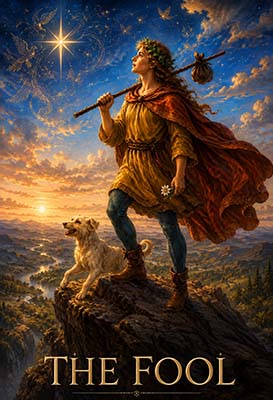
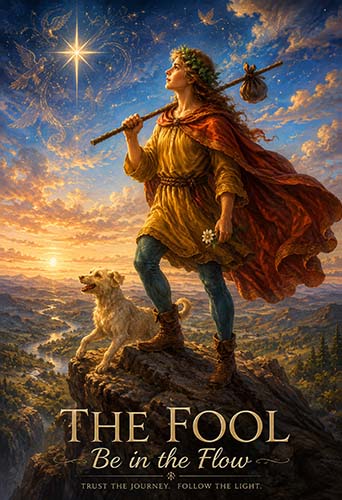
The Fool: Be in the Flow

The Fool card as the archetype of the Flow State.

Most people misunderstand The Fool.

They think he’s reckless. Naïve. Careless. About to step off a cliff because he doesn’t know any better.

But The Fool is not stupidity.

The Fool is original harmony.

The Soul in Its First Breath

The Fool represents the new Soul in the world. He carries the energy closest to what we had when we first incarnated — before cynicism, before conditioning, before we learned how to overthink everything.

In that original state, we are in harmony with our environment. Our perception is clear. Our energy hums. We are not fighting life. We are participating in it.

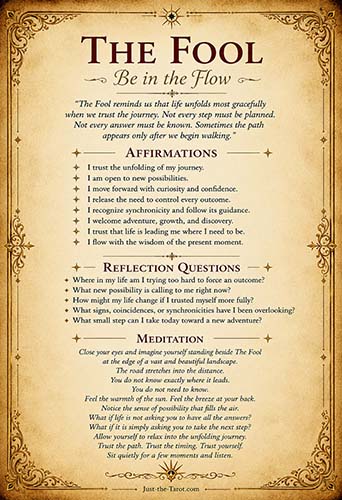
That’s why, when I designed my Tarot affirmation for The Fool, I chose the phrase: Be in the Flow.

Available as a 13 X 19 inch poster on my Etsy shop.

The Fool doesn’t force the river. He walks with it.

What Happens When We’re in the Flow?

Two remarkable things tend to show up when we’re in this state:

Synchronicity and serendipity.

Synchronicity occurs when your internal mental and emotional state aligns so cleanly with the outer world that meaningful coincidences begin to appear.

You’re thinking about needing a new job. A gust of wind blows a newspaper to your feet. The classified section is open. Someone has circled a listing that’s strangely perfect for you.

That’s synchronicity — the outer world answering an inner alignment.

Serendipity is its carefree cousin. It’s good fortune arriving without an obvious causal chain. It’s stumbling into opportunity. It’s finding gold doubloons tucked inside a thrift-store chest of drawers.

Synchronicity feels meaningful.

Serendipity feels lucky.

Both tend to emerge when we stop strangling life with effort.

Wu Wei and the Zero

The Fool’s number is zero.

Zero is potential. Zero is openness. Zero is the circle that contains everything.

In Taoist philosophy, there’s a concept called Wu Wei, which means “effortless action.” It’s not laziness. It’s not passivity. It’s action that arises from alignment rather than strain.

Instead of striving against the current, we move with it.

The more we harmonize with life’s rhythms, the easier life becomes. Paradoxically, we accomplish more by forcing less. When we loosen our grip, synchronicity and serendipity begin to move.

It can feel as if the Universe starts supplying what we need the moment we stop demanding it.

The symbol of Wu Wei is the Enso — a single open circle. It looks suspiciously like a Zero.

It looks suspiciously like The Fool.

The Trick of the Dialogue

Here’s the delicate part.

Flow is not a switch you flip.

Researchers who study the flow state consistently find that it emerges when we are relaxed, engaged, playful, and open. It does not emerge when we are clenched, controlling, or desperately trying to optimize ourselves.

You don’t command The Fool state.

You invite it.

And this is where the dialogue begins.

When we relax and allow life to surprise us, we send a subtle signal:

“Okay. Show me what you’ve got.”

That’s when things begin to move.

The Universe does not respond well to micromanagement.

The Pink Elephant Problem

Of course, we immediately run into a paradox.

You cannot work very, very hard at not working hard.

You cannot become extremely serious about not being serious.

Try this: do not think about a pink elephant with purple polka dots.

Exactly.

The harder we try to relax, the more tense we become. The more we strive to enter Flow, the further away it seems.

In our self-improvement culture, we are experts at turning everything — even surrender — into a project.

But The Fool is not a project.

Dancing Instead of Driving

The Fool state is not about giving up responsibility. It is not about sitting on the couch waiting for destiny to knock.

It is not about “surrendering your will” in some dramatic spiritual gesture.

It is about remembering.

Remembering that we were born playful. Born curious. Born in rhythm with the world.

The Fool doesn’t run the Universe.

He dances with it.

When we return to that original ease — relaxed, alert, a little amused at our own smallness in a very large cosmos — something remarkable happens.

Life softens.

Doors open.

Wind blows newspapers at our feet.

We stop trying to force magic — and we discover that it was already in motion.

The Fool smiles because he knows a secret:

The cliff isn’t always a cliff.

Sometimes it’s just the next step into the Flow.

If you were to reduce all of that to a single affirmation, it would be simple:

Be in the Flow.

And then — gently — stop trying so hard to do even that.

“Just the Tarot,” by Dan Adair, available on Amazon.

The Top Ten Tarot Cards That Indicate You’re Stuck

A concise, Tarot-based guide to the ten cards that most often indicate feeling stuck, stalled, or unable to move forward — and what each one reveals about the deeper source of that stuckness.

Being “stuck” in Tarot rarely means something is broken or hopeless. It usually means energy is stalled, attention is misdirected, or a transition is incomplete. These cards point to places where movement is paused — and where a shift is quietly waiting to happen.

Here are the ten cards that most often signal that kind of stuckness.

1. The Hanged Man

Stuck because of suspension or waiting.

This card indicates a pause imposed by timing, perspective, or the need for surrender. Progress isn’t possible yet because something deeper is still rearranging.

2. Eight of Swords

Stuck because of limiting beliefs or mental loops.

You feel trapped, restricted, or powerless — but the restriction is largely internal. The situation may not be as closed as it feels.

3. Two of Swords

Stuck because of indecision or avoidance.

Movement is blocked by a refusal to choose, usually because neither option feels safe or pleasant.

4. Four of Cups

Stuck because of emotional disengagement.

Nothing feels interesting or meaningful enough to respond to. Opportunities may exist, but the heart isn’t open to them yet.

5. Ten of Wands

Stuck because of overload or exhaustion.

You’re carrying too much. Forward motion is technically possible, but not sustainable in the current state.

6. Five of Cups

Stuck because of grief or fixation on loss.

Attention is anchored in what’s gone wrong, making it hard to see what remains or what could still grow.

7. Judgment (Reversed)

Stuck because of self-doubt or fear of stepping into a new identity.

The call to change is present, but something inside is resisting answering it.

8. Wheel of Fortune (Reversed)

Stuck because of repeating patterns or feeling caught in cycles.

Life feels like it’s looping instead of evolving. This often points to unconscious habits or unresolved lessons.

9. Nine of Swords

Stuck because of anxiety, rumination, or worry.

The mind is so busy anticipating problems that it can’t access solutions or rest.

10. Five of Pentacles

Stuck because of a mindset of lack or survival.

Fear around resources, support, or worthiness makes it difficult to imagine improvement or receive help.

A Note on “Stuckness” in Tarot

In Tarot, being stuck is rarely a punishment or a failure. It’s usually a sign that:

• something internal needs to shift before something external can move,

• a lesson is still integrating,

• or attention needs to be redirected.

These cards don’t say “nothing will ever change.”

They say: this is the part of the story where motion pauses and meaning is being formed.

That’s often where the most important change begins.

And if you’re wondering when you’re going to get unstuck, then check out my other post:  The Top Ten Tarot Cards Indicating Something is About to Change.

“Just the Tarot,” by Dan Adair – available on Amazon

Running It By the Numbers: The Numerology Behind the Tarot Suits

Running It By the Numbers explores the numerological structure behind the Tarot suits from Ace through Ten.

When we look at the Tarot, it’s easy to get lost in the images, stories, and archetypes of each card. But underneath the pictures, symbols, and personalities lies a beautifully simple structure: number.

In each suit — Wands, Cups, Swords, and Pentacles — the cards numbered One through Ten follow a consistent energetic progression. The suit shows where the energy is playing out (creativity, emotion, thought, or material life), and the number shows how that energy is unfolding.

So let’s run it by the numbers.

Below you’ll find the numerological meaning of the cards from Ace (One) through Ten, and how that meaning expresses itself across all four suits.

One (Ace): Beginnings, Seeds, Potential

Ones represent the spark.

They are beginnings, raw potential, the moment when something new is offered into your life.

Numerologically, One is unity, origin, and creative impulse — the first expression of energy.

In Tarot:

• Aces show opportunities.

• They don’t guarantee outcomes — they offer possibility.

Each Ace says: “Here is a seed. Will you plant it?”

Two: Balance, Choice, Polarity

Twos represent the moment when the One becomes aware of an “other.”

Numerologically, Two is duality, relationship, contrast, and choice.

In Tarot:

• Twos often show balance, tension, or decision.

• They ask you to relate — to a person, a feeling, a path, or a truth.

Twos say: “Now that something exists, how will you engage with it?”

Three: Growth, Expansion, Expression

Threes are the first moment of outward growth.

Numerologically, Three is creativity, expression, and development.

In Tarot:

• Threes show movement, growth, collaboration, and early results.

• Something is starting to take form.

Threes say: “This is beginning to live and move in the world.”

Four: Structure, Stability, Foundation

Fours bring form, boundaries, and stability.

Numerologically, Four is structure, order, and grounding.

In Tarot:

• Fours stabilize the energy of the suit.

• They create something solid enough to rest on — or sometimes something rigid enough to get stuck in.

Fours say: “Let’s make this real and sustainable.”

Five: Disruption, Challenge, Change

Fives introduce instability.

Numerologically, Five is movement, friction, and necessary disruption.

In Tarot:

• Fives often show conflict, loss, challenge, or tension.

• They shake what has become too fixed.

Fives say: “Something needs to change — even if it’s uncomfortable.”

Six: Harmony, Integration, Adjustment

Sixes restore balance after the disruption of Five.

Numerologically, Six is harmony, healing, and realignment.

In Tarot:

• Sixes often show cooperation, support, generosity, or healing.

• They smooth what was roughened.

Sixes say: “Let’s bring this back into balance.”

Seven: Assessment, Testing, Inner Work

Sevens are a pause for evaluation.

Numerologically, Seven is reflection, inner work, and spiritual testing.

In Tarot:

• Sevens often show challenges that are internal, subtle, or strategic.

• They ask you to examine your approach.

Sevens say: “Is this truly aligned — and is this worth continuing?”

Eight: Power, Mastery, Momentum

Eights represent focused energy and effective action.

Numerologically, Eight is power, movement, and manifestation.

In Tarot:

• Eights show work, effort, discipline, and progress.

• Things move quickly here, for better or worse.

Eights say: “Apply yourself. This can be accomplished.”

Nine: Fulfillment, Culmination, Near Completion

Nines bring things close to completion.

Numerologically, Nine is culmination, wisdom, and harvest.

In Tarot:

• Nines often show satisfaction, insight, or emotional/spiritual fullness.

• They can also show isolation, depending on the suit.

Nines say: “This cycle is almost complete — what have you learned?”

Ten: Completion, Overflow, Transition

Tens complete the cycle — and often overwhelm it.

Numerologically, Ten is completion that tips over into excess, leading back toward a new beginning.

In Tarot:

• Tens show endings, fulfillment, or overload.

• They signal that a cycle has run its course.

Tens say: “This is complete. It’s time to release and begin again.”

In Summary

Across every suit, the numbers tell a story:

1. Seed

2. Choice

3. Growth

4. Structure

5. Disruption

6. Harmony

7. Assessment

8. Effort

9. Fulfillment

10. Completion

When you read Tarot “by the numbers,” you gain a deeper sense of where you are in a process — not just what’s happening, but what stage it’s in.

And that can be incredibly clarifying.

Because sometimes the most important message isn’t what is happening…

…but where you are in the journey.

“Just the Tarot,” by Dan Adair – available on Amazon

Full Moon in Cancer: Tarot-Friendly Rituals for Emotional Release, Inner Safety, and Soul-Level Nourishment

A gentle Tarot-inspired guide to the Full Moon in Cancer, offering simple practices for emotional release, self-nurturing, and reconnecting with inner safety.

This Full Moon in Cancer invites us to turn inward — away from external goals and future plans — and toward the quieter question of emotional truth. In this post, we explore how Cancer energy supports healing, belonging, and coming home to yourself.

Tomorrow’s Full Moon in Cancer is not loud or dramatic — it’s deeply feeling.

Cancer energy is intuitive, tender, protective, and emotionally wise. It’s less about doing more and more about listening more deeply.

Instead of asking, “What’s next?” this Moon asks:

“What do I need right now to feel safe, held, and whole?”

If you’ve been feeling emotionally tired, overextended, or a little disconnected from yourself, this is a beautiful Full Moon to work with. Below are simple, Tarot-friendly practices (no complicated rituals required) that align with Cancer themes: emotional release, self-nurturing, inner belonging, and gentle healing.

1. The Queen of Cups — Listening to Your Emotional Truth

Theme: Emotional awareness, compassion, and self-empathy.

Practice:

Sit quietly with the Queen of Cups (or imagine her presence if you don’t have the card). Let yourself drop out of thinking and into feeling.

Ask gently:

  • What emotion has been trying to get my attention lately?
  • What have I been feeling, but not fully acknowledging?

Let whatever arises be okay. This is not a problem-solving moment — it’s a witnessing moment.

Intention:

“I honor my emotional truth without judgment.”

“Just the Tarot,” by Dan Adair – available on Amazon

2. The Moon — Releasing Old Emotional Patterns

Theme: The unconscious, emotional cycles, and what’s ready to be released.

Cancer is deeply tied to memory and emotional habit. The Full Moon is a natural time for letting go.

Practice:

Write down anything you’re ready to release, especially emotional patterns such as:

  • over-caretaking,
  • emotional self-abandonment,
  • guilt,
  • or old hurts that still echo.

You might phrase them as:

“I release the belief that…”

“I release the habit of…”

“I release the emotional weight of…”

Safely tear up or discard the paper as a symbolic release.

Intention:

“I release what no longer supports my emotional well-being.”

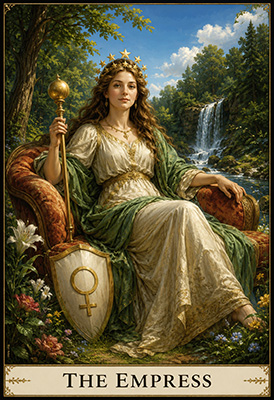
3. The Empress — Nourishing the Inner Self

Theme: Nurturing, care, and emotional abundance.

Cancer and The Empress share a deep resonance: both are about emotional nourishment and inner safety.

Practice:

Do one small, loving thing purely for yourself:

  • take a warm bath,
  • drink tea slowly,
  • wrap up in a blanket,
  • cook something comforting,
  • sit near water, or
  • rest without guilt.

Treat this as sacred — not indulgent.

Intention:

“I am worthy of care, comfort, and gentleness.”

4. The Four of Pentacles (Reversed) — Softening Emotional Defenses

Theme: Letting go of emotional guarding and control.

Sometimes Cancer energy protects by closing. This practice invites softening rather than hardening.

Practice:

Notice where you’ve been emotionally holding tight:

  • withholding vulnerability,
  • staying guarded,
  • keeping yourself small or contained.

Ask:

What would it feel like to soften here — even just a little?

You don’t have to open to others — opening to yourself is enough.

Intention:

“I allow myself to soften into safety.”

5. The Star — Reconnecting to Emotional Hope

Theme: Gentle healing, emotional renewal, and quiet faith.

The Full Moon can stir emotions — The Star reminds us that tenderness itself is healing.

Practice:

Sit quietly and place a hand over your heart or belly. Breathe slowly.

Ask:

What would emotional peace feel like for me right now?

What does healing look like in this season of my life?

Let the answers be felt, not forced.

Intention:

“I trust in gentle healing and quiet renewal.”

Closing Reflection

The Full Moon in Cancer reminds us that strength isn’t only found in movement and achievement — it’s found in presence, feeling, and care.

This is a Moon for:

  • honoring your sensitivity,
  • listening to your emotional body,
  • releasing old emotional weight,
  • and remembering that you are allowed to need comfort.

You don’t have to fix yourself under this Moon.

You only have to be kind to yourself.

And that, in itself, is powerful magic.

2026: A New Cycle Begins — Welcome to a Universal 1 Year

We’ve just completed a cycle of endings and stepped into a year of new beginnings. This post looks at 2026 as a Universal 1 Year, what it means energetically and symbolically, and how to align with the quiet power of starting anew.

As we step into 2026, many people in Tarot, astrology, and esoteric circles are talking about one simple but powerful idea: 2026 is a Universal 1 Year.
Which means we are collectively beginning a brand‑new nine‑year cycle.

So what does that actually mean? And why does it feel like such a big energetic shift?

Let’s explore.

 What Is a Universal Year?

In numerology, each calendar year carries a collective or Universal vibration. It’s calculated by adding the digits of the year together and reducing them to a single number.

For 2026:
2 + 0 + 2 + 6 = 10 → 1 + 0 = 1

So 2026 = a Universal 1 Year.

And the year we just completed:

2025:
2 + 0 + 2 + 5 = 9

Which means we’ve just finished a Universal 9 Year — the final stage of a nine‑year cycle.

The 1–9 Cycle at a Glance

The Universal Years move through a repeating 1–9 pattern, each with its own archetypal meaning:

YearArchetypeTheme
1The SeedBeginnings, identity, new direction
2The MirrorRelationship, reflection, polarity
3The ChildExpression, creativity, joy
4The BuilderStructure, work, foundations
5The RebelChange, disruption, freedom
6The CaretakerResponsibility, healing, home
7The MysticInner work, truth‑seeking
8The RulerPower, manifestation, money
9The ElderCompletion, release, harvest

A 9 year completes a story.
A 1 year begins a new one.

“Just the Tarot,” by Dan Adair – available on Amazon

What We Just Came Through: The Universal 9 Year

Universal 9 Years are not light or easy. They are about:

  • Endings and closures
  • Letting go of identities, relationships, or structures that no longer fit
  • Grief, composting, forgiveness, and release

A 9 year doesn’t just end things — it dissolves them. It clears space.

That’s why many people experienced 2025 as heavy, tiring, emotionally clarifying, or strangely emptying.

Something had to finish.

What’s Beginning Now: The Universal 1 Year

A Universal 1 Year is the opposite energy.

It is:

  • New identity
  • New direction
  • New seeds
  • New courage

But it is not loud or triumphant.

A 1 year is fragile, raw, and tender. It’s the match being struck. The first step onto a new path. The moment of saying:

“This is who I am becoming.”

It’s less about immediate success and more about choosing a direction.

 Symbolically Speaking

Esoterically:

  • 9 is Saturnian — time, karma, endings, harvest, limits
  • 1 is Solar — identity, will, creative fire

So this transition marks a shift from:

Saturn’s scythe The Sun’s spark

From completion into creation.

 Tarot Reflections

If we were to translate this into Tarot language:

  • The 9 Year corresponds to archetypes like The Hermit, Death, The World — inner truth, endings, integration.
  • The 1 Year corresponds to The Magician — the moment when possibility becomes intention.

Not the end of the journey — but the choosing of it.

How to Work With a Universal 1 Year

This is not the year to rush.

It is the year to:

  • Name what you want to begin
  • Claim new identity gently
  • Experiment without needing mastery
  • Allow yourself to be a beginner again

This is the year to plant seeds, not demand fruit.

 In Closing

We have crossed a threshold.

The old cycle is complete. The ground has been cleared. And now — something new is possible again.

May this year be kind to your beginnings.
May you listen for what is quietly trying to be born through you.
And may you walk your new path with patience, courage, and trust.

Happy New Year.

Solstice Thoughts: For Empaths Standing at the Edge of a New Year

Reflections on the past year and strategies for empathic coping with the year to come.

Sunday is the Solstice — the darkest day of the year — before our beautiful Earth begins its long, slow climb back into the light. In many ancient traditions, this moment marked the true New Year: not a calendar flip, but a turning point.

Light returns.

And this year, that matters.

A Difficult Year for Sensitive Souls

2025 has been a particularly rough year for many of us. It’s not surprising if you’re ending it feeling exhausted, raw, or strangely unsteady.

We’ve been inundated with horrific images. Norms we once relied on for stability have been violated again and again. The overall effect has been a pervasive sense of unsafety — not just politically or socially, but emotionally.

And while it feels endless, it helps to remember this:

in the span of a lifetime, five years is a very short time.

It’s only been five years since a global pandemic placed our very existence in question. Many of us were still recovering from a prolonged fight-or-flight response when the world was thrown into further chaos. What once felt “crazy” somehow got even crazier.

That constant state of activation takes a toll.

Why This Has Been Especially Hard on Empaths

If you’re an empath, this year may have felt truly overwhelming.

Empaths naturally absorb the emotional atmosphere around them. Other people’s suffering draws us in. Compassion isn’t optional — it’s automatic.

And that means one of our greatest challenges is keeping the outside, outside.

This year has been a near-constant boundary violation.

There has been a deliberate strategy — politically and culturally — to keep people off balance, upset, and reactive. A lack of empathy and compassion at a societal level doesn’t just distress empaths; it can destabilize us.

When the collective feels unhinged, empaths feel it in their nervous systems.

A Choice at the Turning Point

At this Solstice, we face a choice.

We can tell ourselves:

“The world has gone mad, and I need to hide.”

Or we can reframe this moment as:

“This is a difficult — but perfect — environment for learning new skills.”

Skills that help us survive and stay open.

The Core Skill Empaths Need Right Now

To navigate what’s coming, empaths must learn to distinguish:

What energy is mine — and what does not belong to me.

Right now, there is a lot of chaotic energy in the air. That means we need to perform regular internal “fact checks.”

Ask yourself:

• Am I actually in danger right now?

• Am I personally unstable — or do I just feel unstable?

And yes — it’s okay if you are occasionally a little crazy. We all are.

But if you’re not objectively falling apart and yet you feel like you are, that’s a strong sign the energy is coming from outside you.

Once you recognize that, the next question becomes:

How do I respond — without absorbing it?

Practical Strategies for the Year Ahead

Here are a few grounded ways empaths can protect their nervous systems:

Unplug intentionally.

Turn off the news. Step back from social media. Don’t answer every text like Pavlov’s dog. Your attention is precious.

Curate what you consume.

If you spend five minutes wading through the sewage of daily news, balance it with ten minutes of something hopeful — music, art, a book, a walk, a moment of beauty.

Name the manipulation.

Much of what we’re experiencing is designed to keep people in fight-or-flight. This isn’t accidental. Recognizing that helps break its spell.

When fear and outrage are being deliberately amplified, our most radical response is calm, mindfulness, and conscious detachment.

That doesn’t mean indifference.

It means sovereignty.

Walking Toward the Light

The Solstice reminds us that even at the darkest point, the turn has already begun. The light doesn’t return all at once — it comes back slowly, almost imperceptibly, day by day.

As we move into the new year, especially those of us who feel deeply, the work isn’t to harden or shut down. It’s to strengthen boundaries, choose what we engage with, and care for our nervous systems with intention.

That, too, is a form of courage.

May the coming year bring more steadiness, more discernment, and moments of real peace — both within us and, slowly, in the world we share.

Blessed Be.

New Moon in Sagittarius: Tarot-Friendly Rituals for Big Vision, Fresh Starts, and Better Luck

This New Moon in Sagittarius invites us to lift our eyes from daily worries and reconnect with a bigger sense of purpose. In this post, we explore how Sagittarius energy supports vision, belief, and fresh starts.

Tomorrow’s New Moon in Sagittarius is the kind of lunar reset that doesn’t whisper — it calls you forward. Sagittarius energy is optimistic, truth-seeking, and future-focused. It’s less about fixing what’s broken and more about asking:

“Where am I going next — and why does it matter?”

If you’ve been feeling stuck, uninspired, or a little too boxed in by routine, this is a beautiful New Moon to work with. Below are simple, Tarot-friendly practices (no complicated rituals required) that align with Sagittarius themes: expansion, belief, faith, and big-picture intention.

“Just the Tarot,” by Dan Adair – Available on Amazon

Why the Sagittarius New Moon Feels Different

Sagittarius is ruled by Jupiter, the planet of growth and opportunity. That’s why Sagittarius New Moons tend to feel like:

• a spark of hope returning

• a desire to try again (but smarter)

• an urge to explore new ideas, paths, or possibilities

• a hunger for meaning, not just productivity

This isn’t the New Moon for micromanaging.

This is the New Moon for choosing a direction.

7 Sagittarius New Moon Activities (That Pair Beautifully With Tarot)

1) Set “Big Horizon” Intentions

Sagittarius intentions work best when they’re directional rather than rigid.

Try writing intentions like:

• “I move toward a life that feels expansive and true.”

• “I welcome opportunities that widen my world.”

• “I allow myself to outgrow old limits.”

Think: vision, not logistics.

2) Do a One-Card Tarot Draw for the Next Chapter

Ask:

“What energy wants to grow in my life next?”

Pull one card and write three sentences:

1. What the card is inviting you to become

2. What it wants you to release

3. One small step you can take this week

Sagittarius loves simple, bold action.

3) Release One Limiting Belief

Sagittarius rules beliefs — the inner stories that shape your whole life.

Ask yourself:

• What belief has been quietly shrinking my world?

• Where have I been playing small because it felt safer?

Write the belief down. Then write:

“I no longer consent to this story.”

You don’t have to replace it with a perfect new belief yet.

Just loosen the grip.

4) Start a “Meaningful Study”

Sagittarius energy thrives on learning and perspective.

New Moon ideas:

• start a book that expands your worldview

• explore mythology, philosophy, or spiritual symbolism

• study one Tarot archetype more deeply this week

Even one chapter read with intention can shift your whole mood.

5) Go Outside and Ask One Big Question

Sagittarius is the open sky, the horizon, the road.

Take a walk and hold one question:

“If I trusted life more, what would I do next?”

Let the answer come slowly. Don’t force it.

6) Use a Mini Tarot Spread for Sagittarius Vision

Try this simple 3-card spread:

1. The Road I’m On

2. The Road That’s Calling

3. The First Step

This spread is perfect when you feel like you’re between chapters.

7) Create a “Jupiter List” (Luck & Expansion)

Write a list titled:

“What I’m Ready to Expand.”

Add anything that fits:

• creativity

• money

• confidence

• love

• freedom

• health

• visibility

• joy

Then circle the one that matters most. That’s your New Moon focus.

A Simple Sagittarius New Moon Ritual (5 Minutes)

If you like simple ritual, do this:

1. Light a candle

2. Write three big-picture intentions

3. Pull one Tarot card for guidance

4. Speak your intentions aloud

5. Close with:

“I trust the larger arc of my life.”

Sagittarius responds beautifully to spoken intention. It’s a “say it and claim it” kind of moon.

What to Avoid Under This New Moon

This is not the time for:

• micromanaging outcomes

• overthinking every emotion

• heavy, endless processing

• forcing certainty before you act

Sagittarius New Moons reward faith, courage, and forward motion — even if the path isn’t fully visible yet.

Closing Thought

The Sagittarius New Moon reminds us that life isn’t meant to be endured in a narrow hallway. It’s meant to be lived with curiosity and a sense of possibility.

Choose a direction that feels meaningful.

Then take one honest step toward it.

Happy New Moon.