Just the Tarot Posts

Solstice Thoughts: For Empaths Standing at the Edge of a New Year

Reflections on the past year and strategies for empathic coping with the year to come.

Sunday is the Solstice — the darkest day of the year — before our beautiful Earth begins its long, slow climb back into the light. In many ancient traditions, this moment marked the true New Year: not a calendar flip, but a turning point.

Light returns.

And this year, that matters.

A Difficult Year for Sensitive Souls

2025 has been a particularly rough year for many of us. It’s not surprising if you’re ending it feeling exhausted, raw, or strangely unsteady.

We’ve been inundated with horrific images. Norms we once relied on for stability have been violated again and again. The overall effect has been a pervasive sense of unsafety — not just politically or socially, but emotionally.

And while it feels endless, it helps to remember this:

in the span of a lifetime, five years is a very short time.

It’s only been five years since a global pandemic placed our very existence in question. Many of us were still recovering from a prolonged fight-or-flight response when the world was thrown into further chaos. What once felt “crazy” somehow got even crazier.

That constant state of activation takes a toll.

Why This Has Been Especially Hard on Empaths

If you’re an empath, this year may have felt truly overwhelming.

Empaths naturally absorb the emotional atmosphere around them. Other people’s suffering draws us in. Compassion isn’t optional — it’s automatic.

And that means one of our greatest challenges is keeping the outside, outside.

This year has been a near-constant boundary violation.

There has been a deliberate strategy — politically and culturally — to keep people off balance, upset, and reactive. A lack of empathy and compassion at a societal level doesn’t just distress empaths; it can destabilize us.

When the collective feels unhinged, empaths feel it in their nervous systems.

A Choice at the Turning Point

At this Solstice, we face a choice.

We can tell ourselves:

“The world has gone mad, and I need to hide.”

Or we can reframe this moment as:

“This is a difficult — but perfect — environment for learning new skills.”

Skills that help us survive and stay open.

The Core Skill Empaths Need Right Now

To navigate what’s coming, empaths must learn to distinguish:

What energy is mine — and what does not belong to me.

Right now, there is a lot of chaotic energy in the air. That means we need to perform regular internal “fact checks.”

Ask yourself:

• Am I actually in danger right now?

• Am I personally unstable — or do I just feel unstable?

And yes — it’s okay if you are occasionally a little crazy. We all are.

But if you’re not objectively falling apart and yet you feel like you are, that’s a strong sign the energy is coming from outside you.

Once you recognize that, the next question becomes:

How do I respond — without absorbing it?

Practical Strategies for the Year Ahead

Here are a few grounded ways empaths can protect their nervous systems:

Unplug intentionally.

Turn off the news. Step back from social media. Don’t answer every text like Pavlov’s dog. Your attention is precious.

Curate what you consume.

If you spend five minutes wading through the sewage of daily news, balance it with ten minutes of something hopeful — music, art, a book, a walk, a moment of beauty.

Name the manipulation.

Much of what we’re experiencing is designed to keep people in fight-or-flight. This isn’t accidental. Recognizing that helps break its spell.

When fear and outrage are being deliberately amplified, our most radical response is calm, mindfulness, and conscious detachment.

That doesn’t mean indifference.

It means sovereignty.

Walking Toward the Light

The Solstice reminds us that even at the darkest point, the turn has already begun. The light doesn’t return all at once — it comes back slowly, almost imperceptibly, day by day.

As we move into the new year, especially those of us who feel deeply, the work isn’t to harden or shut down. It’s to strengthen boundaries, choose what we engage with, and care for our nervous systems with intention.

That, too, is a form of courage.

May the coming year bring more steadiness, more discernment, and moments of real peace — both within us and, slowly, in the world we share.

Blessed Be.

New Moon in Sagittarius: Tarot-Friendly Rituals for Big Vision, Fresh Starts, and Better Luck

This New Moon in Sagittarius invites us to lift our eyes from daily worries and reconnect with a bigger sense of purpose. In this post, we explore how Sagittarius energy supports vision, belief, and fresh starts.

Tomorrow’s New Moon in Sagittarius is the kind of lunar reset that doesn’t whisper — it calls you forward. Sagittarius energy is optimistic, truth-seeking, and future-focused. It’s less about fixing what’s broken and more about asking:

“Where am I going next — and why does it matter?”

If you’ve been feeling stuck, uninspired, or a little too boxed in by routine, this is a beautiful New Moon to work with. Below are simple, Tarot-friendly practices (no complicated rituals required) that align with Sagittarius themes: expansion, belief, faith, and big-picture intention.

“Just the Tarot,” by Dan Adair – Available on Amazon

Why the Sagittarius New Moon Feels Different

Sagittarius is ruled by Jupiter, the planet of growth and opportunity. That’s why Sagittarius New Moons tend to feel like:

• a spark of hope returning

• a desire to try again (but smarter)

• an urge to explore new ideas, paths, or possibilities

• a hunger for meaning, not just productivity

This isn’t the New Moon for micromanaging.

This is the New Moon for choosing a direction.

7 Sagittarius New Moon Activities (That Pair Beautifully With Tarot)

1) Set “Big Horizon” Intentions

Sagittarius intentions work best when they’re directional rather than rigid.

Try writing intentions like:

• “I move toward a life that feels expansive and true.”

• “I welcome opportunities that widen my world.”

• “I allow myself to outgrow old limits.”

Think: vision, not logistics.

2) Do a One-Card Tarot Draw for the Next Chapter

Ask:

“What energy wants to grow in my life next?”

Pull one card and write three sentences:

1. What the card is inviting you to become

2. What it wants you to release

3. One small step you can take this week

Sagittarius loves simple, bold action.

3) Release One Limiting Belief

Sagittarius rules beliefs — the inner stories that shape your whole life.

Ask yourself:

• What belief has been quietly shrinking my world?

• Where have I been playing small because it felt safer?

Write the belief down. Then write:

“I no longer consent to this story.”

You don’t have to replace it with a perfect new belief yet.

Just loosen the grip.

4) Start a “Meaningful Study”

Sagittarius energy thrives on learning and perspective.

New Moon ideas:

• start a book that expands your worldview

• explore mythology, philosophy, or spiritual symbolism

• study one Tarot archetype more deeply this week

Even one chapter read with intention can shift your whole mood.

5) Go Outside and Ask One Big Question

Sagittarius is the open sky, the horizon, the road.

Take a walk and hold one question:

“If I trusted life more, what would I do next?”

Let the answer come slowly. Don’t force it.

6) Use a Mini Tarot Spread for Sagittarius Vision

Try this simple 3-card spread:

1. The Road I’m On

2. The Road That’s Calling

3. The First Step

This spread is perfect when you feel like you’re between chapters.

7) Create a “Jupiter List” (Luck & Expansion)

Write a list titled:

“What I’m Ready to Expand.”

Add anything that fits:

• creativity

• money

• confidence

• love

• freedom

• health

• visibility

• joy

Then circle the one that matters most. That’s your New Moon focus.

A Simple Sagittarius New Moon Ritual (5 Minutes)

If you like simple ritual, do this:

1. Light a candle

2. Write three big-picture intentions

3. Pull one Tarot card for guidance

4. Speak your intentions aloud

5. Close with:

“I trust the larger arc of my life.”

Sagittarius responds beautifully to spoken intention. It’s a “say it and claim it” kind of moon.

What to Avoid Under This New Moon

This is not the time for:

• micromanaging outcomes

• overthinking every emotion

• heavy, endless processing

• forcing certainty before you act

Sagittarius New Moons reward faith, courage, and forward motion — even if the path isn’t fully visible yet.

Closing Thought

The Sagittarius New Moon reminds us that life isn’t meant to be endured in a narrow hallway. It’s meant to be lived with curiosity and a sense of possibility.

Choose a direction that feels meaningful.

Then take one honest step toward it.

Happy New Moon.

The Art of Receiving: A Holiday Lesson from the Ace of Pentacles

Are you great at giving but secretly uncomfortable receiving? This holiday-inspired reflection on the Ace of Pentacles explores why receiving is the true key to abundance — and how learning to allow support, blessings, and prosperity can transform your life.

We hear it every year: “It’s the season of giving.”

And while generosity is beautiful, here’s a question we rarely ask:

How good are you at receiving?

Most of us are excellent givers.

We’ll show up for others, offer help, carry the emotional load, and give until we’re exhausted…

Yet when something is offered to us — kindness, support, a compliment, an opportunity, or even abundance — we freeze. We deflect. We downplay. We say, “Oh, you shouldn’t have…”

But in manifestation, and in the symbolic language of the Tarot, receiving is not an afterthought — it’s the core skill.

And the Ace of Pentacles, with its golden hand offering a gift from the sky, is the perfect reminder that abundance can’t enter your life until you’re willing to let it in.

Ace of Pentacles Affirmation Poster by Dan Adair – Available on Etsy.

Why Receiving Is the Real Skill in Manifestation

Genevieve Davis puts it beautifully in her book, “Doing Magic: A Course in Manifesting an Exceptional Life.”

“As soon as you have asked for anything, your next immediate job is to get out of the way. You need to get out of asking and into the receiving state as soon as you possibly can.”

Most people stay stuck in:

• asking

• wishing

• visualizing

• striving

• trying harder

But manifestation isn’t powered by effort.

It’s powered by allowing.

During the holidays we pour energy outward — buying gifts, doing favors, meeting expectations — but the universe doesn’t respond only to what we give. It responds to what we’re willing to accept.

 Receiving Requires Softening, Not Effort

In, “Ask and It Is Given: Learning to Manifest Your Desires” Abraham/Hicks calls this the Art of Allowing:

“Unless you are in the receiving mode, your desires will not be fulfilled.”

Receiving isn’t about deserving more or working harder.

It’s the opposite — a gentle softening.

Receiving happens when you:

• relax your shoulders

• loosen your defenses

• stop arguing with your blessings

• stop explaining your worth

• allow yourself to be supported

Winter energy itself teaches this.

The natural world slows, quiets, and becomes receptive.

There is no pushing — only opening.

The Holiday Block: Feeling Unworthy of Good Things

Here’s the core wound for many people — especially during the holidays:

We don’t believe we deserve good things.

Old stories rise up:

• “Other people need it more.”

• “I haven’t earned that.”

• “I don’t want to be a burden.”

• “I’m not enough.”

Many of us learned as children to receive less so others could have more.

So now, when life tries to hand us something beautiful, we reject it without even realizing we’re doing it.

But the Ace of Pentacles offers a different truth:

You are worthy of abundance.

You are worthy of support.

You are worthy of receiving joy, money, kindness, opportunity — just as you are.

The Ace of Pentacles: A Gift You Are Meant to Receive

TheAce of Pentacles  captures this moment perfectly:

• the hand offering a golden coin

• the floral archway

• the path leading into a new beginning

• the vibrant, fertile landscape

This is the universe extending a gift — potential, prosperity, a fresh start.

The affirmation, “Receive Abundance,” is not a command.

It’s an invitation.

A permission slip.

This holiday season, abundance may appear in quiet ways:

• someone offering help

• an unexpected opportunity

• a compliment

• money flowing in

• a door opening you didn’t expect

Your job?

Let yourself say yes.

A Simple Holiday Receiving Ritual (2 Minutes)

Try this before bed or during a quiet moment in the day:

1. Place your hand over your heart.

2. Take a slow breath.

3. Say gently:

“It is safe for me to receive.”

4. Picture the golden hand of the Ace of Pentacles offering you a gift.

5. Say:

“I allow good things to enter my life.”

Small practice, big shift.

This Season, Let Receiving Be Part of the Celebration

Giving is beautiful.

Generosity is sacred.

But so is allowing yourself to be blessed.

Let this be the season you stop deflecting your good.

Stop stepping aside.

Stop shrinking back.

Let this be the season you say, without apology:

“I am ready to receive abundance.”

Because the universe can only deliver what you’re willing to accept.

Seven Lessons the Tarot Can Teach About Surviving the Holidays

Feeling overwhelmed by the holiday season? The Tarot has a surprising amount of wisdom — and humor — to offer.From The Fool’s fresh start to The World’s end-of-year perspective, these cards remind us that the holidays don’t have to be perfect to be meaningful.

A little humor, a little magic, and just enough perspective will get you through the Holiday Haze.

1. The Fool — You’re Allowed to Start Fresh

Every holiday season is a reset button.

Don’t carry last year’s stress into this year’s festivities.

Don’t walk off of emotional cliffs at family dinners.

Leap lightly… but maybe look down for gift-wrapping paper on the floor.

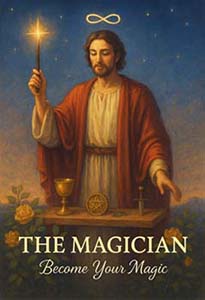
2. The Magician — Use the Tools You Actually Have

Trying to make a perfect holiday with imperfect resources?

The Magician whispers: Use what’s already on the table.

Don’t overspend now and stress later. 

Aim for gifts that are magical, not expensive.

3. The Lovers — Choose Peace, Not Drama

The holidays tend to bring opinions.

And relatives.

And opinions from relatives.

The Lovers reminds you: choose connection, not combat… or at least choose silence and pie.

If one of your loved ones says something absolutely outrageous, remember that you can just put a piece of pie in your mouth and smile.  Add whipped cream to make it an extra sweet conversation.

4. The Seven of Cups — Beware of Overcommitment

Shopping! Baking! Parties! Rituals! Volunteering! Travel!

The Seven of Cups says: You cannot say yes to all seven.

Pick the cup with the least glitter and the most sanity.

You don’t have to be all things to all people – just be the you that people love.

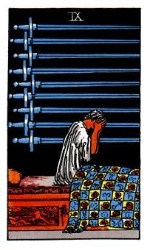
5. The Nine of Swords — Anxiety Lies

That nagging feeling that everything will go wrong?

It’s just the Nine of Swords doing its nightly stand-up routine.

Thank it for its service… and then ignore it.

Don’t just make it a holiday – make it a vacation from worry.

6. The King of Pentacles — Treat Yourself Like a Honored Guest

Warm food, soft blankets, comfortable socks —

This is not indulgence, this is holiday self-care strategy.

Just look at all the things you’ve done for other people!  Don’t you deserve a little pampering, too?

The King of Pentacles approves.

7. The World — You Made It Through Another Year

Pause. Breathe. Celebrate the cycle completing.

On the Winter Solstice, the solar year will end.  Take the time to reflect, to congratulate yourself for another trip around the sun. 

Give yourself credit for all the chapters you survived this year — and all of the growth that went along with that.

Bonus Holiday survival secret:

Lower expectations. Raise kindness. Wear stretchy pants.

Available on Amazon

GOOD GEMINI FULL MOON ACTIVITIES (For Everyone)

Activities of the Full Moon in Gemini.

1. Talk It Out

Gemini is ruled by Mercury, so this moon loves:

• good conversations

• honest check-ins

• clearing misunderstandings

• catching up with someone you care about

If something needs to be said, today is a great day to say it — with curiosity instead of judgment.

2. Write Something (Anything)

The Gemini moon is ideal for:

• journaling

• blogging

• brainstorming

• making lists

• outlining a project

• writing a letter you may or may not send

Gemini energy likes movement, not perfection.

Write badly! Write freely! That’s the point.

“Just the Tarot,” by Dan Adair – Available on Amazon

3. Learn Something New

A Gemini full moon is curiosity on steroids.

Great activities:

• watch a documentary

• read something weird

• take a short online class

• dive into a topic you’ve always wondered about

• explore a new tarot idea or card history

Your brain is extra “sparkable” today.

4. Mix Things Up

Gemini hates routines that feel stale.

Try:

• working in a different room

• rearranging something small

• taking a different route

• visiting a new café

• choosing a new deck to read with

Tiny disruptions = big inspiration under this moon.

5. Light Decluttering

Gemini rules mental clarity, and physical clutter can feel “noisy” today.

But keep it gentle:

• toss old papers

• clear a drawer

• tidy your desk

• delete apps you don’t use

This is not a “deep clean” moon — it’s an “open the windows and let air in” moon.

6. Play with Ideas (Without Committing to Anything Yet)

The full moon illuminates, but Gemini doesn’t demand decisions.

Today is perfect for:

• exploring multiple options

• casting wide nets

• letting possibilities bubble up

• following mental rabbit holes

• gathering puzzle pieces

Choose later — today is for variety.

7. Light, Airy Rituals (If you do them)

This moon works best with:

• incense or diffusing uplifting scents

• breathwork

• music or chanting

• tarot spreads focused on clarity or “What am I not seeing?”

• light meditation rather than deep shadow work

Keep it breezy.

 THE OVERALL THEME

A Gemini Full Moon is excellent for anything involving:

• clarity

• communication

• curiosity

• small changes

• flexible thinking

• opening mental windows

• connecting dots

It’s a mentally stimulating, slightly restless, very dynamic moon — great for creativity, experimentation, and fresh insight.

The Top Ten Tarot Cards Indicating Conflict

A quick, insightful guide to the ten Tarot cards that most often signal conflict—from chaotic energy and power struggles to hidden tension and emotional fallout. This post explains what each card means and how to navigate challenging situations with clarity and confidence.

There are days when Tarot feels like a warm hug…

…and days when it slides a little warning across the table and whispers,

“Brace yourself.”

Conflict is part of life, part of growth, and definitely part of the Tarot.

“Just the Tarot,” by Dan Adair – Available on Amazon

Whether it’s inner tension, relationship friction, or someone else’s chaos spilling into your lane, some cards show up to say:

“Something here needs attention.”

Here are the top ten Tarot cards that most strongly signal conflict — and what each one really means beneath the surface. If you’d like to download this list as a PDF file that you can add to your Tarot notebook, click here.

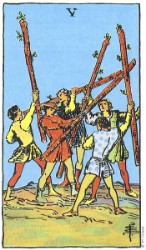
1. Five of Wands – The Classic Chaos Card

If conflict had a mascot, this would be it.

The Five of Wands shows:

– competition

– ego clashes

– mixed agendas

– flailing energy everywhere

It’s not necessarily destructive — but it is noisy.

Message: This isn’t war… it’s everyone talking at once. Calm the room.

2. Five of Swords – A Battle Nobody Really Wins

This is the energy of:

– arguing to be right

– unhealthy victories

– someone taking more than their share

– hurt feelings afterward

Message: Winning at all costs comes with a bill. Choose integrity.

3. Seven of Wands – Defend Your Ground

This is conflict from the outside:

– critics

– competition

– pressure

– feeling outnumbered

But the card says you can stand firm.

Message: Don’t fold. You’re stronger than the opposition.

4. The Tower – Major Disruption

This isn’t a small disagreement — it’s a smackdown from the universe.

Think:

– sudden revelations

– arguments that break things open

– emotional earthquakes

Message: The old structure needed to fall. Liberation follows.

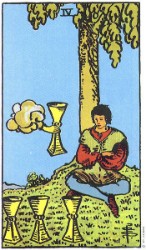
5. The Five of Cups – Emotional Fallout

Not a conflict card on its face, but it often shows up after one:

– regret

– grief

– disappointment

– unresolved conversations

Message: You’re grieving what was lost. Healing begins when you turn around.

6. The Devil – Power Struggles

This card signals:

– manipulation

– obsession

– toxic dynamics

– control games

– addictive patterns in relationships

Message: This conflict has a hook. Break the chain, not each other.

7. The Knight of Swords – Rushing Into Battle

He is smart, fast, determined…

…and doesn’t always think things through.

Shows:

– heated arguments

– impulsive reactions

– someone charging ahead without listening

Message: Slow down before your mouth outruns your wisdom.

8. The Two of Swords – Silent Conflict

Not all conflict is loud.

This card is conflict frozen:

– denial

– avoidance

– stalemates

– tension beneath the surface

Message: Peace requires a decision. Open your eyes and choose.

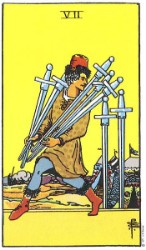
9. The Seven of Swords – Sneaky Energy

Not direct conflict — but conflict waiting to happen.

Signals:

– deception

– half-truths

– secret plans

– someone acting behind the scenes

Message: If something feels “off,” it probably is. Trust your intuition.

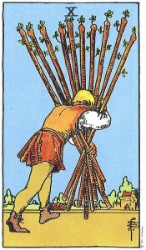
10. The Ten of Wands – Overwhelm and Burnout

This appears when conflict comes from:

– taking on too much

– carrying other people’s problems

– no boundaries

– pressure that builds until you snap

Message: Put down what isn’t yours. You’re not meant to carry it all.

Final Thoughts: Conflict Isn’t Always the Enemy

Conflict in Tarot isn’t punishment — it’s information.

The cards don’t show conflict to scare you…

They show it to help you:

– redirect

– set boundaries

– speak truth

– release what’s toxic

Because once conflict is acknowledged, transformation can finally begin.

THE EMPRESS AND THE ART OF FLUNKING OUT OF EARTH SCHOOL

A playful look at the New Age paradox of being “perfect souls” who still come to “Earth School” to learn lessons. The post explores both views and suggests that real growth comes not from suffering, but from joy, play, and becoming more fully ourselves.

There’s a rather large pothole in New Age philosophy that I keep tripping over. Let’s call it The Earth School Fallacy — the strange contradiction between “We are perfect divine beings” and “We’re here to learn lessons because… well, we’re NOT perfect divine beings.”

Somehow, we manage to carry both of those ideas around in our heads and not notice that they don’t quite fit together.

“Just the Tarot,” available on Amazon

THE EARTH SCHOOL MODEL

You’ve heard this one. If you’ve been on a spiritual path longer than a week, you’ve probably used this one.

Earth, we’re told, is a sort of cosmic classroom we incarnate into repeatedly. Each lifetime is a syllabus of Very Important Lessons, and with each incarnation we supposedly level up until we become Spiritually Perfect.

In this model, we actually choose our life challenges before we’re born.

Have a temper? Great! Let’s incarnate into a family whose daily activities include pushing all of your buttons like they’re competing for a prize. Assuming we don’t murder each other we eventually learn enough humility and patience and – SHAZAM –  we transform into Mahatma Gandhi.

Have an obsession with sex? Wonderful! Let’s incarnate into a world filled with gorgeous, eager, naked partners who—

Okay, that one never happens. But you get the drift.

Pass your lessons and you move up a grade.

Fail your lessons and you come back as a cockroach or a MAGA supporter and start over in Spiritual First Grade, eating glue and making macaroni art.

In Tarot Talk, Gaia’s classroom often looks like the Five of Wands — a bunch of souls flailing around wildly until one of us finally figures out what the sticks are for.

THE ANGEL WITHIN

Now we arrive at the second New Age idea — the one that directly contradicts the first.

This is the belief that we’re already spiritually perfect, but we’ve forgotten that fact. Our task isn’t to improve ourselves… it’s to remember that we don’t need improving.

Buddhists describe it as our original nature: a perfect jewel hidden under a crust of plain gray rock. Chip away the rock and — surprise! — you’ve been luminous the whole time.

Joni Mitchell phrased it better than all the gurus combined:

“We are stardust, we are golden,

and we’ve got to get back to the garden.”

In this view, we are pure, radiant beings from Source Energy who come to Earth, promptly forget who we are, and then spend the rest of our lives meditating, journaling, and buying inspirational calendars in an attempt to remember.

Put another way:

We’ve got a sleeping angel inside us, and the angel really needs to get its butt out of bed.

THE CONTRADICTION

Here’s the uncomfortable question no one asks:

If we’re already perfect, why would we CHOOSE to forget that and struggle?

It’s like becoming a master at algebra, then signing up for a lobotomy just so you can relearn quadratic equations from scratch.

Imagine your higher self sitting in another dimension saying,

“I’m a being of luminous perfection. You know what sounds fun? Forgetting everything and getting pissed off at the traffic while I drive to a boring, meaningless job that I hate.”

Something about that doesn’t quite compute.

EARTH SCHOOL AND THE WORK ETHIC PROBLEM

The Earth School model borrows heavily from Christian theology, a worldview in which:

• Humans are inherently sinful.

• Life is full of temptations that make us more sinful.

• If we behave ourselves and avoid having sex with the neighbor’s spouse, we get to go somewhere nice after we die.

In this model, Earth is basically the rough school on the dangerous side of town, with a curriculum of suffering, discipline, and fear.

Just keep your head down, work hard, and eventually—good news!—you’ll die.

THE VEDANTA SOLUTION (AKA: THE EMPRESS APPROACH)

Vedanta, from the Hindu tradition, on the other hand, leans toward Joni Mitchell’s interpretation. It suggests that:

• We are already perfect.

• Life is not meant to be hard.

• We’re not here to learn painful lessons.

• We’re here to experience, enjoy, and expand.

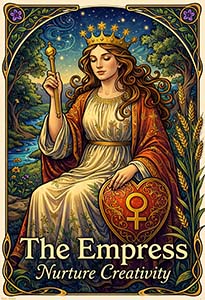
If the Vedanta version of Earth School has a model, it’s not the stern monk or stressed-out student — it’s The Empress.

Empress Poster available on Etsy

She’s not here to ace the test. She’s here to savor the banquet.

Play, creativity, pleasure, beauty — these are not distractions from the spiritual path.

They are the spiritual path.

That’s a really hard concept for Westerners to wrap our heads around.  We’re taught from the moment that we’re born that life is a series of assignments that we’re supposed to complete and that the next assignment will be better than the last.  That’s really the way that our whole society is set up.  We go to kindergarten so that we can go to grade school so that we can go to high school so that we can go to college or trade school so that we can get jobs so that we can get promotions so that we can retire comfortably and have enough money to pay for our funerals.

If we do all of that, we’ve been, “successful.”  If we don’t, our lives have been meaningless.

When someone tells us that the whole purpose of Earth School might actually be recess, it feels slightly insane.

LIVING SOMEWHERE IN THE MIDDLE

We can argue both sides.

If you lean toward Earth School, you can point to all the suffering and struggle that seem baked into our reality. As the English philosopher Thomas Hobbes famously put it, human life often appears “nasty, brutish, and short.”

But if you look again, you’ll also see breathtaking amounts of love, generosity, joy, and compassion.

So what’s the truth?

Probably something in the middle.

No, we’re not perfect angelic beings slumming on Earth…

but we can be.

Maybe life isn’t about learning painful lessons, and maybe it’s not about effortless perfection either.

Maybe it’s simply about becoming more yourself, more awake, more playful, more alive.

And oddly enough, the way we get there isn’t through suffering…

it’s through joy. It’s through learning how to play.

We don’t have to wait until we die to graduate.

We can do that right now — as soon as we remember that recess was always the point.

Surviving the Season: A Light-Hearted Guide to Beating SAD Without Losing Your Mind

This post explores the realities of Seasonal Affective Disorder (SAD) with a humorous twist — why the winter blues hit so hard, how light deprivation messes with our brains, and what actually helps. From sunrise-mimicking light boxes to Vitamin D3 and CBT-SAD reframing techniques, this guide offers practical, affordable ways to lift your mood when the days get dark. Includes a free downloadable PDF of 15 winter affirmations to help rewire your thoughts and make the season feel gentler, brighter, and a whole lot more manageable.

Are you still suffering from the cosmic hangover known as the time change?

Maybe you can’t sleep at night but can barely keep your eyes open during the day. Maybe you’re stumbling through the month like a melancholy robot — mostly upright, mildly conscious, but deeply unimpressed with existence.

And isn’t it cruelly ironic that exactly when we’re all miserable from light deprivation, the government decides to turn the lights off an hour early?

Thanks, folks. Really helpful.

 Light and Happiness (a Love Story as Old as Humans)

Humans have a deep evolutionary connection with light — not metaphorical light, not spiritual light, not “good vibes” light — we’re talking about actual photons hitting your eyeballs. For centuries, nearly every culture has tried to cheer up the dark months by adding more light: bonfires, candles, lantern festivals, torches, flaming wheels, glowing turnips… you name it, someone set it on fire.

Even our pop songs know what’s up:

• You are the sunshine of my life.

• You light up my life.

• I’ve got sunshine on a cloudy day.

• Sunshine on my shoulders makes me happy.

But when there isn’t enough light?

We become depressed, anxious, sluggish, and mildly feral. We want to curl up under a quilt with a 40-pound bag of potato chips and hibernate until April.

In short:

Light = joy.

Dark = sadness.

This is not complicated.

The Sun Tarot Affirmation Poster available on Etsy

 Seasonal Affective Disorder (SAD): The Winter Blues With a Capital B

The official psychological name for the winter blues is Seasonal Affective Disorder, or SAD — which is honestly too accurate. It ranges from “a little down” to “I may never be cheerful again and also don’t touch me.”

Depending on which study you read, SAD affects anywhere from 5% of Americans to 10 million people, with symptoms like:

• chronic sadness

• sleep pattern chaos

• irritability

• carb cravings

• emotional flatness

• hiding from society like a depressed woodland creature

If you’ve ever had it, you know what a total beast it can be. While everyone else is decking halls and singing carols, you’re sitting at home thinking:

“Crap… three more months of this.”

I’ve had SAD kick my ass more than once, so I was very happy to discover that it’s now the subject of its own therapeutic specialty:

CBT-SAD — Cognitive Behavioral Therapy for Seasonal Affective Disorder.

And it’s not as complicated as it sounds.

The Three Pillars of Beating SAD (According to CBT-SAD)

1. Increase Your Light

This one feels obvious:

If darkness is the problem, light is the solution.

But not just any light.

You need a blast of sunrise-level brightness first thing in the morning — something that tells your brain:

“Hello, it’s daytime, stop making melatonin.”

Enter: the mood-enhancing light box.

These used to be huge contraptions you practically had to strap to your head. Now they’re about the size of a tablet, reasonably priced, and honestly kind of pleasant.

Light boxes work because they:

• mimic sunrise

• raise serotonin

• lower melatonin

• reset your circadian rhythm

• tell your brain to get out of bed and stop being a raccoon

This is the one I use because it’s inexpensive and has great reviews:

2. Vitamin D3 (Your Winter Sunshine Backup Plan)

We naturally get Vitamin D from sunshine — so of course, in winter, our levels tank. Add the fact that we’re bundled head-to-toe like sentient laundry bags, and you’ve got the perfect recipe for deficiency.

Low Vitamin D contributes to:

• low serotonin

• flat dopamine

• brain fog

• irritability

• low energy

• general “I’m over this” mood

Supplementing D3 helps stabilize:

• serotonin

• dopamine

• inflammation

• sleep-wake cycles

• mood regulation

And best of all: it’s cheap.

You can grab it on Amazon or at the pharmacy.

3. Reframing the Way You Think About Winter

This is where the cognitive part comes in.

My sister once pointed out that constantly referring to winter as “the dark times” might not be the healthiest mindset. Fair enough.

If we’ve had rough winters in the past, we tend to brace for them like emotional storm preppers:

• “I hate winter.”

• “I dread those long dark months.”

• “Wake me up when it’s spring.”

These thoughts become self-fulfilling prophecies.

CBT-SAD teaches us to rewire those expectations and rewrite our inner scripts — not with toxic positivity, but with seasonal intelligence.

For example:

• Winter is not the enemy — winter is the exhale.

• Early nights are invitations to gentler evenings.

• Light is scarce now, so I become intentional with it.

• Winter is not a shutdown — it’s a recalibration.

These reframes help your brain reinterpret winter as:

• restorative

• quiet

• intentional

• gentle

• rhythmic

Instead of something to dread, it becomes something to work with.

I’ve included 15 winter reframes as a free downloadable PDF that you can get by clicking here:


Final Thoughts (and a Pep Talk)

If SAD is hitting you hard, it’s worth finding a good therapist who understands seasonal depression. But even without professional help, these three pillars can make a huge difference.

Hopefully, this little article gives you a few ideas about how to get the Bah Humbug out of your brain and bring some light back into your winter.

And remember:

Light returns. It always returns.

The Fool as Antidote: The Dictator Versus the Inflatable Frog

From inflatable frogs to the Tarot’s Sacred Jester, here’s why humor and play can puncture authoritarian posturing—and help renew our courage.

 Is it possible that what may save us from the political disaster we’re living through is pure Fool energy? Could it be that—more than protests and lawsuits—what ultimately rescues us is dancing, delight, and unapologetic Foolishness?

Portland, Expecting Doom… and Choosing Play

For months I dreaded a federal show of force in Portland, Oregon. My intuition said it was the logical target for a maximal authoritarian flex. Portland has all the necessary history.  It was the headquarters for the American Nazi movement prior to World War II.  And then there was a long, loud counter-history—artists, woo-woos, college kids, mystics, nude bike rides, and the endlessly invoked specter of “Antifa.” In short: the perfect symbol for the far right to try to crush.

When deployment was announced—National Guard plus a strong contingent of the ICE Orcs — I braced for the worst. Instead, Portlanders greeted it with protesters dressed as inflatable frogs and dancing bananas. Someone declared an “emergency nude bike ride,” and thousands of bare bodies on glittering bicycles poured into the streets.

The effect? Paralysis by absurdity. How does a macho, heavily armed ICE Orc “win” against a dancing banana? Left-brain force met right-brain play and simply short-circuited. The nation watched inflatable amphibians wiggle across our screens—and we laughed.

Remembering the Original Fool

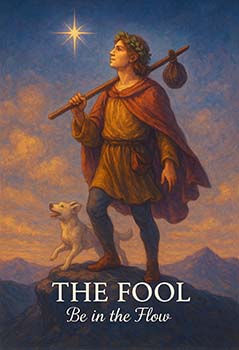
We forget: in the oldest Tarot, The Fool wasn’t a tidy wanderer in tailored tights. He was a street entertainer—juggler, dancer, illusionist—utterly at home in an inflatable frog suit. In medieval courts, the Fool doubled as Sacred Jester, the one person allowed to lampoon the king and point out when the Emperor had no clothes.

That’s what Portland’s play did: it punctured the costume of power.

Why Laughter Works

Authoritarianism demands reverence. It thrives when we’re solemn and frightened. Laughter breaks the spell. It reveals the man behind the curtain, the baggy suit, the orange pancake makeup. Humor pulls us back into the Universal flow of playfulness and creativity, where life replenishes itself. Authoritarianism sits outside that flow; it eventually collapses under its own rigidity.

A Fool for Dark Times

We often gaze at the modern, elegant Fool and forget his deeper medicine. The original Fool brought giggles and belly-laughs during dark eras. That may be precisely what we need now.

Does this mean we abandon lawsuits, organizing, or policy? Of course not. It means we season courage with joy, protest with parody, pressure with play. When we add the Fool, we recover something essential: our sovereign refusal to be grim.

The Vanguard in Frog Suits

I didn’t expect the resistance to arrive on two wheels in nothing but body paint, but here we are—and it makes perfect sense. The antidote to the present darkness may well be to harness Fool energy and refuse to stop playing.

Let’s keep showing up with discipline and delight. March and mock. Organize and improvise. Because when we laugh together, power’s mask slips—and light gets in.

“Just the Tarot,” by Dan Adair – complete definitions and layouts for doing your own Tarot readings.

The Top Ten Tarot Cards That Indicate Healing

Discover the top ten Tarot cards that symbolize healing, recovery, and renewal. From The Star to The Hermit, explore how the cards reveal your path toward balance, peace, and wholeness.

When you’re working with the Tarot, certain cards appear as gentle messengers of recovery, renewal, and wholeness. Whether it’s physical, emotional, or spiritual healing, these ten cards remind us that balance and well-being are always within reach.

1. The Star

The ultimate card of healing and hope. It promises renewal after hardship and invites you to open your heart to divine light and self-trust.

2. Temperance

Balance, integration, and moderation — the alchemy of opposites. Healing flows when extremes are softened and peace returns.

3. The Sun

The warmth of vitality and joy. The Sun restores the life force, illuminating health, positivity, and the return of childlike energy.

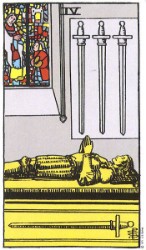
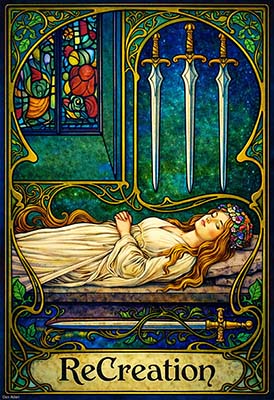
4. The Four of Swords

The body and mind’s call for rest. Recovery through stillness, meditation, and withdrawal from stress.

5. The Six of Swords

Moving away from turbulence toward calm waters. Healing through distance, clarity, and emotional peace.

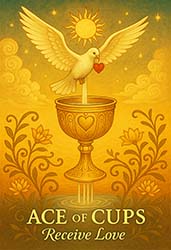
6. The Ace of Cups

Renewal of the heart. Healing through love, forgiveness, and self-compassion; a cleansing flow of feeling.

7. The Queen of Pentacles

Earthy nurturing energy. Healing through care, nourishment, and connection to the body and natural rhythms.

8. The Three of Cups

Healing through friendship and community. Emotional recovery by rejoining the circle of support and joy.

9. The Ten of Pentacles

Long-term stability and health. Healing in the sense of “wholeness” — when life feels safe, abundant, and grounded again.

10. The Hermit

Healing through introspection and solitude. Finding the inner light that guides you back to your own wisdom.

 Using the Cards for Healing

When these cards appear in a spread, ask yourself: What part of me is ready to recover?

Healing doesn’t always mean fixing something broken — sometimes it means remembering you were whole all along.

“Just the Tarot,” by Dan Adair – a complete set of definitions for all of the cards, including layouts and instructions, available on Amazon.