The Art of Receiving: A Holiday Lesson from the Ace of Pentacles

Are you great at giving but secretly uncomfortable receiving? This holiday-inspired reflection on the Ace of Pentacles explores why receiving is the true key to abundance — and how learning to allow support, blessings, and prosperity can transform your life.

We hear it every year: “It’s the season of giving.”

And while generosity is beautiful, here’s a question we rarely ask:

How good are you at receiving?

Most of us are excellent givers.

We’ll show up for others, offer help, carry the emotional load, and give until we’re exhausted…

Yet when something is offered to us — kindness, support, a compliment, an opportunity, or even abundance — we freeze. We deflect. We downplay. We say, “Oh, you shouldn’t have…”

But in manifestation, and in the symbolic language of the Tarot, receiving is not an afterthought — it’s the core skill.

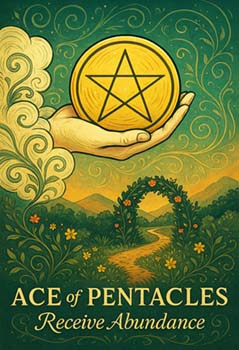
And the Ace of Pentacles, with its golden hand offering a gift from the sky, is the perfect reminder that abundance can’t enter your life until you’re willing to let it in.

Ace of Pentacles Affirmation Poster by Dan Adair – Available on Etsy.

Why Receiving Is the Real Skill in Manifestation

Genevieve Davis puts it beautifully in her book, “Doing Magic: A Course in Manifesting an Exceptional Life.”

“As soon as you have asked for anything, your next immediate job is to get out of the way. You need to get out of asking and into the receiving state as soon as you possibly can.”

Most people stay stuck in:

• asking

• wishing

• visualizing

• striving

• trying harder

But manifestation isn’t powered by effort.

It’s powered by allowing.

During the holidays we pour energy outward — buying gifts, doing favors, meeting expectations — but the universe doesn’t respond only to what we give. It responds to what we’re willing to accept.

 Receiving Requires Softening, Not Effort

In, “Ask and It Is Given: Learning to Manifest Your Desires” Abraham/Hicks calls this the Art of Allowing:

“Unless you are in the receiving mode, your desires will not be fulfilled.”

Receiving isn’t about deserving more or working harder.

It’s the opposite — a gentle softening.

Receiving happens when you:

• relax your shoulders

• loosen your defenses

• stop arguing with your blessings

• stop explaining your worth

• allow yourself to be supported

Winter energy itself teaches this.

The natural world slows, quiets, and becomes receptive.

There is no pushing — only opening.

The Holiday Block: Feeling Unworthy of Good Things

Here’s the core wound for many people — especially during the holidays:

We don’t believe we deserve good things.

Old stories rise up:

• “Other people need it more.”

• “I haven’t earned that.”

• “I don’t want to be a burden.”

• “I’m not enough.”

Many of us learned as children to receive less so others could have more.

So now, when life tries to hand us something beautiful, we reject it without even realizing we’re doing it.

But the Ace of Pentacles offers a different truth:

You are worthy of abundance.

You are worthy of support.

You are worthy of receiving joy, money, kindness, opportunity — just as you are.

The Ace of Pentacles: A Gift You Are Meant to Receive

TheAce of Pentacles  captures this moment perfectly:

• the hand offering a golden coin

• the floral archway

• the path leading into a new beginning

• the vibrant, fertile landscape

This is the universe extending a gift — potential, prosperity, a fresh start.

The affirmation, “Receive Abundance,” is not a command.

It’s an invitation.

A permission slip.

This holiday season, abundance may appear in quiet ways:

• someone offering help

• an unexpected opportunity

• a compliment

• money flowing in

• a door opening you didn’t expect

Your job?

Let yourself say yes.

A Simple Holiday Receiving Ritual (2 Minutes)

Try this before bed or during a quiet moment in the day:

1. Place your hand over your heart.

2. Take a slow breath.

3. Say gently:

“It is safe for me to receive.”

4. Picture the golden hand of the Ace of Pentacles offering you a gift.

5. Say:

“I allow good things to enter my life.”

Small practice, big shift.

This Season, Let Receiving Be Part of the Celebration

Giving is beautiful.

Generosity is sacred.

But so is allowing yourself to be blessed.

Let this be the season you stop deflecting your good.

Stop stepping aside.

Stop shrinking back.

Let this be the season you say, without apology:

“I am ready to receive abundance.”

Because the universe can only deliver what you’re willing to accept.

Seven Lessons the Tarot Can Teach About Surviving the Holidays

Feeling overwhelmed by the holiday season? The Tarot has a surprising amount of wisdom — and humor — to offer.From The Fool’s fresh start to The World’s end-of-year perspective, these cards remind us that the holidays don’t have to be perfect to be meaningful.

A little humor, a little magic, and just enough perspective will get you through the Holiday Haze.

1. The Fool — You’re Allowed to Start Fresh

Every holiday season is a reset button.

Don’t carry last year’s stress into this year’s festivities.

Don’t walk off of emotional cliffs at family dinners.

Leap lightly… but maybe look down for gift-wrapping paper on the floor.

2. The Magician — Use the Tools You Actually Have

Trying to make a perfect holiday with imperfect resources?

The Magician whispers: Use what’s already on the table.

Don’t overspend now and stress later. 

Aim for gifts that are magical, not expensive.

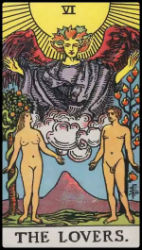
3. The Lovers — Choose Peace, Not Drama

The holidays tend to bring opinions.

And relatives.

And opinions from relatives.

The Lovers reminds you: choose connection, not combat… or at least choose silence and pie.

If one of your loved ones says something absolutely outrageous, remember that you can just put a piece of pie in your mouth and smile.  Add whipped cream to make it an extra sweet conversation.

4. The Seven of Cups — Beware of Overcommitment

Shopping! Baking! Parties! Rituals! Volunteering! Travel!

The Seven of Cups says: You cannot say yes to all seven.

Pick the cup with the least glitter and the most sanity.

You don’t have to be all things to all people – just be the you that people love.

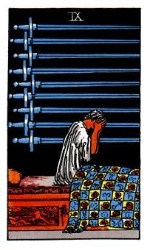
5. The Nine of Swords — Anxiety Lies

That nagging feeling that everything will go wrong?

It’s just the Nine of Swords doing its nightly stand-up routine.

Thank it for its service… and then ignore it.

Don’t just make it a holiday – make it a vacation from worry.

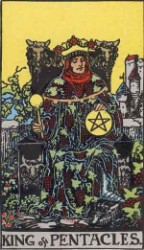
6. The King of Pentacles — Treat Yourself Like a Honored Guest

Warm food, soft blankets, comfortable socks —

This is not indulgence, this is holiday self-care strategy.

Just look at all the things you’ve done for other people!  Don’t you deserve a little pampering, too?

The King of Pentacles approves.

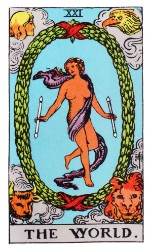
7. The World — You Made It Through Another Year

Pause. Breathe. Celebrate the cycle completing.

On the Winter Solstice, the solar year will end.  Take the time to reflect, to congratulate yourself for another trip around the sun. 

Give yourself credit for all the chapters you survived this year — and all of the growth that went along with that.

Bonus Holiday survival secret:

Lower expectations. Raise kindness. Wear stretchy pants.

Available on Amazon

The Top Ten Tarot Cards That Indicate Healing

Discover the top ten Tarot cards that symbolize healing, recovery, and renewal. From The Star to The Hermit, explore how the cards reveal your path toward balance, peace, and wholeness.

When you’re working with the Tarot, certain cards appear as gentle messengers of recovery, renewal, and wholeness. Whether it’s physical, emotional, or spiritual healing, these ten cards remind us that balance and well-being are always within reach.

1. The Star

The ultimate card of healing and hope. It promises renewal after hardship and invites you to open your heart to divine light and self-trust.

2. Temperance

Balance, integration, and moderation — the alchemy of opposites. Healing flows when extremes are softened and peace returns.

3. The Sun

The warmth of vitality and joy. The Sun restores the life force, illuminating health, positivity, and the return of childlike energy.

4. The Four of Swords

The body and mind’s call for rest. Recovery through stillness, meditation, and withdrawal from stress.

5. The Six of Swords

Moving away from turbulence toward calm waters. Healing through distance, clarity, and emotional peace.

6. The Ace of Cups

Renewal of the heart. Healing through love, forgiveness, and self-compassion; a cleansing flow of feeling.

7. The Queen of Pentacles

Earthy nurturing energy. Healing through care, nourishment, and connection to the body and natural rhythms.

8. The Three of Cups

Healing through friendship and community. Emotional recovery by rejoining the circle of support and joy.

9. The Ten of Pentacles

Long-term stability and health. Healing in the sense of “wholeness” — when life feels safe, abundant, and grounded again.

10. The Hermit

Healing through introspection and solitude. Finding the inner light that guides you back to your own wisdom.

 Using the Cards for Healing

When these cards appear in a spread, ask yourself: What part of me is ready to recover?

Healing doesn’t always mean fixing something broken — sometimes it means remembering you were whole all along.

“Just the Tarot,” by Dan Adair – a complete set of definitions for all of the cards, including layouts and instructions, available on Amazon.

The Karma Cards of the Tarot: Lessons, Consequences, and Course Corrections

Some Tarot cards seem to carry more spiritual gravity than others — the ones that reveal how actions return, lessons repeat, and growth becomes inevitable. These are the “karma cards,” reflecting the Kybalion’s Principle of Cause and Effect. Each shows us where the soul confronts the consequences of its choices — and how to rise into a new level of awareness.

What We Mean by “Karma”

Karma isn’t punishment or reward — it’s simply the universal law of cause and effect. Every thought, every word, every choice sends ripples into the field of consciousness, and those ripples eventually return to their source. When we see a “karma card” in a reading, it doesn’t mean the universe is judging us. It means the universe is teaching us.

In The Kybalion, this is expressed as “Every Cause has its Effect; every Effect has its Cause.”

In the Tarot, that principle unfolds symbolically through specific archetypes that reveal how energy cycles back around, how old patterns resolve, and how the soul grows through awareness.

The Major Arcana Karma Cards

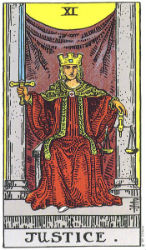
Justice (XI) — Karma in its purest form

Justice is the balancing of the scales — the moment when truth emerges and consequences unfold. It represents the return of equilibrium after imbalance, reminding us that integrity, fairness, and honesty always realign the cosmic order. When Justice appears, something in your life is finding its balance again.

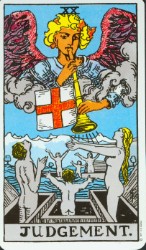
Judgment (XX) — The higher reckoning

This is karma’s spiritual octave — the point of awakening. Judgment calls us to review the past with clarity and compassion, to rise from the old self, and to claim renewal. It shows that karmic patterns are completing because understanding has dawned.

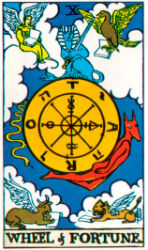
The Wheel of Fortune (X) — The turning of cycles

The Wheel reveals how karma is always in motion. Life rises and falls, fortunes shift, and every chapter becomes another turn in the spiral of growth. This card reminds us that luck isn’t random — it’s the natural consequence of the energy we’ve set in motion.

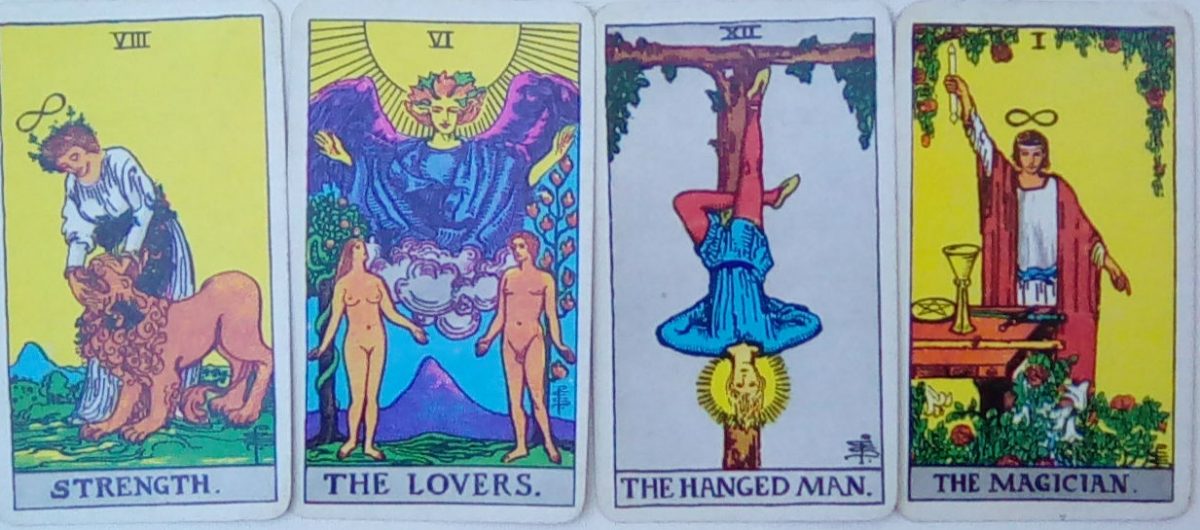
The Hanged Man (XII) — Seeing karma differently

When we find ourselves “stuck,” suspended between worlds, it’s often because the universe is asking us to pause and see things from another perspective. The Hanged Man teaches surrender, acceptance, and the wisdom that comes only when we release control. Sometimes, karma simply says: Wait. See. Understand.

Death (XIII) — Karmic transformation

Death ends what has outlived its purpose. It’s the natural completion of a karmic story — the moment when the past dissolves so new life can begin. In karmic terms, Death is liberation, not loss.

The Devil (XV) — Karma we create ourselves

The Devil shows entanglement — the cycles of desire, addiction, and illusion that keep us bound. It’s the reminder that we forge our own chains, and the key to freedom lies within. Whenever this card appears, it invites us to stop creating new karma and start unbinding the old.

The Tower (XVI) — Karma as course correction

When we resist growth, the universe sometimes intervenes dramatically. The Tower represents those moments of sudden change that dismantle illusion and force renewal. It’s not cosmic punishment — it’s divine intervention, clearing away what can no longer stand.

The World (XXI) — Karma fulfilled

Here, the cycle completes. The lessons have been learned, the soul has integrated its experiences, and balance has been restored. The World is the joy of completion — the karmic graduation that makes space for a new beginning.

Karmic Echoes in the Minor Arcana

While the Major Arcana show the grand architecture of karmic movement, echoes of those same lessons appear in the Minor cards.

Ten of Swords — the final reckoning of a mental or verbal pattern.

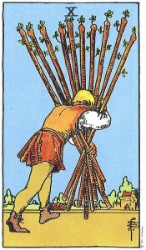
Ten of Wands — karmic burdens carried too long.

Six of Pentacles — the law of giving and receiving, the return of generosity.

Eight of Cups — walking away from a karmic cycle that has served its purpose.

Each of these cards shows a microcosm of cause and effect — personal moments of realization that mirror the larger soul journey.

The Deeper Message

The Tarot doesn’t show karma as destiny written in stone — it shows movement, opportunity, and awareness. Every card offers a chance to respond consciously, to change course, to balance energy, and to evolve.

When we recognize a “karma card,” we’re not seeing a sentence. We’re seeing a mirror.

And in that mirror, we find both the story of what has been — and the power to write what comes next.

Please feel free to leave questions in the comments section and I’ll get back to you as soon as I can.

Will This Love Really Last? 10 Tarot Cards That Say “Yes”

Wondering if your love will really last? Tarot offers powerful clues. Here are the top 10 “yes” cards for romance — symbols of harmony, joy, and lasting connection.

While the Tarot doesn’t hand out guarantees, it does shine a light on the energies present in a relationship. And some cards are so clear, so affirming, that when they appear in a spread, they almost shout “yes!”

Why Tarot for Love Questions?

Love and relationships are the number one category of Tarot inquiries. People turn to the cards when they’re uncertain about where things stand, or when they’re weighing the long-term potential of a relationship.

Tarot won’t say, “This relationship is guaranteed to last forever.” But what it will do is highlight the dynamics at play — the emotional energy, the strengths, and the challenges that shape a partnership. And when certain cards appear, they point strongly toward harmony, mutual growth, and a lasting bond.

The Top 10 Tarot “Yes” Cards for Romance

1. The Lovers

This is the archetypal card of love, union, and attraction. It represents shared values and choices that strengthen the bond. When The Lovers appear, the message is clear: the relationship is rooted in deep connection.

2. Two of Cups

The quintessential partnership card. It reflects mutual attraction, balance, and reciprocity. The Two of Cups points to a genuine soul connection where both people bring equal energy to the table.

3. Ten of Cups

This is the “happily ever after” card. It symbolizes long-term happiness, emotional fulfillment, and family harmony. If you’re asking about lasting love, the Ten of Cups is a resounding yes.

4. Four of Wands

A card of celebration, milestones, and commitment. It often shows up around engagements, weddings, or moving in together. It’s a sign that the relationship is not only joyful but ready to move into the next chapter.

5. The Empress

Abundance, nurturing, and fertility flow through this card. The Empress speaks of love that supports growth — creative partnership, deep affection, and the potential to build something lasting together.

6. The Star

The Star brings healing, inspiration, and spiritual alignment. In love, it suggests that the relationship is not only joyful but also restorative, giving both partners hope and a sense of divine timing.

7. Six of Cups

Sweetness, comfort, and sincerity. This card speaks to simple pleasures and genuine affection. Whether it’s new love or a rekindled flame, the Six of Cups highlights warmth and emotional honesty.

8. The Sun

Few cards are as positive as The Sun. It represents joy, openness, and vitality. In romance, it signals a relationship where both people feel seen, supported, and energized.

9. Ace of Cups

The overflowing chalice of love. This card signals the beginning of a new relationship or the renewal of affection in an existing one. It’s pure emotional abundance and a beautiful green light for love.

10. Two of Wands

While not strictly a “romance card,” the Two of Wands points to planning a shared future. It suggests vision, growth, and expansion — a partnership where both people are willing to build together.


What These Cards Have in Common

Look at these ten cards together, and a pattern emerges:

  • Union & Commitment: Lovers, Two of Cups, Four of Wands, Ten of Cups.
  • Emotional Fulfillment: Ace of Cups, Six of Cups, Empress.
  • Joy & Inspiration: Sun, Star, Two of Wands.

The common theme? Relationships that thrive on balance, mutual support, and a shared vision for the future.

A Note of Realism

Of course, not every card in the Tarot is a “yes.” Sometimes the spread brings red flags — lessons that need to be learned before love can grow strong. That doesn’t mean the relationship is doomed, but it does mean awareness and patience are needed.

Stay tuned: in a future post, we’ll explore the Top 10 “No” Cards for Love Questions.

Conclusion

Deciding if a love will last is never easy. But the Tarot provides more than predictions — it offers symbolic guidance about the energy flowing through your relationship.

When the “yes” cards appear, they suggest love that’s harmonious, joyful, and ready to grow into the future. If you see these cards in your spread, take it as the Universe’s way of saying: love is worth the leap.

“Just the Tarot,” by Dan Adair – A kindle ebook available on Amazon

The Top Ten, “Yes,” Cards for Taking a New Job

Deciding whether to take a new job can feel overwhelming — but the Tarot offers surprising clarity. In this post, we explore the top 10 “yes” cards that signal opportunity, growth, and success in a new role.

There are two areas that cover 99% of what people ask in Tarot readings.  And they are – guess what? – love and money.

To be more specific about the latter, a lot of people are very worried about finances right now.  Younger people, older people, many of us are living just a paycheck away from destitution.

Most of the questions that revolve around finances can be broken down into two major areas:  Should I keep this job?  And, should I take that new job?

Unfortunately, that frequently breaks down further into, “I really, really hate my job but I’m afraid to quit it.”    And, “I’m really thinking about taking this new job, but how do I know it isn’t going to be just another hell hole?”

Obviously, the Tarot can’t make those decisions for us, but it can put up some pretty clear markers one way or the other.  In keeping with that, here are the top ten cards that indicate that, yes, we should take that new job.

The Top 10 Tarot “Yes” Cards for a New Job

1. The Magician

This card is all about skill and personal power. If you’re considering a new role, The Magician suggests you already have the tools and talent you need to succeed. It’s a reminder that you can create your own opportunities — and this one is ready for you to shape.

2. The Sun

Few cards are as positive as The Sun. It brings energy, confidence, and joy. In career terms, it signals that the new job will bring vitality and success — the kind of role where you can thrive, not just survive.

3. The World

The World represents completion and stepping into a bigger arena. It’s a sign that an old cycle is closing, and a new, more expansive chapter is waiting. Professionally, this card says, “Yes — you’re ready for the next level.”

4. Ace of Pentacles

The Ace of Pentacles is the clearest symbol of a new financial or career opportunity. Think of it as the seed of prosperity being handed to you. It’s a resounding “yes” that the new role holds real promise.

5. Three of Pentacles

This card highlights teamwork, recognition, and skill-sharing. If it shows up, it suggests the new job will give you the chance to collaborate with others and be appreciated for your contributions.

6. Six of Wands

The Six of Wands is about victory, advancement, and being noticed. In a career spread, it signals success in your new role and the recognition that comes with it.

7. Eight of Pentacles

This is the card of steady skill-building and mastery. If you’re entering a new field or learning new tasks, the Eight of Pentacles assures you that you’ll gain expertise and grow stronger through the work itself.

8. The Star

The Star brings inspiration, hope, and alignment with your higher purpose. In job matters, it suggests the new opportunity isn’t just a paycheck — it’s a chance to do something meaningful that feeds your spirit.

9. Two of Wands

The Two of Wands is about expansion and long-term vision. It tells you that the new job opens up possibilities for growth, planning, and future success. It’s less about a quick win and more about building something lasting.

10. Ten of Pentacles

This is the card of stability, prosperity, and legacy. If it appears, it suggests the new role has the potential to provide long-term security, financial reward, and a sense of belonging within a larger structure.

What These Cards Have in Common

Looking at these ten cards together, a pattern emerges:

Material success & stability: Ace, Eight, Ten, and Three of Pentacles.

Recognition & growth: The Magician, The World, and Six of Wands.

Fulfillment & inspiration: The Sun, The Star, and Two of Wands.

When these cards appear in your spread, they point to opportunity, alignment, and security — the kind of energies that make a new job worth considering.

A Note of Balance

Of course, not every card says “yes.” It’s always sweet when we get clear yes and no cards in a reading, but sometimes they can be frustratingly ambiguous.

When that happens,  the Tarot suggests waiting, rethinking, or being cautious about what’s really on offer. The future may reveal that the opportunity isn’t as golden as it first appears or maybe it will be.  Things are still developing.

In a future post, we’ll explore the Top 10 “No” Cards for a New Job — the ones that raise red flags and encourage you to pause before leaping.

Conclusion

Deciding whether to take a new job is never easy. It’s a choice that can ripple out through every part of your life. While Tarot can’t choose for you, it can help reveal whether the energies surrounding a new opportunity are supportive, promising, and aligned with your bigger goals.

So the next time you’re staring at an offer letter, pull out your deck. If the “yes” cards show up, it may just be the Universe’s way of saying: step forward with confidence.

If you’d like a downloadable PDF copy of the Top Ten Job Cards, click here.  When the list pops up, go to your browser menu and click on, “print file.”

“Just the Tarot,” a kindle ebook by Dan Adair available on Amazon

Impostor Syndrome and The King of Wands Reversed

The King of Wands reversed shines a light on impostor syndrome — that nagging sense of never being “good enough.” Learn how this Tarot archetype mirrors self-doubt and discover practical steps to reclaim authentic confidence, reverse the distortion, and own your rightful place at the table.

Do you never feel “good enough?”

Do you feel like, no matter how hard you try, no matter how much you do, you’re still falling short?

Does it seem as if everyone around you somehow has more talent, more luck, and is more deserving than you are?

That’s called, “Impostor Syndrome,” and it can destroy our lives.

WHAT IS IMPOSTOR SYNDROME?

Put very simply, it’s the persistent feeling that we’re a fraud, even when the evidence in our life says otherwise.

Self-doubt becomes a constant companion and we dismiss our achievements as, “a fluke,” or, “just good timing.”  Even worse, there’s a chronic fear that someday we’ll be found out, that everyone else will realize that we’ve just been bullshitting our way through life and we don’t have any real substance.

It’s quite common among people who grew up in abusive households because that’s one of the primary messages that they got as kids:  “you’re not good enough.” No matter what you do, you’re still not good enough.

It’s especially common among creatives, leaders, and anyone who’s stepping into a new role in life.  Exactly the people who are already stretching themselves into growth and success.

THE KING ON A SHAKY THRONE

In the Tarot, the King of Wands represents the exact opposite of impostor syndrome.  He radiates confident leadership.  He’s the charismatic leader who can stand firmly in his own power and inspire the people around him.

But reversed?  His fire dims and he hesitates.  His self-belief falters and instead of leading with boldness he spirals into self-doubt.

That’s where Impostor Syndrome rears its ugly head:

Self-doubt in leadership.

Fear of being, “Found Out’ and huge anxiety that others will see through the facade.

Inconsistent Confidence and swinging between moments of brilliance and moments of total collapse.

Avoidance of responsibility and shrinking back from visibility and opportunity.

Overcompensation and burnout where we work WAY too hard to prove our worth until exhaustion sets in.

The King of Wands reversed is the perfect representation of Impostor Syndrome at work.

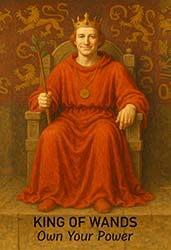
King of Wands Affirmation Poster available on my etsy site.

HOW TO OVERCOME IT

There’s an old joke that says that if you feel the need to ask your therapist if you’re a narcissist, you’re not one.  The same thing applies to Impostor Syndrome.  If you’re constantly full of self-doubt, you probably shouldn’t be.

The gift of the Tarot is that no card is fixed.  The King of Wands can always be turned upright again and so can our confidence.  Here are a few simple practices that can reverse Impostor Syndrome:

1 – Keep a, “proof journal.”  Write down ALL of our wins, big and small, to create a counter-narrative to the voice that’s telling us that we’re, “not good enough.”  And if that feels uncomfortable, it’s just proof that we really need to do it.

2 – Normalize mistakes.  People with Impostor Syndrome don’t just regret it when they screw up – they beat themselves into a bloody pulp over it.  Every artist, every writer, every visionary stumbles.  That’s part of the growth curve.  As Julia Cameron said, “In order to become a good artist, you have to first give yourself permission to be a bad artist.”

3 – Talk it out.  When we share our doubts with a trusted friend or therapist we get the realistic feedback we need.  When we tell someone we love that we feel like a total fuck-up they will frequently be amazed and even appalled that we could perceive ourselves that way.  Basically, that’s just, “borrowing someone else’s eyes” and they may see our brilliance and talent far more clearly than we can.

THE ONLY IMPOSTOR IS OUR SELF-DOUBT

The King of Wands reversed reminds us that Impostor Syndrome isn’t the truth.  It’s a distortion, an illusion that doesn’t need to define our reality.

Turn the card upright and loosen the chains of self-criticism.  Step into the fiery confidence that we should have and that we deserve.

We’ve already earned our places at the table. Now own it.

Love, Limerence, and The Ace of Cups? How to Heal Obsessive Attraction with Self-Generated Love

Ever fallen in love with someone you couldn’t have? Psychologists call it “limerence,” but spiritually it’s more than just a crush. This post explores the difference between obsessive attraction and true love, why we sometimes fall for the “wrong” people, and how to heal by generating love from within. Featuring insights from psychology, past-life theory, Ram Dass, and the Ace of Cups, it’s a guide to shifting from longing to self-created wholeness.

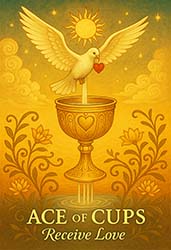
Ace of Cups – A Tarot affirmation poster available at Synergy Studio.

Did you ever fall in love with someone you shouldn’t have?  Someone who was unavailable, but you still felt intensely attracted to them?

Maybe it was your next door neighbor who was happily married.  Maybe it was a co-worker and you KNEW that a work place romance would be a disaster.  Hell, maybe it was your 8th grade teacher who was just SO perfect in every way.

GETTING CRUSHED

We used to call that, “getting a crush,” on someone.  We meet someone and we just know that we’re supposed to be together, even though everything else is saying, “No, you’re not.”

Psychologists – as psychologists tend to do – have invented a new term for it which is, “limerence.”  Here’s a definition:

Limerence is an involuntary, intense, romantic obsession characterized by intrusive thoughts and a longing for emotional reciprocation, often leading to emotional suffering due to unmet romantic needs.”

In other words, having a crush on someone you probably shouldn’t have a crush on.

IT’S ALL PERFECTLY NATURAL

Now, this has been going on ever since the world began and, of course, it’s caused a passel of trouble. Marriages end, people lose their jobs, reputations and careers are destroyed.  All in the name of love.

Which is puzzling, isn’t it?  Love is supposed to be this grand, wonderful adventure that lets us soar to new heights on the wings of the person we’re in love with.  So why is all of this so painful and frustrating?  

THE CALM, INNER VOICE

I had a teaching dream once about spirit guides and spiritual guidance.  I call them, “teaching dreams,” because they’re very lucid, very clear and they usually have to do with some issue that’s really bothering me.

The subject of this dream was, “How do I distinguish true spiritual guidance from my own desires and ego?”

And the answer was that spiritual guidance is never harsh, never critical, never ominous.  It’s always gentle, loving, and kind and leaves us feeling nurtured rather than criticized or beaten up.

The same principle applies to falling in love.  If it feels sweet and kind, it’s probably real love.  If it involves obsessive thinking, insecurity, self-doubt, or criticism . . . hey, it may be a hell of a crush, but it ain’t love.

WHY DOES IT HAPPEN?

Why do we fall in love with people who aren’t, “right,” for us?

Psychologists, philosophers and playwrights have been trying to figure that one out for hundreds of years and really haven’t made much progress.

My personal theory is that these are relationships that are, “out of time.”  And I don’t mean that in the sense of, “Whoops, we’re out of time.”

Rather, what I’m talking about is old relationships from previous incarnations that have been displaced in time.  The feelings are still there, but they’re no longer appropriate in their old form.

Perhaps we were married to someone or had a super, sizzling hot sexual affair with them two lifetimes ago.  Because of that intense attraction, we meet them again in this lifetime.

Only – guess what? – they’re married to someone else.  Or they’re our teacher or mentor.  Or perhaps we’re straight, but they’re the same sex that we are.

The feelings are just as intense.  The desire to be with them is just as strong.  But it just ain’t happening this go-round.

WHAT SHOULD WE DO?

Well . . . nothing, in most cases.  Just observe it and sit with it.  Realize that you love this person but that the love has to take a different form than romantic love.

We can feel it.  We can cherish it.  But we don’t have to act on it.  If there’s a huge internal conflict about getting romantically or sexually involved with someone, that’s not a very good way to start out, is it?

FILL YOUR HEART WITH LOVE

Ram Dass said that we frequently mistake other people as the source of love, rather than realizing that they’re just vehicles that get us to the love.

When we’re seriously crushing on someone we shouldn’t be crushing on, we feel that as a loss, as a deficit, as if we’ve got this Grand Canyon sized hole in our hearts that only they can fill.

Fortunately, we’ve got this wonderful part of our energy systems called, “the heart chakra.”    It can generate an infinite amount of love because love actually IS infinite.  

We can sit down at any time or place and just meditate on love, meditate on that chakra filling up with that sweet, kind essence that is love and the feeling of not being complete immediately goes away.

IT ISN’T THEM, IT’S US

We’ve been programmed into believing that love always flows out of someone else and into us.  That if someone, “out there,” doesn’t love us, we won’t get the love we need.

That’s really the source of the pain in limerence.  We’re convinced that without that other person’s love, we’re just going to be miserable and unfulfilled.  We can’t get to the love we want and so it hurts.

Not true.

We create our own love, in our own hearts.  We receive love when we open our heart centers and intentionally, consciously fill them up.

THE ACE OF CUPS

When we look at the Ace of Cups we can see this message very clearly.  The cup is our heart and the love isn’t flowing out of another person into the cup.  It’s flowing straight out of the Universe.  Love is everywhere.  It’s a Universal energy and we just need to open ourselves to receiving it.  If we occasionally receive it from another person, that’s great.

But if we don’t, that’s not a tragedy and it doesn’t need to be painful. The source of love is always in our own hearts.

“Just the Tarot,” by Dan Adair – A kindle ebook available on Amazon

When All the Choices Feel Wrong: The 7 of Cups and Emotional Paralysis

When you’re overwhelmed by choices but none of them inspire you, the 7 of Cups offers deep insight into emotional flatness, spiritual paralysis, and the fog of indecision. This post explores what it means to feel stuck not from a lack of options, but from a disconnection from desire — and how gentle, imperfect movement can reawaken synchronicity, clarity, and personal magic. With insights from tarot, spiritual practice, and the idea that every choice is a spell, this is a compassionate guide for anyone feeling adrift in a sea of possibility.

We all know what it feels like to be stuck in a situation that offers no way out — a dead-end job, a draining relationship, a town or routine that feels too small for who we are. In those moments, the lack of options is the problem, and we ache for even one open door.

But there’s another kind of stuckness, quieter and harder to name. It happens when you look at your life and see too many doors — job possibilities, creative paths, lifestyle shifts, spiritual practices, places you could move to, people you could become — and yet none of them stir your heart. It’s not that you don’t have options. It’s that nothing feels real enough to move toward. Every possibility feels equally vague, equally weightless. You scroll through them in your mind like a streaming menu of “meh.”

That’s where the 7 of Cups comes in — a card that doesn’t warn of limitation, but of overabundance without embodiment. When we’re caught in that state, the problem isn’t a lack of imagination. It’s that we’ve lost our connection to desire, motivation, or meaning. And that kind of emotional flatness can leave us just as frozen as having no choices at all.

In this post, I want to explore that space of spiritual paralysis — what it really means, why it happens, and how we might begin to move forward again, even when nothing calls to us.

 The 7 of Cups – Castles in the Sky

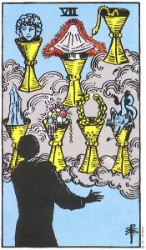
In the classic Rider-Waite tarot deck, the 7 of Cups shows a figure standing before a cloud filled with seven golden cups. Each cup holds something different — a castle, a laurel wreath, a snake, a dragon, a veiled figure, jewels, and even a head. These images float in the sky like a surreal dream, untouchable and unresolved. Some of the items represent temptation or danger. Others represent success, beauty, or mystery. Together, they evoke a kind of psychic overload: too many choices, too many desires, too many unknowns.

This card is often read as a symbol of fantasy, illusion, or indecision — a time when your head is in the clouds and your feet aren’t on the ground. You may be imagining all the things you could do, be, or have, but none of it is actually manifesting. The possibilities feel “up in the air” — compelling, maybe even glamorous, but disconnected from real life.

But the 7 of Cups doesn’t just speak to confusion. It speaks to the pain of disconnection from clarity, purpose, and desire. You might be a visionary, a dreamer, or someone with a deep well of creative imagination. And yet you feel suspended in a kind of fog — no longer trapped, but adrift.

This is the paradox: you can have a wealth of potential and still feel empty. You can imagine endless paths and still feel like you’re going nowhere.

Defining the Emotional Problem

Let’s be clear about something: this isn’t laziness. It’s not procrastination, and it’s not fear of commitment — at least, not in the way people usually frame those things.

What we’re really talking about here is a kind of emotional flatness — a sense that, no matter how many options are available, none of them feel alive. Nothing moves you. You’re not overwhelmed by too many passions; you’re stalled because nothing seems to matter. And when well-meaning people tell you to “follow your bliss” or “just pick something you’re passionate about,” you want to scream — because the truth is, you don’t feel passionate about anything.

This is a deeply misunderstood kind of stuckness. On the surface, it might look like you’re being indecisive or flaky. Underneath, there’s often a more painful story: burnout, disappointment, grief, disillusionment, even trauma. You may have spent years surviving rather than living. You may have pursued dreams in the past that led nowhere. Or you may simply be exhausted — mentally, emotionally, spiritually — and unable to summon the spark that used to drive you.

When this kind of numbness settles in, imagination alone won’t fix it. Vision boards and journaling prompts can feel like cruel jokes when you’re not connected to any real sense of desire. You become a ghost in your own life, haunting the possibility of change without feeling motivated to pursue it.

That’s where the 7 of Cups becomes not just a warning about illusion, but a mirror for a very human experience: the ache of possibility without passion.

Why We Get Frozen: The Paradox of Too Many Options

At first glance, having lots of options seems like a good thing — a sign of freedom, creativity, expansion. But if you’re not grounded in what you actually want or need, too many options can feel like a kind of psychic noise. Instead of liberating you, they overwhelm your system. Nothing feels real, and everything feels like a distraction.

This is the hidden danger of the 7 of Cups: abundance without anchoring.

You might bounce from idea to idea — start a new project, research a new career path, flirt with the idea of moving somewhere else — but none of it takes root. Each choice is hypothetical, weightless, floating just out of reach like the cups in the card. Without an emotional connection to any of them, they begin to blur together until doing nothing feels like the only viable option.

This paralysis often leads to guilt or self-blame: Why can’t I commit? Why don’t I care more? But the deeper issue isn’t about making a bad choice. It’s about the fear that no choice will lead anywhere meaningful.

And that fear can become self-fulfilling. We stop moving because we don’t feel inspired. But inspiration often follows movement — not the other way around. If we wait to feel perfectly clear before taking action, we can stay stuck for years.

The 7 of Cups teaches us that too much floating — too much dreaming without doing — eventually collapses into disconnection. The way out isn’t to find the perfect choice. It’s to ground ourselves in imperfect motion.

The Turn: A Way Out — “Three Least Sucky Choices”

So what do you do when everything feels empty? When every option seems flat, pointless, or too far away to matter?

Spiritual teacher Mike Dooley offers a surprisingly helpful piece of advice:

If all your choices suck, pick the three least sucky ones — and start moving.

It sounds irreverent, even a little cynical. But it’s actually a lifeline disguised as a joke.

Dooley isn’t saying you should build your life around mediocrity. He’s pointing to a truth that’s both practical and mystical: the universe can’t help you until you start moving. When you’re standing still, waiting for a lightning bolt of clarity, you’re not sending any clear signals. You’re broadcasting static.

But when you take even one step — toward something, anything — the whole energetic field around you begins to shift. Possibilities you couldn’t see before start to appear. A “meh” project might lead you to a person who lights you up. A half-hearted attempt at self-care might reawaken something long asleep. A seemingly random decision might become the breadcrumb trail that leads you home.

It’s not about pretending your choices feel great. It’s about trusting that momentum creates meaning, not the other way around.

And sometimes, choosing the “least sucky” option is the boldest move you can make — because it’s a choice made not from fantasy, but from faith.

The Role of Synchronicity

Synchronicity is the universe’s way of saying, “I see you.” It’s that perfect book showing up just when you need it, that person calling when you were thinking about them, that quiet nudge that leads you to an unexpected breakthrough. But synchronicity doesn’t happen in a vacuum. It happens when we’re in motion.

That’s the secret: the universe doesn’t respond to fantasy, it responds to engagement. It’s like a dance partner waiting for you to take the first step. As long as you’re frozen, the dance doesn’t begin.

You don’t need to be confident. You don’t need to be inspired. You just need to move — to start walking down the path of those three “least sucky” choices, trusting that better ones may be waiting just beyond the next curve.

This is how clarity often works. It’s not a neon sign pointing to your destiny. It’s more like a fog slowly lifting as you walk through it. You don’t get to see the whole map. You get to see the next few steps — and only after you take them.

And as you move, something begins to awaken. You start to feel little sparks again — a flicker of interest here, a glimpse of meaning there. What once felt flat starts to feel possible. New paths begin to emerge, and those dreamlike cups that once floated far above your head start to descend, one by one, into your hands.

Magical Reframing: Choice as a Spell

Here’s a radical way to reframe this moment of stuckness:

Every choice is a spell.

Not a perfect choice. Not a destined choice. Just… a choice. Made with intention. Infused with energy. Cast like a stone into the unknown.

In magic, we don’t wait until we feel certain. We gather what we have — some herbs, a candle, a whisper of desire — and we act. We claim. We declare. And the ritual itself becomes the spark that transforms the ordinary into the sacred.

In the same way, when you make a choice — even a small, imperfect one — you send a ripple out into the unseen. You say, “I’m willing to engage. I’m willing to participate in the mystery of my own life.” That willingness alone shifts the vibration.

This is where the 7 of Cups becomes not a warning, but an initiation.

It says: You are standing before a cloud of dreams. You may not know which one is right. But your power lies not in the picking — it lies in the choosing.

By choosing, you collapse the infinite into the actual. You call energy down from the clouds and into the body of your life.

That is magic.

 From Fog to Flow

The 7 of Cups reminds us that too many possibilities can be just as paralyzing as none at all — especially when we’re cut off from desire, drained of motivation, or unsure whether anything really matters. But emotional flatness is not a failure. It’s a signal. A season. A sacred pause.

And the way through it is not to wait for perfect clarity, or for passion to descend from the heavens. The way through is to begin — gently, imperfectly, even skeptically.

Pick the three least sucky choices. Make one small move. Cast one little spell. Not because you know where it leads, but because motion creates magic. Choice calls energy into form. The fog doesn’t lift before we move — it lifts because we move.

As you walk, the air clears. The heart flickers back to life. The cups begin to settle, and one of them — maybe one you never expected — begins to shine a little brighter than the rest.

And in that moment, you remember:

You’re not lost.

You’re just in the in-between.

And you are, in fact, already on your way.

The Alchemy of the Mind: Transforming Your Life With the 7 Principles of the Kybalion, by Dan Adair

Short-Circuiting the Myth of Workaholism: The 8 of Pentacles Reimagined

What if everything you’ve been taught about hard work is backward? This post reimagines the 8 of Pentacles and explores Susanne Koss’s idea from Super Synchronicity — that visualizing your goals may be more powerful than grinding for them. A fresh look at work, time, and creative flow.

The 8 of Pentacles in the tarot is traditionally associated with craftsmanship, diligence, and focused effort. We see a solitary figure at his bench, hammering away with precision and care. It’s often read as a call to roll up your sleeves, master your craft, and devote yourself to the grind.

This image resonates with one of our most deeply rooted cultural beliefs: that success comes from hard, often relentless work. Thomas Edison famously declared, “Genius is 1% inspiration and 99% perspiration.” For generations, this formula has been the gold standard — a kind of sacred math of success.

This is basically what gets drummed into us from the time that we’re small children.  We have to work very hard in elementary school, so that we’ll be ready to work very hard in high school, so that we’ll be ready to work very hard in college, so that we’ll be fully prepared to work very hard when we finally graduate.

Very, very hard work is the key to success in life. We all know that.

But what if that equation is upside down?

Enter the Field of Synchronicity

In her book Super Synchronicity, Susanne Koss offers a radically different perspective. She proposes that when we shift into the realm of synchronicity — that mysterious field where events line up with uncanny precision — the rules of time, effort, and productivity get rewritten.

Instead of spending 90% of our time grinding and 10% dreaming, Koss suggests we reverse the ratio:

“Spend 90% of your time visualizing what you want to accomplish, and only 10% in actual physical labor.”

It’s not about being lazy. It’s about learning to work with the flow rather than against it. When we align with this deeper field of meaning and connection, effort begins to take on a different quality. Things that once seemed far off can suddenly show up in our lives with surprising speed.

As she writes:

“Your old inner identity operates along a time line that aligns with the general assumption of how long things, ‘usually,’ take… But if you want to achieve your goals faster, you need to let go of your old concept of time.”

Visualize It, Don’t Build It

All of this actually makes a great deal of sense when we think about the basic process of visualizing and manifestation.  As Mike Dooley likes to describe that process, “Thoughts become things.”  Not, “Things become thoughts.”

When we manifest something through visualization, we’re taking our thoughts and investing them with huge amounts of our personal energy.  As we continue to imagine all of the delicious details of our visualizations, we’re adding more and more energy until they finally achieve critical mass and manifest in the physical world.  

With that basic formula, it obviously makes sense to spend more time visualizing and less time working.  Actually, if working is taking away from our time visualizing, we’re going at it ass-backwards.

The Invention of Free Time

Another myth that we have about work is that the result is measured by the time that we put into it.  If we only put a little bit of time into a project, then we can’t expect to get much out of it.  And if it’s a really BIG project, like writing a book or starting our own business, then we HAVE to invest massive amounts of time in order to make it happen.

But something strange and wonderful happens when we enter into the field of synchronicity. Suddenly we’re showered with serendipity.  Everything lines up just perfectly and totally unexpected opportunities pop up out of nowhere.  What might have taken six months is suddenly accomplished in six weeks.  What we expected to spend a year on comes to fruition in half that time.

Koss even jokes that she’s “the inventor of free time.” Behind the humor is a profound truth: we’ve been conditioned to equate time with toil, as if doing less invalidates our worth. But Koss has flipped that script. She shares that she often goes weeks or months doing “absolutely nothing” — simply enjoying life — until inspiration strikes and the next project emerges fully formed.

This isn’t procrastination. It’s alignment. It’s honoring the cycle of rest, gestation, and flow.

Reinterpreting the 8 of Pentacles

What if the 8 of Pentacles doesn’t just represent effort — but focused alignment? What if that solitary figure is absorbed not in laborious repetition, but in a meditative state of creation — following an inner spark rather than an external demand?

Maybe the card isn’t telling us to work harder. Maybe it’s inviting us to devote ourselves to what feels right, and to let go of the cultural pressure to earn our worth through exhaustion.

A New Work Ethic

In the magical, new work ethic of synchronicity, we’d be taught to spend a lot more time dreaming and a lot less time doing.  We’d be taught that banging our heads against a brick wall when a project isn’t working out is stupid and that we should drop it and come back to it later.  We’d be taught that working ourselves into a state of exhaustion is nothing more than a sign that we’re completely out of alignment with the Flow.

The myth of workaholism is exactly that — a myth. And like many myths, it contains a seed of truth but has grown into something unbalanced. The emerging paradigm — one that blends visualization, intention, and synchronicity — offers a kinder, faster, and more creative path forward.

It’s time to short-circuit the grind and reclaim our power as conscious co-creators with the Universe. Not by doing more — but by aligning more deeply with what truly moves us.

My new ebook, The Alchemy of the Mind, is available on Amazon at a very reasonable price.