Full Moon in Cancer: Tarot-Friendly Rituals for Emotional Release, Inner Safety, and Soul-Level Nourishment

A gentle Tarot-inspired guide to the Full Moon in Cancer, offering simple practices for emotional release, self-nurturing, and reconnecting with inner safety.

This Full Moon in Cancer invites us to turn inward — away from external goals and future plans — and toward the quieter question of emotional truth. In this post, we explore how Cancer energy supports healing, belonging, and coming home to yourself.

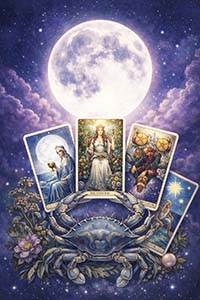
Tomorrow’s Full Moon in Cancer is not loud or dramatic — it’s deeply feeling.

Cancer energy is intuitive, tender, protective, and emotionally wise. It’s less about doing more and more about listening more deeply.

Instead of asking, “What’s next?” this Moon asks:

“What do I need right now to feel safe, held, and whole?”

If you’ve been feeling emotionally tired, overextended, or a little disconnected from yourself, this is a beautiful Full Moon to work with. Below are simple, Tarot-friendly practices (no complicated rituals required) that align with Cancer themes: emotional release, self-nurturing, inner belonging, and gentle healing.

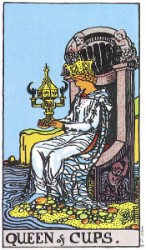
1. The Queen of Cups — Listening to Your Emotional Truth

Theme: Emotional awareness, compassion, and self-empathy.

Practice:

Sit quietly with the Queen of Cups (or imagine her presence if you don’t have the card). Let yourself drop out of thinking and into feeling.

Ask gently:

  • What emotion has been trying to get my attention lately?
  • What have I been feeling, but not fully acknowledging?

Let whatever arises be okay. This is not a problem-solving moment — it’s a witnessing moment.

Intention:

“I honor my emotional truth without judgment.”

“Just the Tarot,” by Dan Adair – available on Amazon

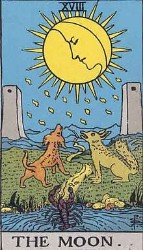
2. The Moon — Releasing Old Emotional Patterns

Theme: The unconscious, emotional cycles, and what’s ready to be released.

Cancer is deeply tied to memory and emotional habit. The Full Moon is a natural time for letting go.

Practice:

Write down anything you’re ready to release, especially emotional patterns such as:

  • over-caretaking,
  • emotional self-abandonment,
  • guilt,
  • or old hurts that still echo.

You might phrase them as:

“I release the belief that…”

“I release the habit of…”

“I release the emotional weight of…”

Safely tear up or discard the paper as a symbolic release.

Intention:

“I release what no longer supports my emotional well-being.”

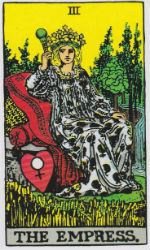
3. The Empress — Nourishing the Inner Self

Theme: Nurturing, care, and emotional abundance.

Cancer and The Empress share a deep resonance: both are about emotional nourishment and inner safety.

Practice:

Do one small, loving thing purely for yourself:

  • take a warm bath,
  • drink tea slowly,
  • wrap up in a blanket,
  • cook something comforting,
  • sit near water, or
  • rest without guilt.

Treat this as sacred — not indulgent.

Intention:

“I am worthy of care, comfort, and gentleness.”

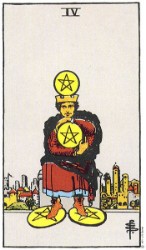
4. The Four of Pentacles (Reversed) — Softening Emotional Defenses

Theme: Letting go of emotional guarding and control.

Sometimes Cancer energy protects by closing. This practice invites softening rather than hardening.

Practice:

Notice where you’ve been emotionally holding tight:

  • withholding vulnerability,
  • staying guarded,
  • keeping yourself small or contained.

Ask:

What would it feel like to soften here — even just a little?

You don’t have to open to others — opening to yourself is enough.

Intention:

“I allow myself to soften into safety.”

5. The Star — Reconnecting to Emotional Hope

Theme: Gentle healing, emotional renewal, and quiet faith.

The Full Moon can stir emotions — The Star reminds us that tenderness itself is healing.

Practice:

Sit quietly and place a hand over your heart or belly. Breathe slowly.

Ask:

What would emotional peace feel like for me right now?

What does healing look like in this season of my life?

Let the answers be felt, not forced.

Intention:

“I trust in gentle healing and quiet renewal.”

Closing Reflection

The Full Moon in Cancer reminds us that strength isn’t only found in movement and achievement — it’s found in presence, feeling, and care.

This is a Moon for:

  • honoring your sensitivity,
  • listening to your emotional body,
  • releasing old emotional weight,
  • and remembering that you are allowed to need comfort.

You don’t have to fix yourself under this Moon.

You only have to be kind to yourself.

And that, in itself, is powerful magic.

2026: A New Cycle Begins — Welcome to a Universal 1 Year

We’ve just completed a cycle of endings and stepped into a year of new beginnings. This post looks at 2026 as a Universal 1 Year, what it means energetically and symbolically, and how to align with the quiet power of starting anew.

As we step into 2026, many people in Tarot, astrology, and esoteric circles are talking about one simple but powerful idea: 2026 is a Universal 1 Year.
Which means we are collectively beginning a brand‑new nine‑year cycle.

So what does that actually mean? And why does it feel like such a big energetic shift?

Let’s explore.

 What Is a Universal Year?

In numerology, each calendar year carries a collective or Universal vibration. It’s calculated by adding the digits of the year together and reducing them to a single number.

For 2026:
2 + 0 + 2 + 6 = 10 → 1 + 0 = 1

So 2026 = a Universal 1 Year.

And the year we just completed:

2025:
2 + 0 + 2 + 5 = 9

Which means we’ve just finished a Universal 9 Year — the final stage of a nine‑year cycle.

The 1–9 Cycle at a Glance

The Universal Years move through a repeating 1–9 pattern, each with its own archetypal meaning:

YearArchetypeTheme
1The SeedBeginnings, identity, new direction
2The MirrorRelationship, reflection, polarity
3The ChildExpression, creativity, joy
4The BuilderStructure, work, foundations
5The RebelChange, disruption, freedom
6The CaretakerResponsibility, healing, home
7The MysticInner work, truth‑seeking
8The RulerPower, manifestation, money
9The ElderCompletion, release, harvest

A 9 year completes a story.
A 1 year begins a new one.

“Just the Tarot,” by Dan Adair – available on Amazon

What We Just Came Through: The Universal 9 Year

Universal 9 Years are not light or easy. They are about:

  • Endings and closures
  • Letting go of identities, relationships, or structures that no longer fit
  • Grief, composting, forgiveness, and release

A 9 year doesn’t just end things — it dissolves them. It clears space.

That’s why many people experienced 2025 as heavy, tiring, emotionally clarifying, or strangely emptying.

Something had to finish.

What’s Beginning Now: The Universal 1 Year

A Universal 1 Year is the opposite energy.

It is:

  • New identity
  • New direction
  • New seeds
  • New courage

But it is not loud or triumphant.

A 1 year is fragile, raw, and tender. It’s the match being struck. The first step onto a new path. The moment of saying:

“This is who I am becoming.”

It’s less about immediate success and more about choosing a direction.

 Symbolically Speaking

Esoterically:

  • 9 is Saturnian — time, karma, endings, harvest, limits
  • 1 is Solar — identity, will, creative fire

So this transition marks a shift from:

Saturn’s scythe The Sun’s spark

From completion into creation.

 Tarot Reflections

If we were to translate this into Tarot language:

  • The 9 Year corresponds to archetypes like The Hermit, Death, The World — inner truth, endings, integration.
  • The 1 Year corresponds to The Magician — the moment when possibility becomes intention.

Not the end of the journey — but the choosing of it.

How to Work With a Universal 1 Year

This is not the year to rush.

It is the year to:

  • Name what you want to begin
  • Claim new identity gently
  • Experiment without needing mastery
  • Allow yourself to be a beginner again

This is the year to plant seeds, not demand fruit.

 In Closing

We have crossed a threshold.

The old cycle is complete. The ground has been cleared. And now — something new is possible again.

May this year be kind to your beginnings.
May you listen for what is quietly trying to be born through you.
And may you walk your new path with patience, courage, and trust.

Happy New Year.

New Moon in Sagittarius: Tarot-Friendly Rituals for Big Vision, Fresh Starts, and Better Luck

This New Moon in Sagittarius invites us to lift our eyes from daily worries and reconnect with a bigger sense of purpose. In this post, we explore how Sagittarius energy supports vision, belief, and fresh starts.

Tomorrow’s New Moon in Sagittarius is the kind of lunar reset that doesn’t whisper — it calls you forward. Sagittarius energy is optimistic, truth-seeking, and future-focused. It’s less about fixing what’s broken and more about asking:

“Where am I going next — and why does it matter?”

If you’ve been feeling stuck, uninspired, or a little too boxed in by routine, this is a beautiful New Moon to work with. Below are simple, Tarot-friendly practices (no complicated rituals required) that align with Sagittarius themes: expansion, belief, faith, and big-picture intention.

“Just the Tarot,” by Dan Adair – Available on Amazon

Why the Sagittarius New Moon Feels Different

Sagittarius is ruled by Jupiter, the planet of growth and opportunity. That’s why Sagittarius New Moons tend to feel like:

• a spark of hope returning

• a desire to try again (but smarter)

• an urge to explore new ideas, paths, or possibilities

• a hunger for meaning, not just productivity

This isn’t the New Moon for micromanaging.

This is the New Moon for choosing a direction.

7 Sagittarius New Moon Activities (That Pair Beautifully With Tarot)

1) Set “Big Horizon” Intentions

Sagittarius intentions work best when they’re directional rather than rigid.

Try writing intentions like:

• “I move toward a life that feels expansive and true.”

• “I welcome opportunities that widen my world.”

• “I allow myself to outgrow old limits.”

Think: vision, not logistics.

2) Do a One-Card Tarot Draw for the Next Chapter

Ask:

“What energy wants to grow in my life next?”

Pull one card and write three sentences:

1. What the card is inviting you to become

2. What it wants you to release

3. One small step you can take this week

Sagittarius loves simple, bold action.

3) Release One Limiting Belief

Sagittarius rules beliefs — the inner stories that shape your whole life.

Ask yourself:

• What belief has been quietly shrinking my world?

• Where have I been playing small because it felt safer?

Write the belief down. Then write:

“I no longer consent to this story.”

You don’t have to replace it with a perfect new belief yet.

Just loosen the grip.

4) Start a “Meaningful Study”

Sagittarius energy thrives on learning and perspective.

New Moon ideas:

• start a book that expands your worldview

• explore mythology, philosophy, or spiritual symbolism

• study one Tarot archetype more deeply this week

Even one chapter read with intention can shift your whole mood.

5) Go Outside and Ask One Big Question

Sagittarius is the open sky, the horizon, the road.

Take a walk and hold one question:

“If I trusted life more, what would I do next?”

Let the answer come slowly. Don’t force it.

6) Use a Mini Tarot Spread for Sagittarius Vision

Try this simple 3-card spread:

1. The Road I’m On

2. The Road That’s Calling

3. The First Step

This spread is perfect when you feel like you’re between chapters.

7) Create a “Jupiter List” (Luck & Expansion)

Write a list titled:

“What I’m Ready to Expand.”

Add anything that fits:

• creativity

• money

• confidence

• love

• freedom

• health

• visibility

• joy

Then circle the one that matters most. That’s your New Moon focus.

A Simple Sagittarius New Moon Ritual (5 Minutes)

If you like simple ritual, do this:

1. Light a candle

2. Write three big-picture intentions

3. Pull one Tarot card for guidance

4. Speak your intentions aloud

5. Close with:

“I trust the larger arc of my life.”

Sagittarius responds beautifully to spoken intention. It’s a “say it and claim it” kind of moon.

What to Avoid Under This New Moon

This is not the time for:

• micromanaging outcomes

• overthinking every emotion

• heavy, endless processing

• forcing certainty before you act

Sagittarius New Moons reward faith, courage, and forward motion — even if the path isn’t fully visible yet.

Closing Thought

The Sagittarius New Moon reminds us that life isn’t meant to be endured in a narrow hallway. It’s meant to be lived with curiosity and a sense of possibility.

Choose a direction that feels meaningful.

Then take one honest step toward it.

Happy New Moon.

Seven Lessons the Tarot Can Teach About Surviving the Holidays

Feeling overwhelmed by the holiday season? The Tarot has a surprising amount of wisdom — and humor — to offer.From The Fool’s fresh start to The World’s end-of-year perspective, these cards remind us that the holidays don’t have to be perfect to be meaningful.

A little humor, a little magic, and just enough perspective will get you through the Holiday Haze.

1. The Fool — You’re Allowed to Start Fresh

Every holiday season is a reset button.

Don’t carry last year’s stress into this year’s festivities.

Don’t walk off of emotional cliffs at family dinners.

Leap lightly… but maybe look down for gift-wrapping paper on the floor.

2. The Magician — Use the Tools You Actually Have

Trying to make a perfect holiday with imperfect resources?

The Magician whispers: Use what’s already on the table.

Don’t overspend now and stress later. 

Aim for gifts that are magical, not expensive.

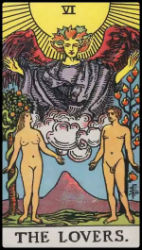
3. The Lovers — Choose Peace, Not Drama

The holidays tend to bring opinions.

And relatives.

And opinions from relatives.

The Lovers reminds you: choose connection, not combat… or at least choose silence and pie.

If one of your loved ones says something absolutely outrageous, remember that you can just put a piece of pie in your mouth and smile.  Add whipped cream to make it an extra sweet conversation.

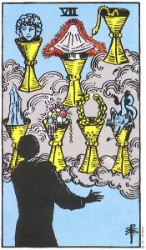
4. The Seven of Cups — Beware of Overcommitment

Shopping! Baking! Parties! Rituals! Volunteering! Travel!

The Seven of Cups says: You cannot say yes to all seven.

Pick the cup with the least glitter and the most sanity.

You don’t have to be all things to all people – just be the you that people love.

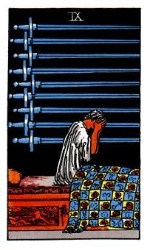
5. The Nine of Swords — Anxiety Lies

That nagging feeling that everything will go wrong?

It’s just the Nine of Swords doing its nightly stand-up routine.

Thank it for its service… and then ignore it.

Don’t just make it a holiday – make it a vacation from worry.

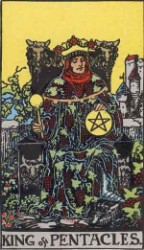
6. The King of Pentacles — Treat Yourself Like a Honored Guest

Warm food, soft blankets, comfortable socks —

This is not indulgence, this is holiday self-care strategy.

Just look at all the things you’ve done for other people!  Don’t you deserve a little pampering, too?

The King of Pentacles approves.

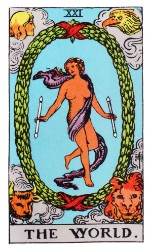
7. The World — You Made It Through Another Year

Pause. Breathe. Celebrate the cycle completing.

On the Winter Solstice, the solar year will end.  Take the time to reflect, to congratulate yourself for another trip around the sun. 

Give yourself credit for all the chapters you survived this year — and all of the growth that went along with that.

Bonus Holiday survival secret:

Lower expectations. Raise kindness. Wear stretchy pants.

Available on Amazon

The Top Ten Tarot Cards Indicating Conflict

A quick, insightful guide to the ten Tarot cards that most often signal conflict—from chaotic energy and power struggles to hidden tension and emotional fallout. This post explains what each card means and how to navigate challenging situations with clarity and confidence.

There are days when Tarot feels like a warm hug…

…and days when it slides a little warning across the table and whispers,

“Brace yourself.”

Conflict is part of life, part of growth, and definitely part of the Tarot.

“Just the Tarot,” by Dan Adair – Available on Amazon

Whether it’s inner tension, relationship friction, or someone else’s chaos spilling into your lane, some cards show up to say:

“Something here needs attention.”

Here are the top ten Tarot cards that most strongly signal conflict — and what each one really means beneath the surface. If you’d like to download this list as a PDF file that you can add to your Tarot notebook, click here.

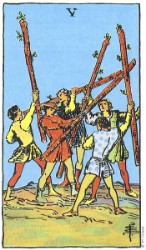
1. Five of Wands – The Classic Chaos Card

If conflict had a mascot, this would be it.

The Five of Wands shows:

– competition

– ego clashes

– mixed agendas

– flailing energy everywhere

It’s not necessarily destructive — but it is noisy.

Message: This isn’t war… it’s everyone talking at once. Calm the room.

2. Five of Swords – A Battle Nobody Really Wins

This is the energy of:

– arguing to be right

– unhealthy victories

– someone taking more than their share

– hurt feelings afterward

Message: Winning at all costs comes with a bill. Choose integrity.

3. Seven of Wands – Defend Your Ground

This is conflict from the outside:

– critics

– competition

– pressure

– feeling outnumbered

But the card says you can stand firm.

Message: Don’t fold. You’re stronger than the opposition.

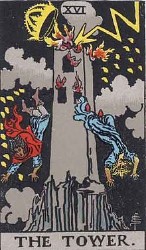
4. The Tower – Major Disruption

This isn’t a small disagreement — it’s a smackdown from the universe.

Think:

– sudden revelations

– arguments that break things open

– emotional earthquakes

Message: The old structure needed to fall. Liberation follows.

5. The Five of Cups – Emotional Fallout

Not a conflict card on its face, but it often shows up after one:

– regret

– grief

– disappointment

– unresolved conversations

Message: You’re grieving what was lost. Healing begins when you turn around.

6. The Devil – Power Struggles

This card signals:

– manipulation

– obsession

– toxic dynamics

– control games

– addictive patterns in relationships

Message: This conflict has a hook. Break the chain, not each other.

7. The Knight of Swords – Rushing Into Battle

He is smart, fast, determined…

…and doesn’t always think things through.

Shows:

– heated arguments

– impulsive reactions

– someone charging ahead without listening

Message: Slow down before your mouth outruns your wisdom.

8. The Two of Swords – Silent Conflict

Not all conflict is loud.

This card is conflict frozen:

– denial

– avoidance

– stalemates

– tension beneath the surface

Message: Peace requires a decision. Open your eyes and choose.

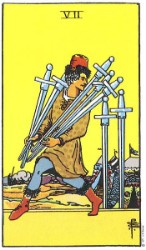
9. The Seven of Swords – Sneaky Energy

Not direct conflict — but conflict waiting to happen.

Signals:

– deception

– half-truths

– secret plans

– someone acting behind the scenes

Message: If something feels “off,” it probably is. Trust your intuition.

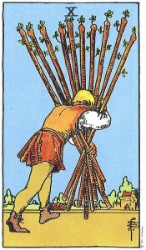
10. The Ten of Wands – Overwhelm and Burnout

This appears when conflict comes from:

– taking on too much

– carrying other people’s problems

– no boundaries

– pressure that builds until you snap

Message: Put down what isn’t yours. You’re not meant to carry it all.

Final Thoughts: Conflict Isn’t Always the Enemy

Conflict in Tarot isn’t punishment — it’s information.

The cards don’t show conflict to scare you…

They show it to help you:

– redirect

– set boundaries

– speak truth

– release what’s toxic

Because once conflict is acknowledged, transformation can finally begin.

Surviving the Season: A Light-Hearted Guide to Beating SAD Without Losing Your Mind

This post explores the realities of Seasonal Affective Disorder (SAD) with a humorous twist — why the winter blues hit so hard, how light deprivation messes with our brains, and what actually helps. From sunrise-mimicking light boxes to Vitamin D3 and CBT-SAD reframing techniques, this guide offers practical, affordable ways to lift your mood when the days get dark. Includes a free downloadable PDF of 15 winter affirmations to help rewire your thoughts and make the season feel gentler, brighter, and a whole lot more manageable.

Are you still suffering from the cosmic hangover known as the time change?

Maybe you can’t sleep at night but can barely keep your eyes open during the day. Maybe you’re stumbling through the month like a melancholy robot — mostly upright, mildly conscious, but deeply unimpressed with existence.

And isn’t it cruelly ironic that exactly when we’re all miserable from light deprivation, the government decides to turn the lights off an hour early?

Thanks, folks. Really helpful.

 Light and Happiness (a Love Story as Old as Humans)

Humans have a deep evolutionary connection with light — not metaphorical light, not spiritual light, not “good vibes” light — we’re talking about actual photons hitting your eyeballs. For centuries, nearly every culture has tried to cheer up the dark months by adding more light: bonfires, candles, lantern festivals, torches, flaming wheels, glowing turnips… you name it, someone set it on fire.

Even our pop songs know what’s up:

• You are the sunshine of my life.

• You light up my life.

• I’ve got sunshine on a cloudy day.

• Sunshine on my shoulders makes me happy.

But when there isn’t enough light?

We become depressed, anxious, sluggish, and mildly feral. We want to curl up under a quilt with a 40-pound bag of potato chips and hibernate until April.

In short:

Light = joy.

Dark = sadness.

This is not complicated.

The Sun Tarot Affirmation Poster available on Etsy

 Seasonal Affective Disorder (SAD): The Winter Blues With a Capital B

The official psychological name for the winter blues is Seasonal Affective Disorder, or SAD — which is honestly too accurate. It ranges from “a little down” to “I may never be cheerful again and also don’t touch me.”

Depending on which study you read, SAD affects anywhere from 5% of Americans to 10 million people, with symptoms like:

• chronic sadness

• sleep pattern chaos

• irritability

• carb cravings

• emotional flatness

• hiding from society like a depressed woodland creature

If you’ve ever had it, you know what a total beast it can be. While everyone else is decking halls and singing carols, you’re sitting at home thinking:

“Crap… three more months of this.”

I’ve had SAD kick my ass more than once, so I was very happy to discover that it’s now the subject of its own therapeutic specialty:

CBT-SAD — Cognitive Behavioral Therapy for Seasonal Affective Disorder.

And it’s not as complicated as it sounds.

The Three Pillars of Beating SAD (According to CBT-SAD)

1. Increase Your Light

This one feels obvious:

If darkness is the problem, light is the solution.

But not just any light.

You need a blast of sunrise-level brightness first thing in the morning — something that tells your brain:

“Hello, it’s daytime, stop making melatonin.”

Enter: the mood-enhancing light box.

These used to be huge contraptions you practically had to strap to your head. Now they’re about the size of a tablet, reasonably priced, and honestly kind of pleasant.

Light boxes work because they:

• mimic sunrise

• raise serotonin

• lower melatonin

• reset your circadian rhythm

• tell your brain to get out of bed and stop being a raccoon

This is the one I use because it’s inexpensive and has great reviews:

2. Vitamin D3 (Your Winter Sunshine Backup Plan)

We naturally get Vitamin D from sunshine — so of course, in winter, our levels tank. Add the fact that we’re bundled head-to-toe like sentient laundry bags, and you’ve got the perfect recipe for deficiency.

Low Vitamin D contributes to:

• low serotonin

• flat dopamine

• brain fog

• irritability

• low energy

• general “I’m over this” mood

Supplementing D3 helps stabilize:

• serotonin

• dopamine

• inflammation

• sleep-wake cycles

• mood regulation

And best of all: it’s cheap.

You can grab it on Amazon or at the pharmacy.

3. Reframing the Way You Think About Winter

This is where the cognitive part comes in.

My sister once pointed out that constantly referring to winter as “the dark times” might not be the healthiest mindset. Fair enough.

If we’ve had rough winters in the past, we tend to brace for them like emotional storm preppers:

• “I hate winter.”

• “I dread those long dark months.”

• “Wake me up when it’s spring.”

These thoughts become self-fulfilling prophecies.

CBT-SAD teaches us to rewire those expectations and rewrite our inner scripts — not with toxic positivity, but with seasonal intelligence.

For example:

• Winter is not the enemy — winter is the exhale.

• Early nights are invitations to gentler evenings.

• Light is scarce now, so I become intentional with it.

• Winter is not a shutdown — it’s a recalibration.

These reframes help your brain reinterpret winter as:

• restorative

• quiet

• intentional

• gentle

• rhythmic

Instead of something to dread, it becomes something to work with.

I’ve included 15 winter reframes as a free downloadable PDF that you can get by clicking here:


Final Thoughts (and a Pep Talk)

If SAD is hitting you hard, it’s worth finding a good therapist who understands seasonal depression. But even without professional help, these three pillars can make a huge difference.

Hopefully, this little article gives you a few ideas about how to get the Bah Humbug out of your brain and bring some light back into your winter.

And remember:

Light returns. It always returns.

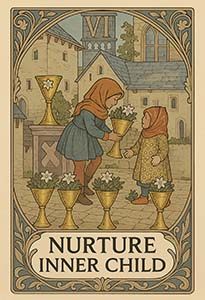
The Six of Cups — Protecting the Inner Child of Your Art

The Six of Cups reminds us that our creativity flows from the innocence of the inner child. Protecting that child means honoring your art, choosing who sees it, and never letting careless criticism silence your joy.

When Beauty Meets Criticism

Have you ever created something you thought was beautiful — a painting, an essay, even a garden — and when you finally shared it, the first thing someone did was point out the flaws? Instead of seeing what you were trying to express, they zeroed in on what they thought was wrong.

There’s always a tension between creating and sharing. When we make something real — assuming we’re not just hacking away — we’re revealing a piece of our heart, our soul, our lived experience. A careless critique can feel like a personal attack. It can leave us feeling exposed, vulnerable, even ashamed.

The Inner Child at Play

Picasso once said, “All children are born artists; the problem is to remain an artist as we grow up.” Creativity flows from the same source as play — from the child who once molded mud into castles or splashed finger paints across paper just for the joy of it.

That inner child still lives inside us, but it’s easily wounded. A thoughtless comment can silence it. A dismissive tone can make it retreat. And when that happens, the creative flow — the very essence of who we are — begins to dry up.

The Birth of the Critic

Mel Brooks joked that with the birth of art came the inevitable afterbirth — the critic. And he wasn’t wrong. If you take your creativity seriously, you’ll eventually encounter people who feel compelled to “fix” your work.

Julia Cameron wrote that before we can become good artists, we must first give ourselves permission to be bad ones. Every artist, writer, gardener, or musician produces clumsy beginnings — and even seasoned creators sometimes turn out a piece that just doesn’t land.

The creative process is messy and human. Yet while you’re admiring what went right, someone else may focus only on what went wrong.

The Wound of the Inner Artist

Cameron also warned that exposing your inner artist to harsh criticism is the emotional equivalent of child abuse. It’s like taking the eager, innocent child who offers you their finger painting and saying, “That’s terrible. You don’t really have any talent, do you?”

If you choose a creative life, criticism is inevitable. Some people simply won’t resonate with your vision, and occasionally you’ll make something that misses the mark. That’s part of the territory. But you can — and must — protect your inner artist with the same fierce loyalty you’d show a child under attack.

Learning by Heart

I became an artist late in life and am entirely self-taught. I picked up a mallet and chisel and learned to carve wood through trial, error, and stubborn joy. I learned to paint the same way.

Looking back, I can see how rough those early pieces were — primitive, awkward, untrained — and yet they were full of life. I still remember the pride I felt each time I saw progress take shape beneath my hands.

Claiming the title artist took courage. The first time I walked into a gallery and asked, “Would you show my work?” was absolutely terrifying.

A Pact of Protection

One simple, unbreakable pact guides me still: when someone criticizes my art, that’s the last time they see my art.

Showing your work is an act of intimacy — an unveiling of something deeply personal. The art flows from the child within you, and that child deserves protection.

How to Shine Your Star and NOT Be a Good Codependent

Do you ever feel invisible, like you’ve disappeared into someone else’s needs? The Star reversed shows how codependency drains us — and how to take back your light.

Of all of the forms of codependency, perhaps the most insidious is the, “good,” kind.  The kind where we’re actually making ourselves less, because it’s the right thing to do.  

Or so we think.  

Our personal light, our Spirit becomes dimmed because we’re trying to make someone else’s shine a little brighter.  If it goes on for too long, we can even forget who we really are.

WHAT CODEPENDENCY REALLY MEANS

When we hear the word, “codependency,” most of us think of the classic scenario involving an alcoholic/addict and the person taking care of him.  In that sort of a relationship, the alcoholic may have the money, but he’s too screwed up to really take care of himself.  The codependent takes care of him – sees that the bills are paid on time, buys the groceries, cleans the house, defends him from criticism, but doesn’t have any personal funds.  

The result, of course, is that neither party is able to survive on their own.  They are mutually dependent on the other for survival and they may hate each other but they also need each other.

At its root, though, codependency is any relationship where we chronically subordinate our own needs and desires to someone else’s.  

That can actually take the form of a noble pursuit.  In a very real sense, good parents subordinate their own needs and desires to rearing their children until the children can fly on their own.  We can also see it in home healthcare situations, where one partner in the relationship is literally too ill to care for herself and the other partner becomes a full-time caretaker.

These are the, “good,” forms of codependency where we’re basically just doing what’s right and what’s loving.  But they can still destroy us over the long haul.

MAKING OURSELVES SMALLER

One of the hallmarks of codependency is shrinking ourselves while inflating someone else.

In the home healthcare situation that I just mentioned, the partner who is healthy may be devoting her entire life to taking care of the partner who is ill, yet insisting that, “it’s no big deal.”  She may sacrifice her social life, her hobbies, her time for herself to an endless round of cooking, cleaning, medications, and taking her partner to medical appointments.  She may have completely given up her own life in order to preserve his.

Because the other person’s light is so dimmed, we do everything we can to make it shine a little brighter.  We praise them, we prop them up, we take care of their every need and we never, ever, let them feel that they are, “less than,” because of their illness.

Over time, this creates an energy imbalance that leaves us feeling like invisible ghosts, like we never had the chance to live as our fullest, most authentic selves because we’ve disappeared into someone else’s needs.

The real tragedy of codependency isn’t just exhaustion – it’s the slow erosion of Self.

THE STAR REVERSED

In the Tarot, the exemplar of codependency is The Star reversed.  When it’s upright, The Star is a beacon of hope, inspiration, and healing.  It’s someone who is fully shining his light into the world.

When it’s reversed, it can point directly to codependent patterns such as:

• Outsourcing your self-worth to another person.

• Over-giving and self-sacrifice until your own cup is bone dry.

• Healing others while neglecting your own healing.

• Depending on someone’s approval to feel hopeful.

• Pretending everything’s fine just to keep the relationship intact.

The Star reversed doesn’t mean you’ve lost your light, though. It means you’ve been dimming it.

THE ANTIDOTE IS RECLAIMING YOUR OWN LIGHT

The medicine for The Star reversed is to consciously reclaim your own radiance:

• Affirm your intrinsic value through affirmations, creative expression, and celebrating small achievements.  That can be as easy as taking a few moments to journal every morning and write about what YOUR dreams are.

• Set boundaries and practice saying “no” without guilt. That can be as simple as saying, “No, I don’t watch that television show,” or, “I’d rather listen to MY music.”

• Shift your focus from “I’ll fix them” to “I’ll care for myself first.” You DO have a right to savor your morning coffee before you make their breakfast.

• Anchor hope internally by nurturing personal goals, spiritual practices, or creative outlets.  Do you love to paint or write or garden?  Insist on taking some time for that every week.  No excuses and no interruptions.  Even if it’s only an hour, that’s your sacred space.

• Practice radical honesty — with yourself and others.  If you hate what you’re doing, you’ve got a right to express that.  If you think you deserve some extra praise and kindness instead of being taken for granted, you’ve got a right to that, too.

• Cultivate interdependence, where two whole people choose connection rather than two halves clinging to each other.  Especially if there’s an imbalance in money, remind your partner frequently of all of the things that you do and how much he’d have to pay to have someone other than you do them.  

Each of these steps helps you pour back into your own cup — and when you shine, you inspire others to shine too.

THE PARADOX OF HEALING

The paradox of this type of codependency is that we usually take it on precisely because we ARE good, loving, kind people. If we see someone who needs help, we help them.  If our child is troubled, we’re there for them 200%.  If our partners are ill, of COURSE we’re going to move heaven and earth to take care of them.

But as it goes on . . . and on . . . and on . . . that good, loving person who is our core being begins to erode.  It isn’t that we become bad people or quit caring – it’s that we simply begin to disappear.  We become nothing but appendages to the needs of the people that we’re caring for.

The lesson of The Star is to let our light shine again.  That core of ourselves that we’re losing through the codependency is what was healing the other person to begin with.  When we lose it, we lose our ability to heal, not just them, but ourselves.

We have to let our lights shine.

“The Star,” a personal affirmation poster available on my etsy site

Will This Love Really Last? 10 Tarot Cards That Say “Yes”

Wondering if your love will really last? Tarot offers powerful clues. Here are the top 10 “yes” cards for romance — symbols of harmony, joy, and lasting connection.

While the Tarot doesn’t hand out guarantees, it does shine a light on the energies present in a relationship. And some cards are so clear, so affirming, that when they appear in a spread, they almost shout “yes!”

Why Tarot for Love Questions?

Love and relationships are the number one category of Tarot inquiries. People turn to the cards when they’re uncertain about where things stand, or when they’re weighing the long-term potential of a relationship.

Tarot won’t say, “This relationship is guaranteed to last forever.” But what it will do is highlight the dynamics at play — the emotional energy, the strengths, and the challenges that shape a partnership. And when certain cards appear, they point strongly toward harmony, mutual growth, and a lasting bond.

The Top 10 Tarot “Yes” Cards for Romance

1. The Lovers

This is the archetypal card of love, union, and attraction. It represents shared values and choices that strengthen the bond. When The Lovers appear, the message is clear: the relationship is rooted in deep connection.

2. Two of Cups

The quintessential partnership card. It reflects mutual attraction, balance, and reciprocity. The Two of Cups points to a genuine soul connection where both people bring equal energy to the table.

3. Ten of Cups

This is the “happily ever after” card. It symbolizes long-term happiness, emotional fulfillment, and family harmony. If you’re asking about lasting love, the Ten of Cups is a resounding yes.

4. Four of Wands

A card of celebration, milestones, and commitment. It often shows up around engagements, weddings, or moving in together. It’s a sign that the relationship is not only joyful but ready to move into the next chapter.

5. The Empress

Abundance, nurturing, and fertility flow through this card. The Empress speaks of love that supports growth — creative partnership, deep affection, and the potential to build something lasting together.

6. The Star

The Star brings healing, inspiration, and spiritual alignment. In love, it suggests that the relationship is not only joyful but also restorative, giving both partners hope and a sense of divine timing.

7. Six of Cups

Sweetness, comfort, and sincerity. This card speaks to simple pleasures and genuine affection. Whether it’s new love or a rekindled flame, the Six of Cups highlights warmth and emotional honesty.

8. The Sun

Few cards are as positive as The Sun. It represents joy, openness, and vitality. In romance, it signals a relationship where both people feel seen, supported, and energized.

9. Ace of Cups

The overflowing chalice of love. This card signals the beginning of a new relationship or the renewal of affection in an existing one. It’s pure emotional abundance and a beautiful green light for love.

10. Two of Wands

While not strictly a “romance card,” the Two of Wands points to planning a shared future. It suggests vision, growth, and expansion — a partnership where both people are willing to build together.


What These Cards Have in Common

Look at these ten cards together, and a pattern emerges:

  • Union & Commitment: Lovers, Two of Cups, Four of Wands, Ten of Cups.
  • Emotional Fulfillment: Ace of Cups, Six of Cups, Empress.
  • Joy & Inspiration: Sun, Star, Two of Wands.

The common theme? Relationships that thrive on balance, mutual support, and a shared vision for the future.

A Note of Realism

Of course, not every card in the Tarot is a “yes.” Sometimes the spread brings red flags — lessons that need to be learned before love can grow strong. That doesn’t mean the relationship is doomed, but it does mean awareness and patience are needed.

Stay tuned: in a future post, we’ll explore the Top 10 “No” Cards for Love Questions.

Conclusion

Deciding if a love will last is never easy. But the Tarot provides more than predictions — it offers symbolic guidance about the energy flowing through your relationship.

When the “yes” cards appear, they suggest love that’s harmonious, joyful, and ready to grow into the future. If you see these cards in your spread, take it as the Universe’s way of saying: love is worth the leap.

“Just the Tarot,” by Dan Adair – A kindle ebook available on Amazon

Recovery, Shame, and The World Card

In therapy or recovery but still haunted by your past? This post explores how The World card can help transform shame and regret into growth. By embracing even painful histories, we can find “closure without a bow” — turning painful memories into guides instead of burdens.

Are you in recovery from alcoholism or addiction but still feel really deep shame about your past?

Are you in therapy but just can’t seem to shake off the depression and anxiety that springs from old beliefs and the ghosts of trauma?

Believe me – you’re not alone.  Many of us can stay sober or work our asses off in counseling, but still feel like we’re going through it with a cinder block chained around our necks.  Guilt, shame, and memories of what we were can weigh us down to a point where we’re almost paralyzed.

The World card from the Tarot can offer a powerful lens for looking at this struggle and finding a way forward.

A SYMBOL OF COMPLETION

In its traditional meaning, The World card celebrates the completion of one cycle and moving onto the next one.  It’s the, “and they lived happily ever after,” card for, “normal,” people

For instance, a person might leave their job after many successful years and move on to another one that presents new challenges.

Or perhaps a parent has spent 18 years raising a child and when the kid goes off to college, the parent finally has time for her own dreams.

Or maybe a writer has spent 2 years putting a book together, it’s finally been published, and now they’re moving on to a new project.

The common theme there is that all of these people can look back and honestly say, “Well done.”

But what happens when we look back at our past and all we can say is, “Oh, christ, what a freaking mess.”

WHEN SATISFACTION ISN’T POSSIBLE

For many of us, the past doesn’t exactly sparkle with bright and cheery accomplishments.  Instead, it can feel like an extended disaster zone.

Maybe we worked at the same job for years and got fired because of poor performance.

Perhaps we wasted many years in a toxic, codependent relationship.

Or we might have been so drunk or drugged up that we destroyed everything and everyone we touched.

Trying to get into a sustained recovery can seem almost impossible under the weight of regret.  The question is:  How do we process all of this and move on to a new life?

WHAT DOES AA SAY ABOUT IT?

When I was trying to help a relative get into recovery, I sat through literally hundreds of Alcoholics Anonymous meetings with her.

Let me hasten to say, I’m not trying to push an AA agenda or wave a Big Book in your face.  It works for some people, it doesn’t work for others, and it’s not everyone’s cup of tea.

What really struck me in those meetings, though, was that some of their members had figured out a way to do this.  They’d sit there and calmly tell the most horrific stories imaginable about their drinking careers and then talk about how happy they were now.

The phrase that was always repeated was, “We will not regret the past nor wish to shut the door on it.”  There are two powerful statements in that:

1 – Even if we totally screwed up, we can CHOOSE not to regret it.

2 – We don’t slam the door on it or pretend that it never happened.

It’s not about denying the past.  It’s about reclaiming it.

FACING THE PAST WITH COURAGE

Facing what we’d rather forget requires a lot of courage, and we need to give ourselves credit for that struggle.  It can also mean that we can mine a few diamonds out of the sewage and become better human beings.

The heartbreak of being totally broken can teach us greater compassion for those who are still struggling.

The mistakes that we made can teach us humility.  It’s mighty hard to look down on someone else when you’re lying in a gutter.

The chaos that we endured can teach us resilience and we can realize how strong we truly are to have survived it.

True courage isn’t erasing our story but owning it without shame.

LESSONS FROM NOT SHUTTING THE DOOR

When we keep our past in view – without wallowing in it – we transform it into guidance.  Painful memories can evolve into teachers, showing us what to avoid and what truly matters.

Even more, our honesty can become a gift.  By sharing our experiences, we offer others a road map through their own dark terrain.

We can look at a friend, a lover, or a neighbor and honestly say, “Oh, man, I know what you’re going through.”  Because we do.

The World Affirmation Poster available on my etsy site

CLOSURE WITHOUT TAKING A BOW

I guess that there are, “normal,” people who live more or less all of the time in Happy Land.  They move from one wonderful accomplishment to the next and life comes at them with ease and grace.  That’s what The World card is all about.

For the rest of us, closure means accepting the whole mess that we may have made of things and integrating it, rather than forgetting it.  We accept the fact that we’ve had a lot heavier karma to deal with than most people.  

And we remind ourselves that wholeness isn’t about perfection.  It’s about embracing all that we are as human beings – our triumphs, our failures, and the courage it takes to live through them.