The Influence of The Magician Card

Today’s post offers a practical tarot reference chart for readers and practitioners, focusing on the influence of The Magician card when paired with each of the other Major Arcana cards. Whether upright or reversed, these pairings reveal powerful nuances about manifestation, power, focus, and intentional action. Ideal for deepening your tarot readings and understanding how The Magician works in tandem with archetypal energies throughout the deck.

The Magician Tarot Card – Magic and Manifestation

In the absence of a regular blog post for today, I would like to offer a chart detailing the influence of The Magician Tarot card when paired with the other cards of the Major Arcana. Please feel free to print this and use it for reference in your readings.

Or, if you’d prefer, you can download this by clicking here. Just click on the link and when it comes up go to your browser menu and click on PRINT.

The Magician + The Fool – Inspired action from spontaneous beginnings. Manifesting through instinct and openness. Reversed: Rash decisions, manipulative potential, lack of grounding.

The Magician + The High Priestess – Balanced mastery of outer action and inner knowing. Power guided by intuition.  Reversed: Secrets manipulate outcomes; unclear motives under the surface.

The Magician + The Empress  – Creative manifestation. Birthing beauty and abundance through conscious intent. Reversed: Over-controlling creativity, blocked expression, false appearances.

The Magician + The Emperor – Strategic manifestation with solid foundations. Power used with authority. Reversed: Control issues, misuse of power, over-managing outcomes.

The Magician + The Hierophant – Mastery aligned with tradition or spiritual systems. Teacher or ritual magician energy. Reversed: Manipulation under the guise of doctrine; rigidity or rebellion.

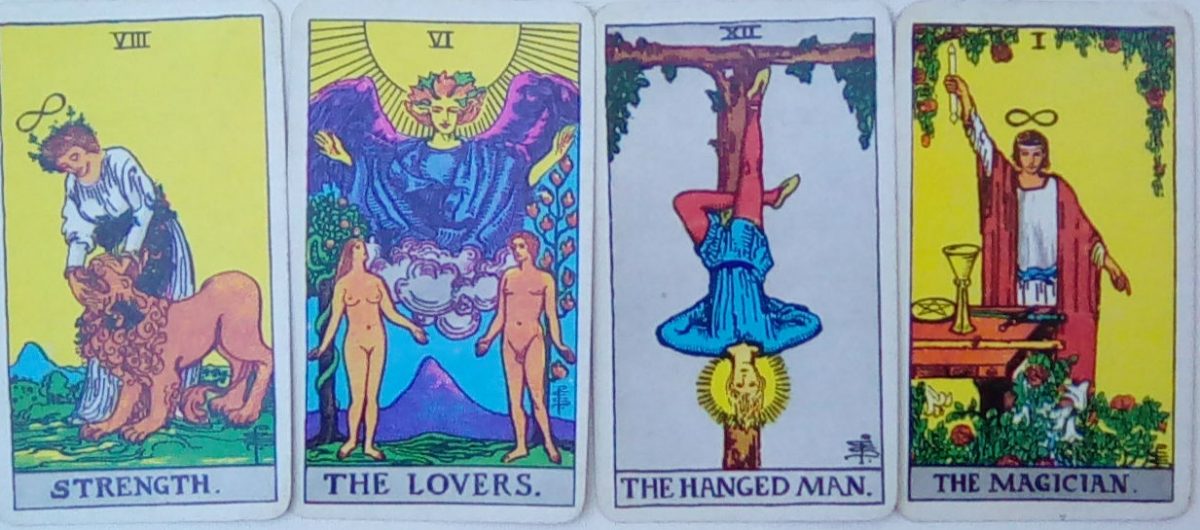
The Magician + The Lovers – Manifesting partnership or choice through alignment of will and desire. Reversed: Manipulative dynamics in relationships; choices clouded by illusion.

The Magician + The Chariot – Focused willpower brings success. Victory through deliberate action. Reversed: Scattered energy, ego-driven direction, force without alignment.

The Magician + Strength – Harnessing inner strength to empower manifestation. Quiet mastery. Reversed: Power games, coercion, or internal sabotage.

The Magician + The Hermit – Manifesting through inner wisdom and spiritual insight. Solitary mastery. Reversed: Isolation misused for manipulation; false guru energy.

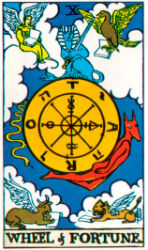
The Magician + Wheel of Fortune – Intentional action within cycles of change. Turning fate through conscious will. Reversed: Manipulating chance; resistance to natural cycles.

The Magician + Justice – Creating balance through skillful choices. Ethical manifestation. Reversed: Twisting truth, unfair dealings, imbalance created through intent.

The Magician + The Hanged Man – Power in surrender. Shifting perspectives leads to deeper manifestation. Reversed: Stagnation disguised as action; martyrdom as manipulation.

The Magician + Death – Transformation through focused intent. Shedding the old to create anew. Reversed: Resisting transformation; clinging to control in times of change.

The Magician + Temperance – Alchemical mastery. Harmonizing elements to create lasting magic. Reversed: Imbalance, forced outcomes, or spiritual bypassing.

The Magician + The Devil – Mastery misused; power becomes entrapment. Illusion of control. Reversed: Breaking free of manipulation or unhealthy control dynamics.

The Magician + The Tower – Radical awakening through dismantled illusions. Creation from chaos. Reversed: Trying to control a collapse; resisting necessary upheaval.

The Magician + The Star – Inspired manifestation aligned with hope and higher vision.  Reversed: False promises, disillusioned effort, manipulation of ideals.

The Magician + The Moon – Magical work through dreams, symbols, and hidden realms. Reversed: Deceptive illusions, manipulation through fear or confusion.

The Magician + The Sun – Empowered creation, joyful manifestation, clarity in action. Reversed: Ego-driven displays, illusion of success, superficial charm.

The Magician + Judgement – Conscious rebirth, purpose-driven action, manifesting a new self. Reversed: Manipulating redemption; resisting accountability.

The Magician + The World – Complete mastery and fulfillment. Manifesting global or life-level success. Reversed: Incomplete projects, scattered focus, illusion of wholeness.

“Just the Tarot,” by Dan Adair – A kindle ebook available on Amazon

The Fool’s Journey and the Dance of Synchronicity

When The Fool appears in a tarot reading, it may be more than a call to begin—it might be a sign that synchronicity is already at play in your life. In this post, we explore how The Fool’s symbols—from the cliff to the rose—mirror the way meaningful coincidences guide us toward growth, transformation, and spiritual alignment. Learn how to recognize The Fool’s invitation to trust the unknown and follow life’s hidden rhythms.

There are moments in life when something just clicks. A random conversation, a song on the radio, a recurring symbol—these aren’t just coincidences. They feel charged, alive, timely. These are the moments that Carl Jung called synchronicities—meaningful coincidences that seem to guide us, gently but unmistakably, toward the next step in our journey.

And there’s no better symbol for that mysterious push into the unknown than The Fool in the Tarot.

Jung and Synchronicity

Swiss psychologist Carl Jung coined the term synchronicity to describe those uncanny moments when something in the outer world perfectly mirrors something happening inside you—without any logical cause. Like when you think of an old friend you haven’t heard from in years, and just then, the phone rings and it’s her. There’s no rational explanation, but it feels too precise to be chance. Jung believed these moments point to a deeper, hidden order—a mysterious connection between our inner lives and the unfolding world around us.

The Fool as the Signpost of Synchronicity

In the Tarot, The Fool is often misunderstood as naïve or aimless, but in truth, The Fool is the sacred wanderer—the soul on the brink of transformation. When this card appears in a reading, it may be more than a call to take a leap of faith; it may be a signal that synchronicity is actively at work in your life. Like a cosmic green light, The Fool shows up when invisible forces are aligning to open new doors, push you out of old patterns, or introduce the exact people, signs, and nudges you need to move forward. It is the Tarot’s way of saying: “Pay attention. Something meaningful is unfolding, even if you don’t yet understand it.”

The Sacred Zero: Becoming an Empty Vessel

The Fool is the only card in the Major Arcana marked with the number zero—a symbol of pure potential, of being open, unformed, unburdened. In many ways, zero represents the exact state in which synchronicity becomes most alive. When we release the ego’s need to plan, predict, and make sense of everything, we create space for the unexpected to enter. The logical, linear mind wants control; it wants cause and effect. But synchronicity belongs to the language of the soul, not the intellect. It speaks in symbols, dreams, chance encounters—and The Fool, with heart wide open and eyes on the horizon, is its perfect interpreter.

The Dog as the Spirit of Play

One often-overlooked symbol in The Fool card is the small white dog trotting at his side. While some say the dog warns The Fool of the cliff’s edge, it may also represent the playful, instinctive energy that keeps us open to life’s hidden magic. Synchronicity rarely happens when we’re tense, overthinking, or trying to force outcomes. It arises when we’re relaxed, present, and in tune with the moment—much like a happy dog on a walk, open to whatever comes. The dog reminds us that joy, spontaneity, and a sense of wonder are not distractions from the spiritual path—they are the path.

The Cliff: The Edge of the Known

The Fool stands at the edge of a cliff, one foot about to step into the great unknown. It looks dangerous—foolish, even. But from the perspective of synchronicity, the cliff represents the threshold between what we can predict and what we can’t. It’s the edge of logic, the border of the familiar. To experience synchronicity is to step beyond the rational mind and into a world that operates by deeper laws—hidden patterns, Soul timing, and symbolic meaning. When we reach the edge of what we know, we’re invited to trust what we feel. The Fool doesn’t fall; he flies—because synchronicity has a way of catching those who take a leap with an open heart.

The Satchel: What the Soul Already Knows

Slung over The Fool’s shoulder is a small satchel—light, almost weightless, but significant. It contains the inner tools The Fool brings into the unknown: intuition, past experiences, hidden wisdom. In moments of synchronicity, we often feel a sense of recognition—as though some part of us already knows what’s happening, even if we can’t explain it. That’s the satchel at work. It’s the symbolic storage of our soul’s memory, the part of us that is quietly guiding the journey even when our conscious mind is unsure. The synchronicities we encounter may feel random, but they often resonate with something we’ve carried with us all along.

The White Rose: Presence, Purity, and Attunement

In the Rider-Waite depiction of The Fool, he holds a single white rose. In a world obsessed with control and destination, this simple act—pausing to experience beauty fully—is radical. The white rose symbolizes innocence, spiritual purity, and being fully present. And that’s exactly the state in which synchronicity most often occurs. When we are truly attuned to the now—our senses open, our heart soft, our mind quiet—we become receptive to life’s subtle signals. The Fool’s rose is not a distraction; it’s a compass. It reminds us that paying attention to beauty, wonder, and fleeting moments may be how the universe whispers its guidance to us.

Following the Fool’s Footsteps

The Fool is not just the beginning of the tarot’s journey—it’s an invitation to live with openness, curiosity, and trust in life’s mysterious choreography. When The Fool appears in a reading, it may be a signal that synchronicity is stirring, that the universe is aligning unseen threads on your behalf. It asks you to stay present, to pay attention, to sniff the rose, listen to the nudge, follow the sign. It reminds you that the unknown is not empty—it is alive. So next time you draw The Fool, don’t just think of risk or adventure. Think of magic. Think of timing. Think of how the world may be conspiring, right now, to lead you exactly where you need to go.

The Eight of Pentacles, Bras Burning Bright, and the Importance of Social Deviance

A look at the importance of personal and social deviance as illustrated by the war over brassieres.

Imagine a culture that was SO rigid that the people in it actually dictated what kind of underwear you had to put on in the morning.  Sounds pretty crazy, doesn’t it?

Still, that was exactly the situation that we had right here in the United States just 50 short years ago.  It’s a short tale and well worth looking at.

The modern brassiere was invented by Mary Phelps Jacob in 1910.  From that point on it was declared that, “decent,” women would wear bras and breasts would henceforth be encased in cotton cups when they were transported out in public view.

Now, in the late 1960’s, a growing group of women said, “I don’t wanna.”  It wasn’t that they were rigidly opposed to brassieres because, as any woman will tell you, bras can be comfy cosy in winter months and in cold climates.  Rather, they were making the radical assertion that any human being should have the right to decide whether they want to wear underwear on any given day.

Many people in our culture were shocked and appalled at the notion of unfettered breasts.  Women who went braless were actually arrested for, “public indecency,” in some Southern states.  “Decent,” women sneered at them and, “god-fearing,” men leered at them.

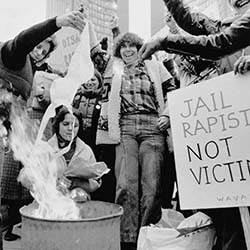
Still, the revolutionary bra warriors persisted and even went so far as to hold public bra burning to make their point.

By today, of course, no one cares if a woman wears a bra or not.  Generally speaking, bras go on in the winter time and come off in the summer time, which is perfectly sensible and the way it should have been all along.

The Great Bra Culture War is a perfect illustration of what sociologists refer to as, “tolerated social deviance.”  They actually have a very precise definition of deviance, which goes like this:

Deviance is a behavior, trait, or belief that departs from a social norm and generates a negative reaction in a particular group. In other words, it is behavior that does not conform to the norms of a particular culture or society.

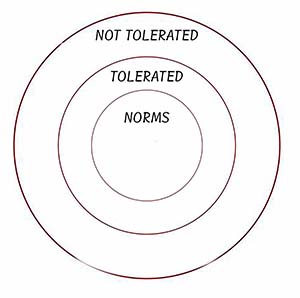
Tolerated social deviance is behavior that’s outside of the social norm, but not so far outside of it that it warrants severe punishment.  We can think of it as a series of concentric circles where the inner circle is the norm, the second circle is outside of the norm but it’s tolerated, and the outer circle is SO far outside of the norm that it will get you arrested.

In that model, during the first half of the 20th century not wearing a bra in public was in the outer circle and would result in a woman being shunned, slut-shamed, or arrested.  After the 1960s, not wearing a bra moved into the second circle of being outside the norm, but tolerated.  And by now, it’s moved into the inner circle of perfectly acceptable behavior, except in Mississippi.

The point of all of this is that freedom and creativity exist OUTSIDE of the norm.  That inner circle of social norms consists of people behaving in exactly the same way as everyone else.  The behavior is, “acceptable,” precisely because everyone else is doing it.

The world of the social norm is what Stuart Wilde was talking about when he referred to the Tick-Tock world.  As he pointed out in his book, “Affirmations: How to Expand Your Personal Power and Take Back Control of Your Life,” the Tick-Tock world involves getting up every day and doing the same things over and over and over because that’s what society expects of us and we don’t want anyone to think we’re being weird or unusual.  “I have to wear a bra because everyone else wears a bra and what would the neighbors think if I didn’t?”

To put it in terms of energy, it’s a closed system.  There’s nothing new or different flowing into it, because everyone is acting and thinking exactly the same way.  It’s like the guy in the Eight of Pentacles who’s just making the same product over and over again, but not creating anything new.

Deviance is thinking outside of that closed box.  Deviance is what allows fresh, different energy into the system.  Deviance is what makes us evolve.

We see this in cultures all across the world.  The most creative, vibrant cultures are the ones that tolerate the highest levels of diversity.  China and Russia, for instance, have extremely low tolerance for diversity and social deviance.  Are they producing any great literature?  Any amazing art?  Fabulous music?  Is anyone desperately trying to get into their countries?  Nope.

Put very simply, the best cultures are the cultures that maximize freedom and diversity.  Those are the cultures that are the most alive and evolving the fastest.

I’ve lived in both California and Texas.  I CHOOSE to live in California because California maximizes my opportunity to be just as different, weird, and unusual as I want to be.  California values social deviance and so I have a much greater opportunity to be my authentic self, to the best of my abilities.

It’s important to ponder all of this as we move into the new era of the Trump administration.  Are we going to continue to be a society that values  and encourages diversity or are we going to become a closed, intolerant  and stagnant energy system?

Make no mistake:  there ARE people out there who are so crazy that they want to tell us what kind of underwear we should put on in the morning.  They want to shrink those two outside circles into one boring inner circle where everyone looks and acts precisely like everyone else.  

Don’t let them do it.

Karma, Having Sex with Republicans, and Being Kind to Yaks

Seeing karma as a way to change our past.

One of my favorite internet memes says, “Karma – It’s spelled K-A-R-M-A and it’s pronounced, ‘Ha, ha, fuck you.’”  

That’s a perfect explanation of our usual understanding of karma which is basically, “If you do some shit, you get some shit.”  If we do something terrible to another person, something terrible is going to happen to us. If we do something nice, something nice is going to happen to us.

OH, WELL, IT’S KARMA

Counter-intuitively, karma is also used an explanation for why bad things happen to good people.  We may have a friend who’s a wonderful person and goes through his life supporting and nurturing others, who’s full of love and gentleness and kindness.  And then something horrendous happens to him, like he falls of a cliff or discovers his wife is having sex with a Republican.

We simply can’t understand why such a good person would have such bad luck.  Certainly, he did nothing to deserve it and, according to the Law of Karma, all of his good behavior should have been rewarded with good things happening to him.

But . . . we’re told . . . perhaps he did something really, really terrible in a previous incarnation.  Maybe he pushed someone off of a cliff or maybe he had sex with a Republican.  Maybe he actually – shudder – enjoyed having sex with a Republican.

That allows us to restore some sense of cosmic balance and we say, “Oh, well, it’s just karma.”

IT AIN’T ME, BABE

We can certainly understand that concept when something bad happens to someone else, but it’s difficult to swallow when it happens to us.

Let’s face it, most of us are NOT the Dalai Lama and we have very little memory of our past lives.  We may accept the general idea that we’ve lived other lives, but we don’t actually remember being a Yak herder in Mongolia in 40 A.D. or a courtesan in Paris during World War I. 

From our current point of view, those people who we were in our past lives were literally someone else and not us.  

The idea that I broke my wrist today because some other guy kicked a Yak 2000 years ago seems entirely capricious and cruel and unjust.  It feels like . . . how shall I put this? . . . bullshit.

KARMA AND DETERMINISM

From that perspective, karma feels very much like determinism.  Determinism is the view that every single thing that happens to us is pre-determined from the moment of birth.  There really isn’t any free will or choice in life because our lives are a result of our genetics, our cultures, the families we’re born into, and the times we live in.

We can actually make a strong case for that.  Even in the United States, where we worship the idea of free will and choosing our own destinies, the statistics say it ain’t so.  If we’re born into a dirt poor family, we’ll probably die dirt poor.  If we’re born into great wealth, we’ll probably die rich.   If our parents were conservative Catholics, we’ll probably be conservative Catholics.  If our grandfather hated socialists for no particular reason, we’ll probably hate socialists for no particular reason.

We tell ourselves that we’re making choices about those issues, but for the most part we aren’t.  It was all programmed into us before we came down the birth canal.  Life is something that happens to us, not something that we create.

Karma can feel a lot the same way.  I, me, the person who I am right now, did NOT kick that Yak 2000 years ago, so why am I being punished for it?  It’s something that’s just happening to me, not something I can control or make any choices about.

BUT KARMA’S A CHOICE

Paradoxically, being the people who we are, right here, right now, is the good news about karma.  

Determinism basically says, “You’re fucked or you’re not fucked and there’s not one damned thing you can do about it.  You have NO choice in the matter.”  It’s all predetermined.

The Law of Karma, on the other hand, says that what we do right now is what really counts.  Far from saying that we have NO choice in the matter, karma is saying that we always have a choice.  And our choices are what determine our karma.

As David Michie said in, “Buddhism for Busy People,” 

“A lot of Western people wrongly think that karma equals fate or predestination.  They think it’s something you don’t have any power to change.  This is a misunderstanding.  It is we who create our own karma and we can change it in a powerful, dynamic way. We are creating hundreds, even thousands of such causes every day of our lives.”

Put another way, we are creating our own karma ALL THE TIME.  It’s not something from the past that just pops up to bite us in the ass every once in a while.  It’s not like The Wheel of Fortune, where we have good luck for a while and then bad luck, for no apparent reason.  It’s something we personally create by either being good people or being bad people.

THE PRESENT AS PROLOGUE TO THE PAST

Now, there’s a particularly fascinating doctrine in some schools of Buddhism that says that we can actually change our past karma by how we behave in our present lives.  

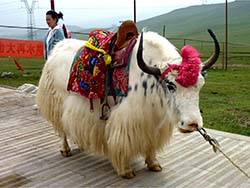
Suppose, for instance, that I was a really notorious Yak kicker in Mongolia in 40 A.D.  I didn’t just kick Yaks occasionally.  No, I was a mean, nasty, evil spirited son of a bitch who got up every single morning and kicked the hell out of as many Yaks as I could reach.

Fast forward 1985 years to my current life.  Suppose I start an, “adopt a Yak program,” and spend years rescuing and feeding homeless Yaks.  I learn to love Yaks and have great compassion for them.  Perhaps I even dress them in Yak finery for special occasions.

Under this particular doctrine, I wouldn’t JUST be creating good karma for my present self.  My good karma would go backwards through time and actually change the character and behavior of my previous self, the notorious Yak kicker. He might learn to love Yaks just as much as I do and my bad Yak karma would be erased.

IT’S NOT THAT WILD

If that sort of time traveling karma sounds a little too wild, just consider what most of us already believe about karma.

We believe that we have one Soul with many different historical identities and that what a previous identity does can travel through time to affect the life of our current identity.  So if all of these past identities are somehow in touch with our current identity, why wouldn’t our current identity be in touch with our past identities?  If they can affect us, it stands to reason that we can affect them.

KARMA AS AN ONGOING PROJECT

When we shift our perspective in that way, then karma becomes an on-going project.  We’re no longer victims of our past.  We’re actually re-creating our past through our current actions.

And if that isn’t free will and choice, I don’t know what is.

Being compassionate, decent people every day and right now is good for us and it’s good for the people around us.  And, ultimately, it’s good for the Yaks.  

Do it for the Yaks.

Just a reminder that my ebook, “Just the Tarot,” is available on Amazon for much less than a bag of Yak feed.

The Fool, Flowing into Fun, and Making Wu Wei Our Woo Hoo

A look at Flow State as a spiritual practice.

Most people know about being, “in the Flow,” also known as being, “in the Zone.”  It’s that feeling of engaging in an activity with such concentration and perfection that it’s as if we somehow become the activity and the activity becomes us.

Dancers and athletes talk about being in the Flow when they turn in a performance that’s absolutely flawless and they somehow go far beyond what they’ve ever been able to do before.  Artists and writers have the same sort of an experience when they plunge so deeply into their work that it’s almost as if the painting is painting itself, or the page is filling itself with beautiful images.

One of the fascinating things about Flow state is that the world seems to disappear for a while.  There’s nothing in our consciousness except the activity that we’re engaging in.  It’s like a trance. Painters will frequently start a painting and then, “wake up,” six hours later, having lost all track of time, their environment, and anything else but the surface of the canvas.

Oddly, we see very much the same phenomenon with people who are plagued by ADHD.  They may spend most of their lives jumping from one activity to another, unable to focus or stay on task for more than a few minutes.  When we take those same people, though, and sit them down in front of a video game, it’s a very different story.  They go into a state of hyper-focus and will frequently become so immersed in the game, so ultra-concentrated, that they may not leave it for hours.  They’re in a trance and the world has disappeared.  They’re in the Flow.

Hungarian psychologist Mihal Csikszentmihalyi first noted the Flow state in 1975, but Taoism pegged it centuries ago and calls it, “Wu Wei.”  Wu Wei can be translated as, “inaction,” or, “doing nothing,”  but a closer definition is, “effortless action.” Which is exactly how we feel when we’re in the Flow.  We feel that we’re completely in synch, in the groove, in harmony with whatever activity we’re engaged in and it becomes totally effortless.

Now, a lot of Westerners have had trouble with the idea of Wu Wei, because they glom onto the idea of just doing nothing, rather than doing something effortlessly. As lovely as it can be, sitting on a beach dangling our toes in the water is NOT Wu Wei.  

We are in the Flow state when we are involved in an activity for which we have some skill.  When we’re doing something completely. Somehow in that process our ego disappears, our environment disappears, and our sense of time disappears, which is pretty much the definition of a transcendent spiritual experience.

To put it another way, we’re co-creating with the Universe.

Mike Dooley hints at that process when he’s talking about the art of visualizing and manifestation.  He says that the Universe acts as a sort of a GPS system that guides us to our goals, constantly popping up directions and resources to get us where we want to go.  BUT . . . we have to actually start the car before the GPS system starts to work.  We have to get our asses in gear and move before the Flow state happens.

The closest that the Tarot gets to portraying that state is The Fool.  The Fool is dancing along at the edge of a cliff, so absorbed in his joy that he really doesn’t even see the precipice.  The message of the card is that even if he dances off of the edge he’ll just go on dancing on air.  He’s in the Flow.

The neat thing about all of this is that, when we look at being in the Flow AS an act of co-creating with the Universe, then it becomes a spiritual practice.  It becomes a way of communing with our higher powers or spirit guides or angels or whatever we want to call them.

All we have to do is to figure out what gets us into that state of Flow and DO IT.  It can be almost anything.  It can be painting or writing or dancing or gardening or cooking or having incredible, mind-blowing sex.  It’s just a matter of thinking about what activities come the closest to putting us into that trance state.  What is it that, when we do it, the world disappears for a while, time stops, and we completely forget our egos?

Once we identify the activity – and we all have at least one – then we build it into our lives more and more.  Every time that we engage in our particular Flow activity, we form a stronger and stronger bond with our higher powers and our higher selves.

And it’s fun.  It’s lots and lots of fun.

The Fool, Double Dorjes, and Saying Yippee to the Universe

A look at the underlying, happy energy of the Universe.

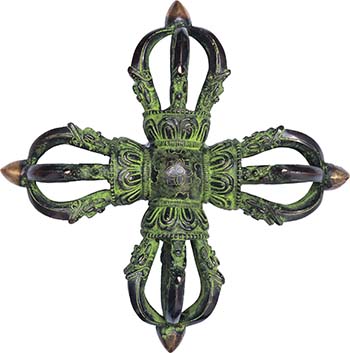
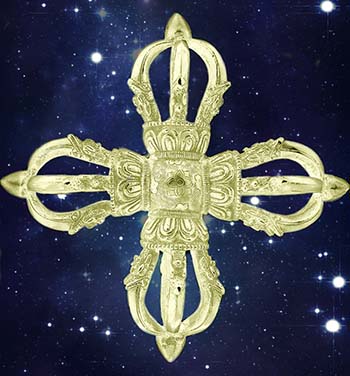
I’ve been playing around with making altar cards to sell on my Etsy shop (synergyfolkart.etsy.com) and trying to put together a line of them for Buddhists.   The other day I was looking at a picture of a double dorje – a very powerful symbol in Vajrayana Buddhism –  and I thought, “I wonder if I could make that gold, instead of bronze?”

Lo and behold, after several hours of research, clicking, layering, re-layering, and praying to the mighty goddess of Adobe Photoshop, I went from this:

to this:

Now, it hasn’t been that long since I had sex with someone – probably not more than 5 or 6 hundred years – but completing this transformation was very much like that feeling.  When I saw the final image there was a huge, internal, “YIPPEE!,” from my Inner Child and I got up and danced around my studio.  (And, yes, when I used to Get Lucky I would frequently shout, “YIPPEE!” and dance around the bedroom.)

There are probably about 30 million 10 year olds who are far more adept at Adobe Photoshop than I’ll ever be,  and I only get a few bucks for each card, so there was nothing earthshaking about this. But that’s not the point.

The point is that the Universe is doing something . . . somehow . . . for some reason. 

I don’t think I can put it any more clearly than that.

Scientists tell us that about 13 billion years ago there was a tiny dot of super-concentrated energy in the center of the Universe.  Well . . . it wasn’t the center of the Universe because there wasn’t any Universe, yet, but just for the sake of argument, pretend there was a Universe and there was this dot in the middle of it.  And then – KABLAMMM!!!!!!!!! – the tiny dot of energy suddenly exploded for no particular reason and started expanding outwards into . . . you know . . . nothing. 

The energy carried with it all of the . . . um . . . stuff . . . that would later form into solar systems and suns and planets and moons and Donald Trump’s hair.

That’s what they call the Big Bang Theory.

AND . . . according to the scientists, the Universe is STILL expanding.

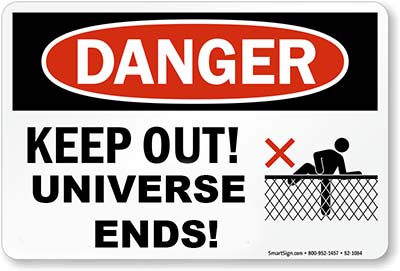
I’ve always had a little trouble with that part because I’ve never been able to figure out exactly what it’s expanding INTO.   I mean, if the Universe is everything and it’s expanding, then there must be a whole lot of nothing out there somewhere for it to expand into and I wonder if there’s some sort of a fence between the Universe and the Nothing.

But I digress.

Modern science has pronounced that the Big Bang was sort of an incredibly powerful firecracker that blew up and scattered detritus all across the Universe.  And they’re very proud of that pronouncement because they feel it gets rid of all of the superstitious nonsense like gods and goddesses and creation myths and fables.  But just saying that there was a giant cherry bomb in the middle of the Universe before there was a Universe and it somehow blew up and somehow made the Universe, doesn’t really explain anything.  There are still those questions like, “Who made the cherry bomb?” And, “Who lit the fuse?”  And, “What’s the point?”

For centuries, Sages, Mystics, Philosophers and other people with far too much spare time on their hands have tried to figure out exactly what that primal energy that exploded outward from the Big Bang is composed of.  Is it alive?  Is it conscious?  Is it thinking?  Is it feeling?  Is it in a bad mood or does it have a sense of humor?

There are a few religions and philosophies out there – like Taoism and Vedanta – that assert that the primal energy is very much alive and conscious.  And, although our egos tend to make us forget it, we ARE that energy.  In many ways, we may actually be the spear tip of that energy because we’re one of the few species we know of who have evolved into thinking, self-reflective, beings.

It makes sense, then, that we feel at our best when we’re in alignment with that energy.  And we feel at our best when we’re loving, creative, and playful, much like the energy of The Fool, dancing along with his little doggie.

It’s not a HUGE leap, then, to extrapolate that the basic, primal energy of the Universe is loving, creative, and playful.  When we’re laughing, having great sex, or making Golden Double Dorjes. To me, at least, that’s a lot more logical than thinking that we’re the left over wrappings of some giant firecracker.

Yippee!!!!

My ebook, “Just the Tarot,” is now available for free for anyone who has a Kindle Unlimited membership. For those of you who don’t, it’s still DIRT CHEAP!

Toxic Masculinity, The Inner Marriage, and Percolating Testicles

On the exterior level, the Two of Cups obviously represents two people who are falling in love.  On a deeper level, though, it represents the Inner Marriage, the harmonious joining of the Divine Feminine and the Sacred Masculine in one person’s Soul.  In a sense, it represents learning to fall in love with yourself.  Or maybe your Self.

I was watching an interview about that the other day and I got plumb confused.  The speaker was discussing the way that her Tantric Tradition deals with the Yin/Feminine and Yang/Masculine energies that we all contain.  I followed the beginning of it with no great problem.  Obviously, every human being incorporates both Yin and Yang and we give greater or lesser expressions to those energies at different times in our lives.

Then she got off into some territory where I felt like I needed to make a chart to keep track of it all.  She said that every person has a Yin and a Yang, but women’s Yin have a Yang within the Yin and men’s Yang have a Yin within the Yang.   The Yang in women’s Yin is apparently centered at  the birth canal, because that’s where they project their being into the world.  The Yin in men’s Yang is located in their testicles because that’s where they hold life and sort of . . . . um . . . percolate it.

It all just seemed really complicated.

Now, I want to be clear that I’m not in any way making fun of that tradition or denigrating it.  In fact, I was really impressed that someone had invested that much time and effort thinking about testicles because most of us are perfectly happy to let them just hang around without analyzing them too much.  Men, in particular, consider their testicles as really good buddies, despite the fact that they seem to cause a lot of problems in the world.

What came through to me, though, is how much more women have advanced than men in thinking about all of this.  Despite the recent legal set-backs in reproductive rights, the women’s movement remains relatively robust.  Women continue to question and examine their roles in society and try to sort out their emotional energies.  The men’s movement on the other hand . . . um . . . oh, that’s right . . . there IS no men’s movement.

Well, there IS a sort of a men’s movement, but it’s pretty horrifying.  It seems to be based on the idea that men have a divine right to be belching, farting, weight lifting, muscle car driving, gun toting swine and that anyone who questions that is a bitch or a fairy.  If you type, “Toxic Masculinity,” into the YouTube search bar, here are a few of the videos that come up:

THE WAR ON MEN

START INCREASING TOXIC MASCULINITY LIKE A REAL MAN

THE RISE OF WEAK MEN: BREAKING DOWN TOXIC MASCULINITY IN AMERICA TODAY

THE INSIDIOUS TOXIC MASCULINITY MYTH IS HARMING HUMANITY

Here’s a screen shot from one of them that kind of says it all:

Ironically, there’s a female side to that story, as well.   Under the same topic we find vids (by women) with titles like:

DON’T BE A SIMP:  WOMEN LIKE BAD BOYS

WOMEN HATE MEN WHO ARE IN TOUCH WITH THEIR, “FEMININE

SIDE”

WHY WOMEN CRAVE DOMINANCE

and my personal favorite:  MEN TRY TO GUILT US BY BEING, 

“NICE.”

So there seem to be a fair number of women who don’t want any Yin in their Yangs.  Men, of course, take note of that and process it as, “Yeah, I know they SAY they want sensitive men but I’ll never get laid by being evolved.”  And, really, we even see quite a few, “feminists,” who are still dating knuckle draggers because it, “just feels right.”

Despite all of that, I still see a fair amount of hope on the sexual horizon.  For one thing, we virtually never see a debate over what it means to be a REAL woman.  Women seem to be pretty accepting of each other’s life choices now days and career women and lesbians are just as welcome in the tribe as homemakers and mommies. 

Kansas City Chiefs football player Harrison Butker recently got into some serious trouble by suggesting that women are much more fulfilled by having babies than they are by having careers.  A lot of Yins suggested cutting his Yang off, but it really hasn’t been that long since that would have been considered normal speech.

Up until the late 1960s, it was commonly accepted that the only, “natural,” role for women was producing babies until their uteruses fell out.  A corollary to that was the widely held stereotype that only women who had large breasts were truly sexy, a belief that must have made most women feel fairly uncomfortable. 

Thankfully, a huge amount of the sexual stereotyping around women has fallen away.  Unfortunately, men seem to still be stuck at first base, he said, using a very masculine, butch sports metaphor.  So what is it going to take for men to dribble their balls down the court and kick one over the goal posts for a home run?

Well, first and foremost, it’s going to involve men actually claiming that Yin side of their nature and saying, “Yes, REAL men have sensitivities and emotions and needs and men who don’t have them aren’t real in any human sense of the word.”

And, second, it going to involve more women letting go of that toxic stereotype, as well.  As long as women continue to have sex with emotionally primitive men, men will continue to be emotionally primitive.

I mean, why wouldn’t they?

The Five of Pentacles, Karma, and God’s Little Baskets of Muffins

Transforming ourselves through karmic selfishness.

I have a younger friend who HATES karma.

More specifically, he hates when he’s in the middle of an, “Oh poor me,” bitching session and someone shrugs her shoulders and says, “Well, that’s karma.”  

First of all, it interrupts the rhythm of his complaining and he has to go back and remember what he was so upset about.  

“What was I saying?  I know it was important . . . oh, I remember . . . life is meaningless and no one understands me . . .”

Secondly, it infuriates him because it suggests that the mess he finds himself in is somehow HIS fault and the whole point of his rap is that it’s everything and everyone else’s fault.  Which is just further proof that no one understands him.

This guy was raised by a Buddhist and that may have something to do with his constant irritation.  It’s developmentally important that teenagers be able to rebel against their parents.  The first way that we really begin to define who we are in the world is by making it clear that we aren’t our parents.  I imagine that it must be pretty damned difficult for a teenager to get any rebellion traction against a Buddhist parent.

“You know, Dad, sometimes I really hate you.”

“Well, son, all strong emotions will pass if we simply do a little deep breathing.  Remember, you’re the sky and your emotions are just clouds drifting by.”

Or

“I’ve been think about getting a tattoo.  What do you think about that?”

“Ah . . . perhaps you should get a tattoo of a double dorje or some other sacred symbol.  In a sense, it would be a constant reminder of the spiritual nature that dwells in physical matter.”

Or

“Maybe I’ll paint my face blue and dye my hair orange.”

“Hmmm . . . I wonder if you were a Druid in a past life.  Do you feel a particular attraction to oak trees?”

Aargh!  So it’s possible that this guy was deeply emotionally scarred by all of that loving kindness and unconditional acceptance from his parents.  If only they’d yelled at him or told him he was an idiot occasionally!  

Still, he does have a bit of a point about the notion of karma.

It’s perfectly understandable that people get a little riled up over the idea of crappy things happening to them because of what they may have done in a past life.  After all, most of us have absolutely no memory of our past lives and so it feels like we’re being punished for something that someone else did.  

Suppose I was Attila the Hun in a past life and in a fit of Barbarian Rage I whipped out my scimitar and beheaded a turtle.  Then 200 lifetimes later –   as Dan Adair –  I’m in a traffic accident and I get whiplash BECAUSE I decapitated that turtle.  That seems a little . . . unjust.  I mean, I’m NOT Attila in any sort of a meaningful sense, so why should I get sent to the principal’s office because Attila was a dick?

And then, to make it even worse, when I’m sitting there in my cervical collar reflecting on exactly HOW unjust it all is, an acquaintance says, “Oh, well, that’s karma.”  As my younger friend would put it:  “Fuck you.”

Now, there’s a particularly odious Christian doctrine called, “predestination.”  It holds that some people are born with the unchangeable destiny that they’re going to heaven when they die. Other people are born with the unchangeable destiny that they’re going straight to hell when they die.  It doesn’t matter what we do or how we behave, our ultimate destiny has already been decided at the moment of birth.

It’s like God is up there in the Kosmic Kitchen baking up human Souls and, as he pulls each one out of the Soul Muffin Pan, he tosses them into separate baskets marked, “Heaven,” and, “Hell.”

“Okay, heaven, heaven, heaven – whoops, you’re fucked – hell, heaven, fucked again, heaven . . .”  Like the beggars in the Five of Pentacles, we’re out in the cold and we’re going to stay there.

Theologians came up with a perfectly logical reason for this totally insane doctrine.  The idea is that God is all powerful and all knowing.  So if God knows everything, then that must mean that he knows everything that happened in the past, the present, AND the future!  And if God already knows what’s going to happen in the future, then he must already know who’s going to heaven and who’s going to hell.  Shazam!  There you are – it’s already determined.

That’s the kind of weird, Left-Brain, cuckoo for coco puffs vibe that a lot of people get off of the notion of karma.  It seems to be some sort of an inexorable process that was put into motion a long time before we came along and there’s not a damned thing we can do about it.  We’re either in the Heaven Basket or we’re in the Oh, You’re So Fucked Basket.  Like it’s something that happens TO us for no particular reason.

Of course, the important point that most of us miss is that karma isn’t happening to us, we’re happening to karma.  It’s a totally dynamic process and it’s something that we can change every single day simply by the ways that we behave right now.

The most simplistic way to think of it is as a sort of a bank account.  Rather than being born into a You’re-Going-to-Hell Basket or a You’re-Going-to-Heaven Basket, we’re born with a certain amount of Karmic Kash that we earned (or didn’t earn) in past lives.  The Dalai Lama will probably be reborn with several savings accounts, a really huge checking account, many certificates of deposit and a great coin collection.  Attila the Turtle Beheader, on the other hand, will be reborn with 50 cents in the bank and a lot of overdue bills.

The thing is, though, that the way that we’re born isn’t our destiny.  The way that we behave is our destiny.  Attila, for instance, might start a refuge for homeless turtles.  Every single time that he saves a turtle and gives it a meaningful life – KA -CHING – that’s another deposit in his Karma Account.  The Dalai Lama, on the other hand, might decide to support Eric Trump for President and – ZAP – that’s a major withdrawal from his Karmic Account.

As David Michie said in, “Buddhism for Busy People,” 

In what is one of the most outstandingly ingenious aspects of Buddhist teachings, we come to realize that our own selfish interests lie in being altruistic . . .months, years or decades of being generous for selfish reasons begin to have a predictable effect . . .what starts out as a contrived and self-conscious change of attitude and behavior results in a genuine metamorphosis.

In other words, we don’t have to start out as Mother Theresa or an Awakened Master.  We can start out as perfectly normal, selfish, self-centered human beings who are being kind to other beings because we DON’T want to end up wearing a cervical collar.  When we pick up a turtle that’s in the middle of the road and leave it safely on the other side, we can be doing it for the completely selfish reason of wanting to fill up our Karmic Account.

As we continue those little acts of kindness they gradually transform us.  They become acts of loving/kindness, where we’re actually noticing and caring about the welfare of the people and beings around us.  The translation of the word, “karma,” is, “action,” and that’s the key.  Our actions change us, even if they originate in selfishness.

And that’s how Attila the Hun becomes the Dalai Lama.  Pretty simple.