The Influence of The Empress Card

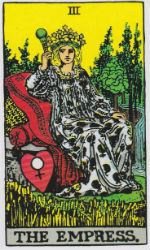
The Empress in Tarot embodies creativity, abundance, and nurturing energy. When paired with the other Major Arcana, her influence reveals how growth, harmony, and fertility play out in every area of life—from relationships and intuition to cycles of transformation. This chart offers quick interpretations of The Empress in combination with all 22 Major cards, including reversed meanings. Perfect for Tarot readers seeking deeper insights or printable reference material.

In the absence of a regular blog post for today, I would like to offer a chart detailing the influence of The Empress Tarot card when paired with the other cards of the Major Arcana. Please feel free to print this and use it for reference in your readings.

Or, if you’d prefer, you can download a PDF version here. Just click on the link and when it comes up, go to your browser menu and click on print.

The Empress + The Fool – Nurturing new beginnings. Creative innocence finds fertile ground.

Reversed: Overprotection stifles growth; immaturity in creativity.

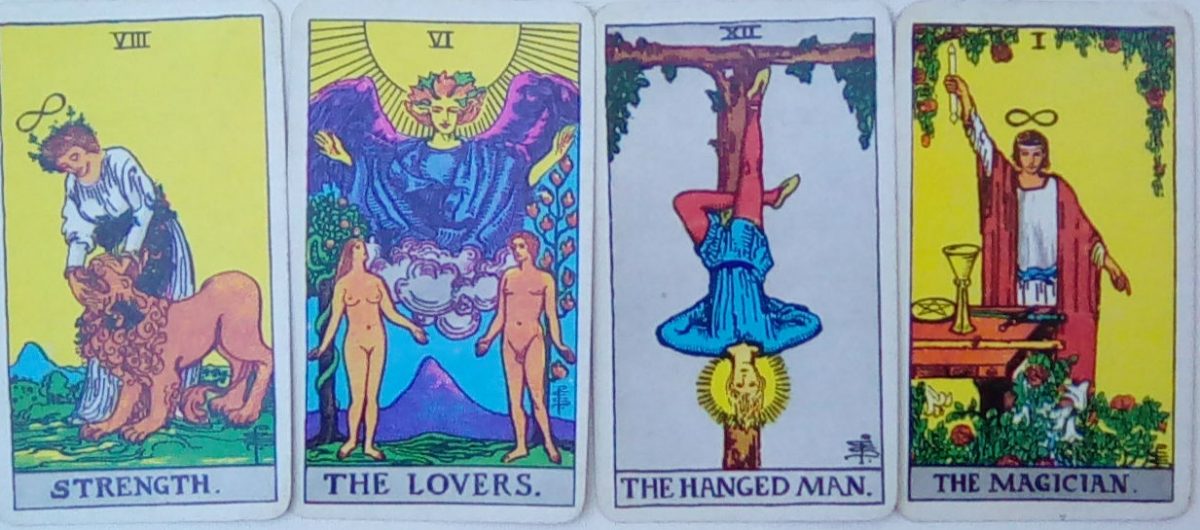
The Empress + The Magician – Manifesting abundance through intention and artistry.

Reversed: Manipulating creativity; false appearances of growth.

The Empress + The High Priestess – Balance of intuition and creativity; inner wisdom flowering into expression.

Reversed: Repressed intuition blocks creativity; confusion in nurturing roles.

The Empress + The Emperor – Harmony between creation and structure; nurturing power within order.

Reversed: Domination suppresses creativity; imbalance between control and flow.

The Empress + The Hierophant – Sacred traditions inspire fertile creativity; nurturing spiritual communities.

Reversed: Stagnation within rigid traditions; blocked feminine wisdom.

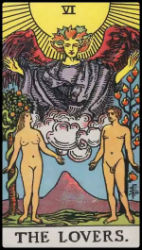
The Empress + The Lovers – Love as a fertile union; creativity fueled by harmony and relationship.

Reversed: Codependency; love smothered rather than nurtured.

The Empress + The Chariot – Creative direction with determination; abundance set into motion.

Reversed: Lack of discipline wastes creative potential; scattered nurturing energy.

The Empress + Strength – Gentle power; nurturing builds resilience.

Reversed: Overindulgence weakens; misplaced compassion.

The Empress + The Hermit – Creativity drawn from solitude; nurturing wisdom within.

Reversed: Isolation stifles growth; withdrawal from fertile opportunities.

The Empress + Wheel of Fortune – Cycles of abundance; harvests following seasons of sowing.

Reversed: Bad luck in creativity; loss of balance in life’s rhythms.

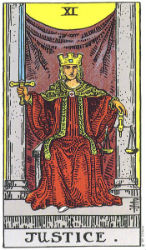
The Empress + Justice – Fairness in nurturing roles; creativity guided by truth.

Reversed: Biased nurturing; injustice in relationships or creative endeavors.

The Empress + The Hanged Man – Creative surrender; new perspectives nurture growth.

Reversed: Stagnation, unwillingness to release control in nurturing.

The Empress + Death – Transformation gives birth to new creation; fertile endings.

Reversed: Resistance to endings; clinging smothers growth.

The Empress + Temperance – Harmony in creativity; nurturing balance and wholeness.

Reversed: Excess stifles balance; nurturing turns to enabling.

The Empress + The Devil – Passionate creativity; fertility bound to desire.

Reversed: Enslavement by overindulgence; blocked nurturing energy.

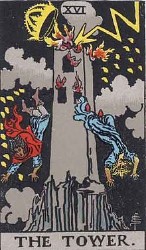
The Empress + The Tower – Creative breakthroughs; fertile destruction clearing ground for new growth.

Reversed: Suppression of necessary change; smothering collapse.

The Empress + The Star – Hope renewed through nurturing; creativity as healing.

Reversed: Disappointment in creative outcomes; blocked inspiration.

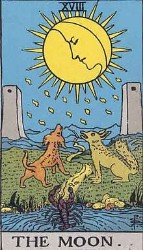
The Empress + The Moon – Intuitive creativity; fertile imagination guided by dreams.

Reversed: Illusion clouds nurturing; confusion in creative flow.

The Empress + The Sun – Joyful abundance; creativity flourishing in light.

Reversed: Overexposure or lack of clarity in nurturing roles.

The Empress + Judgment – Rebirth through nurturing; creativity aligned with higher calling.

Reversed: Misuse of nurturing power; denial of creative responsibility.

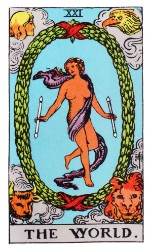
The Empress + The World – Completion of cycles; fulfillment through creation and nurture.

Reversed: Lack of closure; unfulfilled creative potential.

“Just the Tarot,” by Dan Adair – A kindle ebook available on Amazon

The Top Ten, “Yes,” Cards for Taking a New Job

Deciding whether to take a new job can feel overwhelming — but the Tarot offers surprising clarity. In this post, we explore the top 10 “yes” cards that signal opportunity, growth, and success in a new role.

There are two areas that cover 99% of what people ask in Tarot readings.  And they are – guess what? – love and money.

To be more specific about the latter, a lot of people are very worried about finances right now.  Younger people, older people, many of us are living just a paycheck away from destitution.

Most of the questions that revolve around finances can be broken down into two major areas:  Should I keep this job?  And, should I take that new job?

Unfortunately, that frequently breaks down further into, “I really, really hate my job but I’m afraid to quit it.”    And, “I’m really thinking about taking this new job, but how do I know it isn’t going to be just another hell hole?”

Obviously, the Tarot can’t make those decisions for us, but it can put up some pretty clear markers one way or the other.  In keeping with that, here are the top ten cards that indicate that, yes, we should take that new job.

The Top 10 Tarot “Yes” Cards for a New Job

1. The Magician

This card is all about skill and personal power. If you’re considering a new role, The Magician suggests you already have the tools and talent you need to succeed. It’s a reminder that you can create your own opportunities — and this one is ready for you to shape.

2. The Sun

Few cards are as positive as The Sun. It brings energy, confidence, and joy. In career terms, it signals that the new job will bring vitality and success — the kind of role where you can thrive, not just survive.

3. The World

The World represents completion and stepping into a bigger arena. It’s a sign that an old cycle is closing, and a new, more expansive chapter is waiting. Professionally, this card says, “Yes — you’re ready for the next level.”

4. Ace of Pentacles

The Ace of Pentacles is the clearest symbol of a new financial or career opportunity. Think of it as the seed of prosperity being handed to you. It’s a resounding “yes” that the new role holds real promise.

5. Three of Pentacles

This card highlights teamwork, recognition, and skill-sharing. If it shows up, it suggests the new job will give you the chance to collaborate with others and be appreciated for your contributions.

6. Six of Wands

The Six of Wands is about victory, advancement, and being noticed. In a career spread, it signals success in your new role and the recognition that comes with it.

7. Eight of Pentacles

This is the card of steady skill-building and mastery. If you’re entering a new field or learning new tasks, the Eight of Pentacles assures you that you’ll gain expertise and grow stronger through the work itself.

8. The Star

The Star brings inspiration, hope, and alignment with your higher purpose. In job matters, it suggests the new opportunity isn’t just a paycheck — it’s a chance to do something meaningful that feeds your spirit.

9. Two of Wands

The Two of Wands is about expansion and long-term vision. It tells you that the new job opens up possibilities for growth, planning, and future success. It’s less about a quick win and more about building something lasting.

10. Ten of Pentacles

This is the card of stability, prosperity, and legacy. If it appears, it suggests the new role has the potential to provide long-term security, financial reward, and a sense of belonging within a larger structure.

What These Cards Have in Common

Looking at these ten cards together, a pattern emerges:

Material success & stability: Ace, Eight, Ten, and Three of Pentacles.

Recognition & growth: The Magician, The World, and Six of Wands.

Fulfillment & inspiration: The Sun, The Star, and Two of Wands.

When these cards appear in your spread, they point to opportunity, alignment, and security — the kind of energies that make a new job worth considering.

A Note of Balance

Of course, not every card says “yes.” It’s always sweet when we get clear yes and no cards in a reading, but sometimes they can be frustratingly ambiguous.

When that happens,  the Tarot suggests waiting, rethinking, or being cautious about what’s really on offer. The future may reveal that the opportunity isn’t as golden as it first appears or maybe it will be.  Things are still developing.

In a future post, we’ll explore the Top 10 “No” Cards for a New Job — the ones that raise red flags and encourage you to pause before leaping.

Conclusion

Deciding whether to take a new job is never easy. It’s a choice that can ripple out through every part of your life. While Tarot can’t choose for you, it can help reveal whether the energies surrounding a new opportunity are supportive, promising, and aligned with your bigger goals.

So the next time you’re staring at an offer letter, pull out your deck. If the “yes” cards show up, it may just be the Universe’s way of saying: step forward with confidence.

If you’d like a downloadable PDF copy of the Top Ten Job Cards, click here.  When the list pops up, go to your browser menu and click on, “print file.”

“Just the Tarot,” a kindle ebook by Dan Adair available on Amazon

The Influence of The High Priestess Card

Explore how the High Priestess shapes and transforms the meaning of every other Major Arcana card. This reference chart reveals the deep wisdom, mysteries, and hidden truths that emerge when intuition meets archetypal power — upright and reversed. Perfect for adding depth to your Tarot readings.

The High Priestess

In the absence of a regular blog post for today, I would like to offer a chart detailing the influence of The High Priestess Tarot card when paired with the other cards of the Major Arcana. Please feel free to print this and use it for reference in your readings.

Or, if you’d prefer, you can download a PDF version here. Just click on the link and when it comes up go to your browser menu and click on print.

The High Priestess + The Fool – Intuitive trust in the unknown. Wisdom arising from innocence and openness.

Reversed: Naïveté manipulated by hidden influences; confusion or misplaced faith.

The High Priestess + The Magician – Balance of inner knowing with outer mastery. Intuition guiding skillful action.

Reversed: Secrets distort manifestation; misuse of hidden knowledge.

The High Priestess + The Empress – Deep feminine wisdom united with creative abundance. Sacred nurturing.

Reversed: Overprotectiveness; repressed creativity due to secrecy or fear.

The High Priestess + The Emperor – Inner wisdom balancing outer authority. Guidance for leadership through intuition.

Reversed: Tyranny concealed; intuition ignored in favor of rigid control.

The High Priestess + The Hierophant – Mystical insight blended with tradition. Inner guidance within spiritual frameworks.

Reversed: Dogma eclipses truth; manipulation behind spiritual authority.

The High Priestess + The Lovers – Soul-level connection, intuitive bonds, psychic resonance between partners.

Reversed: Illusions in love; hidden agendas or unspoken truths damage trust.

The High Priestess + The Chariot – Intuition steering the will. Success through inner guidance.

Reversed: Conflicting inner voices cause misdirection; lack of clarity in goals.

The High Priestess + Strength – Inner calm directing outer power. Spiritual strength with compassion.

Reversed: Emotional repression; inner fears undermine courage.

The High Priestess + The Hermit – Solitary wisdom, deep meditation, spiritual revelation.

Reversed: Isolation becomes unhealthy withdrawal; secret knowledge withheld.

The High Priestess + Wheel of Fortune – Insight into cycles of fate; intuition aligned with destiny.

Reversed: Resistance to change; blindness to repeating karmic patterns.

The High Priestess + Justice – Inner knowing matched with outer fairness. Truth revealed through intuition.

Reversed: Hidden biases; manipulation of facts; truth obscured.

The High Priestess + The Hanged Man – Surrender leading to spiritual insight. Seeing beyond the veil.

Reversed: Confusion in sacrifice; intuition clouded by fear or denial.

The High Priestess + Death – Transformation through hidden wisdom. Endings guided by spiritual truth.

Reversed: Fear of letting go; clinging to secrets prevents rebirth.

The High Priestess + Temperance – Inner balance, harmony of opposites through intuitive blending.

Reversed: Hidden imbalance; secrets create disharmony.

The High Priestess + The Devil – Hidden desires revealed. Intuition exposing bondage and illusions.

Reversed: Self-deception; denial of unhealthy attachments.

The High Priestess + The Tower – Sudden revelation; secrets exposed; truth shattering illusions.

Reversed: Suppressed intuition leading to collapse; denial of truth.

The High Priestess + The Star – Spiritual guidance, faith in inner wisdom, luminous inspiration.

Reversed: False hopes; ignoring the quiet voice of intuition.

The High Priestess + The Moon – Psychic depth, mystery, profound subconscious revelations.

Reversed: Illusions intensified; deception and confusion dominate.

The High Priestess + The Sun – Hidden wisdom revealed in clarity. Intuition illuminated by joy.

Reversed: Suppressed intuition causes superficial happiness; denial of truth.

The High Priestess + Judgment – Awakening guided by spiritual truth. Intuitive calling to higher purpose.

Reversed: Ignoring the call; secrets prevent healing or rebirth.

The High Priestess + The World – Completion through hidden wisdom; mastery of inner and outer realms.

Reversed: Incompletion; spiritual lessons unlearned; hidden knowledge unintegrated.

“Just the Tarot,” by Daniel Adair – a kindle ebook available on Amazon

Taking Religion Out of the Tarot – A Look at the Real Tarot Deck

For centuries, Christianity condemned Tarot as witchcraft — yet hidden Christian symbols helped the cards survive the Inquisition. This post uncovers how those overlays disguised the deck’s true archetypal roots.

“Are Tarot cards evil?”

That’s one of the most common Google searches on the Tarot and I assume it comes from people who were raised as, “good Christian folks.”  After all, for centuries Christianity has railed against the Tarot.  Preachers and pastors are still screaming that the cards are the gateways to the Devil and dangerous tools of shadowy occultists.

One of the weird things about that is the Tarot actually contains a strong Christian thread that was intentionally stitched into the deck as camouflage.  It’s chock full of angels and not so subtle allusions to the Bible.  Without them, the Tarot would never have survived the Inquisition.

So let’s take a little closer look at how the Church’s iron grip shaped the early Tarot, what Christian symbols were embedded to disguise it, and what the cards may have actually looked like before that clever cover was sewn in.

TAROT WAS BORN IN DANGEROUS TIMES

The first historical references to the Tarot are in Europe in the 1450s.  Right in the middle of one of history’s most brutal religious crackdowns:  the Inquisition.  It’s hard for us to imagine it today, but ANY sort of fortune telling or divination could mean an automatic death sentence.

The Bible was explicit in its warnings. Leviticus 19:31 commands: “Do not turn to mediums or necromancers; do not seek them out, and so make yourselves unclean by them.”

We may casually lay out a reading today, curious as to what the cards can tell us.  To the Church, though, there was nothing casual about it.  It was witchcraft.  And witchcraft meant torture, trials, and being put to a horrible death.

The death toll from the Inquisition is still debated.  Some historians estimate the death toll from the Catholic Church’s witch hunts as, “low” as 30,000 victims.  Others, like Leonard Shlain in, “The Alphabet Versus the Goddess” place the number as high as 10 million.

Whatever the numbers actually were, the climate of terror was real, daily, and all pervasive.  So how did the Tarot survive?

HOW THE TAROT HID IN PLAIN SIGHT

The disguise of what the Tarot actually is was quite brilliant.

First, the makers announced that it was a card game, plain and simple.  Nothing to see here.   It’s just poker, only with archetypes.

 And then they wove Christian symbols directly into the deck.

Take The World card.  It’s four corner symbols – lion, ox, eagle, and angel – aren’t just random.  They’re the traditional symbols of the four evangelists:  Matthew, Mark, Luke, and John.

Even more striking are the Four Cardinal Virtues, lifted straight out of Catholic theology:

Justice

Temperance

Fortitude (Strength)

Prudence

By embedding these virtues, the creators of the deck could claim that the Tarot promoted Christian morality rather than undermining it.  It was a survival tactic:  “See – these aren’t pagan symbols.  Ripping up a Tarot deck is just like ripping up a Bible.”

Prudence eventually vanished from the deck (see my previous post, “Dear Prudence – The Mysterious Case of the Missing Tarot Card”), but the other three virtues remain mainstays of the Major Arcana to this day.

WHAT DID THE ORIGINAL DECK LOOK LIKE?

So what happens if we get rid of the Christian overlays, the cards that don’t really belong in the deck?

What remains are the raw archetypes.  Timeless figures like The Fool, The Magician, The Lovers, The Devil, The Wheel of Fortune and Death.  Those cards pulse with universal energies that transcend any single religion.

A question that arises naturally out of this is:  if we’re getting rid of the Virtue cards, why not get rid of The Hierophant, too?  After all, it was originally known as, “The Pope,” and what could be more Catholic than that?  The answer is The Hierophant is nothing but The High Priest in disguise and is the partner card to The High Priestess in the same way that the Emperor is linked to The Empress.

Beneath the Christian veneer lies a much older symbolic system, one that might have looked very different if it hadn’t been forced to wear this mask.

WHERE DID THE TAROT REALLY COME FROM?

Contrary to many modern assumptions, the Tarot did NOT evolve out of Christianity.  

Instead, it seems to have appeared fully formed in the mid-1400s, as though it had been carried forward from some older source.  What that source was – Ancient Egypt or an even older, lost esoteric tradition – remains a mystery.

What’s clear is this:  the Christian layer was camouflage, not origin.  It was a survival strategy, not a birthing.

SEEING THE REAL DECK

The, ‘Christian Themes’ in the Tarot were never a part of the original deck.  They were just part of a clever disguise to get past the censors of the Inquisition.

When we peel back that layer, what we find is a universal language of archetypes.  The Fool, Magician, Death, The Star – these are symbols that speak to something much deeper than mere religious dogma.

And so the question remains:  when we lay the cards out today, are we seeing the archetypes themselves?  Or the clever veil that once kept them alive?

“Just the Tarot” by Daniel Adair – a kindle ebook available on amazon.

Sex and The Devil Card – Time for a New Definition?

This is an exploration of the meaning and definition of The Devil tarot card. Is it time to de-sexualize it?

It may be time to take the sex out of The Devil card, or at least scale it way back.

When we look at the traditional definitions of The Devil, he’s a pretty horny guy.  He’s linked with illicit affairs, cheating on your spouse, sexual “perversions,” and a variety of scandalous behaviors that good, decent folks just don’t do!

But maybe he’s been typecast.

THE LOVERS AND THE DEVIL – SAME COUPLE ON A DIFFERENT DATE

If you hold up The Lovers and The Devil side by side, you can’t help but notice that they’re the same couple.  

In The Lovers, they’re radiant and glowing.  They even have an angel hovering over them to let us know that their love is blessed by heaven above.

Fast forward to The Devil and we see them with chains, horns, and flaming tails.  There’s a serious, “We may have made some questionable choices,” vibe.

Which begs the question:  what happened to these two?  Did they skip couples therapy and just dive straight into the underworld?  Did he leave the toilet seat up one too many times?

A QUICK HISTORY LESSON

The Tarot as we know it shows up in the 1450s – prime time for the Catholic Inquisition.  This was NOT an era noted for swingers or free love.  Sexual morality was tightly policed:  adultery, premarital affairs, straying outside of monogamy, even masturbation could get you killed by the Bible Police.

So when Tarot artists painted two nude figures on a card, everyone knew what that meant.  It meant . . . you know . . . S – E – X.  But, nude figures with angel = good, approved sex and nude figures with devil = bad, nasty sex.  

Boom – association locked in.

FAST FORWARD TO MODERN TIMES

But here we are in the 21st Century and, my oh my, how things have changed.

Remember just a few years ago when people were totally titillated by the book (and movie) “Fifty Shades of Gray?”  It’s nothing but an exploration of bondage and domination dressed up as a novel and – despite the fact that it may have been one of the worst written books in history – it sold over 150 million copies.

We know that people were doing a lot more than just reading it, too, because emergency room visits related to sex toys jumped up by over 50%.  They were actively checking out those techniques, not just reading about them.

We also know that over a third of Americans admit to cheating on their spouses.  And there’s no doubt that THOSE stats are way under reported.

Only about 5% of Americans report being virgins on their wedding nights.  What was once mandatory is now more of a museum exhibit.

And monogamy?  Still popular but VERY flexible in its applications.  Given the divorce rates, it’s obvious that we’re more into serial monogamy than actual this-is-for-life monogamy.

In a nutshell, we’ve outgrown the black-and-white, “good sex versus bad sex” binary thinking.  The Devil’s definition is starting to feel more than a little outdated.

SO WHAT DOES THE DEVIL REALLY MEAN?

Here’s a thought:  maybe The Devil isn’t about sex gone wrong.  Maybe it’s about love gone wrong.

Look closely at the card:  the chains around the couple’s necks are so loose that they could slip them off at any time.  Which means that they’re staying bound by choice.  Or by fear.

That’s the real Devil.  The loveless marriage that drags on because it’s easier to stay than to leave.  The codependent relationship that’s fueled more by desperation than devotion.  The romantic partnership that’s built on money, appearances or habit instead of love.

Those are the heavy chains that we put on ourselves.  Not fiery lust, but destructive attachments that slowly erode our joy.

FINAL WORD: TIME TO RETIRE THE SCANDAL?

Maybe it’s time to let The Devil out of the dungeon of outdated sexual shame.  He’s got bigger (and scarier) fish to fry.  The next time this card lands in a spread, don’t ask, “Who’s cheating on who?”  Instead, ask:  “Where in my life am I bound by something that no longer serves me?”

That’s The Devil’s true temptation: not passion or sex, but the CHOICE to stay stuck in a loveless relationship when freedom is only a tug away.

“Just the Tarot,” by Daniel Adair – a kindle ebook available on Amazon

A Closer Look at the Star Card – We Are Stardust

This post takes a closer look at The Star card in the Tarot, tracing its origins through medieval thought, astronomy, and spiritual symbolism. From ancient ideas of “ensouled” stars to today’s view of The Star as a card of guidance and renewal, this article explores how the meaning of The Star has shifted through time — and what it offers us now as a symbol of hope, healing, and inspiration.

Have you ever seen the movie Stardust? A star falls to earth, wicked witches chase her to steal her essence, and — improbably — Robert De Niro appears as a pirate captain who does the can-can in drag. It’s a wonderful, magical adult fairy tale.

Oddly enough, it also gives us a few clues about what The Star card in the Tarot is really about.

Origins of the Tarot

No one truly knows where the Tarot came from. Some intriguing hints suggest it may have roots in Egyptian Hermeticism, but there’s no hard evidence for that.

What we do know is that the first recorded Tarot decks appeared in the Italian royal courts around 1450. That makes it very old. And when we interpret the cards, we need to remember that the words and symbols meant something very different to people in the 1400s than they do to us now. The Star is a perfect example.

Modern Astronomy

When I was in the fifth grade, I spent nights in my parents’ backyard with a little Edmund Scientific telescope. Peering up at the moon and stars, I felt pure awe. Even then, though, I knew stars were “distant suns,” cousins of the one that kept me warm every day.

Today, with the Hubble telescope and modern astronomy, we know even more: trillions of stars scattered like glitter across the cosmos, being born and dying every day.

But in the 1400s, that understanding didn’t exist.

Ancient Skies and Ancient Eyes

Back then, knowledge of the stars was still rooted in Greek philosophy and medieval theology. To those eyes, stars were perfect, flawless jewels glowing in the heavens. Perfection, of course, meant divinity.

And to many, they weren’t just divine — they were alive. The “wandering stars” we now call planets were believed to move of their own volition. Movement meant life, and so they were seen as gods. That’s why their names — Mars, Venus, Jupiter — are still with us today.

Angelic Souls

In the 1400s, though, talk of pagan gods could get you burned at the stake. The compromise? Stars weren’t gods — they were “ensouled.” They were divine presences, not quite angels, but spiritual beings with enormous influence.

Astrology was deadly serious business. People genuinely believed their destinies were written in the stars. Contrary to Shakespeare’s later declaration, many in the Middle Ages were convinced their fate was determined above, not within.

Spirit Guides

So what does this mean for The Star card?

Most likely, it was originally meant to depict something very close to what we’d call a “spirit guide” today.

It’s not an angel — Tarot clearly marks angelic figures with wings. Instead, The Star suggests a subtler, quieter presence: a flow of spiritual influence and inspiration. The woman pours water upon the Earth and into the pool, symbolizing a constant infusion of energy, grace, and renewal into our lives.

The Star Today

Seen through modern eyes, The Star becomes both timeless and practical. It’s the card of healing, guidance, and hope. It invites us to trust that the universe has not abandoned us, that unseen currents are still at work.

When The Star appears in a reading, it’s like a deep breath after a storm. It reassures us that life always offers another chance to shine. Whether we call it divine presence, spirit guidance, or simply the return of hope, The Star is a promise that the light will return — and that we, too, are part of that light.

“Just the Tarot,” by Dan Adair – A kindle ebook available on Amazon.

The Wheel of Fortune and Flowing with these Strange Rhythms

This post explores the deeper meaning of The Wheel of Fortune Tarot card and its connection to the Kybalion’s Principle of Rhythm. Life’s ups and downs are not random but part of a greater pattern that ultimately arcs toward the positive. Discover how to maintain perspective, rise above collective fear, and navigate dark times with love, compassion, and inner strength.

Let’s face it: we’re all a little exhausted from the constant insanity in the world right now. Whether you’re right, left, or middle-of-the-bird, it can feel like we’re adrift in a sea of chaos. When it goes on long enough, we start to lose our perspective and wonder if things will ever be “normal” again.

The message of The Wheel of Fortune is that everything passes and everything changes. The people who are at the top of the wheel right now will eventually be cast down, and the people who are at the bottom will eventually be elevated again.

Life is always cyclical — and this, too, shall pass.

The Principle of Rhythm

As I discussed in my book about The Kybalion, Western Occultism calls this The Principle of Rhythm. Here in Earth School, everything is rhythmic, and we only have to open our eyes to see it.

The tides come in and then go out.

The Moon waxes and then wanes.

Life explodes into the richness of spring and then recedes into the cold bleakness of winter.

Even great nations expand and then ultimately diminish into shadows of what they once were.

Everything rises and falls — and then rises again.

The same principle applies to human beings and all our affairs. We may have a string of incredibly good luck and then a period where we can’t buy a break. We may feel joyously happy for a while and then deeply depressed and anxious before we find our way back to happiness. We may fall deeply in love with someone and then end up despising them.

The Pendulum

The Kybalion envisions this process as the pendulum of a clock. It swings to the left, and then it swings to the right. And as the Principle of Rhythm states: “The swing to the left is always equal to the swing to the right.”

Modern science recognizes this in Newton’s Third Law of Motion: “Every action has an equal and opposite reaction.”

When we think about human life, we can see it in terms of alternating energies. We may go through incredibly negative periods — full of stress, sadness, and anxiety — only to be followed by times of great happiness, when everything seems to go our way.

We may have moments where we’re counting quarters to buy groceries, followed by periods of real abundance when the cash flows in like a river.

The collective energy of politics follows the same law – a hard swing to the right is inevitably followed by a hard swing to the left. Hatred is eventually replaced by compassion.

But It’s Not a Closed System

If that was all there was to the rhythms of life, it would be a pretty depressing scenario. It would feel like: “Okay, things are going well right now, but I can’t really enjoy it because it’s all going to turn to shit again.”

If life were nothing but good/bad/good/bad — ad infinitum — it would be the spiritual equivalent of one step forward and one step back. We’d be living, but not progressing. Stuck in an endless cycle of growth and degeneration. A closed system where nothing ever really improves.

The good news is that, as The Kybalion puts it, “nature favors the positive.” Positive energy will always overcome negative energy. Love will always be stronger than hate. Compassion will always conquer cruelty.

Put another way: yes, as long as we’re in Earth School, the pendulum will appear to move equally in both directions. The truth, though, is that it’s always arcing just a little more toward the positive — whether we can see it or not.

So What Should We Do Right Now?

We are, right now, in dark times. As Asha Nayaswami says in this wonderful video, there is demonstrable evil in the world, and some humans are acting out their darkest impulses.

So how do we deal with that? What should we do right now?

The advice of The Kybalion is to “rise above it.” We can’t control the Principle of Rhythm or the turns of the Wheel of Fortune. Those are built into the fabric of Earth School. We don’t have to be swung by the pendulum, though. We can rise above it spiritually.

What we can control is our reaction to it. We can make a conscious effort not to be swept along in the collective energies of hatred, fear, and anger. We can maintain our own little bubbles of love and compassion and keep putting out as much positive energy as we can.

As Nayaswami says, that doesn’t mean we become spiritual doormats. It doesn’t mean we avoid confronting evil when we encounter it. It means we confront it with truth, with as much gentleness and understanding as we can muster, and that we refuse to join it in any way, shape, or form.

Perspective

Above all, it means maintaining perspective. Keep your eyes on the horizon, not just on the dirt road full of potholes. Remember that the pendulum will swing back in the opposite direction.

When it does, life will not only be positive again — it will be more positive. People will learn from these experiences, and they’ll use that knowledge to build a better world.

We just have to be patient… and wait for the wheel to turn.

“Just the Tarot,” by Dan Adair – a kindle ebook available on Amazon.

The Hierophant Card, Spirituality, and That Time That Ram Dass Got Conned

In this candid exploration of The Hierophant Tarot card, I unpack both the light and shadow sides of spiritual authority. From my own rocky history with organized religion to cautionary tales of gurus gone wrong, this post looks at how The Hierophant can represent both guidance and manipulation. Learn how to spot the difference between a true spiritual teacher and a false one, and why, in the end, your own connection to the Sacred should always be at the center.

The Hierophant Card from the Waite Tarot Deck

I’ve always had a hostile feeling toward The Hierophant card. I was raised in the old, Latin, fundamentalist Catholic Church, and like many a recovering Catholic, the mere sight of a priest, pope, or prelate is enough to make me start hissing and spitting.

The image of the Hierophant sitting on his golden throne while tonsured followers bow before him is a perfect example of what I don’t like about organized religion. It’s not the Sacred Divine that’s central to the image—it’s the priest. The priest is the intermediary you have to go through to get to the Sacred.

This setup isn’t limited to Catholicism, of course. We find it in all religions. There are countless priests, rabbis, pastors, vicars, imams, and gurus who claim to hold the Key to the Kingdom—and you’ve got to drop them a little sugar before they’ll let you see it.

Religion Versus Spirituality

“I’m more spiritual than religious.”

We’ve all heard that one—so often, in fact, it’s become almost a cliché in New Age circles. In very simple terms, religions claim to hold knowledge from God/dess—usually in the form of a book or oral teachings—and you have to pay someone (priest, rabbi, guru, etc.) to interpret it for you.

Spirituality, on the other hand, involves direct knowledge of the Sacred through personal meditation, taking psychedelic drugs, or having some other form of mystical insight. You don’t need to pay anyone to interpret it because you’re the one having the experience.

In Tarot terms, that’s the polarity between The High Priestess and The Hierophant: The High Priestess represents direct spiritual experience, while The Hierophant represents organized religion.

The Good and the Bad Faces of The Hierophant

I recently had a discussion with another Tarot reader who seemed mildly shocked by my open hostility to The Hierophant. I could have jumped right in with thousands of examples: pedophile priests, pastors who are sleeping with members of their flocks, imams and rabbis calling for each other’s destruction.

Organized religion makes that all too easy, right? There really are a lot of creepy critters living under that rock.

But I held off and listened to her. Her point was that The Hierophant can also represent the spiritual teacher who is genuinely a spiritual teacher. Examples might include yoga teachers, meditation guides, or instructors at temples and spiritual retreats.

And yes, I suppose that includes priests and pastors who sincerely try to teach compassion, love, and charity.

There are plenty of people who don’t know how to even begin their spiritual journey, much less reach the destination. For them, spiritual “instructors” can be a vital step on the ladder.

Still… be very, very careful.

The Guru Who Got Conned by a Guru

I’ve long been a fan of Ram Dass. Maybe it’s because he was a fellow Aries and I understood him on that level. Maybe it was his gentle, self-deprecating humor. Maybe it was because about 80% of what he said was solid truth.

If I were to name a “good” spiritual instructor, he’d be near the top of my list.

Despite all of that, he wrote an astounding article in a 1976 edition of Yoga Journal outlining how he had been thoroughly and totally conned by another guru named Joya.  

This was years after receiving his own spiritual transmission from his original guru in India. Despite that grounding, he stumbled right into Joya’s web. Within months, he was having sex with her, convinced she was channeling Indian goddesses, and buying her gold bracelets and rings to “protect her energy.”

He bought it—hook, line, and sinker.

Add to that the drunken sexual abuses of Chögyam Trungpa, the murders and kidnappings that evolved out of the Hari Krishna movement, and, of course, the horrors of the Bhagwan Rajneesh compound in Oregon, and you begin to get the picture.

Even the “good” face of The Hierophant can turn bad. No one following these leaders woke up and thought, “Hey, I’d really like to find a guru who’s going to rip me off, sexually abuse me, and get me involved in criminal activities.”

Who’s in the Center?

We can actually learn a lot just by looking at The Hierophant card.

A. The pope figure is in the center. If the spiritual teaching you’re receiving revolves around a particular person—if that person’s existence is central to the teaching—you’ve got a false teacher.

B. The figure is being worshipped. Unless your teacher can levitate six feet into the air and float around the room, don’t buy the idea that there’s something “divine” about them. Even then, check for wires. Real teachers may have siddhis—extraordinary spiritual powers—but they don’t flaunt them, expect worship, or claim to be gods or goddesses.

C. The figure sits on a throne wearing a golden crown. There’s a reason people contrast the spiritual with the material. Real spiritual teachers don’t hoard treasures. As the old country song asked, “Would Jesus wear a Rolex?”

Um… no. He wouldn’t.

Teachers Are Stepping Stones

If you’re involved in a religious practice—whether Tibetan Buddhism or American Christianity—and you feel it’s making you a better person, more power to you.

But remember: we are meant to evolve beyond teachers. We absorb what we need from them and then move on to the next plateau. Organized religion can be a stepping stone at the start of the journey, but it’s not the destination.

And no… I still don’t like The Hierophant.

“Just the Tarot,”  by Dan Adair, a kindle ebook available on Amazon.

Shine Your Light: The Star Card, Shame, and the Courage to Be Seen

This post explores the deeper meaning of The Star card in the Tarot and reflects on why so many of us struggle to shine our light in the world. Drawing on the work of Brené Brown, Tibetan Buddhism, and real-life dynamics like shame and codependency, I look at the messages—both cultural and personal—that lead us to dim our brilliance. The Star invites us to pour our gifts into the world, not for recognition, but because it’s who we truly are. This is a reflection on healing, self-worth, and the sacred courage it takes to be seen.• shine your light

This image is from one of my new Tarot Affirmation posters, now available on my Etsy art site. I really love how it turned out—but even more than that, I love the message it carries: Shine Your Light.

And yet, for so many of us, that’s easier said than done.

Instead of shining, we hide. Instead of pouring ourselves out like starlight, we dim, shrink, withdraw. Why is it so hard to be radiant in a world that so desperately needs our brilliance?

The Culture of Shame and the Fear of Being Seen

In one of her powerful TED Talks, Brené Brown speaks about the culture of shame we all live in. Even if you didn’t grow up in a dysfunctional family (and statistically, about 60% of us did), we’re still marinated in a society that constantly criticizes, compares, and belittles.

Maybe you brought home a report card with a B, and your parent asked, “Why didn’t you get an A?”

Maybe you’re in a job where meeting your performance goals doesn’t bring a sense of completion—it just earns you a fresh, even more demanding set.

Maybe you’ve internalized the billions of dollars spent by the beauty industry telling you that your face, your body, your age, or your hair simply aren’t good enough.

On social media, the message is constant: unless you’re being validated with likes and followers, you’re invisible.

Advertising tells you your house isn’t elegant enough, your car’s too old, your wardrobe outdated.

Even spirituality isn’t immune. We whisper to ourselves: I should be better. I should care more. I should meditate more. Pray more. Try harder.

Let’s face it: in this world, it’s all too easy to believe that we should be ashamed of simply being ourselves.

As Brown puts it, shame drives two powerful tapes in our heads:

1. You’re never good enough, and

2. Who do you think you are?

And because those tapes run deep, we begin to engineer our own smallness. We shrink ourselves to stay invisible—because visibility feels like a threat. We dim our light so no one will see just how “inadequate” we believe we are. And in doing so, we fail to shine.

Codependency and Dimming Our Own Lights

Sometimes, the reason we hide isn’t culture—it’s relationships.

Too many of us are caught in dynamics where one partner shines while the other fades into the background. It might be dressed up in the language of care or sacrifice, but the effect is the same: one person takes center stage, while the other erases themselves.

It could be a relationship with a narcissist, where one partner is expected to provide constant praise, attention, and emotional caretaking.

It could be a more obvious kind of abuse, where failing to meet someone else’s needs results in punishment, blame, or even violence.

It might even look noble—like staying small to “support” someone who is ill, unstable, or in need. But the underlying belief is this: there isn’t enough light to go around.

And so, we dim ourselves to make the other person shine.

We play down our accomplishments. We pretend we’re not that talented. We take the backseat in our own story. And we tell ourselves it’s virtuous.

But it’s not noble to disappear. It’s not compassionate to go dark.

We were meant to shine.

The Star Card and the Sacred Act of Sharing

The Star card in the Tarot is a card of healing—but it’s not just personal healing. It’s about reconnecting with the world by letting your own light flow into it.

In Tibetan Buddhism, there’s a teaching that each of us carries a radiant jewel inside. It may be buried under layers of dust or encased in stone, but it’s there—glimmering with our true nature. And our task in life is to uncover that jewel and offer it to the world.

That’s what the woman in The Star card is doing. She kneels beside the stream and pours out her water—not hoarding, not holding back. She gives freely to the land and to the flow of life itself.

She’s not asking for praise. She’s not trying to be impressive.

She’s just being who she is: a vessel of light.

And so are you.

You don’t shine for applause.

You don’t shine to prove anything.

You shine because it’s your nature.

And this world is thirsty for that kind of offering.

A Final Thought

You are not just a person. You are a sacred gift.

You are a hidden jewel.

You are starlight in human form.

Let yourself shine.

“Just the Tarot,” by Dan Adair – a kindle ebook available on Amazon

The Influence of The Magician Card

Today’s post offers a practical tarot reference chart for readers and practitioners, focusing on the influence of The Magician card when paired with each of the other Major Arcana cards. Whether upright or reversed, these pairings reveal powerful nuances about manifestation, power, focus, and intentional action. Ideal for deepening your tarot readings and understanding how The Magician works in tandem with archetypal energies throughout the deck.

The Magician Tarot Card – Magic and Manifestation

In the absence of a regular blog post for today, I would like to offer a chart detailing the influence of The Magician Tarot card when paired with the other cards of the Major Arcana. Please feel free to print this and use it for reference in your readings.

Or, if you’d prefer, you can download this by clicking here. Just click on the link and when it comes up go to your browser menu and click on PRINT.

The Magician + The Fool – Inspired action from spontaneous beginnings. Manifesting through instinct and openness. Reversed: Rash decisions, manipulative potential, lack of grounding.

The Magician + The High Priestess – Balanced mastery of outer action and inner knowing. Power guided by intuition.  Reversed: Secrets manipulate outcomes; unclear motives under the surface.

The Magician + The Empress  – Creative manifestation. Birthing beauty and abundance through conscious intent. Reversed: Over-controlling creativity, blocked expression, false appearances.

The Magician + The Emperor – Strategic manifestation with solid foundations. Power used with authority. Reversed: Control issues, misuse of power, over-managing outcomes.

The Magician + The Hierophant – Mastery aligned with tradition or spiritual systems. Teacher or ritual magician energy. Reversed: Manipulation under the guise of doctrine; rigidity or rebellion.

The Magician + The Lovers – Manifesting partnership or choice through alignment of will and desire. Reversed: Manipulative dynamics in relationships; choices clouded by illusion.

The Magician + The Chariot – Focused willpower brings success. Victory through deliberate action. Reversed: Scattered energy, ego-driven direction, force without alignment.

The Magician + Strength – Harnessing inner strength to empower manifestation. Quiet mastery. Reversed: Power games, coercion, or internal sabotage.

The Magician + The Hermit – Manifesting through inner wisdom and spiritual insight. Solitary mastery. Reversed: Isolation misused for manipulation; false guru energy.

The Magician + Wheel of Fortune – Intentional action within cycles of change. Turning fate through conscious will. Reversed: Manipulating chance; resistance to natural cycles.

The Magician + Justice – Creating balance through skillful choices. Ethical manifestation. Reversed: Twisting truth, unfair dealings, imbalance created through intent.

The Magician + The Hanged Man – Power in surrender. Shifting perspectives leads to deeper manifestation. Reversed: Stagnation disguised as action; martyrdom as manipulation.

The Magician + Death – Transformation through focused intent. Shedding the old to create anew. Reversed: Resisting transformation; clinging to control in times of change.

The Magician + Temperance – Alchemical mastery. Harmonizing elements to create lasting magic. Reversed: Imbalance, forced outcomes, or spiritual bypassing.

The Magician + The Devil – Mastery misused; power becomes entrapment. Illusion of control. Reversed: Breaking free of manipulation or unhealthy control dynamics.

The Magician + The Tower – Radical awakening through dismantled illusions. Creation from chaos. Reversed: Trying to control a collapse; resisting necessary upheaval.

The Magician + The Star – Inspired manifestation aligned with hope and higher vision.  Reversed: False promises, disillusioned effort, manipulation of ideals.

The Magician + The Moon – Magical work through dreams, symbols, and hidden realms. Reversed: Deceptive illusions, manipulation through fear or confusion.

The Magician + The Sun – Empowered creation, joyful manifestation, clarity in action. Reversed: Ego-driven displays, illusion of success, superficial charm.

The Magician + Judgement – Conscious rebirth, purpose-driven action, manifesting a new self. Reversed: Manipulating redemption; resisting accountability.

The Magician + The World – Complete mastery and fulfillment. Manifesting global or life-level success. Reversed: Incomplete projects, scattered focus, illusion of wholeness.

“Just the Tarot,” by Dan Adair – A kindle ebook available on Amazon