The Influence of The High Priestess Card

Explore how the High Priestess shapes and transforms the meaning of every other Major Arcana card. This reference chart reveals the deep wisdom, mysteries, and hidden truths that emerge when intuition meets archetypal power — upright and reversed. Perfect for adding depth to your Tarot readings.

The High Priestess

In the absence of a regular blog post for today, I would like to offer a chart detailing the influence of The High Priestess Tarot card when paired with the other cards of the Major Arcana. Please feel free to print this and use it for reference in your readings.

Or, if you’d prefer, you can download a PDF version here. Just click on the link and when it comes up go to your browser menu and click on print.

The High Priestess + The Fool – Intuitive trust in the unknown. Wisdom arising from innocence and openness.

Reversed: Naïveté manipulated by hidden influences; confusion or misplaced faith.

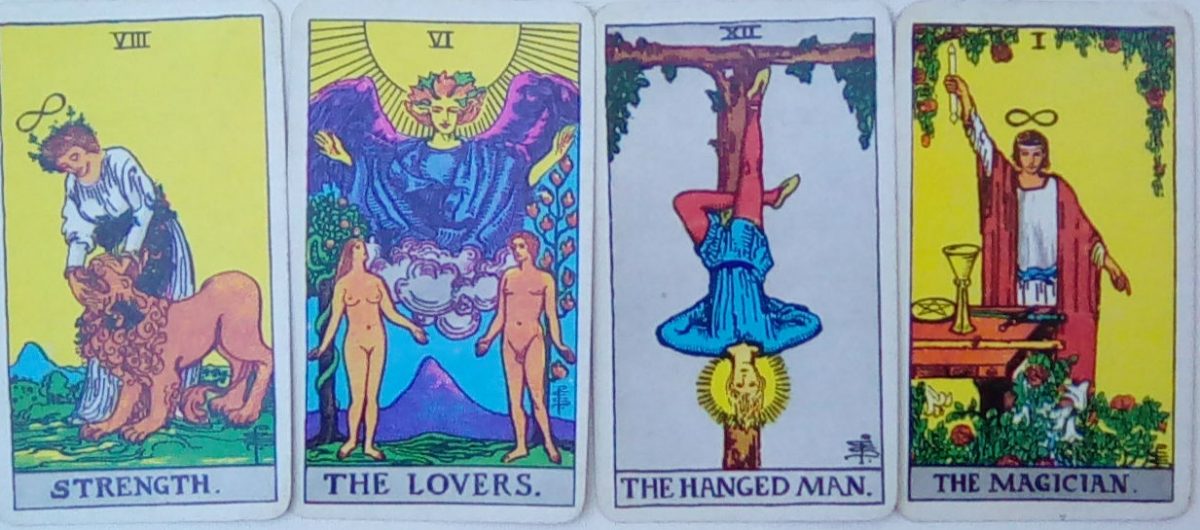
The High Priestess + The Magician – Balance of inner knowing with outer mastery. Intuition guiding skillful action.

Reversed: Secrets distort manifestation; misuse of hidden knowledge.

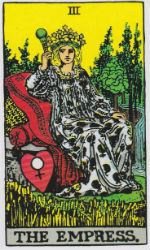
The High Priestess + The Empress – Deep feminine wisdom united with creative abundance. Sacred nurturing.

Reversed: Overprotectiveness; repressed creativity due to secrecy or fear.

The High Priestess + The Emperor – Inner wisdom balancing outer authority. Guidance for leadership through intuition.

Reversed: Tyranny concealed; intuition ignored in favor of rigid control.

The High Priestess + The Hierophant – Mystical insight blended with tradition. Inner guidance within spiritual frameworks.

Reversed: Dogma eclipses truth; manipulation behind spiritual authority.

The High Priestess + The Lovers – Soul-level connection, intuitive bonds, psychic resonance between partners.

Reversed: Illusions in love; hidden agendas or unspoken truths damage trust.

The High Priestess + The Chariot – Intuition steering the will. Success through inner guidance.

Reversed: Conflicting inner voices cause misdirection; lack of clarity in goals.

The High Priestess + Strength – Inner calm directing outer power. Spiritual strength with compassion.

Reversed: Emotional repression; inner fears undermine courage.

The High Priestess + The Hermit – Solitary wisdom, deep meditation, spiritual revelation.

Reversed: Isolation becomes unhealthy withdrawal; secret knowledge withheld.

The High Priestess + Wheel of Fortune – Insight into cycles of fate; intuition aligned with destiny.

Reversed: Resistance to change; blindness to repeating karmic patterns.

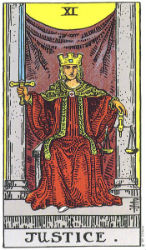
The High Priestess + Justice – Inner knowing matched with outer fairness. Truth revealed through intuition.

Reversed: Hidden biases; manipulation of facts; truth obscured.

The High Priestess + The Hanged Man – Surrender leading to spiritual insight. Seeing beyond the veil.

Reversed: Confusion in sacrifice; intuition clouded by fear or denial.

The High Priestess + Death – Transformation through hidden wisdom. Endings guided by spiritual truth.

Reversed: Fear of letting go; clinging to secrets prevents rebirth.

The High Priestess + Temperance – Inner balance, harmony of opposites through intuitive blending.

Reversed: Hidden imbalance; secrets create disharmony.

The High Priestess + The Devil – Hidden desires revealed. Intuition exposing bondage and illusions.

Reversed: Self-deception; denial of unhealthy attachments.

The High Priestess + The Tower – Sudden revelation; secrets exposed; truth shattering illusions.

Reversed: Suppressed intuition leading to collapse; denial of truth.

The High Priestess + The Star – Spiritual guidance, faith in inner wisdom, luminous inspiration.

Reversed: False hopes; ignoring the quiet voice of intuition.

The High Priestess + The Moon – Psychic depth, mystery, profound subconscious revelations.

Reversed: Illusions intensified; deception and confusion dominate.

The High Priestess + The Sun – Hidden wisdom revealed in clarity. Intuition illuminated by joy.

Reversed: Suppressed intuition causes superficial happiness; denial of truth.

The High Priestess + Judgment – Awakening guided by spiritual truth. Intuitive calling to higher purpose.

Reversed: Ignoring the call; secrets prevent healing or rebirth.

The High Priestess + The World – Completion through hidden wisdom; mastery of inner and outer realms.

Reversed: Incompletion; spiritual lessons unlearned; hidden knowledge unintegrated.

“Just the Tarot,” by Daniel Adair – a kindle ebook available on Amazon

Taking Religion Out of the Tarot – A Look at the Real Tarot Deck

For centuries, Christianity condemned Tarot as witchcraft — yet hidden Christian symbols helped the cards survive the Inquisition. This post uncovers how those overlays disguised the deck’s true archetypal roots.

“Are Tarot cards evil?”

That’s one of the most common Google searches on the Tarot and I assume it comes from people who were raised as, “good Christian folks.”  After all, for centuries Christianity has railed against the Tarot.  Preachers and pastors are still screaming that the cards are the gateways to the Devil and dangerous tools of shadowy occultists.

One of the weird things about that is the Tarot actually contains a strong Christian thread that was intentionally stitched into the deck as camouflage.  It’s chock full of angels and not so subtle allusions to the Bible.  Without them, the Tarot would never have survived the Inquisition.

So let’s take a little closer look at how the Church’s iron grip shaped the early Tarot, what Christian symbols were embedded to disguise it, and what the cards may have actually looked like before that clever cover was sewn in.

TAROT WAS BORN IN DANGEROUS TIMES

The first historical references to the Tarot are in Europe in the 1450s.  Right in the middle of one of history’s most brutal religious crackdowns:  the Inquisition.  It’s hard for us to imagine it today, but ANY sort of fortune telling or divination could mean an automatic death sentence.

The Bible was explicit in its warnings. Leviticus 19:31 commands: “Do not turn to mediums or necromancers; do not seek them out, and so make yourselves unclean by them.”

We may casually lay out a reading today, curious as to what the cards can tell us.  To the Church, though, there was nothing casual about it.  It was witchcraft.  And witchcraft meant torture, trials, and being put to a horrible death.

The death toll from the Inquisition is still debated.  Some historians estimate the death toll from the Catholic Church’s witch hunts as, “low” as 30,000 victims.  Others, like Leonard Shlain in, “The Alphabet Versus the Goddess” place the number as high as 10 million.

Whatever the numbers actually were, the climate of terror was real, daily, and all pervasive.  So how did the Tarot survive?

HOW THE TAROT HID IN PLAIN SIGHT

The disguise of what the Tarot actually is was quite brilliant.

First, the makers announced that it was a card game, plain and simple.  Nothing to see here.   It’s just poker, only with archetypes.

 And then they wove Christian symbols directly into the deck.

Take The World card.  It’s four corner symbols – lion, ox, eagle, and angel – aren’t just random.  They’re the traditional symbols of the four evangelists:  Matthew, Mark, Luke, and John.

Even more striking are the Four Cardinal Virtues, lifted straight out of Catholic theology:

Justice

Temperance

Fortitude (Strength)

Prudence

By embedding these virtues, the creators of the deck could claim that the Tarot promoted Christian morality rather than undermining it.  It was a survival tactic:  “See – these aren’t pagan symbols.  Ripping up a Tarot deck is just like ripping up a Bible.”

Prudence eventually vanished from the deck (see my previous post, “Dear Prudence – The Mysterious Case of the Missing Tarot Card”), but the other three virtues remain mainstays of the Major Arcana to this day.

WHAT DID THE ORIGINAL DECK LOOK LIKE?

So what happens if we get rid of the Christian overlays, the cards that don’t really belong in the deck?

What remains are the raw archetypes.  Timeless figures like The Fool, The Magician, The Lovers, The Devil, The Wheel of Fortune and Death.  Those cards pulse with universal energies that transcend any single religion.

A question that arises naturally out of this is:  if we’re getting rid of the Virtue cards, why not get rid of The Hierophant, too?  After all, it was originally known as, “The Pope,” and what could be more Catholic than that?  The answer is The Hierophant is nothing but The High Priest in disguise and is the partner card to The High Priestess in the same way that the Emperor is linked to The Empress.

Beneath the Christian veneer lies a much older symbolic system, one that might have looked very different if it hadn’t been forced to wear this mask.

WHERE DID THE TAROT REALLY COME FROM?

Contrary to many modern assumptions, the Tarot did NOT evolve out of Christianity.  

Instead, it seems to have appeared fully formed in the mid-1400s, as though it had been carried forward from some older source.  What that source was – Ancient Egypt or an even older, lost esoteric tradition – remains a mystery.

What’s clear is this:  the Christian layer was camouflage, not origin.  It was a survival strategy, not a birthing.

SEEING THE REAL DECK

The, ‘Christian Themes’ in the Tarot were never a part of the original deck.  They were just part of a clever disguise to get past the censors of the Inquisition.

When we peel back that layer, what we find is a universal language of archetypes.  The Fool, Magician, Death, The Star – these are symbols that speak to something much deeper than mere religious dogma.

And so the question remains:  when we lay the cards out today, are we seeing the archetypes themselves?  Or the clever veil that once kept them alive?

“Just the Tarot” by Daniel Adair – a kindle ebook available on amazon.

Impostor Syndrome and The King of Wands Reversed

The King of Wands reversed shines a light on impostor syndrome — that nagging sense of never being “good enough.” Learn how this Tarot archetype mirrors self-doubt and discover practical steps to reclaim authentic confidence, reverse the distortion, and own your rightful place at the table.

Do you never feel “good enough?”

Do you feel like, no matter how hard you try, no matter how much you do, you’re still falling short?

Does it seem as if everyone around you somehow has more talent, more luck, and is more deserving than you are?

That’s called, “Impostor Syndrome,” and it can destroy our lives.

WHAT IS IMPOSTOR SYNDROME?

Put very simply, it’s the persistent feeling that we’re a fraud, even when the evidence in our life says otherwise.

Self-doubt becomes a constant companion and we dismiss our achievements as, “a fluke,” or, “just good timing.”  Even worse, there’s a chronic fear that someday we’ll be found out, that everyone else will realize that we’ve just been bullshitting our way through life and we don’t have any real substance.

It’s quite common among people who grew up in abusive households because that’s one of the primary messages that they got as kids:  “you’re not good enough.” No matter what you do, you’re still not good enough.

It’s especially common among creatives, leaders, and anyone who’s stepping into a new role in life.  Exactly the people who are already stretching themselves into growth and success.

THE KING ON A SHAKY THRONE

In the Tarot, the King of Wands represents the exact opposite of impostor syndrome.  He radiates confident leadership.  He’s the charismatic leader who can stand firmly in his own power and inspire the people around him.

But reversed?  His fire dims and he hesitates.  His self-belief falters and instead of leading with boldness he spirals into self-doubt.

That’s where Impostor Syndrome rears its ugly head:

Self-doubt in leadership.

Fear of being, “Found Out’ and huge anxiety that others will see through the facade.

Inconsistent Confidence and swinging between moments of brilliance and moments of total collapse.

Avoidance of responsibility and shrinking back from visibility and opportunity.

Overcompensation and burnout where we work WAY too hard to prove our worth until exhaustion sets in.

The King of Wands reversed is the perfect representation of Impostor Syndrome at work.

King of Wands Affirmation Poster available on my etsy site.

HOW TO OVERCOME IT

There’s an old joke that says that if you feel the need to ask your therapist if you’re a narcissist, you’re not one.  The same thing applies to Impostor Syndrome.  If you’re constantly full of self-doubt, you probably shouldn’t be.

The gift of the Tarot is that no card is fixed.  The King of Wands can always be turned upright again and so can our confidence.  Here are a few simple practices that can reverse Impostor Syndrome:

1 – Keep a, “proof journal.”  Write down ALL of our wins, big and small, to create a counter-narrative to the voice that’s telling us that we’re, “not good enough.”  And if that feels uncomfortable, it’s just proof that we really need to do it.

2 – Normalize mistakes.  People with Impostor Syndrome don’t just regret it when they screw up – they beat themselves into a bloody pulp over it.  Every artist, every writer, every visionary stumbles.  That’s part of the growth curve.  As Julia Cameron said, “In order to become a good artist, you have to first give yourself permission to be a bad artist.”

3 – Talk it out.  When we share our doubts with a trusted friend or therapist we get the realistic feedback we need.  When we tell someone we love that we feel like a total fuck-up they will frequently be amazed and even appalled that we could perceive ourselves that way.  Basically, that’s just, “borrowing someone else’s eyes” and they may see our brilliance and talent far more clearly than we can.

THE ONLY IMPOSTOR IS OUR SELF-DOUBT

The King of Wands reversed reminds us that Impostor Syndrome isn’t the truth.  It’s a distortion, an illusion that doesn’t need to define our reality.

Turn the card upright and loosen the chains of self-criticism.  Step into the fiery confidence that we should have and that we deserve.

We’ve already earned our places at the table. Now own it.

Sex and The Devil Card – Time for a New Definition?

This is an exploration of the meaning and definition of The Devil tarot card. Is it time to de-sexualize it?

It may be time to take the sex out of The Devil card, or at least scale it way back.

When we look at the traditional definitions of The Devil, he’s a pretty horny guy.  He’s linked with illicit affairs, cheating on your spouse, sexual “perversions,” and a variety of scandalous behaviors that good, decent folks just don’t do!

But maybe he’s been typecast.

THE LOVERS AND THE DEVIL – SAME COUPLE ON A DIFFERENT DATE

If you hold up The Lovers and The Devil side by side, you can’t help but notice that they’re the same couple.  

In The Lovers, they’re radiant and glowing.  They even have an angel hovering over them to let us know that their love is blessed by heaven above.

Fast forward to The Devil and we see them with chains, horns, and flaming tails.  There’s a serious, “We may have made some questionable choices,” vibe.

Which begs the question:  what happened to these two?  Did they skip couples therapy and just dive straight into the underworld?  Did he leave the toilet seat up one too many times?

A QUICK HISTORY LESSON

The Tarot as we know it shows up in the 1450s – prime time for the Catholic Inquisition.  This was NOT an era noted for swingers or free love.  Sexual morality was tightly policed:  adultery, premarital affairs, straying outside of monogamy, even masturbation could get you killed by the Bible Police.

So when Tarot artists painted two nude figures on a card, everyone knew what that meant.  It meant . . . you know . . . S – E – X.  But, nude figures with angel = good, approved sex and nude figures with devil = bad, nasty sex.  

Boom – association locked in.

FAST FORWARD TO MODERN TIMES

But here we are in the 21st Century and, my oh my, how things have changed.

Remember just a few years ago when people were totally titillated by the book (and movie) “Fifty Shades of Gray?”  It’s nothing but an exploration of bondage and domination dressed up as a novel and – despite the fact that it may have been one of the worst written books in history – it sold over 150 million copies.

We know that people were doing a lot more than just reading it, too, because emergency room visits related to sex toys jumped up by over 50%.  They were actively checking out those techniques, not just reading about them.

We also know that over a third of Americans admit to cheating on their spouses.  And there’s no doubt that THOSE stats are way under reported.

Only about 5% of Americans report being virgins on their wedding nights.  What was once mandatory is now more of a museum exhibit.

And monogamy?  Still popular but VERY flexible in its applications.  Given the divorce rates, it’s obvious that we’re more into serial monogamy than actual this-is-for-life monogamy.

In a nutshell, we’ve outgrown the black-and-white, “good sex versus bad sex” binary thinking.  The Devil’s definition is starting to feel more than a little outdated.

SO WHAT DOES THE DEVIL REALLY MEAN?

Here’s a thought:  maybe The Devil isn’t about sex gone wrong.  Maybe it’s about love gone wrong.

Look closely at the card:  the chains around the couple’s necks are so loose that they could slip them off at any time.  Which means that they’re staying bound by choice.  Or by fear.

That’s the real Devil.  The loveless marriage that drags on because it’s easier to stay than to leave.  The codependent relationship that’s fueled more by desperation than devotion.  The romantic partnership that’s built on money, appearances or habit instead of love.

Those are the heavy chains that we put on ourselves.  Not fiery lust, but destructive attachments that slowly erode our joy.

FINAL WORD: TIME TO RETIRE THE SCANDAL?

Maybe it’s time to let The Devil out of the dungeon of outdated sexual shame.  He’s got bigger (and scarier) fish to fry.  The next time this card lands in a spread, don’t ask, “Who’s cheating on who?”  Instead, ask:  “Where in my life am I bound by something that no longer serves me?”

That’s The Devil’s true temptation: not passion or sex, but the CHOICE to stay stuck in a loveless relationship when freedom is only a tug away.

“Just the Tarot,” by Daniel Adair – a kindle ebook available on Amazon

Dear Prudence – The Mysterious Case of the Missing Tarot Card

An examination of the mysterious Prudence Card that vanished from the original Tarot decks.

The Prudence Tarot Card

Did you know that there was a card that simply vanished out of the Tarot deck?  Poof!  Like it never existed, and its existence isn’t even known, except to a few historians and Tarot scholars.

THE PRUDENCE CARD

The card was known as, “Prudence,” and – as you can see – it depicted a woman looking into a mirror while a snake keeps her company.  A very strange image, indeed.

It appeared in one of the first known Tarot decks, known as the Visconti-Sforza deck.  This was about the year 1450 and, although the images were crude by today’s standards, for the most part they represent the same themes we see in our modern Tarot decks.  Except for Prudence.  What in the hell is SHE doing in there?

WHY PRUDENCE WAS INCLUDED

To understand why Prudence made her way into the Tarot, we really have to look at what was happening in Europe in the 1400s.

Can you say, “Inquisition?”  Sure you can.  

This was a time when the Catholic Inquisition was in full swing and even the hint of fortune telling could get you burned at the stake as a witch.  The Tarot is – quite obviously – a tool for divination and so they needed to disguise what it really was.

The first ploy was to say that it was just a simple card game.  You know . . . it’s just poker, only with archetypes.  Nothing to see here.

The second trick was to include so much Christian imagery that the priests and torturers would be thrown off of the scent.  In order to do that, they included the ‘four cardinal virtues’ of the Catholic Church.  They are:

JUSTICE

TEMPERANCE

FORTITUDE (AKA Strength)

PRUDENCE

Put quite simply, these cards are nothing but camouflage for the real, original Tarot deck.  

SO WHAT HAPPENED TO HER?

The obvious question here is, “Why did Prudence disappear?”  Why did the other, “virtue cards,” remain while she went away to wherever ex-Tarot-cards live?

Most scholars suggest that the messages she was meant to convey – reflection, wisdom, self-knowledge – were simply absorbed by other cards.   They feel that The Hermit card in particular had all of those qualities, so perhaps Prudence simply wasn’t necessary.  

In modern terms, we could say that her job description was eliminated.  Which sounds like bullshit, doesn’t it?

My personal theory is that Prudence may have been just a little too Pagan for their purposes.  It’s a very strange card. The image of a woman, a snake and a mirror conjure up memories of mythological creatures like Medusa or Hathor.  Perhaps the artist who created the Visconti-Sforza deck was tipping his hand a little too much with this depiction and they needed to hide her.

Whatever the reason, Prudence faded into obscurity, leaving the Tarot a little leaner, but much more mysterious.

PROBLEMS FOR THE OCCULTISTS

The presence of Prudence would have created a major problem for the Victorian occultists – who really brought the Tarot back to life – had they known about her.

They were bound and determined that there was some secret, ancient path hidden away in the Tarot cards and – by god – they were going to find it.  In the 19th century, Eliphas Levi had correlated the 22 cards of the Major Arcana with the 22 letters of the Hebrew alphabet.  He went on to create an elaborate system where he divided the 22 cards into three groups of 7, which echoed the Kabbalistic Tree of Life.

Arthur Edward Waite, who published the Waite deck that we’re all so familiar with, was so determined to make the deck fit into a numerology scheme that he actually changed the order of the cards.  He flipped the numbers so that Strength took the place of Justice and Justice became Strength.  Who cares about history, right?

And, after all of the many years they put into organizing the 22 cards of the Major Arcanum into tidy systems, it turns out there were actually 23 cards.

Well, hell.

CLOSING THOUGHTS

The disappearance of Prudence is more than just a historical footnote.  It reminds us that our knowledge of the Tarot is constantly evolving and it leaves some tantalizing questions.

Why did this ONE card disappear, and not the other virtue cards?

Was the Tarot truly designed as a mystical system disguised as a game?

Does it carry Egyptian or even Atlantean symbols that were concealed from the religious authorities?

The mystery endures and the Tarot invites us to keep looking.

“Just the Tarot,” by Daniel Adair – A kindle ebook available on Amazon

Learn Tarot the Easy Way: Free Step-by-Step Course

Announcing a new Free Tarot Course! Learn Tarot step by step with simple lessons designed for beginners. Perfect for newcomers, or share with a friend who wants to start reading.

I’ve just launched something new on the site — a Free Tarot Course designed for anyone who wants to learn how to read the cards in a simple, step-by-step way.

Over the years I’ve met so many people who are curious about Tarot but get discouraged by all the complicated instructions out there. It can feel overwhelming — like you have to memorize hundreds of meanings before you can even start.

That’s not how it has to be. This free course is built from a few posts I’ve re-structured into a clear path: what the cards are, how to shuffle, some tips to get started, and then how to do your very first reading. It’s a straightforward, encouraging approach that will have you reading Tarot faster than you thought possible.

If you’re a beginner, this course is perfect for you. And if you’re already a seasoned reader, it’s something you can easily pass along to a friend who’s just getting started.

 You can find the new course right here: Free Tarot Reading Course.

“Just the Tarot,” by Daniel Adair – A kindle ebook available on Amazon

The Influence of The Magician Card

Today’s post offers a practical tarot reference chart for readers and practitioners, focusing on the influence of The Magician card when paired with each of the other Major Arcana cards. Whether upright or reversed, these pairings reveal powerful nuances about manifestation, power, focus, and intentional action. Ideal for deepening your tarot readings and understanding how The Magician works in tandem with archetypal energies throughout the deck.

The Magician Tarot Card – Magic and Manifestation

In the absence of a regular blog post for today, I would like to offer a chart detailing the influence of The Magician Tarot card when paired with the other cards of the Major Arcana. Please feel free to print this and use it for reference in your readings.

Or, if you’d prefer, you can download this by clicking here. Just click on the link and when it comes up go to your browser menu and click on PRINT.

The Magician + The Fool – Inspired action from spontaneous beginnings. Manifesting through instinct and openness. Reversed: Rash decisions, manipulative potential, lack of grounding.

The Magician + The High Priestess – Balanced mastery of outer action and inner knowing. Power guided by intuition.  Reversed: Secrets manipulate outcomes; unclear motives under the surface.

The Magician + The Empress  – Creative manifestation. Birthing beauty and abundance through conscious intent. Reversed: Over-controlling creativity, blocked expression, false appearances.

The Magician + The Emperor – Strategic manifestation with solid foundations. Power used with authority. Reversed: Control issues, misuse of power, over-managing outcomes.

The Magician + The Hierophant – Mastery aligned with tradition or spiritual systems. Teacher or ritual magician energy. Reversed: Manipulation under the guise of doctrine; rigidity or rebellion.

The Magician + The Lovers – Manifesting partnership or choice through alignment of will and desire. Reversed: Manipulative dynamics in relationships; choices clouded by illusion.

The Magician + The Chariot – Focused willpower brings success. Victory through deliberate action. Reversed: Scattered energy, ego-driven direction, force without alignment.

The Magician + Strength – Harnessing inner strength to empower manifestation. Quiet mastery. Reversed: Power games, coercion, or internal sabotage.

The Magician + The Hermit – Manifesting through inner wisdom and spiritual insight. Solitary mastery. Reversed: Isolation misused for manipulation; false guru energy.

The Magician + Wheel of Fortune – Intentional action within cycles of change. Turning fate through conscious will. Reversed: Manipulating chance; resistance to natural cycles.

The Magician + Justice – Creating balance through skillful choices. Ethical manifestation. Reversed: Twisting truth, unfair dealings, imbalance created through intent.

The Magician + The Hanged Man – Power in surrender. Shifting perspectives leads to deeper manifestation. Reversed: Stagnation disguised as action; martyrdom as manipulation.

The Magician + Death – Transformation through focused intent. Shedding the old to create anew. Reversed: Resisting transformation; clinging to control in times of change.

The Magician + Temperance – Alchemical mastery. Harmonizing elements to create lasting magic. Reversed: Imbalance, forced outcomes, or spiritual bypassing.

The Magician + The Devil – Mastery misused; power becomes entrapment. Illusion of control. Reversed: Breaking free of manipulation or unhealthy control dynamics.

The Magician + The Tower – Radical awakening through dismantled illusions. Creation from chaos. Reversed: Trying to control a collapse; resisting necessary upheaval.

The Magician + The Star – Inspired manifestation aligned with hope and higher vision.  Reversed: False promises, disillusioned effort, manipulation of ideals.

The Magician + The Moon – Magical work through dreams, symbols, and hidden realms. Reversed: Deceptive illusions, manipulation through fear or confusion.

The Magician + The Sun – Empowered creation, joyful manifestation, clarity in action. Reversed: Ego-driven displays, illusion of success, superficial charm.

The Magician + Judgement – Conscious rebirth, purpose-driven action, manifesting a new self. Reversed: Manipulating redemption; resisting accountability.

The Magician + The World – Complete mastery and fulfillment. Manifesting global or life-level success. Reversed: Incomplete projects, scattered focus, illusion of wholeness.

“Just the Tarot,” by Dan Adair – A kindle ebook available on Amazon

The Influence of The Fool Card

Discover how the Fool transforms the meaning of every other Major Arcana card. This chart explores the Fool’s spirit of innocence, spontaneity, and daring when combined with each archetype — upright and reversed. A handy reference to deepen your Tarot readings.

In the absence of a regular blog post for this week, I would like to offer a chart detailing the influence of The Fool Tarot card when paired with the other cards of the Major Arcana.  Please feel free to print this and use it for reference in your readings.

Alternatively, you can download a PDF of this list by clicking here. When the file launches in your browser, go to your browser menu and click print so that you’ll have it for easy reference.

The Fool + The Magician

New beginning with tools in hand. Inspired action, raw potential becomes focused. Magic in motion. Reversed: Wasted opportunity, trickery, ungrounded ideas.

The Fool + The High Priestess

Leap into the unknown guided by inner wisdom. Intuition over logic. A secret revealed through chance. Reversed: Misguided instincts, hidden dangers.

The Fool + The Empress

Creative burst, new artistic or sensual experience. Playful affection. Pregnancy or new project. Reversed: Reckless indulgence, lack of nurturing.

The Fool + The Emperor

Freedom meets structure. Risk balanced by discipline. New venture backed by authority. Reversed: Rebellion against control, unstable leadership.

The Fool + The Hierophant

Breaking from tradition, questioning beliefs. Innocence challenges dogma. New spiritual path. Reversed: Naïve rejection of wisdom, cultish influence.

The Fool + The Lovers

Spontaneous romance, unexpected choice. Heart leads the way. A joyful union begins. Reversed: Foolish attachment, poor relationship decision.

The Fool + The Chariot

Adventure with determination. Bold move succeeds through focus. A fearless journey. Reversed: Aimless energy, failure to harness potential.

The Fool + Strength

Innocence empowered by inner courage. Risk taken with grace. A gentle victory. Reversed: Naïveté undermines resilience, weakness exposed.

The Fool + The Hermit

Solitary journey for wisdom. Innocent seeker finds guidance within. Unexpected insight. Reversed: Lost wanderer, foolish isolation.

The Fool + Justice

Innocence meets fairness. A fresh start through truth. Karma in motion. Reversed: Irresponsibility, unfair consequences.

The Fool + The Hanged Man

New perspective through surrender. Leap leads to pause and reflection. Enlightenment through inaction. Reversed: Stagnation, foolish sacrifice.

The Fool + Death

Sudden transformation. Clean slate after loss. Ending embraced with wonder. Reversed: Fear of change, delayed rebirth.

The Fool + Temperance

Joyful balance. Risk moderated with grace. Spontaneity meets harmony. Reversed: Excess, poor timing, lack of integration.

The Fool + The Devil

Temptation disguised as freedom. Naïve descent into obsession. Dangerous thrill. Reversed: Breaking chains, reckless escape.

The Fool + The Tower

Sudden upheaval. Innocence struck by chaos. Radical change as initiation. Reversed: Narrow escape, denial of collapse.

The Fool + The Star

Hope reborn. Light at the start of the journey. Guided by faith and inspiration. Reversed: Disillusioned dreamer, lost direction.

The Fool + The Moon

Unseen paths, emotional risk. Wanderer in the realm of dreams. Instinct over reason. Reversed: Confusion, delusion, deceptive start.

The Fool + The Sun

Radiant joy. Childlike wonder brings success. Best outcome from brave beginning. Reversed: Overconfidence, careless optimism.

The Fool + Judgement

Call to purpose. Awakening through experience. Beginning aligned with destiny. Reversed: Missed calling, refusal to grow.

The Fool + The World

Journey’s start meets journey’s end. Whole cycle in motion. New adventure after success. Reversed: Delayed progress, fear of closure.

“The Alchemy of the Mind – Transforming Your Life With the 7 Principles of The Kybalion,” by Daniel Adair.

Queen of Pentacles

The meaning of the Queen of Pentacles in a Tarot reading, with definitions for both the upright and reversed positions.

A crowned woman sits on a heavily carved throne adorned with goats and cherubs.  She is surrounded by a lush garden and gazes down at a pentacle which she holds in her lap.  A rabbit is hopping by in the lower corner of the card.

Upright: This is a very sensuous, materialistic woman.  Since this is the Queen of Pentacles, the suit of money and possessions, we know that both of those are very important to this woman.  Beyond that, though, there is an awareness of the fact that money really represents the good things in life that money can buy. This is a woman who enjoys – and expects – the finer things in life.  A nice car, a lovely home, a good income, and, yes, probably a very nice garden.

And with the goats on the throne and the rabbit at her feet we can interpret that there is a very strong element of sexuality to this woman.  Among the other fine things she expects and enjoys are good lovers and slow, delicious love making.

On a mundane level, look for a woman who possesses and excellent business sense and knows how to turn money into more money.

Reversed:  A tough, resilient business woman who is willing to get down in the ditches and fight it out hand to hand.  Very good with money but there is a hard, materialistic edge to her soul.

EXAMPLES:  A middle aged business woman who lives happily alone in a beautiful home and enjoys sharing her bed with the occasional lover.

A sensual, beautiful wife who EXPECTS to be supported in a luxurious manner because she’s damned well worth it.

Knight of Pentacles

The meaning of the Knight of Pentacles in a Tarot reading with definitions for both the upright and reversed positions.

A heavily armored man sits astride an immobile horse.  He holds a pentacle aloft in his gloved hand. Sprigs of greenery are attached to his helmet and to the mane of the horse.  A plowed field stretches out behind him.

Upright: A good money card, though hardly exciting or glamorous.  Unlike the Knight of Swords, this Knight isn’t going anywhere.  He sits still, solidly planted on his very solid looking horse. The plowed field represents the routine, day to day, hard work that’s necessary to bring projects to fruition.  This card shows a dependable, hard working individual who takes care of details and keeps money coming in.

On a mundane level, this may show the presence of a young, conservative individual in the questioners life.

Reversed:  Problems with money due to the disruption of the daily routine.  A young, conservative person who is causing problems in the questioners life.

EXAMPLES:  The single mother or father who reliably shows up for work every day, does the job with no drama or complaints, and put food on the table and shoes on the baby.

A college student who grinds his or her way through to a PhD by taking a few courses every year while working a full time job.

“Just the Tarot,” by Dan Adair – a kindle ebook available on Amazon