Karma, Having Sex with Republicans, and Being Kind to Yaks

Seeing karma as a way to change our past.

One of my favorite internet memes says, “Karma – It’s spelled K-A-R-M-A and it’s pronounced, ‘Ha, ha, fuck you.’”  

That’s a perfect explanation of our usual understanding of karma which is basically, “If you do some shit, you get some shit.”  If we do something terrible to another person, something terrible is going to happen to us. If we do something nice, something nice is going to happen to us.

OH, WELL, IT’S KARMA

Counter-intuitively, karma is also used an explanation for why bad things happen to good people.  We may have a friend who’s a wonderful person and goes through his life supporting and nurturing others, who’s full of love and gentleness and kindness.  And then something horrendous happens to him, like he falls of a cliff or discovers his wife is having sex with a Republican.

We simply can’t understand why such a good person would have such bad luck.  Certainly, he did nothing to deserve it and, according to the Law of Karma, all of his good behavior should have been rewarded with good things happening to him.

But . . . we’re told . . . perhaps he did something really, really terrible in a previous incarnation.  Maybe he pushed someone off of a cliff or maybe he had sex with a Republican.  Maybe he actually – shudder – enjoyed having sex with a Republican.

That allows us to restore some sense of cosmic balance and we say, “Oh, well, it’s just karma.”

IT AIN’T ME, BABE

We can certainly understand that concept when something bad happens to someone else, but it’s difficult to swallow when it happens to us.

Let’s face it, most of us are NOT the Dalai Lama and we have very little memory of our past lives.  We may accept the general idea that we’ve lived other lives, but we don’t actually remember being a Yak herder in Mongolia in 40 A.D. or a courtesan in Paris during World War I. 

From our current point of view, those people who we were in our past lives were literally someone else and not us.  

The idea that I broke my wrist today because some other guy kicked a Yak 2000 years ago seems entirely capricious and cruel and unjust.  It feels like . . . how shall I put this? . . . bullshit.

KARMA AND DETERMINISM

From that perspective, karma feels very much like determinism.  Determinism is the view that every single thing that happens to us is pre-determined from the moment of birth.  There really isn’t any free will or choice in life because our lives are a result of our genetics, our cultures, the families we’re born into, and the times we live in.

We can actually make a strong case for that.  Even in the United States, where we worship the idea of free will and choosing our own destinies, the statistics say it ain’t so.  If we’re born into a dirt poor family, we’ll probably die dirt poor.  If we’re born into great wealth, we’ll probably die rich.   If our parents were conservative Catholics, we’ll probably be conservative Catholics.  If our grandfather hated socialists for no particular reason, we’ll probably hate socialists for no particular reason.

We tell ourselves that we’re making choices about those issues, but for the most part we aren’t.  It was all programmed into us before we came down the birth canal.  Life is something that happens to us, not something that we create.

Karma can feel a lot the same way.  I, me, the person who I am right now, did NOT kick that Yak 2000 years ago, so why am I being punished for it?  It’s something that’s just happening to me, not something I can control or make any choices about.

BUT KARMA’S A CHOICE

Paradoxically, being the people who we are, right here, right now, is the good news about karma.  

Determinism basically says, “You’re fucked or you’re not fucked and there’s not one damned thing you can do about it.  You have NO choice in the matter.”  It’s all predetermined.

The Law of Karma, on the other hand, says that what we do right now is what really counts.  Far from saying that we have NO choice in the matter, karma is saying that we always have a choice.  And our choices are what determine our karma.

As David Michie said in, “Buddhism for Busy People,” 

“A lot of Western people wrongly think that karma equals fate or predestination.  They think it’s something you don’t have any power to change.  This is a misunderstanding.  It is we who create our own karma and we can change it in a powerful, dynamic way. We are creating hundreds, even thousands of such causes every day of our lives.”

Put another way, we are creating our own karma ALL THE TIME.  It’s not something from the past that just pops up to bite us in the ass every once in a while.  It’s not like The Wheel of Fortune, where we have good luck for a while and then bad luck, for no apparent reason.  It’s something we personally create by either being good people or being bad people.

THE PRESENT AS PROLOGUE TO THE PAST

Now, there’s a particularly fascinating doctrine in some schools of Buddhism that says that we can actually change our past karma by how we behave in our present lives.  

Suppose, for instance, that I was a really notorious Yak kicker in Mongolia in 40 A.D.  I didn’t just kick Yaks occasionally.  No, I was a mean, nasty, evil spirited son of a bitch who got up every single morning and kicked the hell out of as many Yaks as I could reach.

Fast forward 1985 years to my current life.  Suppose I start an, “adopt a Yak program,” and spend years rescuing and feeding homeless Yaks.  I learn to love Yaks and have great compassion for them.  Perhaps I even dress them in Yak finery for special occasions.

Under this particular doctrine, I wouldn’t JUST be creating good karma for my present self.  My good karma would go backwards through time and actually change the character and behavior of my previous self, the notorious Yak kicker. He might learn to love Yaks just as much as I do and my bad Yak karma would be erased.

IT’S NOT THAT WILD

If that sort of time traveling karma sounds a little too wild, just consider what most of us already believe about karma.

We believe that we have one Soul with many different historical identities and that what a previous identity does can travel through time to affect the life of our current identity.  So if all of these past identities are somehow in touch with our current identity, why wouldn’t our current identity be in touch with our past identities?  If they can affect us, it stands to reason that we can affect them.

KARMA AS AN ONGOING PROJECT

When we shift our perspective in that way, then karma becomes an on-going project.  We’re no longer victims of our past.  We’re actually re-creating our past through our current actions.

And if that isn’t free will and choice, I don’t know what is.

Being compassionate, decent people every day and right now is good for us and it’s good for the people around us.  And, ultimately, it’s good for the Yaks.  

Do it for the Yaks.

Just a reminder that my ebook, “Just the Tarot,” is available on Amazon for much less than a bag of Yak feed.

The Emperor, The Empress, and Kamala Harris as Feminine Archetype

The re-emergence of the Divine Feminine Archetype in American society.

Carl Jung was always a bit vague about exactly what an archetype is.  The basic definition is, “universal symbols or patterns that exist in the collective unconscious of all humans.”

Okey dokey.  That’s one of those phrases that sounds like it must mean something really important and leaves us feeling a little dumb because we can’t figure out what it is.

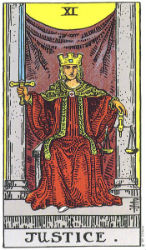
One way of cognizing archetypes is to think of them as sort of Super Energy Forms.  They are the essence of a particular idea or feeling, writ large.  In Tarot cards, for instance, the card Justice might stand for all legal matters, court proceedings, judges, and lawyers.  The Lovers might symbolize all forms of human bonding between couples.  The Moon could be seen as all forms of craziness, delusions, and projection.

Now, one of the fascinating things about archetypes is that we can invoke them, which is to say that we can draw their energy into our lives.  For instance, if it’s been a very, very long time since we had a romantic relationship, we might meditate on The Lovers and that will serve to create that romantic energy in our existence.  Or, if we’re feeling scattered and restless, we can meditate on a statue of the Buddha and that will pull in peacefulness and serenity.  If it feels like our lives are full of obstructions, we can invoke the energy of Ganesh to dissolve them.

It’s very much like there are all of these specific energy sources that we can tap into when we need them.  Pretty neat, huh?

Although he only hinted at it Jung seemed to warn us that there is also a dark side to archetypes.  He seemed to feel that they can actually possess us and take over our lives.

By way of an example, he was doing psychotherapy in Vienna when many of his male clients began having the same dreams.  They involved white, Germanic males riding horses in a nighttime parade and carrying torches.  This, of course, became a standard practice in Nazi Germany, but their dreams occurred several years before Hitler came to power.  He theorized that the collective German unconscious was being slowly possessed by the archetype which would manifest as the Nazi movement.

In another example, Bill Wilson, who was one of the founders of Alcoholics Anonymous, once asked Jung what caused alcoholism.  Jung replied that alcoholics were, “possessed by the Devil.”  Jung was NOT, of course, a fundamentalist christian, and he meant that in a very specific way.  He meant that their unconscious minds were being taken over by the archetype of addiction which, in its essence, is evil.

It is perhaps illuminating to view current American politics as a demonstration of the power of archetypes.  In that scenario, Trump might be seen as a sort of a dark magician (The Magician reversed) who has been invoking an archetype in the unconscious minds of his followers.  It has a huge amount of negative energy in it – hatred, anger, xenophobia, misogyny, racism, fear.

Many of us have been puzzled by it for several years.  We have friends, relatives, neighbors, even lovers, who appear to be normal, rational humans in all of the other areas of their lives.  Still, they support a politician whose, “values,” are the antithesis of everything they claim to believe in.  How is that possible?

In Jungian terms, we might say that Trump has managed to summon their Shadow selves and form them into a collective archetype.  And, at a certain point, that archetype has possessed them and they’re no longer in command of their own faculties.  They are no longer individuals, they’re parts of a collective energy form.

One of the most intriguing aspects is that this dark, shadow archetype seems to be summoning yet another archetype in the minds of the people who aren’t Trumpsters.

The Trump movement has become increasingly focused on a particularly malevolent form of misogyny.  Under their model, females, even children, will be forced to carry and deliver the babies of the men who raped them.  Project 25 documents reveal that there are even plans to eliminate free access to birth control.  J.D. Vance, Trump’s running mate has stated that women who don’t procreate are essentially wasting their lives and should be treated as second class citizens.

In a phrase, women are to be reduced to breeding stock.

Obviously, this is one of the most anti-feminist, anti-female political movements we’ve ever seen in the United States.  The good news, though, is that it seems to be giving birth to a new wave of feminism.  Suddenly, as if by magic, the male Democratic nominee has been whisked off of center stage and replaced by a very energetic, very feisty female candidate.  There is a palpable, almost electrifying energy in our electoral process that hasn’t been there for years.

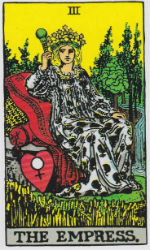
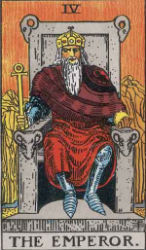
If we were to cast it in archetypal terms, Trump might be seen as The Emperor Tarot card, the embodiment of toxic male energy.  Harris, on the other hand, could be seen as The Empress, the archetype of sensual, relaxed but very, very strong feminine energy.  Toxic masculinity versus the divine feminine.

A Battle of the Archetypes.  Wow!

It’s going to be a very interesting election.

The Emperor, Psilocybin, and Butterfly Warriors

A look at the role of psilocybin in erasing toxic masculinity.

And then there’s the amazing case of Mark Matzeldelaflor.

Mark was a Navy Seal.  In case you’re not familiar with that, the Seals and the Green Berets are the ultimate warriors.  Incredible athletes, highly disciplined and impeccably trained, they are considered the finest combat soldiers in the world.  

Mark was also a professional sniper in the Seals.  His job was to kill other human beings by shooting them with high powered rifles, as rapidly and effectively as possible, and he was very good at it.

After serving two tours in Iraq, he left the military and returned to the West Coast, where he became an emotional and spiritual shipwreck.  He drifted from one meaningless job to another, drank too much, suffered from horrible PTSD and sank into depression and suicidal ideation.

Then one day a buddy of his said, “Hey, man, why don’t you take some Magic Mushrooms with me”. And it all went away.  All of the trauma, all of the depression, the alcoholism, the PTSD – it vanished from his heart and brain like . . . well . . . magic.

Mark immediately started trying to use his new world view to help other veterans and started an organization called Guardian Grange.  The idea is to use the discipline and talents that they’ve acquired in the military but channel that into helping to save the earth.  And their first project is . . . a refuge for monarch butterflies.

Now, I’ve written quite a bit here about toxic male role models and I find this story so amazing from that perspective.  When we think of the classic toxic male, we tend to envision a guy who’s taken a few too many steroids, muscular, swaggering, fairly devoid of emotions, unable to admit any vulnerabilities, and a bully.

That kind of a guy becomes a sort of a silly cartoon when you put him up against the reality of a Navy Seal.  These are men who can run or swim for hours with no rest, survive in a jungle or desert with no food, and kill with no mercy or compunction.

So how does someone who is literally a stone cold killer suddenly become a Butterfly Warrior?  It’s fascinating to think about, isn’t it?

The normal cultural model for male/female behavior is based on hormones.  To put it in a nutshell, men are chock full of testosterone and that makes us aggressive, dominant, and violent.  Women are flooded with estrogen, and that makes them passive, nurturing, and weak.  That model was given a huge boost by Sigmund Freud, a man who wanted to fuck his own mother and thought the clitoris was utterly unimportant in female sexuality.

Despite it’s rather shaky logic and dubious proponents, that remains the model that most people operate out of:  we’re simply predetermined products of our hormones.  But what if we’re not?

Scientists are just now beginning to really dig into what psilocybin does to the human brain.  They know, for instance, that it has some sort of a strong interaction with serotonin and pleasure receptors, meaning that it makes us happier.  They know that it vastly increases the connectivity between different parts of the brain, so that parts of our brain that don’t usually, “talk to each other,” are suddenly communicating.  They know that it suppresses activity in other parts of the brain, such as the portion that maintains our sense of self and ego.

Still, there’s much more that we DON’T know about how Magic Mushrooms affect our brains than what we DO know.  Somehow it erases depression, anxiety, PTSD, and suicidal ideation.  And – I suspect – it may also erase toxic male role modeling.

My symbol for the Male Archetype in our culture is The Emperor.  He’s strong, he’s heavily armored, he’s living in a barren environment, and he’s very much alone.  He rules, but he’s paid a heavy price for his crown.  He is, above all else, disconnected.

One of the best descriptions I’ve read of what psilocybin does to the human brain is that it’s just like a snow globe.  It picks up our brains, gives them a good shake, and a lot of our normal neural pathways are disrupted and fly off in totally new directions.  If you’re more into mechanistic models, it seems to instantly rewire our brain patterns.

Dig what Mark said in that interview:  “I just reconnected to nature and my past, where I was like a kid in the woods.”  That description is what we hear from many other people who have taken psilocybin:  an instant sense of reconnection with the earth and with meaning.

Now, there’s no suggestion that psilocybin caused a huge drop in Mark’s testosterone levels or that he suddenly became a eunuch and that’s what took away his aggression or his toxic male role modeling.  He simply instantly learned how to be a male in an entirely different way than what WE ARE TAUGHT that it means to be a male.

All of this is strongly indicative that, “manhood,” is much more in our heads than it is in our testicles.  Toxic masculinity may very well consist of a series of enculturated neural pathways that are so deeply burned into our brain tissue that they’re nearly impossible to overcome.  Unless someone picks up that snow globe and gives it a good shake.

We can’t expect that taking psilocybin will turn our culture around anytime soon.  For one thing, we’re taught from the cradle that some form or another of toxic masculinity is good, that this is the way that a real man behaves.  For another, there’s no money to be made by the pharma industries where psilocybin in concerned.  It’s out there and it’s relatively cheap, so why manufacture it?

Still, it’s a start.  If a man who was the most efficient killing machine the military can manufacture can suddenly turn into a warrior for butterflies that’s . . . a miracle.  

There’s hope.

Another way to almost instantly expand your consciousness is to buy my ebook, Just the Tarot, available dirt cheap on Amazon.

The Empress, Fucking a Trumpster, and White Feminism

A look at sleeping with the enemy and the politics of sex.

I have an online friend who’s fucking a MAGA Trumpster.

Now, I lived in Texas for many years so I actually have quite a few friends who are fucking Trumpsters, but this one feels different to me.  This is a woman who claims to be a liberal and a feminist.

I read recently that we now have 15 different states in our Grand Old Union where, if a 12 year old girl is raped and impregnated, she’ll be forced to bear that baby to term.  In some states, the rapist is even allowed to sue anyone who assists the little girl in getting an abortion.  

We can draw a direct line from that barbaric state of affairs to the Supreme Court overturning Roe v. Wade.  And we can draw a direct line from the court doing that to Donald Trump’s appointments to that court.

So how, I asked my friend, can you – as a feminist – be on intimate terms with someone who supports the politician who has caused so much harm to the women’s movement and so much pain to individual women?  Her answers were telling.

You don’t understand.

We keep politics out of our relationship.

He’s really a decent, nice guy.

He comes from a different background.

We don’t talk about that stuff.

Put another way, she chooses to not discuss the issues that she claims are important to her because they might be inconvenient to her romantic relationship.  Put another way, those issues really aren’t very important to her, after all.

There’s been an interesting development in the feminist movement in the last few years, which is the rejection of, “white feminism,” by women of color.  Among a myriad of disagreements, one that stands out is the accusation that white feminists tend to be more concerned with, “board room feminism,” than with the grittier women’s issues.  

For instance, a white, middle class feminist might be much more concerned about equality in the workplace and getting that promotion to CEO than she would be about issues like rape, domestic abuse and abortion rights.  And, of course, the reality is that women of color are far more likely to be raped, abused, and need reproductive choices than white, middle class women and much less likely to get that promotion.

Unfortunately, that view is born out rather powerfully by the voting records in the United States.  In the 2016 election, 42% of female voters cast their ballots for Trump.  That’s well, well past the time that every single adult in the country was aware of the pussy-grabbing tape and aware of the fact that Trump is a misogynistic swine who views women as mere life-support systems for vaginas.

As shocking as that is, here’s the more interesting breakdown on that:  55% of white women voted for Trump.  70% of Hispanic women voted for Biden.  And 91% of black women voted for Biden.

You really can’t get much more definitive evidence of the racial differences in today’s women’s movements and how this is impacting some women much more powerfully than others.

Under that scenario, white, middle class feminists have gotten . . . comfortable.  Like The Empress, they’re securely ensconced on their luxurious couches, wearing their prom queen tiaras and languidly waving their scepters at the women who are still down in the trenches getting raped.  And it may be true.

I still care about my friend and respect her in many other ways, but I recognize that on this topic she’s talking the talk and not walking the walk.

You can’t share a bed with a Nazi and claim that you’re concerned about anti-semitism.  If your boyfriend has a KKK robe hanging in his closet, you can’t claim that you’re upset about racism.  And if you’re fucking a Trumpster, you can’t claim you’re a feminist.

The Emperor, Robotic Cats, and Suicide Among Elderly Men

Examining the reasons for the high suicide rate among elderly males.

I was just reading an article about suicide in the elderly and the author – a certified therapist with a PhD, mind you – suggested that a good preventative might be a robotic cat or dog that we could talk to and sleep with.  That way, we wouldn’t be lonely and, if we weren’t lonely, we wouldn’t be offing ourselves at record numbers.

Now, if you weren’t already suicidal, the idea of having to get a little cat robot to be your best friend would surely drive you over the edge.  It’s such a radiant example of NOT understanding suicide in the elderly that it’s almost breathtaking.

Here, kitty kitty!  Oh, shit, her batteries are dead.  Might as well just kill myself.

The, “reasons,” for elder suicide are all over the place.  According to the experts, it’s because we’re lonely, or we’re socially isolated, or we’re sick, or we don’t have jobs anymore, or our spouses died, or we’re invisible in a youth-culture, or we never get touched by anyone.

My very favorite is that elderly people commit suicide because they’re . . . drumroll, please . . . depressed.  

You think?

After spending several days combing through articles and studies about why elderly people kill themselves, I came to two conclusions.  One – nobody really knows why.  Two – nobody is very motivated to find out.  From a purely dollars and cents perspective, it doesn’t make a lot of sense to social scientists to study elderly suicide because – hey! – old people are, you know, old.  Why spend a ton of money studying how to keep them alive when they’re supposed to die soon anyway?

They have pretty much pinned down the people at the highest risk. The person who is most likely to commit suicide in the United States is an elderly, white, male, introvert with a family history of suicide.

Males kill themselves four times more than females.  Apparently it’s one of our special skills, though it’s probably best to not note it on our resume’s.  No surprise, then, that those statistics would go across all of the age groups and extend into old age.

I can also understand the factor of the family history of suicide.  Perhaps that’s just a genetic predisposition to depression, but once you’ve seen suicide modeled in your own family, it’s hard to unsee it.

Introversion is a little harder to grasp, because it exists across such a broad spectrum and means so many different things to different people.  About 52% of the general population are introverts but most of them are obviously not suicidal.

Researchers have been quick to make the leap from introversion to loneliness and social isolation, though.  Under that model, introversion = social isolation, which = loneliness, which = depression which causes suicide.

Leaving aside the fact that those us with robotic cats are hardly lonely, other statistics would seem to refute this approach.  Elderly women actually report much higher levels of feeling socially isolated and much higher levels of feeling lonely than elderly men.  If there was causation from those factors, we’d expect to see the gender statistics reversed, with women killing themselves at four times the rate of men.

There’s another interesting difference we can discern when we look at a recent study from UCLA.  Dig this:

“What’s striking about our study is the conspicuous absence of standard psychiatric markers of suicidality across all age groups among a large number of males who die by suicide,” said Kaplan, a professor of social welfare at the UCLA Luskin School of Public Affairs. They found that 60% of victims had no documented mental health conditions.

In other words, the standard perception of suicide as being caused by long term mental illness simply isn’t born out.  Suicidal men aren’t crazy, they’re just suicidal.

So, if elderly men aren’t killing themselves because they’re more lonely, more isolated, crazier, or more introverted than everyone else, what’s causing it?

I suspect that a large part of it may lie in another part of the description, which is, “white male.”

Of all of the many groups in the United States, there is no group that is more likely to fully participate in the toxic masculine paradigm than the Caucasian male.  We have, simply by being born with white skin, more access to the education and financial resources that enable us to become completely enmeshed in the insane pursuit of money, power, and position.  We abandon our own authenticity in that lifelong pursuit.

When we look at the Tarot card, The Emperor, we see the ultimate outcome of that paradigm.  Yes, he’s sitting on a throne and he’s powerful.  He’s also completely and totally alone, covered from head to toe in his armor.  Everything around him is a blasted, sterile wasteland. No friends.  No lovers.  No family.

He doesn’t even have a fucking robotic cat to sit on his lap.

When we talk about toxic masculinity, we mainly frame it in terms of the negative effects that it has on women who come into contact with it.  We tend to forget that it’s the men who are carrying all of those toxins around with us.  And it’s killing us.

Is it likely that white American males will begin to look at the female paradigm or perhaps people of color and try to figure out why we’re killing ourselves and they’re not?  Probably not.  On the other hand, artificial intelligence is improving by leaps and bounds.  It’s only a matter of time – hopefully a very short time – until we’ll all have robotic cats and dogs who can actually talk to us and help us deal with our emotional problems more realistically.

Here kitty kitty!  I have some brand new batteries for you, sweetheart.

I am very pleased to announce that my ebook, “Just the Tarot,” is now available FOR FREE on Amazon for anyone who has a Kindle Unlimited membership. The cheapest robotic cat that they offer is $113.00 so this is just one hell of a deal.

Toxic Masculinity, The Inner Marriage, and Percolating Testicles

On the exterior level, the Two of Cups obviously represents two people who are falling in love.  On a deeper level, though, it represents the Inner Marriage, the harmonious joining of the Divine Feminine and the Sacred Masculine in one person’s Soul.  In a sense, it represents learning to fall in love with yourself.  Or maybe your Self.

I was watching an interview about that the other day and I got plumb confused.  The speaker was discussing the way that her Tantric Tradition deals with the Yin/Feminine and Yang/Masculine energies that we all contain.  I followed the beginning of it with no great problem.  Obviously, every human being incorporates both Yin and Yang and we give greater or lesser expressions to those energies at different times in our lives.

Then she got off into some territory where I felt like I needed to make a chart to keep track of it all.  She said that every person has a Yin and a Yang, but women’s Yin have a Yang within the Yin and men’s Yang have a Yin within the Yang.   The Yang in women’s Yin is apparently centered at  the birth canal, because that’s where they project their being into the world.  The Yin in men’s Yang is located in their testicles because that’s where they hold life and sort of . . . . um . . . percolate it.

It all just seemed really complicated.

Now, I want to be clear that I’m not in any way making fun of that tradition or denigrating it.  In fact, I was really impressed that someone had invested that much time and effort thinking about testicles because most of us are perfectly happy to let them just hang around without analyzing them too much.  Men, in particular, consider their testicles as really good buddies, despite the fact that they seem to cause a lot of problems in the world.

What came through to me, though, is how much more women have advanced than men in thinking about all of this.  Despite the recent legal set-backs in reproductive rights, the women’s movement remains relatively robust.  Women continue to question and examine their roles in society and try to sort out their emotional energies.  The men’s movement on the other hand . . . um . . . oh, that’s right . . . there IS no men’s movement.

Well, there IS a sort of a men’s movement, but it’s pretty horrifying.  It seems to be based on the idea that men have a divine right to be belching, farting, weight lifting, muscle car driving, gun toting swine and that anyone who questions that is a bitch or a fairy.  If you type, “Toxic Masculinity,” into the YouTube search bar, here are a few of the videos that come up:

THE WAR ON MEN

START INCREASING TOXIC MASCULINITY LIKE A REAL MAN

THE RISE OF WEAK MEN: BREAKING DOWN TOXIC MASCULINITY IN AMERICA TODAY

THE INSIDIOUS TOXIC MASCULINITY MYTH IS HARMING HUMANITY

Here’s a screen shot from one of them that kind of says it all:

Ironically, there’s a female side to that story, as well.   Under the same topic we find vids (by women) with titles like:

DON’T BE A SIMP:  WOMEN LIKE BAD BOYS

WOMEN HATE MEN WHO ARE IN TOUCH WITH THEIR, “FEMININE

SIDE”

WHY WOMEN CRAVE DOMINANCE

and my personal favorite:  MEN TRY TO GUILT US BY BEING, 

“NICE.”

So there seem to be a fair number of women who don’t want any Yin in their Yangs.  Men, of course, take note of that and process it as, “Yeah, I know they SAY they want sensitive men but I’ll never get laid by being evolved.”  And, really, we even see quite a few, “feminists,” who are still dating knuckle draggers because it, “just feels right.”

Despite all of that, I still see a fair amount of hope on the sexual horizon.  For one thing, we virtually never see a debate over what it means to be a REAL woman.  Women seem to be pretty accepting of each other’s life choices now days and career women and lesbians are just as welcome in the tribe as homemakers and mommies. 

Kansas City Chiefs football player Harrison Butker recently got into some serious trouble by suggesting that women are much more fulfilled by having babies than they are by having careers.  A lot of Yins suggested cutting his Yang off, but it really hasn’t been that long since that would have been considered normal speech.

Up until the late 1960s, it was commonly accepted that the only, “natural,” role for women was producing babies until their uteruses fell out.  A corollary to that was the widely held stereotype that only women who had large breasts were truly sexy, a belief that must have made most women feel fairly uncomfortable. 

Thankfully, a huge amount of the sexual stereotyping around women has fallen away.  Unfortunately, men seem to still be stuck at first base, he said, using a very masculine, butch sports metaphor.  So what is it going to take for men to dribble their balls down the court and kick one over the goal posts for a home run?

Well, first and foremost, it’s going to involve men actually claiming that Yin side of their nature and saying, “Yes, REAL men have sensitivities and emotions and needs and men who don’t have them aren’t real in any human sense of the word.”

And, second, it going to involve more women letting go of that toxic stereotype, as well.  As long as women continue to have sex with emotionally primitive men, men will continue to be emotionally primitive.

I mean, why wouldn’t they?

Love, Therapy, Ram Dass, and God in Drag

A look at the sources of love.

I’ve been reading a book called, “Getting the Love You Want,” by a psychotherapist named Harville Hendrix.  The theme of the book is basically, “We all fall in love, a lot of us fall out of love, and here’s how to fix that.”  He’s a smart guy, did some excellent analysis, and I’d probably recommend the book.

But he never did get into that basic question of, “What IS love?”

Now, there’s been an awful lot of brain and biochemistry research over the last 20 years.  What the scientists have determined is that when we magically meet, “the right person,”  giant sparks fly out of both our genitals and our subconscious minds, then our brains start pumping huge amounts of endorphins, and – SHAZAM! – we’re in love.

That’s what we could call the, “reductionist,” approach to love.  What we call love is ultimately reduced to brain and body chemicals that cause us to feel wonderful.  From that point of view, love is nothing more than a biochemical reaction – probably based on the need for the species to procreate – that we dress up with a lot of romantic notions, boxes of candy, and Hallmark cards.

It’s a classic case of the whole being more than the sum of the parts, though.  Love isn’t just hormones.

Love is an energy.  When we have it in our lives, we don’t just feel better, our lives actually work better.  Its presence seems to trigger huge amounts of synchronicity and serendipity, we suddenly have solutions to most of the problems that we encounter, and we’re harmonious with the Tao, the Universal Flow.  When we don’t have it, life can feel like a meaningless slog through knee deep mud.

So the obvious course of action seems to be that we should all run right out, throw a net over someone, and fall in love with them.  Unfortunately, as Hendrix pointed out, right around 50% of us fall out of love, which is extremely painful, and we’re right back where we started, only we hurt a little more than we did before and we’re a lot more cynical.  Then we go back out, find another person to fall in love with, and rinse and repeat. 

 As much as Americans revere the idea of finding our Soul Mates, most of us are actually serial monogamists, who find one Soul Mate after another after another until one of them finally sticks.

I got a BIG clue on all of this a few years ago when I was listening to a Ram Dass talk after my partner had died.  He said that the reason that we feel so devastated after a death, a divorce, or a break up is that we mistake the person for the love.  The person is the vehicle that gets us to the love, not the love itself.  Since we have so totally identified the love with the person, though, when they go away it feels as if all of the love has gone away.

As near as I’ve been able to figure out, there are basically three sources of love.  There’s the love we derive from our relationships with other people.  There’s self-love, which so many of us struggle to achieve.  And then there’s the love that flows out of our spiritual connection with Source Energy, the god-head, the Tao, the Flow.

The trick is to understand that all three of the different forms are actually the same energy, the Source Energy, dressed up in different costumes.

Human beings are hardwired to receive love from other human beings.  And that’s a very good thing, indeed.  It’s like a built in on-ramp to Source Energy and it should be an effortless, natural process.  Unfortunately, the second that we enter the world, a lot of other ingredients get added to that process.  We start out with pure love and then we throw in crazy parents, cultural expectations, dysfunctional partners, etc., etc., etc, until the love becomes a shit show.  

Then we find ourselves sitting in a therapist’s office, asking, “What happened?  All I wanted was for someone to love me.  What happened?”  If we’re blessed with a really good therapist, we can start to untangle those knots and sort it all out.  “Okay, this part of the shit show came from your depressed mother and this part of the shit show came from high school and this part of the shit came from your ex-husband.”  As we identify and subtract more and more of the added ingredients that doomed our relationships, we move closer to that model of pure love that we were born with.

Where our culture lets us down, though, is in not identifying the actual origin of that energy that we call, “love.”  When we finally realize that the love is flowing OUT of Source and THROUGH our partners, then we can wake up and realize, “Huh . . .the love is always there and it’s abundant.  I can find it through my partners, but I can find it in a lot of other ways, too.  I can actually love myself.  I can meditate on Source.  I can connect with that energy in a zillion different ways.”

That’s not to put down romantic love in any way.  Romantic love is a grand sort of a feeling and it’s probably the fastest way for us, as a species, to reach that love energy.  BUT . . . it’s not the origin of the energy.

Perhaps the best solution is something else that Ram Dass suggested:  “Treat everyone you meet as if they were God in drag.”  When we start looking at the people we love as little bits of that God/Goddess/Love energy shining out at us through their human forms, then we can honor them, honor the process, and honor the love.

The Five of Pentacles, Karma, and God’s Little Baskets of Muffins

Transforming ourselves through karmic selfishness.

I have a younger friend who HATES karma.

More specifically, he hates when he’s in the middle of an, “Oh poor me,” bitching session and someone shrugs her shoulders and says, “Well, that’s karma.”  

First of all, it interrupts the rhythm of his complaining and he has to go back and remember what he was so upset about.  

“What was I saying?  I know it was important . . . oh, I remember . . . life is meaningless and no one understands me . . .”

Secondly, it infuriates him because it suggests that the mess he finds himself in is somehow HIS fault and the whole point of his rap is that it’s everything and everyone else’s fault.  Which is just further proof that no one understands him.

This guy was raised by a Buddhist and that may have something to do with his constant irritation.  It’s developmentally important that teenagers be able to rebel against their parents.  The first way that we really begin to define who we are in the world is by making it clear that we aren’t our parents.  I imagine that it must be pretty damned difficult for a teenager to get any rebellion traction against a Buddhist parent.

“You know, Dad, sometimes I really hate you.”

“Well, son, all strong emotions will pass if we simply do a little deep breathing.  Remember, you’re the sky and your emotions are just clouds drifting by.”

Or

“I’ve been think about getting a tattoo.  What do you think about that?”

“Ah . . . perhaps you should get a tattoo of a double dorje or some other sacred symbol.  In a sense, it would be a constant reminder of the spiritual nature that dwells in physical matter.”

Or

“Maybe I’ll paint my face blue and dye my hair orange.”

“Hmmm . . . I wonder if you were a Druid in a past life.  Do you feel a particular attraction to oak trees?”

Aargh!  So it’s possible that this guy was deeply emotionally scarred by all of that loving kindness and unconditional acceptance from his parents.  If only they’d yelled at him or told him he was an idiot occasionally!  

Still, he does have a bit of a point about the notion of karma.

It’s perfectly understandable that people get a little riled up over the idea of crappy things happening to them because of what they may have done in a past life.  After all, most of us have absolutely no memory of our past lives and so it feels like we’re being punished for something that someone else did.  

Suppose I was Attila the Hun in a past life and in a fit of Barbarian Rage I whipped out my scimitar and beheaded a turtle.  Then 200 lifetimes later –   as Dan Adair –  I’m in a traffic accident and I get whiplash BECAUSE I decapitated that turtle.  That seems a little . . . unjust.  I mean, I’m NOT Attila in any sort of a meaningful sense, so why should I get sent to the principal’s office because Attila was a dick?

And then, to make it even worse, when I’m sitting there in my cervical collar reflecting on exactly HOW unjust it all is, an acquaintance says, “Oh, well, that’s karma.”  As my younger friend would put it:  “Fuck you.”

Now, there’s a particularly odious Christian doctrine called, “predestination.”  It holds that some people are born with the unchangeable destiny that they’re going to heaven when they die. Other people are born with the unchangeable destiny that they’re going straight to hell when they die.  It doesn’t matter what we do or how we behave, our ultimate destiny has already been decided at the moment of birth.

It’s like God is up there in the Kosmic Kitchen baking up human Souls and, as he pulls each one out of the Soul Muffin Pan, he tosses them into separate baskets marked, “Heaven,” and, “Hell.”

“Okay, heaven, heaven, heaven – whoops, you’re fucked – hell, heaven, fucked again, heaven . . .”  Like the beggars in the Five of Pentacles, we’re out in the cold and we’re going to stay there.

Theologians came up with a perfectly logical reason for this totally insane doctrine.  The idea is that God is all powerful and all knowing.  So if God knows everything, then that must mean that he knows everything that happened in the past, the present, AND the future!  And if God already knows what’s going to happen in the future, then he must already know who’s going to heaven and who’s going to hell.  Shazam!  There you are – it’s already determined.

That’s the kind of weird, Left-Brain, cuckoo for coco puffs vibe that a lot of people get off of the notion of karma.  It seems to be some sort of an inexorable process that was put into motion a long time before we came along and there’s not a damned thing we can do about it.  We’re either in the Heaven Basket or we’re in the Oh, You’re So Fucked Basket.  Like it’s something that happens TO us for no particular reason.

Of course, the important point that most of us miss is that karma isn’t happening to us, we’re happening to karma.  It’s a totally dynamic process and it’s something that we can change every single day simply by the ways that we behave right now.

The most simplistic way to think of it is as a sort of a bank account.  Rather than being born into a You’re-Going-to-Hell Basket or a You’re-Going-to-Heaven Basket, we’re born with a certain amount of Karmic Kash that we earned (or didn’t earn) in past lives.  The Dalai Lama will probably be reborn with several savings accounts, a really huge checking account, many certificates of deposit and a great coin collection.  Attila the Turtle Beheader, on the other hand, will be reborn with 50 cents in the bank and a lot of overdue bills.

The thing is, though, that the way that we’re born isn’t our destiny.  The way that we behave is our destiny.  Attila, for instance, might start a refuge for homeless turtles.  Every single time that he saves a turtle and gives it a meaningful life – KA -CHING – that’s another deposit in his Karma Account.  The Dalai Lama, on the other hand, might decide to support Eric Trump for President and – ZAP – that’s a major withdrawal from his Karmic Account.

As David Michie said in, “Buddhism for Busy People,” 

In what is one of the most outstandingly ingenious aspects of Buddhist teachings, we come to realize that our own selfish interests lie in being altruistic . . .months, years or decades of being generous for selfish reasons begin to have a predictable effect . . .what starts out as a contrived and self-conscious change of attitude and behavior results in a genuine metamorphosis.

In other words, we don’t have to start out as Mother Theresa or an Awakened Master.  We can start out as perfectly normal, selfish, self-centered human beings who are being kind to other beings because we DON’T want to end up wearing a cervical collar.  When we pick up a turtle that’s in the middle of the road and leave it safely on the other side, we can be doing it for the completely selfish reason of wanting to fill up our Karmic Account.

As we continue those little acts of kindness they gradually transform us.  They become acts of loving/kindness, where we’re actually noticing and caring about the welfare of the people and beings around us.  The translation of the word, “karma,” is, “action,” and that’s the key.  Our actions change us, even if they originate in selfishness.

And that’s how Attila the Hun becomes the Dalai Lama.  Pretty simple.

Christmas Candy, the Meaning of Giving, and Tibetan Meditation Centers

Making our lives into gifts.

Here in the United States we’re just finishing up the annual emotional and commercial orgy of Christmas, also known as, “the season of giving.”  It started me thinking about the nature of giving and, oddly, a Tibetan meditation center I toured over 20 years ago.

Our guide was a woman who lived there with the improbable name of, “Candy.”  I’m guessing that trying to explain the intricacies of Buddhist philosophy to a group of tourists in Bermuda shorts was not the highlight of her day, but she was pleasant, kind, and patient.  One of the concepts that she put in a nutshell for us was the idea of accumulating merit.

“We get up in the morning with the idea of helping other sentient beings and, if we do that, it earns us karmic merit.  And then, instead of clinging to that merit for ourselves, we dedicate it to the good of other sentient beings.  Which accumulates more merit, which we dedicate to the good of other sentient beings.”

I glanced around at the people I was with and their faces were frozen in expressions that pretty much conveyed, “I don’t know what in the fuck you’re talking about, but you seem relatively harmless.”  To me, though, it was a major revelation.  In just those few sentences, I understood the concept of giving with absolutely no expectations of getting anything back.  It’s been something I’ve gone back to again and again over the last two decades.  A lasting treasure.

Now, here’s the thing:  I feel absolutely sure that Candy had no idea that she was making a major impact in another person’s life and thoughts.  We spent maybe 30 minutes with her and I’ve never seen her again, but I still remember that moment like it happened yesterday.  It was a gift, and the gift was her just living her life and telling her truth.

We tend to think of giving as being something that’s transactional and we can see that idea illustrated in the Six of Cups.  The little boy is giving a gift of love (symbolized by the Cup) to the little girl.  Implicit in that image is the next step in the transaction, where the little girl is going to say, “Oh, hey!  What a nice cup!  Thanks so much for thinking of me.”

And then we feel good because we’ve made someone we care about feel good and we feel good about ourselves because, after all, we were thoughtful enough to give something nice to someone we care about.  When we put all of the commercialism and forced jolliness aside, that’s part of the sweetness of Christmas – it’s a chance to give something to others and tell them we love them.

Most of us feel pretty disconnected with that in our general, everyday lives, though.  We may get up in the morning with the intentions of being, “good,” people.  We’re loving with our life partners, we don’t snap at the cashier in the grocery store, we smile at our co-workers and try to work hard at our jobs.  As near as I can tell, right around 90% of us are good people, in the sense that we make some effort to not be shit heads and to be decent to our fellow humans.

Still, a lot of us are afflicted with a sense of meaninglessness.  We feel like we’re slow walking through life in a sort of a daze and we’re not really making any difference.  It’s like we’re born, we eat a lot of t.v. dinners, and then we die and we wonder if anything we’ve done actually matters.

That’s where synchronicity and a leap of faith comes in.  That’s where giving with no sense of attachment to the results comes in.

Each one of us is absolutely unique.  There’s never been anyone exactly like us before and there will never be anyone exactly like us again.  To the extent that we celebrate that uniqueness and share our own individual truths in our lives, we become a walking, talking, breathing gift to the world.

But we almost HAVE to detach that gift from results.  If we make our giving transactional – which is to say, someone saying, “Thank you for being you,”  – we’re setting ourselves up for a lot of disappointment.  The fact of the matter is that most people don’t even see us, in any sort of a meaningful way.  Like us, they’re hustling and bustling through life, trying to pay their bills, hoping they’ve got some clean socks, trying to figure out what in the hell they can cook for their kids that isn’t a t.v. dinner.

And if they do notice us, the odds are that they’re seeing us through so many perceptual filters that they don’t see who we really are.  As the old Indian adage goes, “When a pickpocket looks at a saint, all he sees is pockets.”  

So, we have to make a little leap of faith that we ARE being seen without knowing that we are.  And that we ARE making a difference in other people’s lives and in the world, without any proof that it’s so.  Sometimes it may be like Candy at the meditation center, where words we speak become seeds that grow in other people’s lives.  Sometimes it may be as simple as smiling at a person we pass on the street, never knowing that they were depressed and suicidal until they saw our smile.

We can see that in another card, the Ace of Cups.  The cup represents love flowing into the world, but, unlike the Six of Cups, it’s not attached to anything.  It’s not something we have to earn.  It’s not dependent on being thanked or being noticed or appreciated.  It’s just there in the world and it makes life better by its very presence.

When we finally get it that we’re giving to the world around us and making a difference just by being us to the fullest extent that we can, then we shift into having meaning in our lives because we ARE making a difference.  We may not see it.  Perhaps no one will ever tell us.  Maybe it will take twenty years for that good to ripen in someone else’s life, but we DO matter.  Every single day.

My e-book, “Just the Tarot,” is still available on Amazon for less than the price of a meaningless t.v. dinner and it’s twice as nutritious!

Atheist Tarot Readers, Defective Jesus, and Finding a New God-Person

The pragmatism of polytheism.

I have a friend who is an atheist Tarot card reader and it tickles me no end.  I like to rag on her a bit and ask her, “Who do you think is answering your questions when you do a reading?  Maybe atheist angels or agnostic spirit guides?”  

Which generally earns me a dirty look or a shrug.  She reads Tarot cards.  She’s an atheist.  It’s not up for discussion.

Now, she’s kind of caught between a rock and a hard place.  The rock is that she was reading Tarot cards for many years before she became an atheist, so she knows that they actually work.  When you sit down with a deck of cards and do a reading, you get answers and the answers are generally (not always) right on.

The hard place is that she went through a series of very painful life experiences that led her to conclude that there’s no God and that religion is nothing more than superstitious nonsense.  That conclusion wasn’t arrived at in a frivolous manner because she was genuinely suffering in her life, she prayed for help, and nothing much happened.

It’s a pretty simple equation, right?  We’re told that there’s some sort of a God-person out there, that he loves us, and that if we’re in trouble he’ll come zooming in and rescue us.  So, if we do our part by (a) getting in trouble and (b) praying for help and the God-person doesn’t do his part by (c) zooming in and rescuing us, then it’s logical to conclude that the God-person either doesn’t exist or else he’s pretty useless.

I’m actually very sympathetic with my friend, the atheist Tarot reader, because I had a similar experience when I was in my mid-forties.  My father had just killed himself, I lost my job and had to declare bankruptcy, my house was repossessed, and my mother developed Alzheimer’s Disease.

All of this happened within a one year span of time.  My life went from being perfectly normal to being a total shit-burger in the wink of an eye.  I was so chewed up by life that I had to look up to see the bottom and if it weren’t for bad luck, “I wouldn’t have had no luck at all.”  Life had chewed me up, spit me out, and then stomped on me with hob-nail boots to be sure I’d stay on the ground.

I was living in Texas at the time and there’s a fundamentalist christian under every rock and behind every cactus in Texas.  It was probably inevitable, then, that one of them said, “Dan, you just need to get down on your knees and pray to Jesus for help.”  And I did.  I was raised up in the catholic church, so the concept of praying to Jesus wasn’t exactly foreign to me and I thought, “Well, shit . . . what do I have to lose?”  Nothing.

So I commenced praying and I prayed and prayed and prayed and asked Jesus to help me in my misery and travails and – SHAZAM! – nothing happened.  No heavenly hosts of angels appeared, Jesus didn’t invite me for a walk in the garden and no one anointed my fevered brow with soothing oils.  I continued to be royally fucked.

But, unlike my friend, the atheist Tarot reader, I didn’t throw my hands in the air and declare that God is dead and it’s just a cold, hard universe.  Instead, I analyzed my situation and thought, “Well, I’m in trouble, I prayed to the God-person to come zooming in and help me, and nothing happened.  Obviously, I have a defective God-person.  He’s not working, so I’ll just send him back.  I need to find a God-person who can get the job done.”

I did a lot of research on Gods and Goddesses and finally settled on Hecate’, the Goddess of the Cross Roads.  She seemed like a good fit because I was definitely at a cross roads in my life and I needed to know which way to turn.  I prayed and prayed and prayed and asked Hecate’ to help me in my misery and travails and – SHAZAM! – something happened.

In fact, quite a bit happened, just like magic.  I met a woman on line, fell in love with her, moved to California and we lived together for 19 years.  My life went from being an absolute shit-burger to being wonder-full in the wink of an eye.

Now, I’m not writing all of this as some sort of an anti-Jesus screed or to praise the wonders of Hecate’.  I know a few christians who swear up and down that Jesus answers their prayers and they seem like nice, honest people.  Maybe they got a Jesus model that wasn’t defective and he sort of works if they don’t take too close a look at him.  Maybe Jesus was just a bad fit for me – could be that he doesn’t like my haircut or tie dyed shirts.  I don’t know.  I just know he didn’t work.

Which leads me back to my friend, the atheist Tarot reader.  Like me, she tried praying to her God-person and nothing happened, nothing got better.  She quite logically realized he was a defective model and sent him back.  Fortunately, she was still able to hang on to her Tarot cards and say, “These DO work, so I’m not sending them back.”

The point being that we have a sort of a pragmatic, mostly unspoken, contract with our God-persons.  It’s something along the lines of, “Okay, God-person, we’ll pray to you and we’ll build all of these very grandiose temple-houses for you to live in and we’ll pay the salaries of your priest-persons.  You, on the other hand, will help us, console us, give us guidance, and zoom in to help us when we’re in trouble.”

Unfortunately, humans have a long history of making excuses for their God-persons.  In many instances, it’s as if the God-person is on vacation when we’re in trouble, or perhaps he has Attention Deficit Disorder and it just slips his mind that we’re hanging off the edge of a cliff holding on to a single branch.  In the worst instances, the God-person seems to behave like some sort of a deranged sadist who LIKES wrecking people’s lives and we just pray that maybe he won’t notice us while he’s in a bad mood.

In those instances, it’s perfectly acceptable to just say, “Okay, God-person – I held up my end of the bargain and you didn’t hold up yours.  It’s been sweet, but I think we both know this isn’t working out.”

And it’s also perfectly acceptable to find another God-person.  Just because this relationship is ending, it doesn’t mean that we can’t have another relationship.  There’s no reason to accept the christian line that there’s only ONE God-person and that we mustn’t ever be unfaithful to him, even when he’s being unfaithful to us.  What a narcissist!

It’s actually a great big universe out there and there are plenty of God-persons to choose from.  If we’re stone-cold poor, for instance, we might want to talk to Lakshmi, the Goddess of Abundance.  If we’re facing insurmountable obstacles, Ganesh specializes in removing them.  If we’re in need of healing, talk to Tara.  If we have no love in your lives, pray to Quan Yin.

I think that you’ll find that most God-persons are actually quite nice entities.  For the most part, they seem to have healthy boundaries.  They don’t follow you around and spy on what you’re doing.  They don’t have temper fits and throw you out of the garden just because you ate an apple.  They seem to have a lot of unconditional love and won’t ask you to sacrifice your first born son.  And they actually work.

My e-book, “Just the Tarot,” a practical guide to reading Tarot cards, is still available on Amazon for less than you’d pay for a small order of jalapeño poppers and will last a lot longer.