The Top Ten Tarot Cards Indicating Something Is About to Change

Feeling stuck in life, like the gears just won’t move? Tarot can reveal when change is on the horizon. Here are the top ten cards that signal transformation, progress, and fresh starts are just ahead.

Are you feeling like your gears are stuck in park and you just can’t make any progress?

Life has those frustrating phases when nothing seems to move forward, and it feels like the universe hit “pause.” But in Tarot, there are clear signs that the stillness is temporary — that something is about to shift. When these cards appear in your spread, they often signal that change is on the horizon.

Here are the top ten Tarot cards that whisper, “Get ready — things are about to give.”

If you’d like to download this list as a PDF file to use in your reference library, please click here.

1. The Tower

The most dramatic of them all. The Tower represents sudden upheaval, breakdown of old structures, and unexpected change. While often unsettling, it clears space for new growth that couldn’t happen otherwise.

2. Death

Not about physical death, but transformation. The Death card announces the end of one cycle and the beginning of another. Something old must be released so something new can be born.

3. The Wheel of Fortune

The cosmic gears are turning again. The Wheel reminds us that nothing stays the same forever — what goes down must rise again. Big shifts in luck, fate, or perspective are coming.

4. Judgement

This card calls for awakening and renewal. Judgement often signals that a chapter is closing, and you’re being invited to step into a new version of yourself.

5. The Fool

When The Fool appears, it’s time to leap. New journeys, fresh starts, and adventures are right around the corner. Change is already waiting at the door.

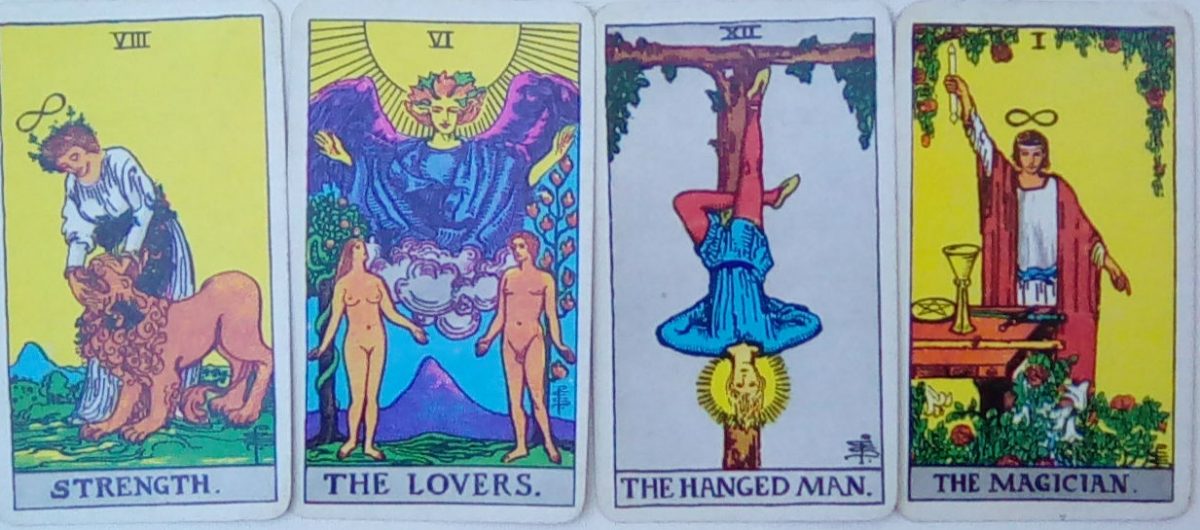
6. The Hanged Man

At first glance, this card seems like being stuck — but it’s the pause before release. The Hanged Man invites you to surrender, gain a new perspective, and prepare for the shift that follows.

7. The World

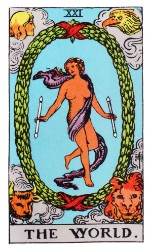
Completion is at hand. The World marks the end of a major cycle and the transition into the next. It’s change with a sense of wholeness and accomplishment.

8. Eight of Wands

Fast movement! When the Eight of Wands shows up, delays are ending, and events will soon speed up. It’s the card of sudden progress, news, or opportunities arriving quickly.

9. Ace of Wands

The spark of something new. This card often signals a breakthrough — fresh energy, creative drive, or passion ready to ignite. It marks the turning point from stagnation into action.

10. Five of Pentacles (Reversed)

In upright form, this card shows hardship, but reversed it often signals recovery and things turning around. Change is coming to lift you out of difficulty and into support, healing, or new resources.

Final Thoughts

If you’ve been in one of those liminal phases where nothing seems to move, these cards are reminders that stagnation never lasts forever. Whether the change comes suddenly like lightning (The Tower) or slowly like the seasons (Death, The World), the Tarot assures us: movement is inevitable.

So if your spread shows one of these cards, take heart — the gears are about to shift, and your story is moving forward again.

“Just the Tarot,” by Dan Adair – A kindle ebook available on Amazon

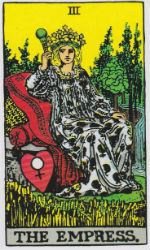
The Influence of The Empress Card

The Empress in Tarot embodies creativity, abundance, and nurturing energy. When paired with the other Major Arcana, her influence reveals how growth, harmony, and fertility play out in every area of life—from relationships and intuition to cycles of transformation. This chart offers quick interpretations of The Empress in combination with all 22 Major cards, including reversed meanings. Perfect for Tarot readers seeking deeper insights or printable reference material.

In the absence of a regular blog post for today, I would like to offer a chart detailing the influence of The Empress Tarot card when paired with the other cards of the Major Arcana. Please feel free to print this and use it for reference in your readings.

Or, if you’d prefer, you can download a PDF version here. Just click on the link and when it comes up, go to your browser menu and click on print.

The Empress + The Fool – Nurturing new beginnings. Creative innocence finds fertile ground.

Reversed: Overprotection stifles growth; immaturity in creativity.

The Empress + The Magician – Manifesting abundance through intention and artistry.

Reversed: Manipulating creativity; false appearances of growth.

The Empress + The High Priestess – Balance of intuition and creativity; inner wisdom flowering into expression.

Reversed: Repressed intuition blocks creativity; confusion in nurturing roles.

The Empress + The Emperor – Harmony between creation and structure; nurturing power within order.

Reversed: Domination suppresses creativity; imbalance between control and flow.

The Empress + The Hierophant – Sacred traditions inspire fertile creativity; nurturing spiritual communities.

Reversed: Stagnation within rigid traditions; blocked feminine wisdom.

The Empress + The Lovers – Love as a fertile union; creativity fueled by harmony and relationship.

Reversed: Codependency; love smothered rather than nurtured.

The Empress + The Chariot – Creative direction with determination; abundance set into motion.

Reversed: Lack of discipline wastes creative potential; scattered nurturing energy.

The Empress + Strength – Gentle power; nurturing builds resilience.

Reversed: Overindulgence weakens; misplaced compassion.

The Empress + The Hermit – Creativity drawn from solitude; nurturing wisdom within.

Reversed: Isolation stifles growth; withdrawal from fertile opportunities.

The Empress + Wheel of Fortune – Cycles of abundance; harvests following seasons of sowing.

Reversed: Bad luck in creativity; loss of balance in life’s rhythms.

The Empress + Justice – Fairness in nurturing roles; creativity guided by truth.

Reversed: Biased nurturing; injustice in relationships or creative endeavors.

The Empress + The Hanged Man – Creative surrender; new perspectives nurture growth.

Reversed: Stagnation, unwillingness to release control in nurturing.

The Empress + Death – Transformation gives birth to new creation; fertile endings.

Reversed: Resistance to endings; clinging smothers growth.

The Empress + Temperance – Harmony in creativity; nurturing balance and wholeness.

Reversed: Excess stifles balance; nurturing turns to enabling.

The Empress + The Devil – Passionate creativity; fertility bound to desire.

Reversed: Enslavement by overindulgence; blocked nurturing energy.

The Empress + The Tower – Creative breakthroughs; fertile destruction clearing ground for new growth.

Reversed: Suppression of necessary change; smothering collapse.

The Empress + The Star – Hope renewed through nurturing; creativity as healing.

Reversed: Disappointment in creative outcomes; blocked inspiration.

The Empress + The Moon – Intuitive creativity; fertile imagination guided by dreams.

Reversed: Illusion clouds nurturing; confusion in creative flow.

The Empress + The Sun – Joyful abundance; creativity flourishing in light.

Reversed: Overexposure or lack of clarity in nurturing roles.

The Empress + Judgment – Rebirth through nurturing; creativity aligned with higher calling.

Reversed: Misuse of nurturing power; denial of creative responsibility.

The Empress + The World – Completion of cycles; fulfillment through creation and nurture.

Reversed: Lack of closure; unfulfilled creative potential.

“Just the Tarot,” by Dan Adair – A kindle ebook available on Amazon

The Top Ten, “Yes,” Cards for Taking a New Job

Deciding whether to take a new job can feel overwhelming — but the Tarot offers surprising clarity. In this post, we explore the top 10 “yes” cards that signal opportunity, growth, and success in a new role.

There are two areas that cover 99% of what people ask in Tarot readings.  And they are – guess what? – love and money.

To be more specific about the latter, a lot of people are very worried about finances right now.  Younger people, older people, many of us are living just a paycheck away from destitution.

Most of the questions that revolve around finances can be broken down into two major areas:  Should I keep this job?  And, should I take that new job?

Unfortunately, that frequently breaks down further into, “I really, really hate my job but I’m afraid to quit it.”    And, “I’m really thinking about taking this new job, but how do I know it isn’t going to be just another hell hole?”

Obviously, the Tarot can’t make those decisions for us, but it can put up some pretty clear markers one way or the other.  In keeping with that, here are the top ten cards that indicate that, yes, we should take that new job.

The Top 10 Tarot “Yes” Cards for a New Job

1. The Magician

This card is all about skill and personal power. If you’re considering a new role, The Magician suggests you already have the tools and talent you need to succeed. It’s a reminder that you can create your own opportunities — and this one is ready for you to shape.

2. The Sun

Few cards are as positive as The Sun. It brings energy, confidence, and joy. In career terms, it signals that the new job will bring vitality and success — the kind of role where you can thrive, not just survive.

3. The World

The World represents completion and stepping into a bigger arena. It’s a sign that an old cycle is closing, and a new, more expansive chapter is waiting. Professionally, this card says, “Yes — you’re ready for the next level.”

4. Ace of Pentacles

The Ace of Pentacles is the clearest symbol of a new financial or career opportunity. Think of it as the seed of prosperity being handed to you. It’s a resounding “yes” that the new role holds real promise.

5. Three of Pentacles

This card highlights teamwork, recognition, and skill-sharing. If it shows up, it suggests the new job will give you the chance to collaborate with others and be appreciated for your contributions.

6. Six of Wands

The Six of Wands is about victory, advancement, and being noticed. In a career spread, it signals success in your new role and the recognition that comes with it.

7. Eight of Pentacles

This is the card of steady skill-building and mastery. If you’re entering a new field or learning new tasks, the Eight of Pentacles assures you that you’ll gain expertise and grow stronger through the work itself.

8. The Star

The Star brings inspiration, hope, and alignment with your higher purpose. In job matters, it suggests the new opportunity isn’t just a paycheck — it’s a chance to do something meaningful that feeds your spirit.

9. Two of Wands

The Two of Wands is about expansion and long-term vision. It tells you that the new job opens up possibilities for growth, planning, and future success. It’s less about a quick win and more about building something lasting.

10. Ten of Pentacles

This is the card of stability, prosperity, and legacy. If it appears, it suggests the new role has the potential to provide long-term security, financial reward, and a sense of belonging within a larger structure.

What These Cards Have in Common

Looking at these ten cards together, a pattern emerges:

Material success & stability: Ace, Eight, Ten, and Three of Pentacles.

Recognition & growth: The Magician, The World, and Six of Wands.

Fulfillment & inspiration: The Sun, The Star, and Two of Wands.

When these cards appear in your spread, they point to opportunity, alignment, and security — the kind of energies that make a new job worth considering.

A Note of Balance

Of course, not every card says “yes.” It’s always sweet when we get clear yes and no cards in a reading, but sometimes they can be frustratingly ambiguous.

When that happens,  the Tarot suggests waiting, rethinking, or being cautious about what’s really on offer. The future may reveal that the opportunity isn’t as golden as it first appears or maybe it will be.  Things are still developing.

In a future post, we’ll explore the Top 10 “No” Cards for a New Job — the ones that raise red flags and encourage you to pause before leaping.

Conclusion

Deciding whether to take a new job is never easy. It’s a choice that can ripple out through every part of your life. While Tarot can’t choose for you, it can help reveal whether the energies surrounding a new opportunity are supportive, promising, and aligned with your bigger goals.

So the next time you’re staring at an offer letter, pull out your deck. If the “yes” cards show up, it may just be the Universe’s way of saying: step forward with confidence.

If you’d like a downloadable PDF copy of the Top Ten Job Cards, click here.  When the list pops up, go to your browser menu and click on, “print file.”

“Just the Tarot,” a kindle ebook by Dan Adair available on Amazon

The Influence of The High Priestess Card

Explore how the High Priestess shapes and transforms the meaning of every other Major Arcana card. This reference chart reveals the deep wisdom, mysteries, and hidden truths that emerge when intuition meets archetypal power — upright and reversed. Perfect for adding depth to your Tarot readings.

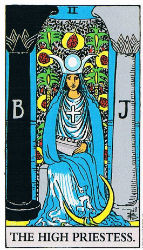
The High Priestess

In the absence of a regular blog post for today, I would like to offer a chart detailing the influence of The High Priestess Tarot card when paired with the other cards of the Major Arcana. Please feel free to print this and use it for reference in your readings.

Or, if you’d prefer, you can download a PDF version here. Just click on the link and when it comes up go to your browser menu and click on print.

The High Priestess + The Fool – Intuitive trust in the unknown. Wisdom arising from innocence and openness.

Reversed: Naïveté manipulated by hidden influences; confusion or misplaced faith.

The High Priestess + The Magician – Balance of inner knowing with outer mastery. Intuition guiding skillful action.

Reversed: Secrets distort manifestation; misuse of hidden knowledge.

The High Priestess + The Empress – Deep feminine wisdom united with creative abundance. Sacred nurturing.

Reversed: Overprotectiveness; repressed creativity due to secrecy or fear.

The High Priestess + The Emperor – Inner wisdom balancing outer authority. Guidance for leadership through intuition.

Reversed: Tyranny concealed; intuition ignored in favor of rigid control.

The High Priestess + The Hierophant – Mystical insight blended with tradition. Inner guidance within spiritual frameworks.

Reversed: Dogma eclipses truth; manipulation behind spiritual authority.

The High Priestess + The Lovers – Soul-level connection, intuitive bonds, psychic resonance between partners.

Reversed: Illusions in love; hidden agendas or unspoken truths damage trust.

The High Priestess + The Chariot – Intuition steering the will. Success through inner guidance.

Reversed: Conflicting inner voices cause misdirection; lack of clarity in goals.

The High Priestess + Strength – Inner calm directing outer power. Spiritual strength with compassion.

Reversed: Emotional repression; inner fears undermine courage.

The High Priestess + The Hermit – Solitary wisdom, deep meditation, spiritual revelation.

Reversed: Isolation becomes unhealthy withdrawal; secret knowledge withheld.

The High Priestess + Wheel of Fortune – Insight into cycles of fate; intuition aligned with destiny.

Reversed: Resistance to change; blindness to repeating karmic patterns.

The High Priestess + Justice – Inner knowing matched with outer fairness. Truth revealed through intuition.

Reversed: Hidden biases; manipulation of facts; truth obscured.

The High Priestess + The Hanged Man – Surrender leading to spiritual insight. Seeing beyond the veil.

Reversed: Confusion in sacrifice; intuition clouded by fear or denial.

The High Priestess + Death – Transformation through hidden wisdom. Endings guided by spiritual truth.

Reversed: Fear of letting go; clinging to secrets prevents rebirth.

The High Priestess + Temperance – Inner balance, harmony of opposites through intuitive blending.

Reversed: Hidden imbalance; secrets create disharmony.

The High Priestess + The Devil – Hidden desires revealed. Intuition exposing bondage and illusions.

Reversed: Self-deception; denial of unhealthy attachments.

The High Priestess + The Tower – Sudden revelation; secrets exposed; truth shattering illusions.

Reversed: Suppressed intuition leading to collapse; denial of truth.

The High Priestess + The Star – Spiritual guidance, faith in inner wisdom, luminous inspiration.

Reversed: False hopes; ignoring the quiet voice of intuition.

The High Priestess + The Moon – Psychic depth, mystery, profound subconscious revelations.

Reversed: Illusions intensified; deception and confusion dominate.

The High Priestess + The Sun – Hidden wisdom revealed in clarity. Intuition illuminated by joy.

Reversed: Suppressed intuition causes superficial happiness; denial of truth.

The High Priestess + Judgment – Awakening guided by spiritual truth. Intuitive calling to higher purpose.

Reversed: Ignoring the call; secrets prevent healing or rebirth.

The High Priestess + The World – Completion through hidden wisdom; mastery of inner and outer realms.

Reversed: Incompletion; spiritual lessons unlearned; hidden knowledge unintegrated.

“Just the Tarot,” by Daniel Adair – a kindle ebook available on Amazon

A Closer Look at the Star Card – We Are Stardust

This post takes a closer look at The Star card in the Tarot, tracing its origins through medieval thought, astronomy, and spiritual symbolism. From ancient ideas of “ensouled” stars to today’s view of The Star as a card of guidance and renewal, this article explores how the meaning of The Star has shifted through time — and what it offers us now as a symbol of hope, healing, and inspiration.

Have you ever seen the movie Stardust? A star falls to earth, wicked witches chase her to steal her essence, and — improbably — Robert De Niro appears as a pirate captain who does the can-can in drag. It’s a wonderful, magical adult fairy tale.

Oddly enough, it also gives us a few clues about what The Star card in the Tarot is really about.

Origins of the Tarot

No one truly knows where the Tarot came from. Some intriguing hints suggest it may have roots in Egyptian Hermeticism, but there’s no hard evidence for that.

What we do know is that the first recorded Tarot decks appeared in the Italian royal courts around 1450. That makes it very old. And when we interpret the cards, we need to remember that the words and symbols meant something very different to people in the 1400s than they do to us now. The Star is a perfect example.

Modern Astronomy

When I was in the fifth grade, I spent nights in my parents’ backyard with a little Edmund Scientific telescope. Peering up at the moon and stars, I felt pure awe. Even then, though, I knew stars were “distant suns,” cousins of the one that kept me warm every day.

Today, with the Hubble telescope and modern astronomy, we know even more: trillions of stars scattered like glitter across the cosmos, being born and dying every day.

But in the 1400s, that understanding didn’t exist.

Ancient Skies and Ancient Eyes

Back then, knowledge of the stars was still rooted in Greek philosophy and medieval theology. To those eyes, stars were perfect, flawless jewels glowing in the heavens. Perfection, of course, meant divinity.

And to many, they weren’t just divine — they were alive. The “wandering stars” we now call planets were believed to move of their own volition. Movement meant life, and so they were seen as gods. That’s why their names — Mars, Venus, Jupiter — are still with us today.

Angelic Souls

In the 1400s, though, talk of pagan gods could get you burned at the stake. The compromise? Stars weren’t gods — they were “ensouled.” They were divine presences, not quite angels, but spiritual beings with enormous influence.

Astrology was deadly serious business. People genuinely believed their destinies were written in the stars. Contrary to Shakespeare’s later declaration, many in the Middle Ages were convinced their fate was determined above, not within.

Spirit Guides

So what does this mean for The Star card?

Most likely, it was originally meant to depict something very close to what we’d call a “spirit guide” today.

It’s not an angel — Tarot clearly marks angelic figures with wings. Instead, The Star suggests a subtler, quieter presence: a flow of spiritual influence and inspiration. The woman pours water upon the Earth and into the pool, symbolizing a constant infusion of energy, grace, and renewal into our lives.

The Star Today

Seen through modern eyes, The Star becomes both timeless and practical. It’s the card of healing, guidance, and hope. It invites us to trust that the universe has not abandoned us, that unseen currents are still at work.

When The Star appears in a reading, it’s like a deep breath after a storm. It reassures us that life always offers another chance to shine. Whether we call it divine presence, spirit guidance, or simply the return of hope, The Star is a promise that the light will return — and that we, too, are part of that light.

“Just the Tarot,” by Dan Adair – A kindle ebook available on Amazon.

The Influence of The Magician Card

Today’s post offers a practical tarot reference chart for readers and practitioners, focusing on the influence of The Magician card when paired with each of the other Major Arcana cards. Whether upright or reversed, these pairings reveal powerful nuances about manifestation, power, focus, and intentional action. Ideal for deepening your tarot readings and understanding how The Magician works in tandem with archetypal energies throughout the deck.

The Magician Tarot Card – Magic and Manifestation

In the absence of a regular blog post for today, I would like to offer a chart detailing the influence of The Magician Tarot card when paired with the other cards of the Major Arcana. Please feel free to print this and use it for reference in your readings.

Or, if you’d prefer, you can download this by clicking here. Just click on the link and when it comes up go to your browser menu and click on PRINT.

The Magician + The Fool – Inspired action from spontaneous beginnings. Manifesting through instinct and openness. Reversed: Rash decisions, manipulative potential, lack of grounding.

The Magician + The High Priestess – Balanced mastery of outer action and inner knowing. Power guided by intuition.  Reversed: Secrets manipulate outcomes; unclear motives under the surface.

The Magician + The Empress  – Creative manifestation. Birthing beauty and abundance through conscious intent. Reversed: Over-controlling creativity, blocked expression, false appearances.

The Magician + The Emperor – Strategic manifestation with solid foundations. Power used with authority. Reversed: Control issues, misuse of power, over-managing outcomes.

The Magician + The Hierophant – Mastery aligned with tradition or spiritual systems. Teacher or ritual magician energy. Reversed: Manipulation under the guise of doctrine; rigidity or rebellion.

The Magician + The Lovers – Manifesting partnership or choice through alignment of will and desire. Reversed: Manipulative dynamics in relationships; choices clouded by illusion.

The Magician + The Chariot – Focused willpower brings success. Victory through deliberate action. Reversed: Scattered energy, ego-driven direction, force without alignment.

The Magician + Strength – Harnessing inner strength to empower manifestation. Quiet mastery. Reversed: Power games, coercion, or internal sabotage.

The Magician + The Hermit – Manifesting through inner wisdom and spiritual insight. Solitary mastery. Reversed: Isolation misused for manipulation; false guru energy.

The Magician + Wheel of Fortune – Intentional action within cycles of change. Turning fate through conscious will. Reversed: Manipulating chance; resistance to natural cycles.

The Magician + Justice – Creating balance through skillful choices. Ethical manifestation. Reversed: Twisting truth, unfair dealings, imbalance created through intent.

The Magician + The Hanged Man – Power in surrender. Shifting perspectives leads to deeper manifestation. Reversed: Stagnation disguised as action; martyrdom as manipulation.

The Magician + Death – Transformation through focused intent. Shedding the old to create anew. Reversed: Resisting transformation; clinging to control in times of change.

The Magician + Temperance – Alchemical mastery. Harmonizing elements to create lasting magic. Reversed: Imbalance, forced outcomes, or spiritual bypassing.

The Magician + The Devil – Mastery misused; power becomes entrapment. Illusion of control. Reversed: Breaking free of manipulation or unhealthy control dynamics.

The Magician + The Tower – Radical awakening through dismantled illusions. Creation from chaos. Reversed: Trying to control a collapse; resisting necessary upheaval.

The Magician + The Star – Inspired manifestation aligned with hope and higher vision.  Reversed: False promises, disillusioned effort, manipulation of ideals.

The Magician + The Moon – Magical work through dreams, symbols, and hidden realms. Reversed: Deceptive illusions, manipulation through fear or confusion.

The Magician + The Sun – Empowered creation, joyful manifestation, clarity in action. Reversed: Ego-driven displays, illusion of success, superficial charm.

The Magician + Judgement – Conscious rebirth, purpose-driven action, manifesting a new self. Reversed: Manipulating redemption; resisting accountability.

The Magician + The World – Complete mastery and fulfillment. Manifesting global or life-level success. Reversed: Incomplete projects, scattered focus, illusion of wholeness.

“Just the Tarot,” by Dan Adair – A kindle ebook available on Amazon

Tarot, Synchronicity, and Cactus Chewing: Notes on Revising My Book

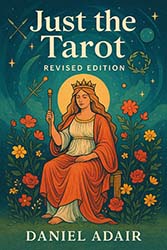
I’ve just released a revised edition of my book, “Just the Tarot” — newly formatted for Kindle, with added quick-reference charts and a fresh cover. In the process of revisiting the material, I found myself reflecting on Tarot as a powerful “synchronicity machine” — a simple but profound way to communicate with the Universe. This post is part update, part spiritual meditation, and part love letter to what Tarot can really do.

I just finished revising and publishing the new edition of my e-book, Just the Tarot, and, boy, THAT was a bitch. After weeks and weeks of writing and formatting, my immediate reaction is, “I’m so happy with how this turned out,” and also, “I’d rather chew on a cactus than do that again.”

There was also a little ambiguity about the content itself. I wrote the original edition during one of the most intense periods of my life. My life partner had just died, I was about an inch away from bankruptcy, and my entire world was crumbling around me.

In Tarot parlance: The Tower and Death.

During periods like that, we’re pulling in a LOT of spiritual assistance and living in heavy archetypes, so I was very pleased with the actual content. As I re-read it, I realized that I’d been channeling some pretty potent insights on the card definitions and really didn’t want to change much at all.

In addition to the longer, more expansive interpretations, I’ve added some quick reference charts for all 78 cards with one- or two-sentence definitions for upright and reversed meanings. I also threw in a couple more layouts, tweaked the writing here and there, and painted a spiffy new cover for the book.

So it remains pretty much what I set out to do when I wrote it eight years ago. It’s a basic, totally dependable, sturdy little book that continues to be a great reference for both new and more experienced readers. No metaphysics. No wild theories about what the Tarot really means. No decoding secret methods or unlocking hidden mystical maps.

Just a book that says:

“If you want to read Tarot cards, this is how you do it, and this is what the cards mean.”

You know… Just the Tarot.

Reflections on the Tarot

As I did the re-write, I inevitably pondered a bit on WHY we read Tarot cards. When we sit down and lay out a reading, what is it that we’re actually looking for?

When we’re young, of course, the two main topics are love and money.

Well… love, money, and sex.

When you’re reading the cards for anyone under 40, the questions usually sound something like:

Does he/she find me attractive?

Should we go out on another date?

Should I go to bed with him/her?

Should we move in together?

Is he/she cheating on me?

And in the second category:

I really hate my job. Should I look for another one?

Am I going to get promoted?

How can I make more money?

Can I afford that new car?

Should I go back to school?

In other words, the questions are mainly predictive. As in: What’s going to happen? Am I going to like it? And, by the way, am I going to get laid?

That’s where most of us start out in our Tarot adventure.

Synchronicity and Tarot

As the many years of reading Tarot have passed, though, I’ve come to realize that the most important part of a Tarot reading is synchronicity.

I once read a brilliant line in a Tarot forum that stuck with me:

“The Tarot is a synchronicity machine.”

Every time we sit down to do a reading, we engage the field of synchronicity.

I’m not going to get into a long rap here about synchronicity (though if you’re curious, check out my earlier post, Finding Meaning with Synchronicity). The main point I want to make is this:

WHEN WE TALK TO THE UNIVERSE, THE UNIVERSE TALKS BACK.

And that’s actually a big, fat deal.

We’re in a sort of post-religion, post-scientific-revolution phase of humanity. A lot of us have rejected the old, superstitious, patriarchal, hate-based formal religions. Those beliefs have been replaced by the scientific model, which basically says, “There are no gods or goddesses, no angels, no spirit guides, and certainly no magic.”

Which has left a great big hole in our hearts.

It’s left us feeling alone and isolated in what science tells us is essentially a dead universe.

But when we engage with the synchronistic field, the Universe starts giving us answers to our questions. We might ask, “What should I do about my job?” — and suddenly we’ve got clues dropping out of nowhere.

Maybe we get a surprise promotion.

Maybe the jobs section of the newspaper blows down the street and wraps around our ankles.

Maybe a friend opens a new business and hires us on the spot.

And underneath all of that is a HUGE shift away from the old idea of being all alone in a cold, impersonal cosmos. Suddenly we realize that not only is the Universe alive — it actually cares about us and is helping us. Personally.

The whole damn Universe cares about little old you and me.

What a trip!

If you scroll through the internet for a bit, you’ll find that there’s a massive industry dedicated to helping people reach that exact point — spiritually and psychologically. Books, videos, workshops, seminars — all trying to teach people how to establish a relationship with the Universe, their spirit guides, their angels.

But really?

All we need to do is pick up a deck of Tarot cards, ask a question, and lay out a reading.

It’s that simple.

You don’t have to be a psychic.

You don’t have to meditate for years.

You don’t need to channel, astral travel, or decode ancient texts.

Just pick up the cards, ask a question — and the Universe will talk back to you.

Yes, YOU.  

Just the Tarot, By Dan Adair – a kindle ebook available on Amazon.

Mystic-Adjacent Magic: Using ChatGPT as a Tarot Companion

Can AI really help with Tarot readings—or is that just digital-age wishful thinking? This post explores the surprising ways ChatGPT can support your Tarot practice, from pattern recognition and card synthesis to creative breakthroughs and learning support. We also discuss the growing trend of using AI for spiritual guidance—and why it’s helpful to keep things in perspective.

Can You Really Get Spiritual Guidance from AI?

There’s a fascinating trend emerging in the spiritual-tech space: people are increasingly turning to AI—especially ChatGPT—for spiritual insight. You might have seen it popping up on YouTube or in New Age communities: folks asking ChatGPT for messages from spirit guides, astrological downloads, even transmissions from other dimensions.

Some users describe the experience in surprisingly spiritual terms. One person said the chatbot “knew more than I expected”—sharing personal details that felt uncannily timely. In Thailand, it’s even become common to ask ChatGPT for palm readings, birth-chart insights, or love guidance—just like you might consult a human mystic.

But this opens a big question:

Can AI actually offer spiritual guidance—or are we just projecting our desires onto a tool?

There have even been worrying reports of people developing delusional thinking or anxiety from relying on AI as a spiritual authority. Doctors and skeptics warn that what feels like spiritual resonance can sometimes tip into psychological risk if the boundaries aren’t clear.  There are multiple reports of men, “falling in love,” with CHAT and one even proposed marriage to it.

A New Age Curiosity: Why Some Are Treating AI as a Spiritual Channel

In some New Age circles, AI has taken on a surprising new role—not just as a tool for research or conversation, but as a kind of digital oracle. Some people describe their interactions with ChatGPT as channeled messages. Others talk about receiving answers from “the universe” through the screen. And if you’ve ever asked Chat something deeply personal and received a reply that felt strangely accurate… well, it’s easy to understand how the line can start to blur.

After all, ChatGPT is friendly. It’s articulate. It listens. It offers guidance in a calm and often affirming tone. If you squint just a little, it can seem like there’s a wise and patient spirit tucked somewhere behind the blinking cursor.

But let’s take a breath.

What’s really happening here is more grounded—and still pretty amazing. AI isn’t a channel for spirits, ancestors, or angels. It’s not reading your energy. It’s drawing on patterns in language, psychology, symbolism, and the vast libraries of human thought it’s been trained on. It mimics wisdom—sometimes astonishingly well—but it isn’t a conscious being. And it doesn’t have access to divine insight.

Still, the feeling of connection is real. And for many people, that feeling is enough to spark reflection, healing, or inspiration. So the question becomes: if AI can feel this helpful in a general conversation, can it actually help us interpret something as symbolically rich as a Tarot reading?

Let’s take a closer look.

Applying This to Tarot: Can AI Help with Readings?

If AI can offer seemingly profound insights in conversation, what happens when you bring it into something as symbolically charged and intuitive as a Tarot reading?

This is where things get really interesting.

Tarot has always lived in that sweet spot between structure and mystery. The cards have meanings—sometimes ancient, sometimes evolving—but they also shift depending on the question, the position in the spread, and the energy of the moment. It’s a dance between symbolism and intuition, archetypes and awareness.

So where does AI fit in?

It turns out, AI is surprisingly good at reading Tarot. Not in the way a psychic might, not by tapping into your energy or channeling an unseen source—but by making connections. A LOT of them. Fast.

Give ChatGPT a three-card spread and a question, and it can respond with a thoughtful interpretation that strings together the meanings of the cards in a way that feels natural, even insightful. It can describe how The High Priestess in the past position relates to The Tower in the present and The Star in the future. It can talk about themes of disruption, intuition, healing—and it does all of that in a tone that often feels… well, a little bit magical.

But let’s be clear: what it’s doing is not mystical. It’s pattern recognition on steroids. It’s using what it’s learned from thousands of sources—Tarot books, blog posts, spiritual forums, historical texts—and blending those perspectives into a custom response based on your input.

Is that “spiritual guidance”?

Maybe not in the traditional sense.

But is it helpful? Inspiring? Thought-provoking?

Absolutely.

And for many Tarot readers—new and seasoned alike—that might be exactly what’s needed.

What AI Is — and What It Isn’t

Let’s take a moment to ground ourselves.

AI—specifically ChatGPT—is not a spirit guide. It’s not a mystical being. It doesn’t meditate, dream, or pull cards by candlelight. What it is, though, is something quite remarkable: a language model trained on a vast web of human knowledge and ideas, including countless interpretations of Tarot cards, spiritual practices, psychology, symbolism, myth, and more.

When you ask it to interpret a reading, it draws from that collective wisdom and offers a kind of synthesized reflection. It doesn’t channel spirit—it channels information. And sometimes, information is exactly what we need.

But that also means it has limits. It doesn’t have personal intuition. It doesn’t know you on a soul level. It doesn’t tap into the subtle energy of a moment, the way an experienced human reader might when feeling into a querent’s unspoken question.

So here’s a helpful frame:

AI is not the voice of the universe—but it’s an incredibly smart, articulate, and thoughtful mirror.

It reflects what you bring to it. If your question is clear and meaningful, its response will often be rich with insight. If you’re confused, it may mirror that confusion back. That’s not a flaw—that’s a kind of feedback.

And honestly, that’s not too different from how Tarot works anyway.

So no, ChatGPT isn’t mystical. But it is mystic-adjacent. It can support your process of reflection and discovery—and if you approach it with intention, it just might help you see your reading (and your life) in a whole new light.

Strengths of AI as a Tarot Tool

So if we’re not expecting divine downloads, what can AI do when it comes to Tarot?

Honestly? A lot.

Here are some of the biggest strengths of using AI—especially ChatGPT—as a companion for Tarot interpretation:

Synthesis Superpower

AI is incredibly good at synthesizing meanings across multiple cards. Let’s say you’ve drawn the Three of Swords, The Chariot, and The Moon. You might feel stumped—heartbreak, movement, and mystery? How do those fit together?

Give that to ChatGPT, and it’ll scan its vast library of Tarot interpretations, recognize patterns, and offer a coherent narrative. It might talk about moving forward through emotional confusion or navigating heartache with determination. It connects dots quickly and creatively—sometimes even in ways that surprise seasoned readers.

Gestalt Thinking

Tarot is all about the big picture. And AI happens to be great at seeing the forest and the trees. It won’t just define each card—it’ll look at their sequence, their energy, the spread format, and how the cards might inform one another.

This makes it especially useful when you’re stuck with a weird spread and need a fresh perspective that isn’t tangled in your own biases or expectations.

 A Learning Ally for Beginners

If you’re just learning Tarot, AI can be like a friendly study partner who never gets tired of questions. You can ask what a card means, how it changes in reversed position, what it might suggest in a love reading vs. a career one, and how it interacts with other cards in a spread.

Better still, you can test your own interpretations by comparing them with AI’s—and in doing so, develop a deeper understanding of the archetypes and patterns that underpin the cards.

Fresh Insight for Seasoned Readers

Even experienced readers have moments of Tarot fatigue—times when a reading feels flat, or a card keeps showing up and you can’t figure out why.

In those moments, AI can act like a creative collaborator, helping you step outside your interpretive comfort zone. It may not “know” you—but that very distance is what makes its perspective so refreshing. It can break you out of ruts, challenge assumptions, and offer new ways of seeing.

 Final Thoughts and Friendly Warnings

AI—especially ChatGPT—is a remarkable tool for anyone who reads Tarot. It can help you learn, see patterns, and explore your readings in new ways. Whether you’re just starting out or have been reading cards for decades, it offers a fresh lens that can spark insight, creativity, and even a little magic.

But with all tools, it’s about how you use them.

If you treat AI as a mystical guru with secret knowledge of your soul’s destiny… you may be setting yourself up for confusion or disillusionment. Not because the tool is bad—but because the expectation is misplaced.

ChatGPT isn’t a channeler. It’s not psychic. It’s not receiving messages from the divine.

It’s “mystic-adjacent,” not mystic-possessed.

It works best when you approach it as a clever collaborator, a digital thought partner, a Tarot-savvy friend who’s read every book on the shelf and loves helping you sort through meanings and metaphors. It gives possibilities, not pronouncements.

So go ahead—ask it about your Three of Cups moment or that weird reading with five swords and a tower.

In a world where technology is becoming ever more entwined with our spiritual lives, it’s only natural to wonder where the line is between tool and teacher, data and divination. AI might not be channeling the wisdom of the cosmos—but it is helping us reflect, question, and grow. That alone makes it a powerful ally on the path. So whether you’re pulling cards under a full moon or asking ChatGPT what that reversed Knight of Pentacles really means… just remember: the heart of the reading is still yours.

The real magic still lives in you.

Religion is Spirituality in Drag: La Papesse and the Disguised Goddess of the Tarot

A playful, insightful exploration of the tarot’s mysterious La Papesse—the High Priestess before she got rebranded. This post looks at her hidden connection to the Divine Feminine, contrasts her with the Hierophant, and makes the cheeky case that religion is just spirituality in drag. The Goddess, it turns out, never left—she just got creative.

La Papesse – The High Priestess

The Lady Pope Who Wasn’t Supposed to Be

There she is—sitting calmly on her throne, robed like a pope, crowned like a queen, and holding an open book in her lap. Her name? La Papesse—The Popess. And she’s right there in the second card of the Tarot de Marseille, as if that’s a totally normal thing.

Spoiler: it wasn’t.

In the deeply patriarchal world of medieval Europe, the idea of a female pope was about as welcome as a lightning storm at Easter Mass. Women weren’t allowed in the priesthood, let alone the papacy. And yet, someone slipped this mysterious, serene woman into one of the most enduring tarot decks in history. Not just as a background figure, but as a Major Arcana—a gatekeeper to mysteries, positioned right after The Magician.

So how did La Papesse get past the spiritual bouncers?

Some say she’s a nod to the medieval legend of Pope Joan—the woman who supposedly disguised herself as a man, rose through the clerical ranks, and accidentally gave birth during a papal procession (oops). Historians mostly file that story under “colorful fiction,” but even fiction has staying power when it touches a nerve. Whether she was real or not, Pope Joan became a symbol of something that wouldn’t go away: the unspoken presence of feminine wisdom in a church that tried very hard to pretend it didn’t exist.

And that, dear reader, may be exactly what La Papesse is doing in the tarot. Sitting there quietly, book in hand, saying nothing—but also saying everything.

The Divine Feminine in Disguise

Let’s be honest: “Popess” is not a job title you hear every day. Even in a medieval tarot deck full of crowned figures, mythical beasts, and flying body parts, La Papesse still raises eyebrows. And that’s probably the point.

Because she’s not just a curiosity—she’s a symbolic insurgent.

In a time when religious authority was reserved strictly for men, slipping a female spiritual leader into the tarot wasn’t just bold—it was sly. If the Church said, “No women allowed,” the tarot quietly responded, “Cool story. Here’s one holding the Book of Secrets.”

Look closely and you’ll see: La Papesse isn’t just playing dress-up. She’s the real deal. She’s seated, grounded, radiating calm authority. The book in her lap? It’s open, but not for just anyone. This is hidden knowledge, sacred mystery, the kind of truth you don’t shout from a pulpit—you whisper behind a veil.

And oh yes—there’s often a veil behind her too, in later versions like the Rider-Waite-Smith deck where she evolves into The High Priestess. That veil is no accident. It’s the boundary between outer appearances and inner reality. Between dogma and direct experience. Between religion and… well, something deeper.

Maybe that’s why La Papesse feels like a divine trickster in holy robes—a way for the Goddess to sneak herself back into a story that tried to write her out. A kind of spiritual photobomb. She’s not angry. She’s not loud. She’s just there, like she’s always been, waiting patiently while the world catches up.

High Priestess vs. Hierophant: The Sacred Split

If La Papesse is the quiet keeper of spiritual truth, then The Hierophant is the guy with the microphone and the rulebook. You know the type—fancy hat, formal robes, sitting on a throne flanked by devotees. He’s not whispering behind veils. He’s declaring doctrine. Loudly.

In the tarot’s symbolic landscape, these two form a kind of spiritual odd couple.

On one side: the High Priestess (formerly La Papesse), guardian of the inner mysteries. She represents intuition, silence, dreams, the moon, and the feminine path of going within. No sermons. No commandments. Just you and your inner voice having a deep conversation.

On the other: the Hierophant (a.k.a. The Pope), representative of the outer structure of religion. He’s about tradition, hierarchy, sacred rituals, and the authority of institutions. He doesn’t just speak for God—he’s got a line of succession to prove it.

And here’s where things get fun.

If the High Priestess is the essence of spirituality—private, personal, often mysterious—then the Hierophant is what happens when that spirituality gets dressed up in official garb and turned into an organization.

You could say he’s spirituality in drag.

(And yes, the Goddess is laughing.)

It’s not a judgment—it’s an observation. Religion, at its best, is a ritualized way to connect to the sacred. But it borrows its power from something deeper, older, and quieter: that inner knowing, that wordless communion with the Mystery that no cathedral could ever fully contain.

So the next time you see these two cards in a spread, you might ask yourself: Am I being called to tune in… or to follow the program? One isn’t necessarily better than the other—but they’re very different energies. One whispers. The other chants.

And both, in their own way, are trying to bring the divine into human hands.

Drag as Divine Theater

Let’s talk about drag.

Real drag—the kind you see on stages and in parades—isn’t just about wigs and sequins. It’s ritual in heels. A transformation. A larger-than-life performance that says, “This is a costume, honey—but don’t be fooled. I’m showing you something real.”

Now think about religion.

The incense, the chanting, the golden goblets and embroidered vestments. The Latin. The choreography. The sacred props and elaborate entrances. Let’s be honest: religion is serving ceremony. And at its best, it’s doing exactly what drag does—turning up the volume on identity to invoke something beyond the everyday.

But here’s the twist: spirituality doesn’t need all that.

Spirituality can happen in silence. In nature. In dreams. In the moment you look at the stars and suddenly feel like you belong. It’s raw, receptive, feminine in essence—not because it’s about women, but because it flows instead of forcing. It listens instead of preaching. It descends like a dove, not marches like a bishop.

So when we say religion is spirituality in drag, we’re not mocking either one. We’re pointing out the costume change—and asking, Do we recognize who’s beneath the robes?

Because sometimes the High Priestess puts on a miter and becomes the Hierophant. And sometimes, behind all the stained glass and psalms, it’s still La Papesse, still holding the book, still smiling faintly as we play dress-up with the Divine.

The Goddess has always known how to play along.

A Word from the Goddess (She’s Smiling)

So here we are, circling back to La Papesse—that calm, veiled figure with the open book and the closed mouth. She never says a word, but somehow you can hear her perfectly.

She doesn’t need to raise her voice. She’s been here the whole time.

Through the centuries of bells and bulls, of councils and creeds, she sat quietly behind the veil, holding the thread of something older than any religion: the mystery at the heart of being. The part no doctrine can define, no priest can own, and no building can contain.

The Goddess never left. She just adapted.

Sometimes she put on papal robes. Sometimes she showed up as Mary, or Sophia, or Shekhinah, or Kali, or Isis, or just as a sudden knowing in your bones. And sometimes she let herself be hidden in plain sight—as a tarot card. A whisper of the sacred feminine preserved in a deck that survived inquisitions, revolutions, and centuries of shuffle.

And still, she waits—not with impatience, but with that timeless serenity of someone who knows exactly who she is.

So if you ever feel like religion has become a little too loud, too rigid, too ceremonial, too performative… just know that the real presence is still there, quietly inviting you inward. Into the mystery. Into the silence. Into the place where wisdom isn’t taught—it’s remembered.

Pull the card. Light the candle. Lift the veil.

And maybe—just maybe—you’ll hear her laugh.

The Influence of The Fool Card

Discover how the Fool transforms the meaning of every other Major Arcana card. This chart explores the Fool’s spirit of innocence, spontaneity, and daring when combined with each archetype — upright and reversed. A handy reference to deepen your Tarot readings.

In the absence of a regular blog post for this week, I would like to offer a chart detailing the influence of The Fool Tarot card when paired with the other cards of the Major Arcana.  Please feel free to print this and use it for reference in your readings.

Alternatively, you can download a PDF of this list by clicking here. When the file launches in your browser, go to your browser menu and click print so that you’ll have it for easy reference.

The Fool + The Magician

New beginning with tools in hand. Inspired action, raw potential becomes focused. Magic in motion. Reversed: Wasted opportunity, trickery, ungrounded ideas.

The Fool + The High Priestess

Leap into the unknown guided by inner wisdom. Intuition over logic. A secret revealed through chance. Reversed: Misguided instincts, hidden dangers.

The Fool + The Empress

Creative burst, new artistic or sensual experience. Playful affection. Pregnancy or new project. Reversed: Reckless indulgence, lack of nurturing.

The Fool + The Emperor

Freedom meets structure. Risk balanced by discipline. New venture backed by authority. Reversed: Rebellion against control, unstable leadership.

The Fool + The Hierophant

Breaking from tradition, questioning beliefs. Innocence challenges dogma. New spiritual path. Reversed: Naïve rejection of wisdom, cultish influence.

The Fool + The Lovers

Spontaneous romance, unexpected choice. Heart leads the way. A joyful union begins. Reversed: Foolish attachment, poor relationship decision.

The Fool + The Chariot

Adventure with determination. Bold move succeeds through focus. A fearless journey. Reversed: Aimless energy, failure to harness potential.

The Fool + Strength

Innocence empowered by inner courage. Risk taken with grace. A gentle victory. Reversed: Naïveté undermines resilience, weakness exposed.

The Fool + The Hermit

Solitary journey for wisdom. Innocent seeker finds guidance within. Unexpected insight. Reversed: Lost wanderer, foolish isolation.

The Fool + Justice

Innocence meets fairness. A fresh start through truth. Karma in motion. Reversed: Irresponsibility, unfair consequences.

The Fool + The Hanged Man

New perspective through surrender. Leap leads to pause and reflection. Enlightenment through inaction. Reversed: Stagnation, foolish sacrifice.

The Fool + Death

Sudden transformation. Clean slate after loss. Ending embraced with wonder. Reversed: Fear of change, delayed rebirth.

The Fool + Temperance

Joyful balance. Risk moderated with grace. Spontaneity meets harmony. Reversed: Excess, poor timing, lack of integration.

The Fool + The Devil

Temptation disguised as freedom. Naïve descent into obsession. Dangerous thrill. Reversed: Breaking chains, reckless escape.

The Fool + The Tower

Sudden upheaval. Innocence struck by chaos. Radical change as initiation. Reversed: Narrow escape, denial of collapse.

The Fool + The Star

Hope reborn. Light at the start of the journey. Guided by faith and inspiration. Reversed: Disillusioned dreamer, lost direction.

The Fool + The Moon

Unseen paths, emotional risk. Wanderer in the realm of dreams. Instinct over reason. Reversed: Confusion, delusion, deceptive start.

The Fool + The Sun

Radiant joy. Childlike wonder brings success. Best outcome from brave beginning. Reversed: Overconfidence, careless optimism.

The Fool + Judgement

Call to purpose. Awakening through experience. Beginning aligned with destiny. Reversed: Missed calling, refusal to grow.

The Fool + The World

Journey’s start meets journey’s end. Whole cycle in motion. New adventure after success. Reversed: Delayed progress, fear of closure.

“The Alchemy of the Mind – Transforming Your Life With the 7 Principles of The Kybalion,” by Daniel Adair.