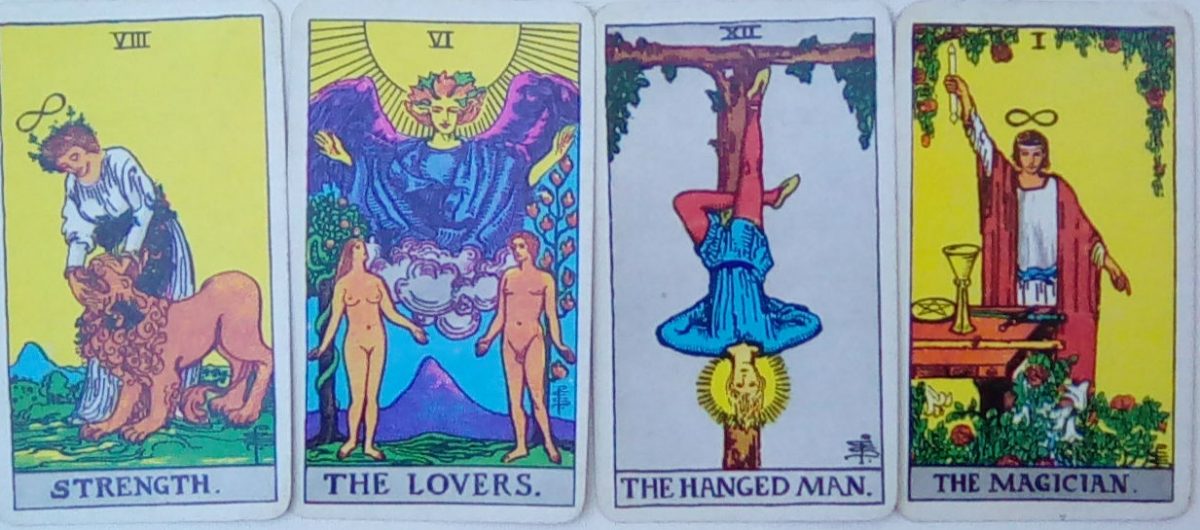
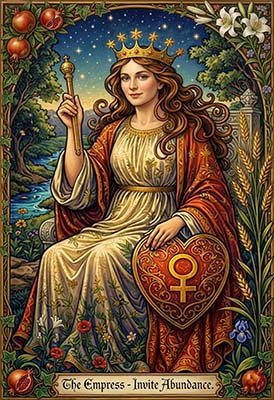
In any serious discussion of the Tarot, you’ll hear people referring to the Major Arcana as “archetypes.”
Which sounds very impressive… but also raises a perfectly reasonable question:
What, exactly, is an archetype?
The idea goes all the way back to Plato, but in modern usage it’s most often associated with the Swiss psychologist Carl Jung.
Jung defined archetypes as:
Universal, inherited patterns of thought or imagery that exist in the collective unconscious of all human beings.
Which is a fine scholarly definition… but for most of us, it lands somewhere around:
“Huh?”
So instead of trying to define archetypes academically, let’s talk about how they actually show up in real life—especially through the Tarot.
The Major Arcana
If you’re reading a Tarot blog, you probably already know the basics. The Tarot is divided into two parts, the Minor Arcana and the Major Arcana.
• The Minor Arcana (Wands, Cups, Pentacles, Swords) deal with everyday life.
• The Major Arcana (22 cards) deal with something deeper.
The images of the Major Arcana are the ancient core of the Tarot, dating back to the 15th century (and possibly earlier). The Minor Arcana didn’t even get illustrated scenes until the Waite-Smith deck in 1909.
So when we talk about archetypes in Tarot, we’re really talking about the Major Arcana.
They’re Not Personal
Here’s the first—and most important—thing to understand:
Archetypes are not personal.
Now, I know that sounds strange, because they feel very personal.
If you pull Death or The Tower in a reading, it doesn’t feel abstract. It feels like the universe just singled you out and dropped a piano on your head.
But here’s the shift:
• Minor Arcana = things you’re generating and can influence
• Major Arcana = larger forces moving through your life
For example:
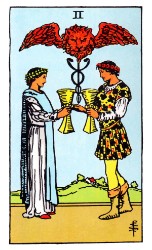
• Two of Cups → You’re falling in love. Those are personal dynamics, like the type of person you find attractive, are you feeling lonely, do you want a partner?
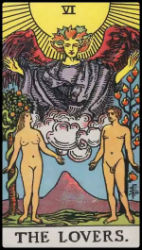
• The Lovers → Love as an energy is active in your life (archetypal force.). The energy isn’t something you’re creating and it’s not attached to any one person. It’s just moving through your life.
In other words:
You don’t create archetypes—you experience them.
Sometimes They’re Collective
Archetypes don’t just affect individuals—they can sweep through entire cultures.
Jung noticed this before World War II when many of his German patients reported eerily similar dreams of White men riding black horses through the night—images that seemed to foreshadow the rise of Nazism. He interpreted this as a collective archetype emerging.
And honestly, you don’t have to look far to see this kind of thing in today’s politics.
We’ve all watched people we’ve known for years suddenly shift—sometimes dramatically—in beliefs, behavior, or identity. It can feel almost like they’ve been “taken over.”
From an archetypal perspective, that’s not entirely wrong.
These are psychic weather systems—and sometimes whole populations get caught in them.
The important takeaway?
Just because an energy is present doesn’t mean you have to identify with it.
Shelter in Place
Obviously, not all archetypes are pleasant.
• The Tower → destruction
• The Moon → confusion, illusion, emotional instability
• The Devil → addiction, entrapment, shadow patterns
So what do you do when one of these shows up?
You’ve got two main options.
1. Shelter in Place
Sometimes the best strategy is simple:
Ride it out.
Think of a tornado. You don’t go out and negotiate with it. You don’t try to “manifest” it away.
You get into the storm shelter and wait.
Life sometimes does this:
• Relationship ends
• Job disappears
• Everything falls apart at once
That’s Tower energy.
And sometimes the wisest response is:
“Okay… this is happening. Let’s survive it.” Hunker down and wait for it to go away.
2. Rise Above It
The Kybalion talks about this strategy quite a bit.
Even if you can’t control the event, you can control your response.
You can:
• shift your perspective
• regulate your emotions
• choose your interpretation
For instance, with The Tower, you can respond to it in one of two ways.
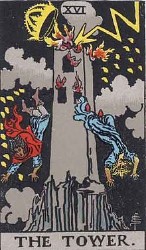
• “This is a disaster. I lost my job, my partner divorced me, I’m out of money. My life is ruined.”
OR
• “This is a reset. I get to rebuild from scratch. My old life is gone, so I get to build my new life exactly as I want it.”
The external event is the same.
The internal vibration is not.
And that makes all the difference. We haven’t, “cured,” what happened to us, but we’ve vastly diminished it effects on us.
Invoking the Positive Archetypes
Here’s where things get interesting.
Even though archetypes aren’t created by us…
We can align with them.
Think of it less as control and more as tuning in.
Examples:
• Feeling stuck financially? → work with The Empress (abundance, growth)
• Struggling with confidence? → invoke The Emperor (authority, structure)
• Feeling lonely? → connect with The Lovers (connection, union)
• Burned out? → step into The Hermit (withdrawal, restoration)
This can be done through:
• meditation
• visualization
• journaling
• even just keeping the image nearby
You’re not creating the energy.
You’re opening yourself to it and inviting it’s power into your life.
Conclusion
So what is an archetype, really?
It’s not just a symbol.
It’s not just a psychological idea.
It’s more like a living pattern of energy that moves through human experience.
Sometimes it lifts us.
Sometimes it breaks us open.
Sometimes it sweeps through entire cultures like a storm.
But here’s the key:
You are not powerless in the face of archetypes.
You may not control when they appear,
but you do have a say in how you meet them.
You can:
• recognize them
• name them
• step back from them
• align with the ones that serve you
And over time, something interesting happens:
Instead of being tossed around by these forces…
You start to navigate them.
And that’s really what Tarot is for.


 Just the Tarot