Shine Your Light: The Star Card, Shame, and the Courage to Be Seen

This post explores the deeper meaning of The Star card in the Tarot and reflects on why so many of us struggle to shine our light in the world. Drawing on the work of Brené Brown, Tibetan Buddhism, and real-life dynamics like shame and codependency, I look at the messages—both cultural and personal—that lead us to dim our brilliance. The Star invites us to pour our gifts into the world, not for recognition, but because it’s who we truly are. This is a reflection on healing, self-worth, and the sacred courage it takes to be seen.• shine your light

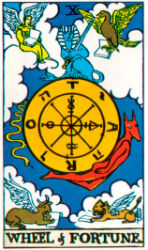
This image is from one of my new Tarot Affirmation posters, now available on my Etsy art site. I really love how it turned out—but even more than that, I love the message it carries: Shine Your Light.

And yet, for so many of us, that’s easier said than done.

Instead of shining, we hide. Instead of pouring ourselves out like starlight, we dim, shrink, withdraw. Why is it so hard to be radiant in a world that so desperately needs our brilliance?

The Culture of Shame and the Fear of Being Seen

In one of her powerful TED Talks, Brené Brown speaks about the culture of shame we all live in. Even if you didn’t grow up in a dysfunctional family (and statistically, about 60% of us did), we’re still marinated in a society that constantly criticizes, compares, and belittles.

Maybe you brought home a report card with a B, and your parent asked, “Why didn’t you get an A?”

Maybe you’re in a job where meeting your performance goals doesn’t bring a sense of completion—it just earns you a fresh, even more demanding set.

Maybe you’ve internalized the billions of dollars spent by the beauty industry telling you that your face, your body, your age, or your hair simply aren’t good enough.

On social media, the message is constant: unless you’re being validated with likes and followers, you’re invisible.

Advertising tells you your house isn’t elegant enough, your car’s too old, your wardrobe outdated.

Even spirituality isn’t immune. We whisper to ourselves: I should be better. I should care more. I should meditate more. Pray more. Try harder.

Let’s face it: in this world, it’s all too easy to believe that we should be ashamed of simply being ourselves.

As Brown puts it, shame drives two powerful tapes in our heads:

1. You’re never good enough, and

2. Who do you think you are?

And because those tapes run deep, we begin to engineer our own smallness. We shrink ourselves to stay invisible—because visibility feels like a threat. We dim our light so no one will see just how “inadequate” we believe we are. And in doing so, we fail to shine.

Codependency and Dimming Our Own Lights

Sometimes, the reason we hide isn’t culture—it’s relationships.

Too many of us are caught in dynamics where one partner shines while the other fades into the background. It might be dressed up in the language of care or sacrifice, but the effect is the same: one person takes center stage, while the other erases themselves.

It could be a relationship with a narcissist, where one partner is expected to provide constant praise, attention, and emotional caretaking.

It could be a more obvious kind of abuse, where failing to meet someone else’s needs results in punishment, blame, or even violence.

It might even look noble—like staying small to “support” someone who is ill, unstable, or in need. But the underlying belief is this: there isn’t enough light to go around.

And so, we dim ourselves to make the other person shine.

We play down our accomplishments. We pretend we’re not that talented. We take the backseat in our own story. And we tell ourselves it’s virtuous.

But it’s not noble to disappear. It’s not compassionate to go dark.

We were meant to shine.

The Star Card and the Sacred Act of Sharing

The Star card in the Tarot is a card of healing—but it’s not just personal healing. It’s about reconnecting with the world by letting your own light flow into it.

In Tibetan Buddhism, there’s a teaching that each of us carries a radiant jewel inside. It may be buried under layers of dust or encased in stone, but it’s there—glimmering with our true nature. And our task in life is to uncover that jewel and offer it to the world.

That’s what the woman in The Star card is doing. She kneels beside the stream and pours out her water—not hoarding, not holding back. She gives freely to the land and to the flow of life itself.

She’s not asking for praise. She’s not trying to be impressive.

She’s just being who she is: a vessel of light.

And so are you.

You don’t shine for applause.

You don’t shine to prove anything.

You shine because it’s your nature.

And this world is thirsty for that kind of offering.

A Final Thought

You are not just a person. You are a sacred gift.

You are a hidden jewel.

You are starlight in human form.

Let yourself shine.

“Just the Tarot,” by Dan Adair – a kindle ebook available on Amazon

Karma, Having Sex with Republicans, and Being Kind to Yaks

Seeing karma as a way to change our past.

One of my favorite internet memes says, “Karma – It’s spelled K-A-R-M-A and it’s pronounced, ‘Ha, ha, fuck you.’”  

That’s a perfect explanation of our usual understanding of karma which is basically, “If you do some shit, you get some shit.”  If we do something terrible to another person, something terrible is going to happen to us. If we do something nice, something nice is going to happen to us.

OH, WELL, IT’S KARMA

Counter-intuitively, karma is also used an explanation for why bad things happen to good people.  We may have a friend who’s a wonderful person and goes through his life supporting and nurturing others, who’s full of love and gentleness and kindness.  And then something horrendous happens to him, like he falls of a cliff or discovers his wife is having sex with a Republican.

We simply can’t understand why such a good person would have such bad luck.  Certainly, he did nothing to deserve it and, according to the Law of Karma, all of his good behavior should have been rewarded with good things happening to him.

But . . . we’re told . . . perhaps he did something really, really terrible in a previous incarnation.  Maybe he pushed someone off of a cliff or maybe he had sex with a Republican.  Maybe he actually – shudder – enjoyed having sex with a Republican.

That allows us to restore some sense of cosmic balance and we say, “Oh, well, it’s just karma.”

IT AIN’T ME, BABE

We can certainly understand that concept when something bad happens to someone else, but it’s difficult to swallow when it happens to us.

Let’s face it, most of us are NOT the Dalai Lama and we have very little memory of our past lives.  We may accept the general idea that we’ve lived other lives, but we don’t actually remember being a Yak herder in Mongolia in 40 A.D. or a courtesan in Paris during World War I. 

From our current point of view, those people who we were in our past lives were literally someone else and not us.  

The idea that I broke my wrist today because some other guy kicked a Yak 2000 years ago seems entirely capricious and cruel and unjust.  It feels like . . . how shall I put this? . . . bullshit.

KARMA AND DETERMINISM

From that perspective, karma feels very much like determinism.  Determinism is the view that every single thing that happens to us is pre-determined from the moment of birth.  There really isn’t any free will or choice in life because our lives are a result of our genetics, our cultures, the families we’re born into, and the times we live in.

We can actually make a strong case for that.  Even in the United States, where we worship the idea of free will and choosing our own destinies, the statistics say it ain’t so.  If we’re born into a dirt poor family, we’ll probably die dirt poor.  If we’re born into great wealth, we’ll probably die rich.   If our parents were conservative Catholics, we’ll probably be conservative Catholics.  If our grandfather hated socialists for no particular reason, we’ll probably hate socialists for no particular reason.

We tell ourselves that we’re making choices about those issues, but for the most part we aren’t.  It was all programmed into us before we came down the birth canal.  Life is something that happens to us, not something that we create.

Karma can feel a lot the same way.  I, me, the person who I am right now, did NOT kick that Yak 2000 years ago, so why am I being punished for it?  It’s something that’s just happening to me, not something I can control or make any choices about.

BUT KARMA’S A CHOICE

Paradoxically, being the people who we are, right here, right now, is the good news about karma.  

Determinism basically says, “You’re fucked or you’re not fucked and there’s not one damned thing you can do about it.  You have NO choice in the matter.”  It’s all predetermined.

The Law of Karma, on the other hand, says that what we do right now is what really counts.  Far from saying that we have NO choice in the matter, karma is saying that we always have a choice.  And our choices are what determine our karma.

As David Michie said in, “Buddhism for Busy People,” 

“A lot of Western people wrongly think that karma equals fate or predestination.  They think it’s something you don’t have any power to change.  This is a misunderstanding.  It is we who create our own karma and we can change it in a powerful, dynamic way. We are creating hundreds, even thousands of such causes every day of our lives.”

Put another way, we are creating our own karma ALL THE TIME.  It’s not something from the past that just pops up to bite us in the ass every once in a while.  It’s not like The Wheel of Fortune, where we have good luck for a while and then bad luck, for no apparent reason.  It’s something we personally create by either being good people or being bad people.

THE PRESENT AS PROLOGUE TO THE PAST

Now, there’s a particularly fascinating doctrine in some schools of Buddhism that says that we can actually change our past karma by how we behave in our present lives.  

Suppose, for instance, that I was a really notorious Yak kicker in Mongolia in 40 A.D.  I didn’t just kick Yaks occasionally.  No, I was a mean, nasty, evil spirited son of a bitch who got up every single morning and kicked the hell out of as many Yaks as I could reach.

Fast forward 1985 years to my current life.  Suppose I start an, “adopt a Yak program,” and spend years rescuing and feeding homeless Yaks.  I learn to love Yaks and have great compassion for them.  Perhaps I even dress them in Yak finery for special occasions.

Under this particular doctrine, I wouldn’t JUST be creating good karma for my present self.  My good karma would go backwards through time and actually change the character and behavior of my previous self, the notorious Yak kicker. He might learn to love Yaks just as much as I do and my bad Yak karma would be erased.

IT’S NOT THAT WILD

If that sort of time traveling karma sounds a little too wild, just consider what most of us already believe about karma.

We believe that we have one Soul with many different historical identities and that what a previous identity does can travel through time to affect the life of our current identity.  So if all of these past identities are somehow in touch with our current identity, why wouldn’t our current identity be in touch with our past identities?  If they can affect us, it stands to reason that we can affect them.

KARMA AS AN ONGOING PROJECT

When we shift our perspective in that way, then karma becomes an on-going project.  We’re no longer victims of our past.  We’re actually re-creating our past through our current actions.

And if that isn’t free will and choice, I don’t know what is.

Being compassionate, decent people every day and right now is good for us and it’s good for the people around us.  And, ultimately, it’s good for the Yaks.  

Do it for the Yaks.

Just a reminder that my ebook, “Just the Tarot,” is available on Amazon for much less than a bag of Yak feed.

Lucid Choices, The Four of Swords, and Living the Dream Life

Looking at our lives as lucid dreams.

Have you ever had a dream that seemed so real, so vivid and intense, that you were actually shocked when you woke up and realized it was just an illusion?

Sometimes they’re really GOOD dreams.  Perhaps we’re making incredible love with someone or maybe we’re floating through a starry, magical sky. Sometimes they’re really BAD dreams, where we’re being chased by monsters or night terrors.  Whether they’re good or bad, the one thing they have in common is that – at the moment that we’re having them – they seem absolutely, 100% real.

LIVING THE DREAM

There’s a strong case to be made for the idea that our so-called, “waking life,” is very much like a dream, as well.

In, “The Four Agreements,” that’s the term that Don Miguel Ruiz actually uses to describe our day to day existence:  a dream.  As we grow up, we’re programmed by our parents, our religions, and our societies to see the world in particular ways.  We don’t question those view points as they’re being installed in our little brains because we don’t have the ability to judge whether they’re true at that age.  By the time that we reach adulthood, we’re thoroughly convinced that the way that we see the world is the RIGHT way to see it, perhaps the ONLY way.  But those view points are just someone else’s dreams of how the world really is.

Buddhist and Hindu philosophies approach human life in much the same way:  life as we commonly experience it is an illusion, a dream that’s made up of our emotions, ideas, desires, and aversions.  We’re essentially sleep walkers who go through life laughing, crying, eating, procreating, raising families, working, and eventually dying, with no clue as to why we’re here or what it all means.  We just know that, like our dreams, it seems absolutely 100% real. 

WAKING UP

Occasionally, some of us will wake up just a little bit from the dream that we call our lives.  Usually it’s because our pleasant dreams have turned into a nightmare.  

One of our major dreams is, “I’m going to live happily ever after and nothing bad is going to happen to me.”  We’re taught that if we’re, “good,” people and we work hard and we’re responsible, everything is supposed to work out for us.  We’re going to fall madly in love with just the right person, have 2.5 beautiful children who will be extremely well adjusted, get a nice house, a new car, and all of the material toys. And we’ll live happily ever after.  Shit happens to, “bad,” people, not to us.

And then shit happens to us.

Perhaps we find our wife or husband in bed with someone else.  Perhaps we’re in a terrible auto accident.  Perhaps one of our beautiful children gets very, very sick.  Perhaps we get fired from our jobs and lose all of our material possessions.

It’s very much like suddenly waking up.  All of the things that seemed so rock solid and dependable in our lives turn out to be built on sand.  We may feel like life has betrayed us or the whole world has gone crazy.  Eventually, though, most of will go back to our dream worlds because the dream is so comfortable and waking up hurts.

LUCID DREAMING

There’s something that happens in some dreams where we’re dreaming but we suddenly become aware of the fact that it’s a dream.  We don’t wake up from the dream, but we exist within it, knowing that it’s a dream.  It’s called lucid dreaming and, if you’re not familiar with it you might enjoy reading, “Lucid Dreaming,” by Charlie Morley.

Now, one of the things that happens in lucid dreaming is that, to a large extent, we’re able to control the dream.  If we see a wall in front of us, we can consciously decide to simply grow wings and fly over it.  Or perhaps we can visualize a really beautiful woman or man and make love to them to our heart’s content.  

It’s a dream.  We know it’s a dream. But we can choose what happens in the dream.

LUCID LIVING

In his book, “Change of Heart,” Chagdud Tulku said that very few of us will ever be enlightened.  Most of us will continue to live in a dream state, perhaps for many incarnations.  BUT . . . we can choose whether we want to have a good dream or a bad dream.

Which sounds very much like lucid dreaming, doesn’t it?

When we have one of those life experiences where our day to day dream has turned into a nightmare, when we suddenly get a peek behind the curtain of what we thought was true, we have a choice.

Most people roll over and go right back to sleep, just as quickly as they can.

Some people decide to adopt a stance of total cynicism.  Life sucks.  People are rotten.  It’s all a lie.  These are the, “life is a bitch and then you die,” people.

But a few people will say, “Huh . . . it’s all just a dream.  But it’s an interesting dream.  I wonder if I can grow wings and fly over that wall?”

IT’S NOT ENLIGHTENMENT

One of the things that it’s important to remember is that just because we realize that life may be a dream, it doesn’t mean that we’re suddenly, “enlightened.”  Like the person in the 4 of Swords, we’re still solidly asleep, but now we know that we’re asleep.  Which is an improvement.

Unfortunately, as a brief stroll through the internet will teach us, there are many, many people out there who have decided that they must be gurus, spiritual adepts and geniuses just because they woke up a little bit.  Seeing through the illusions doesn’t mean that we’ve got an answer – it just means that we see the problem.

It’s a paradox, like lucid dreaming, where we’re asleep and awake at the same time.  If we keep meditating and keep working on our personal growth, we’ll wake up a little more and a little more and a little more.

In the meantime, we can choose to have good dreams.  We can have dreams that are full of love and healing and our dreams will make other people’s dreams a little better, too.

As Bob Dylan once said, “I’ll let you be in my dream if you’ll let me be in yours.”

Remember that my ebook, “Just the Tarot,” is available dirt cheap on Amazon. It’s not just a dream. Really. I think.

The Fool, Double Dorjes, and Saying Yippee to the Universe

A look at the underlying, happy energy of the Universe.

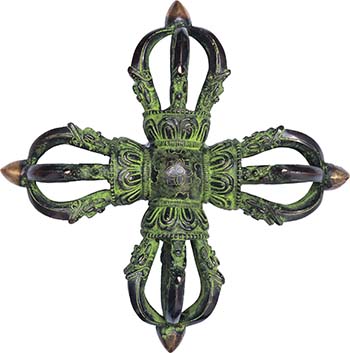
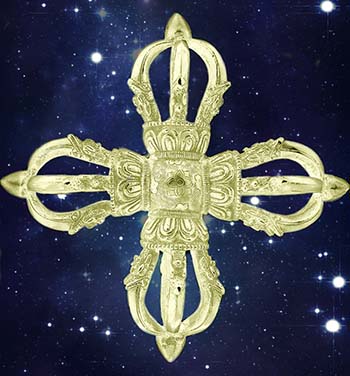
I’ve been playing around with making altar cards to sell on my Etsy shop (synergyfolkart.etsy.com) and trying to put together a line of them for Buddhists.   The other day I was looking at a picture of a double dorje – a very powerful symbol in Vajrayana Buddhism –  and I thought, “I wonder if I could make that gold, instead of bronze?”

Lo and behold, after several hours of research, clicking, layering, re-layering, and praying to the mighty goddess of Adobe Photoshop, I went from this:

to this:

Now, it hasn’t been that long since I had sex with someone – probably not more than 5 or 6 hundred years – but completing this transformation was very much like that feeling.  When I saw the final image there was a huge, internal, “YIPPEE!,” from my Inner Child and I got up and danced around my studio.  (And, yes, when I used to Get Lucky I would frequently shout, “YIPPEE!” and dance around the bedroom.)

There are probably about 30 million 10 year olds who are far more adept at Adobe Photoshop than I’ll ever be,  and I only get a few bucks for each card, so there was nothing earthshaking about this. But that’s not the point.

The point is that the Universe is doing something . . . somehow . . . for some reason. 

I don’t think I can put it any more clearly than that.

Scientists tell us that about 13 billion years ago there was a tiny dot of super-concentrated energy in the center of the Universe.  Well . . . it wasn’t the center of the Universe because there wasn’t any Universe, yet, but just for the sake of argument, pretend there was a Universe and there was this dot in the middle of it.  And then – KABLAMMM!!!!!!!!! – the tiny dot of energy suddenly exploded for no particular reason and started expanding outwards into . . . you know . . . nothing. 

The energy carried with it all of the . . . um . . . stuff . . . that would later form into solar systems and suns and planets and moons and Donald Trump’s hair.

That’s what they call the Big Bang Theory.

AND . . . according to the scientists, the Universe is STILL expanding.

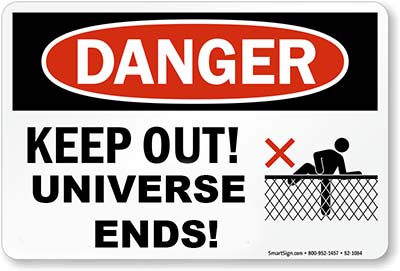
I’ve always had a little trouble with that part because I’ve never been able to figure out exactly what it’s expanding INTO.   I mean, if the Universe is everything and it’s expanding, then there must be a whole lot of nothing out there somewhere for it to expand into and I wonder if there’s some sort of a fence between the Universe and the Nothing.

But I digress.

Modern science has pronounced that the Big Bang was sort of an incredibly powerful firecracker that blew up and scattered detritus all across the Universe.  And they’re very proud of that pronouncement because they feel it gets rid of all of the superstitious nonsense like gods and goddesses and creation myths and fables.  But just saying that there was a giant cherry bomb in the middle of the Universe before there was a Universe and it somehow blew up and somehow made the Universe, doesn’t really explain anything.  There are still those questions like, “Who made the cherry bomb?” And, “Who lit the fuse?”  And, “What’s the point?”

For centuries, Sages, Mystics, Philosophers and other people with far too much spare time on their hands have tried to figure out exactly what that primal energy that exploded outward from the Big Bang is composed of.  Is it alive?  Is it conscious?  Is it thinking?  Is it feeling?  Is it in a bad mood or does it have a sense of humor?

There are a few religions and philosophies out there – like Taoism and Vedanta – that assert that the primal energy is very much alive and conscious.  And, although our egos tend to make us forget it, we ARE that energy.  In many ways, we may actually be the spear tip of that energy because we’re one of the few species we know of who have evolved into thinking, self-reflective, beings.

It makes sense, then, that we feel at our best when we’re in alignment with that energy.  And we feel at our best when we’re loving, creative, and playful, much like the energy of The Fool, dancing along with his little doggie.

It’s not a HUGE leap, then, to extrapolate that the basic, primal energy of the Universe is loving, creative, and playful.  When we’re laughing, having great sex, or making Golden Double Dorjes. To me, at least, that’s a lot more logical than thinking that we’re the left over wrappings of some giant firecracker.

Yippee!!!!

My ebook, “Just the Tarot,” is now available for free for anyone who has a Kindle Unlimited membership. For those of you who don’t, it’s still DIRT CHEAP!

The Five of Pentacles, Karma, and God’s Little Baskets of Muffins

Transforming ourselves through karmic selfishness.

I have a younger friend who HATES karma.

More specifically, he hates when he’s in the middle of an, “Oh poor me,” bitching session and someone shrugs her shoulders and says, “Well, that’s karma.”  

First of all, it interrupts the rhythm of his complaining and he has to go back and remember what he was so upset about.  

“What was I saying?  I know it was important . . . oh, I remember . . . life is meaningless and no one understands me . . .”

Secondly, it infuriates him because it suggests that the mess he finds himself in is somehow HIS fault and the whole point of his rap is that it’s everything and everyone else’s fault.  Which is just further proof that no one understands him.

This guy was raised by a Buddhist and that may have something to do with his constant irritation.  It’s developmentally important that teenagers be able to rebel against their parents.  The first way that we really begin to define who we are in the world is by making it clear that we aren’t our parents.  I imagine that it must be pretty damned difficult for a teenager to get any rebellion traction against a Buddhist parent.

“You know, Dad, sometimes I really hate you.”

“Well, son, all strong emotions will pass if we simply do a little deep breathing.  Remember, you’re the sky and your emotions are just clouds drifting by.”

Or

“I’ve been think about getting a tattoo.  What do you think about that?”

“Ah . . . perhaps you should get a tattoo of a double dorje or some other sacred symbol.  In a sense, it would be a constant reminder of the spiritual nature that dwells in physical matter.”

Or

“Maybe I’ll paint my face blue and dye my hair orange.”

“Hmmm . . . I wonder if you were a Druid in a past life.  Do you feel a particular attraction to oak trees?”

Aargh!  So it’s possible that this guy was deeply emotionally scarred by all of that loving kindness and unconditional acceptance from his parents.  If only they’d yelled at him or told him he was an idiot occasionally!  

Still, he does have a bit of a point about the notion of karma.

It’s perfectly understandable that people get a little riled up over the idea of crappy things happening to them because of what they may have done in a past life.  After all, most of us have absolutely no memory of our past lives and so it feels like we’re being punished for something that someone else did.  

Suppose I was Attila the Hun in a past life and in a fit of Barbarian Rage I whipped out my scimitar and beheaded a turtle.  Then 200 lifetimes later –   as Dan Adair –  I’m in a traffic accident and I get whiplash BECAUSE I decapitated that turtle.  That seems a little . . . unjust.  I mean, I’m NOT Attila in any sort of a meaningful sense, so why should I get sent to the principal’s office because Attila was a dick?

And then, to make it even worse, when I’m sitting there in my cervical collar reflecting on exactly HOW unjust it all is, an acquaintance says, “Oh, well, that’s karma.”  As my younger friend would put it:  “Fuck you.”

Now, there’s a particularly odious Christian doctrine called, “predestination.”  It holds that some people are born with the unchangeable destiny that they’re going to heaven when they die. Other people are born with the unchangeable destiny that they’re going straight to hell when they die.  It doesn’t matter what we do or how we behave, our ultimate destiny has already been decided at the moment of birth.

It’s like God is up there in the Kosmic Kitchen baking up human Souls and, as he pulls each one out of the Soul Muffin Pan, he tosses them into separate baskets marked, “Heaven,” and, “Hell.”

“Okay, heaven, heaven, heaven – whoops, you’re fucked – hell, heaven, fucked again, heaven . . .”  Like the beggars in the Five of Pentacles, we’re out in the cold and we’re going to stay there.

Theologians came up with a perfectly logical reason for this totally insane doctrine.  The idea is that God is all powerful and all knowing.  So if God knows everything, then that must mean that he knows everything that happened in the past, the present, AND the future!  And if God already knows what’s going to happen in the future, then he must already know who’s going to heaven and who’s going to hell.  Shazam!  There you are – it’s already determined.

That’s the kind of weird, Left-Brain, cuckoo for coco puffs vibe that a lot of people get off of the notion of karma.  It seems to be some sort of an inexorable process that was put into motion a long time before we came along and there’s not a damned thing we can do about it.  We’re either in the Heaven Basket or we’re in the Oh, You’re So Fucked Basket.  Like it’s something that happens TO us for no particular reason.

Of course, the important point that most of us miss is that karma isn’t happening to us, we’re happening to karma.  It’s a totally dynamic process and it’s something that we can change every single day simply by the ways that we behave right now.

The most simplistic way to think of it is as a sort of a bank account.  Rather than being born into a You’re-Going-to-Hell Basket or a You’re-Going-to-Heaven Basket, we’re born with a certain amount of Karmic Kash that we earned (or didn’t earn) in past lives.  The Dalai Lama will probably be reborn with several savings accounts, a really huge checking account, many certificates of deposit and a great coin collection.  Attila the Turtle Beheader, on the other hand, will be reborn with 50 cents in the bank and a lot of overdue bills.

The thing is, though, that the way that we’re born isn’t our destiny.  The way that we behave is our destiny.  Attila, for instance, might start a refuge for homeless turtles.  Every single time that he saves a turtle and gives it a meaningful life – KA -CHING – that’s another deposit in his Karma Account.  The Dalai Lama, on the other hand, might decide to support Eric Trump for President and – ZAP – that’s a major withdrawal from his Karmic Account.

As David Michie said in, “Buddhism for Busy People,” 

In what is one of the most outstandingly ingenious aspects of Buddhist teachings, we come to realize that our own selfish interests lie in being altruistic . . .months, years or decades of being generous for selfish reasons begin to have a predictable effect . . .what starts out as a contrived and self-conscious change of attitude and behavior results in a genuine metamorphosis.

In other words, we don’t have to start out as Mother Theresa or an Awakened Master.  We can start out as perfectly normal, selfish, self-centered human beings who are being kind to other beings because we DON’T want to end up wearing a cervical collar.  When we pick up a turtle that’s in the middle of the road and leave it safely on the other side, we can be doing it for the completely selfish reason of wanting to fill up our Karmic Account.

As we continue those little acts of kindness they gradually transform us.  They become acts of loving/kindness, where we’re actually noticing and caring about the welfare of the people and beings around us.  The translation of the word, “karma,” is, “action,” and that’s the key.  Our actions change us, even if they originate in selfishness.

And that’s how Attila the Hun becomes the Dalai Lama.  Pretty simple.

The Chariot, Choices, and Man in the Moon Epaulettes

Choosing new lives after devastating loss.

I’ve always loved the way that the guy is dressed in The Chariot Tarot card.    I mean, what a spiffy outfit!  He’s got a crown with a star on it, his very own scepter, and he’s rocking a sort of a skirt with all of the signs of the zodiac on it.  And the pièce de résistance is those wonderful Man in the Moon epaulettes. I mean, this is a guy that, if we saw him walking down the street, we’d definitely be impressed with how put together he is.   Not to mention his bold sartorial choices.

Of course, there’s a major wink in this card.  When we look at the two sphinxes that are pulling the chariot he stands in, we realize that (a) they’re sitting down; (b) they’re facing in opposite directions; and (c) there are no harnesses or reins attached to them.  In other words, the Charioteer, despite his glorious finery, is going nowhere any time soon.

The reason he’s not cruising is a matter of choice, and I don’t mean that he’s chosen not to move.  He’s psychically paralyzed.  The black and white sphinxes represent duality. The second that duality comes into the picture, we’ve got choices to make.  Should I go right or left?  Should I get this job or that job?  Should I get married or stay single?  Should I follow the Yellow Brick Road or just hang here with the Munchkins?

When we suddenly have too many choices, we can become frozen in place, like the classic deer in the headlights.  Which is ironic, because for so much of our lives we bitch about NOT having any choices.  We’re stuck in a dead end job.  Or we can’t leave a toxic relationship because we’re worried about the kids.  Or we’re living in a town we hate but we don’t have the money to move.

If only . . . if only . . . we had a choice.  Things would be different.  Life would be good.

Now, when our lives suddenly blow up – and I mean really blow up – we may not have much left.  If we go through a devastating divorce or our partner dies or we lose all of our money, we’re left standing there with nothing.  The one thing we DO have left is choices.  

It sounds paradoxical, because when we, “lose,” everything, we feel powerless.  We feel as if all of our usual, reliable resources have been stripped away from us and we have nothing left to work with.  Oddly, though, we find out that we have much more to work with than we did before we lost everything, and that’s because we suddenly have choices.  As Kristofferson said, “Freedom’s just another word for nothing left to lose.”  When we lose everything, we can actually be free, perhaps for the first time in our lives.

The Chariot is a wonderful metaphor for how we traverse our lives in ordinary times.  We may not actually be going anywhere, we may have no sense of direction, we may feel that our lives lack any real meaning, but by god we’re well dressed.  Before we step out into the world every day, we make sure our crowns are on straight, our zodiac skirts are clean and pressed, and we have a firm grasp on our scepters.  We may be, “leading lives of quiet desperation,” on the inside, but we see to it that our outsides are impeccable.

We’re standing there in our glorious, glittery chariots that we call our lives and – BOOM – we get fired or we come home and find our wife/husband shtupping our best friend or we get run over by an out of control ice cream truck.  Suddenly we’re lying there in the ditch with our crown all bent to hell, our scepter broken in two and our epaulettes torn off.

And, of course, we’re filled with immense grief for all that we’ve lost.

One of the first things that happens in the grief process is that we try to pretend that everything is normal.  Nora McInerny talks about that in one of her videos on grief. In a period of just a few months, her father died, her husband died and she had a miscarriage.  When friends and family would ask how she was doing, her constant refrain was, “I’m fine.  I’m alright.  I’m perfectly fine,” though she was shattered inside.

So basically, our first impulse is to pick ourselves up out of the ditch, dust off our zodiac skirts, glue our scepters together and put our bent crowns on our heads.  We’re fine.  Perfectly fine.

That works for some of us, after a fashion.  If we get our outsides together, then we can reassure ourselves that our insides must be okay, too.  Hey, I’m going to work, I’m paying my bills, I eat meals . . . sort of . . . so I must be okay.  Our friends and family will shine that back at us, too, because they really, really don’t want to deal with us NOT being okay.  Right around the six month mark after a death they’ll start to be worried and say something like, “Look, isn’t it time you start to get over this?  Maybe get out and meet someone?  You know . . . get on with your life?”

For many of us, though, that doesn’t work.  We know that the crown is never going to fit on our heads again, the goddamned scepter won’t stay glued together and our Man in the Moon epaulettes are in shreds.

At first blush, that can feel incredibly overwhelming, because there’s a realization that so much of what we used to call our lives was total bullshit.   If everything that we thought was so solid, so dependable, so . . . normal . . . can be taken away in a flash, then it wasn’t worth much to begin with, was it?

Then we enter into another phase of the grieving that can be just as painful as the first, shocking, phase, which is, “what do I do now?”  How do I put my life back together in such a way that it can’t be exploded into pieces by the next shit storm that blows through?  We have to make choices.

That secondary phase can be agonizingly slow and filled with crushing anxiety.  Like the Chariot, we can end up frozen in place for months, perhaps years. Just the realization that we made SO many wrong choices in our previous, pre-disaster lives, can render us terrified of making any choices now.  How do I not screw this up again?

The ironic thing is that eventually it turns out that even the idea of making new choices is bullshit.  There’s a new self that begins to emerge spontaneously and, much like the birth process, it shouldn’t forced and it can’t be stopped.  The new self is kinder, more compassionate, more loving, more patient, more authentic.  And a lot less concerned with how our crowns fit.

It was there all along, just waiting for the right circumstances to be born.  

The Buddhists talk about it in terms of, “original nature.”  They say that we each have an incredibly beautiful gem inside of us that’s covered with common rock.  As we chip away at the rock, we gradually reveal the jewel that is our real selves.  Sometimes it may take decades of patient meditation and practicing loving/kindness to reveal it.  Sometimes it just takes getting run over by an ice cream truck.

Faeries and Angels and the Something Out There That Wants to Have a Chat

A closer look at synchronicity and the concept of a responsive universe.

There’s Something Out There.

 . . . And it’s watching you.

Cue in creepy horror story music.

LOL!  Not really.  More like cue in joyous, happy music.  But there IS Something Out There.  Something mysterious that we can occasionally feel but can’t quite focus on.  It flits by at the corner of our eyes but when we turn to look at it, it’s gone.

Here’s a fun experiment that anyone can try.  Think of a problem that you’ve got or a question that you need an answer to.  Really concentrate on it and then send it out into the universe and ask for an answer.

Then over the next week, watch for the answer.  You don’t have to get all serious about it (in fact, that may be the worst thing to do) but just remind yourself to look for the answer every time that you go out the door.  And it will appear.  It will probably be in symbolic form rather than a post-it note dropping out of the sky, but it will be there.  Perhaps a book will fall out of a shelf opened to a page that has the answer.  Maybe it will be a highway sign flashing a message on your way to work.  Maybe it will be a particular song that comes on the radio every time that you turn it on.  Perhaps a total stranger will walk up to you and say something that fits perfectly.  However it appears, if you ask the question and then diligently look for the answer, the answer will appear.

And that’s strange and wonderful and magical and marvelous and has some really interesting implications.

Now, our current term for that is, “synchronicity,” which was coined by Carl Jung.  Jung was one of the few honest scientists of his time and he noticed that weird shit happens and he actually wrote about it.  He noted weird things that  we’ve all experienced, like thinking of someone we haven’t seen in years when the telephone suddenly rings and it’s that very person calling.  One of his own examples was that he was treating a patient who was describing a dream she’d had about a scarab beetle when – shazam – a scarab beetle appeared on the outside of the window.

He looked at those occurrences, analyzed them thoroughly, and then concluded, “That’s weird. Really, really . . . weird.”

Unfortunately, when Jung talked to his fellow scientists about it and asked, “Have you noticed that weird shit happens?” they all said, “No.  We try very hard to not notice that.”  In other words, if they couldn’t explain it, they preferred to ignore it.

Jung’s very careful definition of synchronicity was, “a meaningful convergence of inner and outer events.”  Which is just another way of saying, “When you ask the universe a question, Something Out There answers you.”

There’s Something Out There.

A large part of the history of the human race has been trying to figure out just exactly WHAT or who the Something Out There is.  There have been a lot of interesting answers, too.  Human cultures have had hundreds and hundreds of gods and goddesses whom we have posited as, “the Something Out There,” that answers our questions and solves our problems.

We’ve gotten a bit lazy and unimaginative in modern times and we only seem to be able to come up with one god, but for most of our evolution we actually had specialized gods who answered specific questions.  If we were having problems with a lack of abundance in our lives, we might ask Lakshmi to give us answers for those questions.  Or if we were suffering through a drought, we might appeal to Oshun for rain.  Or if we were faced with insurmountable obstacles, we could turn to Ganesh and ask him to remove them.

All of the gods and goddesses are a recognition of the fact that there’s Something Out There that seems to listen to us and provide the answers that we need.  Some of the more spiritually, “evolved,” religions like Taoism posit that there’s a Something Out There but it’s not too terribly interested in our personal problems.  Rather, the Something Out There is a sort of an impersonal current that runs through the universe and we solve our problems by becoming more aligned with its energy.  The more we’re in harmony with that energy, the more likely we are to be happy and not have any problems that need answers.  We just have to get in the flow, but the flow doesn’t particularly care if we do that or not.

That’s never really been terribly satisfactory to the human spirit, though.  We seem to need to feel a personal connection, to know that the Something Out There actually sees us, hears us, and cares about us.  Despite the fact that Taoism as a philosophy may posit an impersonal universe, Taoism as a religion has plenty of gods and goddesses to talk with, not to mention swarms of ancestors we can consult on a daily basis.  Buddhism as a philosophy may be perfectly acceptable to atheists, but most Buddhists pray to Tara and have altars in their homes.

I love the approach that Brian Froud and Jessica MacBeth took in the Faeries’ Oracle Cards.  Not only is there a Something Out There, there are a LOT of somethings out there, in the form of Faeries, Gnomes, and Elementals who are perfectly willing to give us a wink and tell us when we’re going down the wrong paths.

In a very similar way, I have several friends who see and talk with angels and spirit guides on a regular basis.  To them, those are the Something Out There that answers when they ask a question.  Sonia Choquette has actually mapped out dozens of different types of angels and guides and elementals, each with different functions and different answers.

For as long as humans have existed, we’ve known that there was a Something Out There that is conscious, caring, and interacts with us to make our lives better.  And for just as long, we’ve been trying to fill in the blank about exactly who or what that Something Out There is.  

We don’t really need to do that, though.  We don’t have to be Spiritual Masters or be able to see the angels sitting on our couches.  If we have faeries living in our gardens and they want to appear to us and tell us their names, that’s great, but it’s not necessary.  We can just start with the knowledge that there’s Something Out There, which is magical enough for most of us, and go from there.

“Hey, Something Out There, I really like the person I’ve been dating and I’m wondering if we should move in together?”

“Hi, Something Out There, I’ve been offered a better job, but it means moving away from my family and I’m just not sure if I want to do that.  What do you think?”

“You know, Something Out There, I was wondering if I could really make a living as an artist, or am I just bullshitting myself?”

And the Something Out There will give us the answer and the answer will be right.

All we have to do is . . . Believe . . . Ask . . . and Listen.

Easy peasy.

Remember that my e-book, Just the Tarot, is available on Amazon and is less expensive than a bag of Doritos. If you buy one of those little jars of spinach dip to go along with the Doritos, my book is actually THREE TIMES LESS EXPENSIVE!!! Jesus, what a bargain!

The Four of Pentacles, Elon Musk, and the Buddha in High Top Sneakers

An exploration of materialism as a source of joy.

I recently bought a pair of Keds High Top Sneakers and I got a major spiritual insight out of them.  That may sound a little weird but Robert Pirsig in, “Zen and the Art of Motorcycle Maintenance,” said that the Buddha could reside as easily on a computer chip as on a lotus.  So I see no reason that the Buddha couldn’t wear Keds High Tops.

I actually have a long history with Keds High Top Sneakers.  More accurately, I have a long NON history with them.  When I was a kid I desperately wanted a pair of them.  I thought that, without a doubt, they were the coolest sneakers in the entire world, and I was especially enamored of the circular white rubber sticker on the ankle that said, “KEDS.”  I knew that if I could get my feet into those sneakers all of my problems would be solved and I would live happily ever after, forevermore.

So, of course, my parents wouldn’t buy them for me, because that’s what parents do when you’re a little kid.  They stomp all over your sneaker dreams and leave you as a damaged human being who will grow up to be maladjusted and unable to cope with the modern world or ever form a meaningful relationship.  And all because they wouldn’t buy you a lousy pair of Keds High Tops.  Tragic, really.

I don’t know why I had to get this old before it finally occurred to me that I could buy my OWN Keds HIgh Top Sneakers.  Talk about self-love!  Talk about nurturing my Inner Child!  What a brilliant idea:  I could buy my own Keds!

And so I did.

The moment of Spiritual Keds Insight came when I opened the package at home and found myself feeling pure, unadulterated . . . fun.  It was just a LOT of fun pulling the little paper wads out of the toes, lacing them up, pulling them on and walking around the house admiring my feet.  My new KEDS HIGHTOP feet!

And that’s when I solved a basic conundrum I’ve been dealing with about  affirmations, visualization, and all of the various courses and videos out there that teach us, “how to have the life and abundance that we’ve always dreamed of having.”

I realized that I’d been feeling guilty about having material possessions that make me happy.  I’m in good company in experiencing that guilt because a lot of us – particularly those of us who were raised in Christian families – have been taught that material possessions are really, really bad.  Jesus rapped on that subject several times and said that it was easier for a camel to get through the eye of a needle than for a rich man to get into heaven.  He didn’t choose to expand the thought and tell us whether it’s easier for a camel to get into heaven than for a rich man to get through the eye of a needle, but I would certainly think so, all things being equal.  Nonetheless, it was clear that he had a mighty poor opinion of rich people and all of their toys.

One result of that early programming about material possessions (they are bad and you won’t get into heaven) is that I have trouble really embracing the New Thought teachings about abundance.  I definitely believe in visualization and in affirmations because I’ve seen them work in my own life.  Still, when the speakers get to the inevitable part where they talk about abundance, I veer off course.  Their talks usually go something like:

“Just a few short years ago I was so poor that I couldn’t even afford to have a penis.  I was so far down I had to look up to see a snake’s belly.  I was so poverty stricken that all I could afford to eat was dirt.  Why, I remember going into coffee shops and asking for a cup of hot water because it was free and then, when they weren’t looking, I’d mix some dirt into the water and pour ketchup on it so I could have some dirt soup.  But then one day when I was sitting in the local park –  because that’s the only place I had to sleep – I was chewing on some dirt and licking dew off of the leaves of a tree to wash it down and I suddenly understood . . . EVERYTHING!  And that’s when I developed my Amazing New Method of visualizing.  Now I have a private jet, 12 sports cars, 6 mansions, 8 girlfriends and, yes, friends, I’ve even grown a penis.  A big one.  And if you buy my new book you can have all of that, too!”

I’m good with that, right up until the point where they mention the jet, sports cars and mansions and then I think, “Bad . . . you won’t get into heaven.”  Because, you know, materialism is shallow and not really spiritual or evolved and people become obsessed with making money and turn into Donald Trump and Elon Musk, even though we kind of have to halfway forgive Elon because what chance did he have with a name like that? 

There’s even a Tarot card for it:  The Four of Pentacles.

It shows a man sitting on his little stool, clutching a coin to his chest, with another coin sitting on his head.  It’s not so much that he owns his money as that it owns him.  It’s sitting on him as much as he’s sitting on it. You can take one look at him and tell he’s not getting through the eye of a needle, much less into heaven.

Now, one of the most misquoted passages from the Bible is, “Money is the root of all evil.”  The actual passage says that THE LOVE OF MONEY is the root of all evil.  And that’s what my new sneakers taught me:  it’s not about the material possessions, it’s about the ATTACHMENT to them.

Buddhists talk a lot about attachment.  When we attach to material possessions (or even lovers)  we automatically start to think of them as, “ours.”  As extensions of ourselves, as part of our egos.  We feel more important because we have, “stuff,” and the more stuff we get, the more important we feel.  Then we start looking around at other people and comparing our stuff to their stuff.  If we’ve got more stuff than them, or more expensive stuff, then we must be better than them.  If they’ve got more or better stuff, then we become jealous of them and maybe even grow to hate them or dream about them losing all of their stuff so that we’ll be more important.

That’s the point where we’ve stopped seeing ourselves or others as humans and substituted material possessions for a measurement of worth.  Yes, that’s bad and, no,  we won’t get through the eye of a camel anymore, not even a rich camel.

But there’s a sort of a, “pre-attachment,” point with material possessions where they’re just a lot of fun, and fun is good in the same way that happy is good.  That’s what my Keds sneakers taught me.

If we give a new toy to a normal, very young child, the kid is going to be just as happy as a little clam in diapers.  She’ll play with it and stick it in her mouth and drool on it and carry it around for days.  And laugh a lot.  It’s a wonderful, fun thing to watch and there’s no downside.

Within a very short period of development, though, we begin to see a change in the way that some children receive new toys.  Especially in homes where there are too many children and not enough love, we see kids start to attach to their toys.  This is MY toy, it’s not yours.  They don’t want to share it with the other children and may begin to hide and even hoard their toys.  They may go into absolute screaming fits if one of the other kids tries to play with their . . . stuff.  Basically, even at that very young age, they’ve learned to substitute material possession for self worth and love.

The trick, then, is to re-learn the joy of a new toy without attaching to it.  There is absolutely NOTHING wrong with enjoying material possessions.  Hell, it’s probably hard wired into our nervous systems.  

I can thoroughly enjoy my Keds High Tops without at all thinking that my High Tops are better than your loafers.  I don’t have to run out and buy 20 more pairs of High Tops so that I’ll have a lot more of them than you.  I don’t need to put my High Tops in a safety deposit box.  I don’t have to get all tragically existential because, yes, someday my High Tops will wear out, so what’s the point of life anyway???

I can just enjoy them and I can do that with any other material possession that I want.  There’s nothing innately evil, wrong, or unspiritual about Keds High Tops.  They’re fun and fun is good, in the same way that happy is good, and happy is very good indeed.

At the end of the day, we’re here in the Earth School and the Earth School is chock full of fun toys, so we can just take pleasure in them, share them, and even love them for exactly what they are: toys.  Life is good and no one named us Elon Musk, so there is much to be grateful for.

Happy Buddhists, Christian Apple Munchers and Garden Gnomes in Tutus

Why Buddhism is actually a happy religion.

The Dalai Lama giggles a lot.  Have you ever noticed that?  On a certain level, he seems to find life to be absolutely hilarious.  For instance, there’s this wonderful interview that Barbara Walters did with him and, toward the end of the video, he absolutely cracks up about the fact that Eskimos kiss each other by rubbing noses.

It seems a little strange because Buddhism has a reputation for being a very dark, solemn sort of a religion.  That reputation probably flows out of the Buddha’s admonition that, “life is suffering,” which is not exactly what he said, but it’s the way that it’s frequently translated.  So we have this religious doctrine that seems to say that life is suffering, yet we see Buddhists like the Dalai Lama and Thic Nhat Hahn who not only seem to be happy, they seem to be really, really, REALLY happy.

What’s up with that?

The tarot card, The Hierophant, is all about formal doctrine, rather than first hand experience.  Religion, rather than spirituality.  It represents what religions SAY they are, rather than the way that they’re actually practiced on a daily basis by their followers.  Oddly, there’s a curious optimism that permeates Buddhism once we get past the doctrines and get into the actual experience of, “living Buddhism.”  

Although I’m sure that the Buddha wouldn’t dig my doing this because it involves a lot of judgment,  one of the best ways to illustrate that optimism  is by contrasting it with the dominant Western religion, Christianity.  In particular, how do the two religions actually VIEW human beings?

Christianity starts out with the basic premise that humans are miserable, flawed sinners.  According to Christian doctrine, we’re actually born that way, which doctrine is referred to as, “original sin.”  Now, it’s kind of hard to get a grasp on what original sin really means, but when you wrestle it to the ground it seems to mean that every single one of us was born with, “the stain of Adam,” on our souls.  Which goes back to Adam and Eve getting thrown out of the Garden of Eden because that bitch Eve just HAD to have an apple

I know, right?  It’s kind of hard to figure the reasoning.  Still, it appears to say that because our great, great, great, great, great grandmother to the hundredth power munched on an apple, we’re all born sinners and destined to go straight to hell if we don’t find redemption.  That’s also, by the way, the reason that women have been, “cursed,” with having periods every month.

I’m not making this shit up.  

So, according to Christianity, at the core of every human being there’s a rotten, sinful, apple muncher and we come into the world that way.  That’s why you’ve got to get babies baptized right away, because babies are basically pure evil, as we all know.

The Buddhist viewpoint is very much the opposite.  Buddhists believe that at the core of every human being is absolute perfection.  We just don’t know it.  Tibetan Buddhist Master, Chagdud Tulku Rinpoche, described this by saying that we all have a beautiful jewel at the center of our hearts which is covered over by common rock.  Our job is to slowly chip away at the rock that’s covering our jewel so that more and more of it is exposed as we go through our lives. Yes, life is suffering, but it’s suffering because we remain ignorant of our true nature, which is bliss and joy.

To put all of that in a nutshell, Christianity says that we should pretty much hate ourselves and Buddhism says that we should pretty much love ourselves.  It shouldn’t be a major news flash to anyone that hating yourself feels really, really bad and loving yourself feels really, really good.

Which may be why the Pope doesn’t do a lot of giggling.

There’s another major implication here, which is that Chrisitanity views, “salvation,” as coming from an outside source and Buddhism sees it as very much of an inside job.  Christianity says that we are SO fucked up and miserable and down in the dirt that we literally have no chance of saving ourselves.  We just have to pray and hope that Jesus is going to ride in on his white horse and whack us with his redemption wand and THEN we get to go to heaven.

Buddhists believe that our salvation, our Buddha nature, is already inside of us, so ANYONE can become a Buddha.  That means you, me, our Aunt Gertrude, or even the weird guy down the block who collects garden gnomes and dresses them in tutus. And we don’t get there by some outside deity or force, “forgiving us,” we get there by sitting our asses down on the meditation cushion and by practicing love and compassion in our daily lives.

Which is a lot of work and a lot of responsibility but it’s also tremendously liberating.  It’s looking at ourselves and realizing that if we’re not happy it’s because we didn’t do the work.  We may have talked the talk but we didn’t walk the walk.  We didn’t uncover that jewel inside of us.  It’s TOTALLY up to us.

Wow!

Another probable reason that the Dalai Lama giggles a lot is that Buddhists believe that we are all connected.  I don’t mean that in some generalized sense of, “our common humanity,”  or, “our shared heritage,”  or the Christian sense that we’re all, “born in sin.”  No, I mean, really, genuinely, energetically connected to each other, just like there’s some invisible thread that runs from me to you and from you to another person and so on and on.  Whatever we’re feeling and experiencing emotionally and spiritually is going out into a sort of a giant, collective web of consciousness and affects not just us, but everyone else, as well.

Think of it this way:  if we’re going out grocery shopping and we’re in a really high vibrations, zippety doo dah sort of a mood, some of that positive energy is going to spark off of us to everyone we encounter, from the kid stacking tomatoes at the vegetable section to the cashier who checks us out.  On the other hand, if we’re in a really sour bah humbug fuck you mood, some of that negative energy will be transferred to other people as well.  We leave everyone we meet either feeling a little better or a little worse.

Now take that same phenomenon of energy transfer and magnify it to influencing every person on the entire planet.  That doesn’t mean that if we wake up in a rotten mood trains will crash and someone’s flower garden will die.  But it does mean that everything we’re feeling is radiating out to everyone else, even if it’s one little drip at a time.  The way that the Buddha put it was:

“Goodness, like rain in a bucket, gathers one drop at a time.

Evil, like rain in a bucket, gathers one drop at a time.”

So, if you’re a really highly evolved, spiritually aware person and you KNOW that everything you’re feeling is affecting everyone else, what are you going to do?  Are you going to sit around your house feeling like crap and radiating out bad vibes?  Or are you going to try to stay in as high and loving a place as possible, as much of the time as possible, and send out good vibes?

Obviously, you’re going to try to stay as happy as possible.  And if you stay as happy as possible, for a long enough period of time, you’ll probably start to giggle.

Eating Pancakes with Jesus, Having Lunch with Lucifer and Looking Inward with the Three of Pentacles

A contrast in Christian and Buddhist views of human nature and spirituality.

Are we on the outside looking in or on the inside looking out?

Do we think that heaven or redemption or satori or enlightenment or whatever we want to call it, is, “out there somewhere,” or do we think it’s inside of us, waiting to be uncovered?

Which direction are we gazing? Inside or out? It’s a fundamental, crucial question in terms of how we approach life and our personal spirituality.

In Western Christianity, there’s no question that the focus is very much outward.  Heaven, redemption, blessings are seen as things that exist but they’re not an innate part of us. Christian theology goes something like this:  

“God made you in his self-image but something kind of went wrong.  God is perfect, but you aren’t.  In fact, you’re really, really flawed.  In fact, let’s be honest here, you’re a real piece of  shit.   You like to fornicate and steal and lie to people and, um, eat bacon and shrimp.  You’re pretty much hopeless, unless you change your ways.  If you change your ways, you can eat pancakes with Jesus in heaven, and they use REAL maple syrup, not that Mrs. Butterworth’s crap.  On the other hand, if you DON’T change your ways, well, God is going to have to toss you into a flaming pit where you’ll burn in agony forever.  Because he loves you.”

Now, the salient point in all of that is that THERE IS NO GOOD INSIDE OF US.  Whatever blessings or grace may exist, they exist, “out there,” in God, and it’s only by overcoming our basic, sinful nature that we can have any hope of finding happiness and salvation.

It’s only by becoming, “not us,” that we can get God’s approval and get into that pancake breakfast with Jesus.  That sets us up for a lot of spiritual and psychological tension because, basically, everything we really like to do as human beings is a sin and sends us toward having snacks with Satan, instead of breakfast with Jesus.  Everything from sex, enjoying our possessions, loving a good meal, having a nice lazy day, eating shell fish or pork, even masturbating are ALL deadly sins.

What causes us to commit all of our sins?  Why, our bodies, of course!  It isn’t really ME that wants to get into bed with Mary Jo and fuck like bunnies, it’s my body.  It isn’t really me that wants a BLT, it’s my body.  More specifically, it’s my DAMNED body.  If it weren’t for my body, I could be, like, I dunno . . .  Mother Teresa . . . or maybe Mahatma Gandhi, except he wasn’t a Christian so he went straight to hell, of course. 

The end result of that is that we end up hating even our own bodies because the body is the source of all of those terrible impulses that cause us to sin.  That’s why Medieval christians developed wonderful traditions like whipping themselves and self-crucifixion.  The terrible, sinful body had to be literally beaten into submission so that it wouldn’t make them sin, or they’d end up having lunch with Lucifer or brunch with Beelzebub (also known as, “Beelzebubba,” if you live in Texas.)

It’s interesting and even a little startling to our Western minds, to compare that Christian model of spirituality with the Buddhist model.  Tibetan Buddhists speak of basic human nature in terms of a precious jewel or crystal that is covered with plain rock. Our job, our spiritual quest, is to uncover that beautiful jewel by chipping away at the rock, one little piece at a time.  By meditating, practicing mindfulness, and building loving/kindness into our lives, we gradually reveal more and more of the jewel, our true nature.  As Chagdud Tulku Rinpoche’ put it:

“Enlightenment is not anything new or something we create or bring into existence. It is simply discovering within us what is already there. It is the full realization of our intrinsic nature. 

In sharp contrast to Christian theology, we aren’t terribly flawed,”sinful,” beings.  Instead, we are beings that are incredibly beautiful, holy, and wonder-filled.  We just haven’t uncovered that part of our nature, that precious jewel, yet.

Our redemption isn’t, “out there,” it’s not something we’re going to find in heaven or a book.  It’s very much, “in here.”  It’s something that we find by looking inward, toward our true nature, by meditating, consciousness, and increasing the love in our hearts.

This isn’t to say that Buddhists don’t have their Greatest Hits list of, “sins.”  They condemn anger, judging others, envy, greed, etc.  But, they don’t condemn them in terms of their being a part of our basic nature.  Rather, they’re considered sort of side trips that lead us away from our basic goal of enlightenment.  They’re distractions, rather than definitions of who we really are.

There’s actually a major Buddhist doctrine called, “Precious Human Birth,” which not only says that we’re NOT terrible, sinful creatures, it says that if we were born human, we hit the fucking jackpot.  Only human beings are able to consciously contemplate life, make ethical decisions, and improve our spiritual state of being.  When we consider all of the trillions of other beings on our planet who were incarnated as insects and animals, being humans puts us in a very, very, VERY small minority.  We lucked out.

It’s a major shift in thinking for most of us who were raised in the West.  Our bodies aren’t sources of primal, evil urges; they are precious vessels that contain an ineffable beauty just waiting to be brought to the light.  They are a gift beyond comprehension.  Heaven and salvation aren’t up in the sky or hiding in a holy book – they’re in our hearts.

And if heaven is in our hearts, we are sacred.  Umm . . . really? Hmmm . . .  Are you sure?

The Three of Pentacles is a pretty good illustration of the two choices we can make.  The stone mason stands on a stool, mallet in hand, ready to carve.  Beside him there is a monk and a fool holding a plan.  The monk represents a religious creed, a looking outward to others for answers to our spiritual quest.  The fool represents our basic human nature, that surge of playful, happy spiritual energy that occurs when we gaze within and joyfully embrace what already exists in our hearts and souls.

We just have to understand that everything that we want to be, we already are.