Didja ever notice that we tend to discuss time in almost exactly the same way that we discuss money?
Consider some of these phrases:
- We spend time.
- We save time.
- We waste time.
- We invest time.
- We say that we’re running out of time.
- We tell people that we don’t have enough time.
And, of course, the one that really lets the cat out of the bag: “Time is money.”
In other words, we’ve made time into a commodity. We assure ourselves that we don’t have enough of it, but we trade substantial portions of it to our employers in exchange for money, which then allows us to take vacations when we’ve stacked up enough moolah, because we, “need some time off.”
Now, there are moments in human history when we, as a species, have made such monumentally stupid decisions about something that they amount to an evolutionary wrong turn and scar us forever. I discussed one such moment in my previous post, “Happiness, Capitalists, Yellow Rocks, and Radical Meditators.”
At some point in ancient human history, a person picked up a piece of gold and said, “I have a yellow rock and you don’t.” The appropriate response would have been to say, “Dude, what good is it? You can’t eat it and you can’t fuck it. Get over yourself.”
But, instead, we said, “I want one, too.” What followed was centuries of murder, pillaging, and decimating native cultures, all in the name of determining who had the most yellow rocks.
In much the same way, there was a point in human history when some idiot asked, “What time is it?” We have to imagine that the person standing next to him replied, “It’s day time. What are you blind? The sun’s up there in the sky and you can see your hand in front of your face. It’s day time.”
“No, I mean, exactly what time of the day is it?”
“Who cares? If it’s day time, we get up. If it’s night time, we go to sleep. Who cares what part of It’s-Get-Up-Time it is?”
“Well, if we don’t know precisely what time of It’s-Get-Up-Time it is, how are we supposed to know when to have lunch?”
“Oh . . . shit . . . I never thought of it that way. That’s an important point. I don’t want to miss lunch.”
“I know what! Let’s build a sundial! Then we’ll know exactly how much time we’ve got in each day and when to eat lunch.”
Thus was born the concept of time as a commodity. Something that could be measured and therefore controlled.
This form of insanity became SO popular that by 46 BC Julius Caesar said, “You know, we’ve actually got too much time going on and we need to get it under control, so I invented . . . the calendar. From now on, there are exactly 365 days in each year. Well . . . I mean, except for every fourth year when there’s an extra day and we’ll just throw that one in during February so no one notices.”
It seemed as if we finally had time under full control and everyone knew exactly when to eat lunch, when suddenly, 1600 years later, in 1582, Pope Gregory said, “Actually, I’ve been thinking about it, and I think that there are 365.2425 days in the year instead of 365.25.” And thus was born the Gregorian calendar, which we use to this very day.
Hurrah!
Now, let’s be honest. If we had a friend or a relative who was terribly, terribly, TERRIBLY worried about whether there are 365.25 days in the year or 365.2425 days, we’d say, “You know, that guy’s plumb nuts. He actually stays up at night worrying how long the year is.”
Really, there are only two natural measures of time here on the Earth school. The first is the number of times that the Moon gets full.
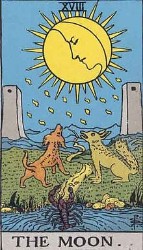
And the second is how many Full Moons occur while we rotate around the Sun.
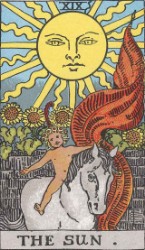
It gets light and then it gets dark and that’s night and day. We have more dark in the winter and more light in the summer and those are the seasons. The, “shortest,” day of the year is right around December the twenty first, so the, “new,” year starts right around December the twenty second. Easy peasy.
We can see that more natural approach to time with the Indigenous Peoples of the Pacific Northwest. They had one month that was called, “the time to catch salmon.” Another month was, “the time to gather berries.” Another month was, “the time to catch eels.” My favorite was February, which was, “the time to do nothing,” (probably because of that pesky extra day that Julius Caesar discovered.) They didn’t have any concept of weeks or months or hours in the day and were totally amazed at our obsession with watches and clocks and calendars.
So where DID this need to measure and control time come from? We can get a very clear picture on that when we consider the origin of the word, “calendar.” It was, “Kalendorium,” which was defined as, “A book in which the interest on loans (due on the first of the month) was recorded. An account book. A ledger.”
So the concept of time wasn’t invented to be sure that we all had lunch at the right time. It was invented to be sure that we paid back our loans on time.
Basically, the guys who had collected all of the yellow rocks said, “I’m going to loan you this yellow rock because all you have is copper rocks and you can’t even buy lunch with that. BUT . . . in exchange for my giving you one of my yellow rocks, you have to pay me back TWO yellow rocks. Unless, of course, you hold onto my yellow rock for longer than the period of the loan, and then you have to give me THREE yellow rocks.”
And thus was born capitalism.
It became more radical, of course, with the beginning of the industrial age when we saw the birth of the wage slave. That’s when the people who had collected all of the yellow rocks REALLY dug in and took control of our time.
“Look here,” they said, “I don’t have a lot of time because I’m busy counting all of my yellow rocks. You, on the other hand, don’t have any yellow rocks but you have a lot of time, which, up until now, was free time. Now, I’ll give you the dust in the bottom of my bag of yellow rocks in exchange for you using all of your time to work in my factory, and then you can afford to buy lunch. I mean, if I decide to give you a lunch break.”
And thus was born the minimum wage.
And that is how we came to lose our time. Now we can’t afford to waste our time, because we have to spend our time, in order to invest our time because . . . well, we’re running out of time.
Time is money!

My ebook, “Just the Tarot,” is still available on Amazon.com for less than you’d pay for three rolled tacos, even without guacamole’. You really can’t afford to turn down a bargain like that.






 Just the Tarot