The Sun, the Moon, Julius Caesar, and Why There’s No Such Thing as a Free Lunch

A brief look at the origin of the concept of time and its link to money, capitalism, and lunch.

Didja ever notice that we tend to discuss time in almost exactly the same way that we discuss money?

Consider some of these phrases:

  • We spend time.
  • We save time.
  • We waste time.
  • We invest time.
  • We say that we’re running out of time.
  • We tell people that we don’t have enough time.

And, of course, the one that really lets the cat out of the bag:  “Time is money.”  

In other words, we’ve made time into a commodity.  We assure ourselves that we don’t have enough of it, but we trade substantial portions of it to our employers in exchange for money, which then allows us to take vacations when we’ve stacked up enough moolah, because we, “need some time off.”

Now, there are moments in human history when we, as a species, have made such monumentally stupid decisions about something that they amount to an evolutionary wrong turn and scar us forever.  I discussed one such moment in my previous post, “Happiness, Capitalists, Yellow Rocks, and Radical Meditators.”

At some point in ancient human history, a person picked up a piece of gold and said, “I have a yellow rock and you don’t.”  The appropriate response would have been to say, “Dude, what good is it?  You can’t eat it and you can’t fuck it.  Get over yourself.”

But, instead, we said, “I want one, too.”  What followed was centuries of murder, pillaging, and decimating native cultures, all in the name of determining who had the most yellow rocks.

In much the same way, there was a point in human history when some idiot asked, “What time is it?”  We have to imagine that the person standing next to him replied, “It’s day time.  What are you blind?  The sun’s up there in the sky and you can see your hand in front of your face.  It’s day time.”

“No,  I mean, exactly what time of the day is it?”

“Who cares?  If it’s day time, we get up.  If it’s night time, we go to sleep.  Who cares what part of It’s-Get-Up-Time it is?”

“Well, if we don’t know precisely what time of It’s-Get-Up-Time it is, how are we supposed to know when to have lunch?”

“Oh . . . shit . . . I never thought of it that way.  That’s an important point.  I don’t want to miss lunch.”

“I know what!  Let’s build a sundial!  Then we’ll know exactly how much time we’ve got in each day and when to eat lunch.”

Thus was born the concept of time as a commodity.   Something that could be measured and therefore controlled.

This form of insanity became SO popular that by 46 BC Julius Caesar said, “You know, we’ve actually got too much time going on and we need to get it under control, so I invented . . . the calendar.  From now on, there are exactly 365 days in each year.  Well . . . I mean, except for every fourth year when there’s an extra day and we’ll just throw that one in during February so no one notices.”

It seemed as if we finally had time under full control and everyone knew exactly when to eat lunch, when suddenly, 1600 years later, in 1582, Pope Gregory said, “Actually, I’ve been thinking about it, and I think that there are  365.2425 days in the year instead of 365.25.”  And thus was born the Gregorian calendar, which we use to this very day.

Hurrah!

Now, let’s be honest.  If we had a friend or a relative who was terribly, terribly, TERRIBLY worried about whether there are 365.25 days in the year or 365.2425 days, we’d say, “You know, that guy’s plumb nuts.  He actually stays up at night worrying how long the year is.” 

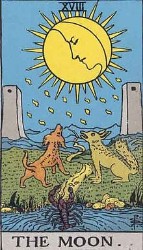
Really, there are only two natural measures of time here on the Earth school. The first is the number of times that the Moon gets full.
And the second is how many Full Moons occur while we rotate around the Sun.
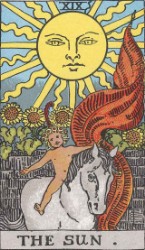
It gets light and then it gets dark and that’s night and day.  We have more dark in the winter and more light in the summer and those are the seasons.  The, “shortest,” day of the year is right around December the twenty first, so the, “new,” year starts right around December the twenty second.  Easy peasy.

We can see that more natural approach to time with the Indigenous Peoples of the Pacific Northwest.  They had one month that was called, “the time to catch salmon.”  Another month was, “the time to gather berries.”  Another month was, “the time to catch eels.”  My favorite was February, which was, “the time to do nothing,” (probably because of that pesky extra day that Julius Caesar discovered.)  They didn’t have any concept of weeks or months or hours in the day and were totally amazed at our obsession with watches and clocks and calendars.

So where DID this need to measure and control time come from?  We can get a very clear picture on that when we consider the origin of the word, “calendar.”  It was, “Kalendorium,” which was defined as, “A book in which the interest on loans (due on the first of the month) was recorded.  An account book.  A ledger.”

So the concept of time wasn’t invented to be sure that we all had lunch at the right time.  It was invented to be sure that we paid back our loans on time.  

Basically, the guys who had collected all of the yellow rocks said, “I’m going to loan you this yellow rock because all you have is copper rocks and you can’t even buy lunch with that.  BUT . . . in exchange for my giving you one of my yellow rocks, you have to pay me back TWO yellow rocks.  Unless, of course, you hold onto my yellow rock for longer than the period of the loan, and then you have to give me THREE yellow rocks.”

And thus was born capitalism.

It became more radical, of course, with the beginning of the industrial age when we saw the birth of the wage slave.  That’s when the people who had collected all of the yellow rocks REALLY dug in and took control of our time.

“Look here,” they said,  “I don’t have a lot of time because I’m busy counting all of my yellow rocks.  You, on the other hand, don’t have any yellow rocks but you have a lot of time, which, up until now, was free time.  Now, I’ll give you the dust in the bottom of my bag of yellow rocks in exchange for you using all of your time to work in my factory, and then you can afford to buy lunch.  I mean, if I decide to give you a lunch break.”

And thus was born the minimum wage.

 And that is how we came to lose our time.  Now we can’t afford to waste our time, because we have to spend our time, in order to invest our time because . . . well, we’re running out of time.

Time is money!

My ebook, “Just the Tarot,”  is still available on Amazon.com for less than you’d pay for three rolled tacos, even without guacamole’.  You really can’t afford to turn down a bargain like that.
The Sun Card and The Uncarved Block

Seeing the human Soul in the Taoist concept of The Uncarved Block.

One of the core tenets of Taoism is an idea called, “The Uncarved Block,”  or, as it’s written in Chinese, “Pu,” (not to be confused with The Tao of Pooh although it IS the Tao of Pu.)  

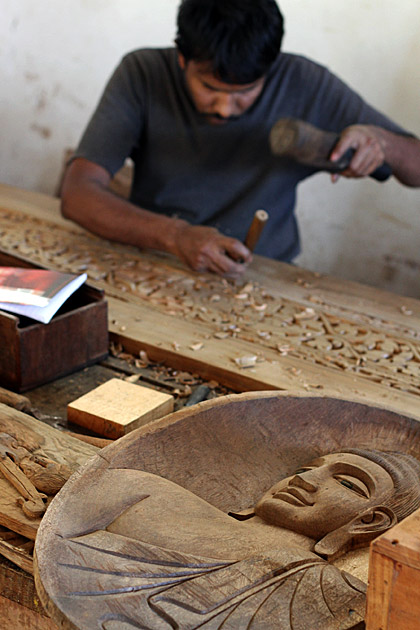
It refers, quite simply, to a piece of wood that’s never been touched, never been carved into a statue or an ornament or a utensil.  It’s just the wood, as it came into and grew into this world.  It’s in its’ primal, original state of being.

When the term is used to refer to the human experience, it means the primal state in which WE came into this world, untouched by experiences, prejudices, or dualistic thinking.  And, of course, it implies that there was a SOMETHING that arrived when we were born, other than just a tiny little human body.  There was a primal NATURE that came into the human body. Some people call it a Soul.

This has actually been a pretty hot topic for philosophers and psychologists for hundreds of years.  Are we just reducible to the sum total of our bodies and brains, or is there something else that’s greater and somehow inhabits our bodies and brains?  Another way of putting it is, “nature versus nurture:”  are we born with a certain nature, an essence that existed before our birth, or are we simply whatever we learn as we go along in life, whatever we learn by being nurtured by our culture?

Aristotle came down firmly on the nurture side of the equation, saying that we are born as a, “tabula rasa,” a blank slate that life and culture writes upon.  There is no soul, no pre-existing essence. The idea was later picked up by the English philosopher John Locke and thus made its way into modern psychology.

New Thought writers, of course, are advocates of nature, of the idea of our having a Soul that, “arrives,” in this world using the vehicle of our bodies.  What’s more, they see the Soul as being pretty cool when it dances into the physical world.  To quote Esther Hicks/ Abraham in Ask and It Is Given: Learning to Manifest Your Desires

“You are eternal beings who have chosen to participate in this specific physical life experience for many wonderful reasons . . . You are eternal Consciousness, currently in this wonderful physical body for the thrill and exhilaration of specific focus and creation.”

In other words, when we first get here we are beautiful, spiritual beings, full of joy, who have come here on a mission that INCLUDES having a lot of fun.  To use a phrase from AA, we are happy, joyous, and free.  We would feel a lot like The Sun Tarot card looks.

We arrive as beautiful, innocent, children, full of elation and radiating the euphoria of being alive in this enchanted garden that we call the Earth.  We are naked and unadorned, and our original nature, our essence, our, “uncarved block,” is love.  Pure love.

But then something happens.  Perhaps we forget our original nature in the process of transitioning from being Spirits to existing in physical bodies.  Perhaps, as some children do, we remember our original nature and still see the angels and the fairies, but our families and society soon beat that magic out of us.  As Don Miguel Ruiz put it in The Four Agreements: A Practical Guide to Personal Freedom (A Toltec Wisdom Book)

“We are born with the capacity to learn how to dream, and the humans who live before us teach how to dream the way society dreams . . . we learned a whole new reality, a whole new dream.  We never had the opportunity to choose what to believe or what not to believe.”

And we find ourselves wandering in Paradise, lost in the collective dream of our existence, with no memory that we are something far, far greater than our mere physical bodies.  As the bible expressed it – in a phrase that christians never, never, never EVER quote – because then we wouldn’t need preachers:  “You are gods, sons of the Most High, all of you.” 

 Or to use Joni Mitchel’s riff on it, “We are stardust, we are golden, and we’ve got to get ourselves back to the garden.”

That’s the rub, that’s the rough part for most of us: just remembering that we ARE spiritual beings and getting back to that garden.  It’s not as if society exactly encourages us to act like we’ve all got Souls.  If we really believed that we’re all part of the Divine, we’d treat each other with a shade more respect, wouldn’t we?  If we actually looked at killing as killing a part of the Divine, we’d have a lot fewer wars, doncha think?

It’s actually become quite fashionable to laugh at the idea of a Soul.  Many people view it as an anachronistic belief on a par with the idea that god is an old man sitting on a golden throne.  Just silly crap that’s left over from our primitive religious views.

Can we PROVE that there’s a Soul?  Of course not.  Can materialists or atheists prove that there ISN’T a Soul?  Of course not.  What we CAN do is to intuit that there is a something that lies beyond and beneath our ordinary consciousness and reality.

In discussing the difference between the ego and what we really are in A New Earth: Awakening to Your Life’s Purpose (Oprah’s Book Club, Selection 61) Eckhart Tolle says:

“What a liberation to realize that the ‘voice in my head’ is not who I am.  Who am I then?  The one who sees that.  The awareness that is prior to thought, the space in which the thought happens.”

In a similar vein, Jeffrey Schwartz, who is a neuropsychiatrist and uses very strict scientific standards of proof,  argues in You Are Not Your Brain: The 4-Step Solution for Changing Bad Habits, Ending Unhealthy Thinking, and Taking Control of Your Life that there is something beyond the mere thoughts that our physical brains generate, something that directs our focus and can override our thoughts.  He calls it, “The Wise Advocate,” and it sounds very much like the description of a Soul.

“The Wise Advocate knows what is best for you, it loves and cares for you, so it encourages you to make decisions in a rational way based on what’s in your overall best interest in the long term.”

That Wise Advocate, that space that exists between our thoughts, is where our Soul lives.  It’s where our Soul is still naked, beautiful, innocent, and playing.  It’s our original nature, our uncarved block.  

All we have to do is find it again. Or at least try to be a chip off the old block.

The Sun Tarot Card

The meaning of The Sun card in the Tarot, including definitions for the upright and reversed positions.

Sun

A young, nude child sits astride a pony with flowers and feathers in her hair while a bright, red banner waves in the air.  Behind her a wall is topped with sunflowers and a huge sun shines down upon the scene.

Upright: Joy, fun, happiness!  This is a wonderful card and indicates that everything is going just right.  It indicates that warm, comforting sense of existence when you’re going through a period where you’re satisfied and happy.

The child on the pony obviously indicates youth, both in the way the questioner feels right now and in her actual physical environment.  New children or grandchildren may be on the way or perhaps the neighbor’s kids will show up to play. Life is good.

Reversed:  The weather forecast is for a cloudy day with the possibility of clearing.  Good things may be on the horizon but that’s not assured, yet, and it’s important to keep a positive attitude.

Possibilities of problems with children or pregnancies.  Perhaps the neighbor’s kids show up to play and they’re REALLY annoying.

If you have questions about this card or its meaning in one of your readings, please don’t hesitate to leave a comment.  I’ll get back to you as soon as I can.

A Few More Thoughts About The Sun

If you’ve ever done any Inner Child work you’ve got to love The Sun.  It’s all there: the laughing child (riding a pony, no less) in a warm, walled in garden filled with sunflowers waving a banner or flag while the sun shines down.

Let’s focus on the flag for a little bit because it’s the one thing in the composition that just doesn’t belong there.  And things that don’t belong tend to be the most interesting.

We can see first of all that the flag is WAY oversized for the child.  It’s huge and would be appropriate for a large man or woman, not a child.  Secondly it’s red, a color commonly associated with power. So combining those factors we’ve got a very small child controlling a large amount of power, which is a fascinating concept.

To say that our society is anti-child might be an overstatement, but it might not.  Consider these common insults:

Do you have to be so childish?

Why don’t you just grow up?

I guess I’ll be the adult in the room.

Quit being such a brat.

You’re just a cry baby.

And on and on and on.  The word, “puerile,” is from a latin word meaning, “boy.”  Also juvenile, infantile, immature.

Most Inner Child work could more accurately be defined as, “Injured Inner Child work.”  It’s all about working with that ego construct that we form as a child and which tends to be emotionally abused by parents, teachers, preachers and other authoritarians commonly known as grown ups.  It’s about recovering and healing that part of us that was told that he/she was stupid, noisy, pesky, insolent, too big for our britches, and a general pain in the ass. Shut up and sit down or go stand in a corner and think it over until you’re willing to be, “good.”

And, yes, we tend to think of Inner Child as being weak, powerless, delicate, violated.  But if that was all there was to it, what would be the point in trying to recover it or heal it?  After all, it’s just a dumb kid.

The fact is, though, that there is tremendous power that flows out of the Child.   Julia Cameron, author of, “The Artist’s Way,” places creativity squarely in the child ego state, as do many others.  Here’s what Cameron had to say:

“Remember, your artist is a child.  Find and protect that child. Learning to create is like learning to walk.  The artist child must begin by crawling.”

Picasso said, “Every child is an artist.  The problem is how to remain an artist once we grow up.”

Amber K, in her wonderful book, “True Magick,” says:

“ . . . the Younger Self is a valuable ally to the conscious mind. . . it is in charge of emotion, memory and sensation . . . it is a powerful generator and channel of psychic energy . . .”

I know a therapist who is fascinated both by deaths and births because, “those are the moments when the veil is thinnest, when a Soul is coming into or passing out of the world.”

If you conceptualize it that way, Child is much closer to the Divine, to Spirit World than Adult.  Each child is a traveler who just stepped off of the Astral Plane and is approaching the Baggage Claim area to pick up it’s new bag of karma.  Each child is still magical.

Until we can talk her out of it.

“Just the Tarot,” by Dan Adair – a kindle ebook available on Amazon